Ar abian Horse Times | 2 | Volume 56, No. 4
Ar abian Horse Times | 3 | Volume 56, No. 4
table of
CONTENTS Volume 56, No. 4
8 85 139 152 154 162 164 176 177 206 6 196 198 205 208
Issue4
Cover: Rae-Dawn Arabians … “We Believe” Colonial Wood Arabians … The Joy of Beginning Again by Jeff Wallace & Evie Tubbs Sweeney AHT Picks Building For The Future by Taryl O’Shea The United States Arabian & Half-Arabian National Championships—Celebrating 60 Years of Equine Excellence, Part I by Scott Benjamin 2026 Breeding Pays Futurity USN Contenders From Center Ring … 2026 U.S. Nationals Judges The Ultimate Spectator Sport — Choosing Our Place in History’s Greatest Moments U.S. Nationals Profiles Tribute to Breeder Lucy Rosalind Whittier (1939-2026) by Jeff Wallace & Evie Tubbs Sweeney Comments From The Publisher Faces & Places AHT On The Road Index Of Advertisers Boarding Agreement Basics: What Every Horse and Barn Owner Should Know, by Johanna Sheehe, ESQ
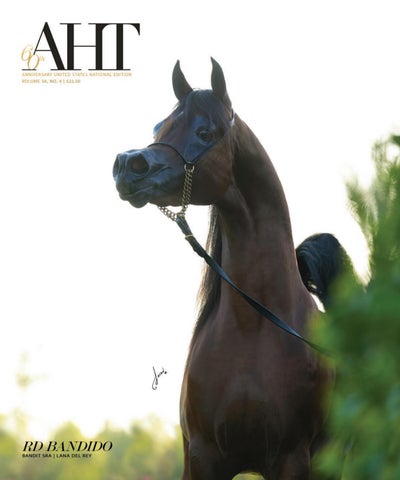
On The Cover: RD Bandido (Bandit SRA x Lana Del Rey), owned & bred by Murray or Shirley Popplewell, Rae-Dawn Arabians.
Ar abian Horse Times | 4 | Volume 56, No. 4
Ar abian Horse Times | 5 | Volume 56, No. 4
Owner/Publisher Lara Ames Managing Editor Charlene Deyle Production Manager Melissa Pasicznyk Advertising Account Executive Lesley Blain Mazur Kelly Craig Contributing Writers Scott Benjamin Taryl O’Shea Caitlin Pigott Colleen Scott Johanna Sheehe Evie Tubbs Sweeney Jeff Wallace Sophie Yih Contributing Designers Danielle Crawford Braden Davidsen Ally Edwards Martha Hartley Jaime Johnson Emily Maita Cat McKenna Brandy Phillips Riyan Rivero Jenn Trickey Ashley Wilson AHT Abroad Director of Creative & Operational Development Mieke Opsteyn
Show Operations & Digital Support Meaghan Estes Sales Coordinator & Accounts Receivable Deb Trebesch Social Media/Sales Assistant Hillary Hoffman Sue O’Neill
COMMENTS from the publisher As we reflect on 60 years of making U.S. Nationals memories, it is incredible to see how much our industry has changed over the decades. Yet, one thing remains entirely untouched: our enduring, unwavering love for the horse. My journey began as a little girl sitting in the stands at the U.S. Nationals, mesmerized by every single class and determined not to miss a moment. Those early years planted the seeds of a lifelong passion, fueled by unforgettable highlights like watching Mike Neal and Shahteyna, the breathtaking presence of FF Summer Storm and Orans Adagio, Jack Teague and Authenticity proudly carrying the flag, and Rohara Moon Storm capturing the open western title. The memories run deep — bringing those childhood dreams to life, I showed for 12 years, fueled by the chase of the big trophy where upon my very first U.S. National win, I promptly got thrown off and missed the victory pass, to the powerful sight of Matoi and 9/11, presenting the flag. But nothing compares to the bittersweet memory of my dad making his final National Championship victory pass at age 89, just two months before he passed, or the magical, storybook setting shared by my mom, me, and Perfinka. This is a truly historical time for our industry. More than ever, the national championships remain a vital cornerstone of our community—a sacred time of year when we come together to honor our history, celebrate our horses, and share what matters most.
© Copyright AHT, Inc. dba Arabian Horse Times. All rights reserved. Reproduction in whole or in part without permission is prohibited. Articles or opinions published by the AHT, Inc. dba Arabian Horse Times are not necessarily the expressed views of the AHT, Inc. dba Arabian Horse Times. AHT, Inc. dba Arabian Horse Times is not responsible for the accuracy of advertising content or manipulation of images that are provided by the advertiser. ARABIAN HORSE TIMES (ISSN 0279-8125) Volume 52, No. 8, July 2022, is published monthly, except April, May, June, August and November, by AHT, Inc. dba Arabian Horse Times, P.O. Box 70, Jordan, Minnesota 55352. Periodical postage paid at Jordan, Minnesota 55352 and at additional entry offices. Single copies in U.S. and Canada $22.50. Subscription in U.S. $85 per year, $145 two years, $205 three years. Canada $135 one year, $255 two years, $345 three years, U.S. funds. Foreign Subscriptions: $195 one year, $325 two years, $385 three years, payable in advance, U.S. funds. Sorry, no refunds on subscription orders. For subscription and change of address, please send old address as printed on last label. Please allow four to six weeks for your first subscription to be shipped. Occasionally ARABIAN HORSE TIMES makes its mailing list available to other organizations. If you prefer not to receive these mailings, please write to ARABIAN HORSE TIMES, Editorial Offices, P.O. Box 70, Jordan, MN 55352. The publisher is not responsible for unsolicited manuscripts or photographic materials. Printed in U.S.A. • POSTMASTER: Please send returns and address changes to Arabian Horse Times, P.O. Box 70, Jordan, MN 55352. For subscription information, call 952-492-3213. ARABIAN HORSE TIMES P.O. Box 70, Jordan, MN 55352 Fax: 952-492-3228 www.ahtimes.com
Ar abian Horse Times | 6 | Volume 56, No. 4
Wishing all a truly unforgettable experience and the show of a lifetime lifetime!!
Ar abian Horse Times | 7 | Volume 56, No. 4
Ar abian Horse Times | 8 | Volume 56, No. 4
Ar abian Horse Times | 9 | Volume 56, No. 4
“Every new phase is exciting,” Murray shared. “We have a lot of new personnel who are contributing to this next step. Our goal is to continue developing and showing national and world champion foals.” That next phase is taking shape through several important additions to the Rae-Dawn Team. Manuel Luquin has joined as halter trainer, Katie McGregor is managing the Scottsdale facility, and Canadian farm manager Amie Sewell has relocated to Rae-Dawn’s new farm in Pagosa Springs, Colorado. Murray was quick to share his enthusiasm for Manuel’s skills, drive, and commitment to Rae-Dawn’s future. His vision for the program aligns closely with the goals Murray and Shirley have as they move into this next phase. Over the years, Rae-Dawn has been an early stop for trainers as they continue their professional journeys. “We have always believed in recognizing talent and providing the opportunity for that talent to truly ourish,” he said. “It allows us to all grow together.” Likewise, Manuel has expressed his excitement about being extremely hands on with each horse’s experience as they prepare to show, and Rae-Dawn is privileged to be part of his continued journey into the winner’s circle. Murray’s emphasis on developing talent continued as he elaborated on Katie McGregor joining the program as manager of the Scottsdale facility. Katie brings extensive experience in the Arabian horse industry, along with a well-established background in breeding and management. Her knowledge and involvement will support the continued development of Rae-Dawn’s breeding program while strengthening the day-to-day leadership of its primary training location. The addition of the Colorado farm also marks another signi cant step forward for Rae-Dawn. fter managing the Canadian farm for the past 10 years, Amie Sewell has relocated to oversee the new facility. The Pagosa Springs farm provides a setting for mares to foal and young horses to grow, while Amie brings continuity and experience to this next chapter of the program. The farm in their “home and native land” will always remain an important part of Rae-Dawn’s operation. Meghan Mohr, who has been an employee at the location for the past few years is now managing the Canadian farm. The facility will continue to provide a place for mares to enjoy their retirement, while Rae-Dawn’s locations work together to support the horses through each stage of their development.
Ar abian Horse Times | 10 | Volume 56, No. 4
Farm Manageress, Katie McGregor
“It takes a village to run this operation,” Murray shared. With dedicated leadership across each of Rae-Dawn’s facilities, along with its groundskeepers and horse care professionals, it is a collective effort that makes Rae-Dawn possible. Breeding and Future Plans Rae-Dawn breeds an average of 15 foals each year. While halter is the program’s primary discipline, athleticism and good minds are equally important. The goal is to produce horses that are correct and beautiful enough to excel in the halter ring, with the movement, athleticism, and potential to thrive in performance. RD Bandido, a 2-year-old colt bred by Murray and Shirley, and the cover star of this issue, embodies that goal. Sired by Bandit SRA and out of the Exxalt daughter Lana Del Ray, Bandido made his debut as a yearling and was named the 2025 U.S. National Champion Sweepstakes Arabian Yearling Colt. Rae-Dawn is looking forward to bringing this talented horse back to the U.S. Nationals for the Breeding Pays Futurity Colts & Geldings.
Bandido’s combination of excellence and athleticism reflects the kind of versatility Rae-Dawn hopes to produce. His successful introduction to the show ring offered an early glimpse of his potential, and the program looks forward to seeing that promise develop as he continues his career. “RD Bandido is very much a part of the future of our program,” Murray says. “We are looking forward to incorporating him further into our program when he reaches breeding age.” Rae-Dawn’s next chapter, “WE BELIEVE”, is already underway. With the right people in place and a clear focus, the program is staying true to what has always mattered most, and horses like RD Bandido are an exciting part of that future.
Ar abian Horse Times | 12 | Volume 56, No. 4
Ar abian Horse Times | 13 | Volume 56, No. 4
Ar abian Horse Times | 14 | Volume 56, No. 4
Ar abian Horse Times | 16 | Volume 56, No. 4
Ar abian Horse Times | 17 | Volume 56, No. 4
Ar abian Horse Times | 18 | Volume 56, No. 4
Ar abian Horse Times | 19 | Volume 56, No. 4
Ar abian Horse Times | 20 | Volume 56, No. 4
Ar abian Horse Times | 21 | Volume 56, No. 4
Ar abian Horse Times | 22 | Volume 56, No. 4
Ar abian Horse Times | 23 | Volume 56, No. 4
Ar abian Horse Times | 24 | Volume 56, No. 4
Ar abian Horse Times | 25 | Volume 56, No. 4
Ar abian Horse Times | 26 | Volume 56, No. 4
Ar abian Horse Times | 27 | Volume 56, No. 4
Ar abian Horse Times | 28 | Volume 56, No. 4
THE
SA
Owned and Bred by Corry Key
Nathan Salamy (615) 642-0062 Beth Ann Salamy (615) 927-9915 Mount Juliet, TN | copperhillarabians.com
For Your Consideration
Ar abian Horse Times | 30 | Volume 56, No. 4
Ar abian Horse Times | 34 | Volume 56, No. 4
Ar abian Horse Times | 35 | Volume 56, No. 4
Ar abian Horse Times | 36 | Volume 56, No. 4
Ar abian Horse Times | 37 | Volume 56, No. 4
Ar abian Horse Times | 38 | Volume 56, No. 4
Ar abian Horse Times | 39 | Volume 56, No. 4
Ar abian Horse Times | 40 | Volume 56, No. 4
Ar abian Horse Times | 41 | Volume 56, No. 4
Ar abian Horse Times | 42 | Volume 56, No. 4
Ar abian Horse Times | 43 | Volume 56, No. 4
Ar abian Horse Times | 44 | Volume 56, No. 4
Ar abian Horse Times | 45 | Volume 56, No. 4
Ar abian Horse Times | 46 | Volume 56, No. 4
Ar abian Horse Times | 47 | Volume 56, No. 4
Ar abian Horse Times | 48 | Volume 56, No. 4
Ar abian Horse Times | 49 | Volume 56, No. 4
Ar abian Horse Times | 50 | Volume 56, No. 4
Ar abian Horse Times | 51 | Volume 56, No. 4
Ar abian Horse Times | 52 | Volume 56, No. 4
Ar abian Horse Times | 53 | Volume 56, No. 4
Ar abian Horse Times | 54 | Volume 56, No. 4
Ar abian Horse Times | 55 | Volume 56, No. 4
Ar abian Horse Times | 56 | Volume 56, No. 4
Ar abian Horse Times | 57 | Volume 56, No. 4
Ar abian Horse Times | 58 | Volume 56, No. 4
Ar abian Horse Times | 60 | Volume 56, No. 4
Ar abian Horse Times | 61 | Volume 56, No. 4
Ar abian Horse Times | 62 | Volume 56, No. 4
Ar abian Horse Times | 63 | Volume 56, No. 4
Ar abian Horse Times | 64 | Volume 56, No. 4
Ar abian Horse Times | 65 | Volume 56, No. 4
Ar abian Horse Times | 66 | Volume 56, No. 4
Ar abian Horse Times | 67 | Volume 56, No. 4
Ar abian Horse Times | 68 | Volume 56, No. 4
Ar abian Horse Times | 69 | Volume 56, No. 4
Ar abian Horse Times | 70 | Volume 56, No. 4
Ar abian Horse Times | 71 | Volume 56, No. 4
Ar abian Horse Times | 72 | Volume 56, No. 4
Ar abian Horse Times | 73 | Volume 56, No. 4
Ar abian Horse Times | 74 | Volume 56, No. 4
BE PART OF THE
MOVEMENT! PUBLIC SERVICE ANNOUNCEMENT Join the most comprehensive Arabian Horse Farm Directory in the industry to promote the Arabian horse to people beyond our existing community through a variety of different efforts to introduce, educate and attract people to the breed
IT’S FREE! To add your farm visit arabianhorsepromotionalfund.com/farm-finder
Magazine Advertising Show Coverage Photos & Video E-Mail Marketing Social Media Management Auctions Events Custom Printing & So Much More! Your Equine Marketing Source For
50+ years
www.ahtimes.com Ar abian Horse Times | 76 | Volume 56, No. 4
Ar abian Horse Times | 77 | Volume 56, No. 4
Ar abian Horse Times | 78 | Volume 56, No. 4
Ar abian Horse Times | 79 | Volume 56, No. 4
Ar abian Horse Times | 80 | Volume 56, No. 4
Ar abian Horse Times | 81 | Volume 56, No. 4
Ar abian Horse Times | 82 | Volume 56, No. 4
Ar abian Horse Times | 84 | Volume 56, No. 4
Ar abian Horse Times | 85 | Volume 56, No. 4
Ar abian Horse Times | 86 | Volume 56, No. 4
Ar abian Horse Times | 88 | Volume 56, No. 4
Ar abian Horse Times | 89 | Volume 56, No. 4
Ar abian Horse Times | 90 | Volume 56, No. 4
THE INDUSTRY’S LEADING SOURCE FOR 55+ YEARS
Subscribe Today! ahtimes.com/subscribe
Print & Digital Subscriptions | Free Digital Edition With A Print Subscription | Multi-Year Discounts Available Ar abian Horse Times | 91 | Volume 56, No. 4
Ar abian Horse Times | 92 | Volume 56, No. 4
Ar abian Horse Times | 93 | Volume 56, No. 4
Ar abian Horse Times | 94 | Volume 56, No. 4
Ar abian Horse Times | 95 | Volume 56, No. 4
Ar abian Horse Times | 96 | Volume 56, No. 4
Ar abian Horse Times | 97 | Volume 56, No. 4
Ar abian Horse Times | 98 | Volume 56, No. 4
Ar abian Horse Times | 99 | Volume 56, No. 4
Ar abian Horse Times | 100 | Volume 56, No. 4
Ar abian Horse Times | 101 | Volume 56, No. 4
Ar abian Horse Times | 102 | Volume 56, No. 4
Ar abian Horse Times | 103 | Volume 56, No. 4
Ar abian Horse Times | 104 | Volume 56, No. 4
Ar abian Horse Times | 105 | Volume 56, No. 4
Ar abian Horse Times | 106 | Volume 56, No. 4
Ar abian Horse Times | 108 | Volume 56, No. 4
Ar abian Horse Times | 110 | Volume 56, No. 4
Ar abian Horse Times | 112 | Volume 56, No. 4
Ar abian Horse Times | 114 | Volume 56, No. 4
MOMENTS CAP TURED IN TIME ... PH OTOS REMOVE TH E N E E D FO R WO RDS.
T H A N K YO U A H T N AT I O N A L S S H OW P H OTO G R A P H E RS! YO U T H & M I D S UMM E R N AT I O N A L S
Molly Wilson ALLY EDWARDS | MOLLY WILSON
C A N A D A’ S N A T I O N A L C H A M P I O N S H I P
DALLAS GERBRANDT
S P O RT H O RS E N AT I O N A L S
Breanna Wyant BRE ANNA W YANT
U. S . N AT I O N A L S
Molly Wilson DALL AS GERBR ANDT | K AYLEE MARKONICH | MOLLY WILSON
P ROV I D I N G TA N G I B L E M EMO R I ES TO L AS T A L I FE T I M E! E V E N T P H OTO S AVA I L A B L E TO V I E W A N D P U R C H A S E AT A H T I M E S .C O M/P H OTO S
Ar abian Horse Times | 116 | Volume 56, No. 4
Ar abian Horse Times | 117 | Volume 56, No. 4
Ar abian Horse Times | 118 | Volume 56, No. 4
Ar abian Horse Times | 119 | Volume 56, No. 4
Ar abian Horse Times | 120 | Volume 56, No. 4
Ar abian Horse Times | 121 | Volume 56, No. 4
Ar abian Horse Times | 122 | Volume 56, No. 4
Ar abian Horse Times | 123 | Volume 56, No. 4
Ar abian Horse Times | 124 | Volume 56, No. 4
Ar abian Horse Times | 125 | Volume 56, No. 4
Ar abian Horse Times | 126 | Volume 56, No. 4
Ar abian Horse Times | 127 | Volume 56, No. 4
Ar abian Horse Times | 128 | Volume 56, No. 4
Ar abian Horse Times | 129 | Volume 56, No. 4
Ar abian Horse Times | 130 | Volume 56, No. 4
Ar abian Horse Times | 131 | Volume 56, No. 4
Ar abian Horse Times | 132 | Volume 56, No. 4
Ar abian Horse Times | 133 | Volume 56, No. 4
Ar abian Horse Times | 134 | Volume 56, No. 4
Ar abian Horse Times | 135 | Volume 56, No. 4
Innovative Equine Supplements | Created By A Veterinarian | www.DePaoloEquineConcepts.com Ar abian Horse Times | 138 | Volume 56, No. 4
TRANQUILITY™ Equine Calming & Focus Supplement
s k c i
P
Tranquility™ provides targeted nutritional support for horses experiencing nervousness, anxious behavior, distraction, environmental changes, travel, competition stress, rehabilitation, or stall rest. Its comprehensive formula supports normal neurotransmitter function and promotes a calm, focused, and willing attitude—without sacrificing the alertness and responsiveness needed for performance. • Encourages calmness and mental focus • Supports a relaxed, willing attitude • Helps horses cope with training, competition, travel, and environmental changes • Provides support during confinement, rehabilitation, and stall rest • May help manage stress-related behaviors such as weaving and stall walking • Supports healthy nerve signaling, muscle function, and neurological health • Formulated with Tryptophan, Vitamin D3, Choline, Inositol, Glutamic Acid, Magnesium, and Brewer’s Yeast For horses whose attitude or performance may be affected by nutritional imbalances, Horse Hair Analysis can provide additional insight into mineral deficiencies and exposure to potentially harmful metals.
HORSE HAIR ANALYSIS Horse Hair Analysis® is a cutting edge approach for owner’s to help their horses achieve maximum health and performance. The HHA report will reveal heavy metal toxicities and/or vitamin and mineral deficiencies. This, combined with the HHA Personal Supplement, has become a revolutionary approach for owners, trainers, and veterinarians looking to help horses regain peak health & performance.
STAY ON POINT EQUINE PASTE This palatable and easy to dose equine paste allows your horse to stay calm and focused during competition. It contains no USEF prohibited substances, making it an essential item to take the stress out of performance.
Ar abian Horse Times | 139 | Volume 56, No. 4
s k c i
OFFICIAL VET OF U.S. NATIONALS AND MAJOR SPONSORS OF THE AEPA AND AWPA. Equine Athlete Veterinary Services is an exclusively-equine practice designed to cater to the needs of the equine athlete, at all stages of life. Traveling nationwide to provide full-service care at your farm or event, Equine Athlete has doctors based in Michigan, North Texas, California/ Arizona, and Kentucky, including our state-of-the-art diagnostic and surgical hospital located in Simpsonville, Kentucky. Our mission is to provide our customers outstanding value in veterinary care in three areas: 1. Producing predictable and reliable results; 2. Offering quality diagnostics and therapeutics; 3. Utilizing clear and concise communication at every step along the way. Equine Athlete Veterinary Services is designed to cater to the needs of equine athletes at all stages of life including ...
Sports Medicine | Diagnostic Imaging Pre-Purchase Exam | Reproductive Services Preventative Care + Wellness Alternative Medicine + Therapies
Ar abian Horse Times | 141 | Volume 56, No. 4
P
Ar abian Horse Times | 142 | Volume 56, No. 4
3/4” COB HALTER WITH ROLLED NOSE AND PADDED CROWN WITH NAME PLATE
s k c i
P
The best quality 3/4” rolled nose padded crown halter you will ever own. Beautifully built and designed for daily use. Long lasting hand-rubbed and double stitched vegetable tanned leather on the underside with smooth hand burnished and stained edges so as not to rub your horse, and snap throat latch. Hard wearing, deep engraved halter name plate included. Cast solid brass non-rust ultra strong hardware, durable doubled and stitched solid construction, tested and proven sizing. Available in: - Brown Bridle leather with Brass Hardware - Black Bridle leather with Stainless Steel Hardware Halter Plate Size: 4” x 5/8”
$129
HAUTE EQ PERFORMANCE VEST A sleek and versatile vest designed to combine sport functionality with a modern, elevated look. Crafted with a water-resistant outer and fully seam-sealed construction, it delivers reliable protection against the elements while maintaining a sleek, tailored silhouette. The padded interior and silky-smooth lining provide lightweight warmth and comfort without bulk, while stretch fabrication ensures unrestricted movement. Easy-care, machine washable design
$199
NORFOLK CROSSBODY BAG Wear this around your waist or crossbody to keep all your essentials close and accessible as you head out the door. Hand crafted out of premium, Italian pebble grain cow hide leather with roomy silver finished zippered main pouch and secure interior pockets lined in luxurious jacquard fabric with additional zippered pocket on the back. Our woven F horseshoe logo embossed 1 1/2” wide adjustable strap and secure nylon buckle allows you to wear it how and where it suits your current requirements. 8”W x 5 1/2”H x 1 3/4”D
$129 Ar abian Horse Times | 143 | Volume 56, No. 4
Ar abian Horse Times | 144 | Volume 56, No. 4
CREATING CUSTOM SHORTY’S FOR YOUR ARABIAN HORSE SHOW
s k c i
P
Shorty’s Caboy Hattery hats are handmade in Oklahoma City. Every hat features the perfect balance of quality and craftsmanship. Each hat is custom built, one by one, and then shaped to give you that “ just for you” feeling. Shorty’s has been the leader in building custom hats since 1989. We are celebrating our 35th year. Shorty’s attention to detail on each hat doesn’t just focus on the craftsmanship and quality of the overall finished product. For years, Shorty’s has been known for their attention to detail and new designs, such as custom laser whiplace. Also, keeping designs close to the traditional way yet adding class to a hat with custom design native American bead work. The shape of the hat also adds to the overall look of our hats—having that final custom touch of each hat being hand shaped just for you. Shorty’s customers are always first class when they look in the mirror or for their win picture. If you’re in a Shorty’s custom hat, you’re one step ahead of the competition.
50X SAND WITH PECOS LASER AROUND THE BRIM AND BOUND EDGE Price starts at $1,200
100X CAMEL OPEN ROAD/FEDORA WITH NAVY BOUND EDGE AND NAVY OPEN ROAD RIBBON BOW
Price starts at $1,200
50X PECAN WITH WHIPLACE AND A DOUBLE BRAIDED HAT BAND WITH HORSEHAIR TASSELS Price starts at $1,300
WWW.SHORTYSHATTERY.COM Ar abian Horse Times | 145 | Volume 56, No. 4
Ar abian Horse Times | 146 | Volume 56, No. 4
s k c i
P
WHO WE ARE:
Elite Stall Mat Rentals, LLC was founded with a vision to provide a top-notch, reliable mat solution for equestrian events and exhibitions. The company emerged from the passion and horse show experience of Linda Sheridan, a long-time Morgan exhibitor, and her entrepreneurial son, Clayton Sheridan. The company has serviced over 1,500 equine events to date.
WHAT WE DO:
Rent ¾” thick EVA foam stall mats with anti-slip surface for Stalls with hard stalling surfaces Aisle and alleyways for exhibitor comfort Pre-bed stalls for ease of arrival Sanitize stalls for extra protection
PROUD SUPPORTERS OF THE ARABIAN HORSE ASSOCIATION & ITS EQUINE ATHLETES. Don’t haul mats … rent mats at Stallmatrentals.com 877-MATS-200
Ar abian Horse Times | 147 | Volume 56, No. 4
-Lesley Rand Bennett
Save The Wild Horses
Exclusive Equestrian Fine Jewelry and Bronze Sculptures Hand Crafted By Lesley Rand Bennett
Pegasus is our muse
for this time and space. We are constantly reaching for the stars! Evolving...morphing into new heights. Join us in our journey at the
Hoot N’ Holler Lounge Ar abian Horse Times | 148 | Volume 56, No. 4
s k c i
P THE ULTIMATE NATIONAL CHAMPION RING Solid 14k gold with a diamond horseshoe and diamond center stone. Handcrafted by Lesley Rand Bennett in Scottsdale, Arizona
CLASSIC ARABIAN HORSE 14k yellow and white gold with a diamond eye and sapphire accents. Handcrafted by Lesley Rand Bennett in Scottsdale, Arizona
WESTERN WEDDING SET We present our two become one wedding set. Handcrafted by Lesley Rand Bennett in Scottsdale, Arizona See it in the Hoot N’ Holler lounge
At Bennett Fine Jewelry & Sculpture “We believe there is jewelry that you wear and jewelry that defines you!”
Ar abian Horse Times | 149 | Volume 56, No. 4
Ar abian Horse Times | 150 | Volume 56, No. 4
s k c i
P
Ar abian Horse Times | 151 | Volume 56, No. 4
Building for the Fut2ure
by Taryl O’Shea
Chief Executive Officer, Arabian Horse Association
I have spent a lot of time over the past 90 days thinking about the difference between managing an association and building one.
Managing means keeping the lights on: answering the calls, making sure the shows run, the registrations get processed, the rulebook stays current. That work matters, and I do not take it for granted. But it is not the same as building something that will still matter to this breed in 20 years. That is the question I keep returning to: are we simply maintaining what came before us, or are we actually building toward something larger? I do not believe we can grow this industry until we first invest in the people who carry it. That work starts with our trainers. Trainers are the ones on the ground every day, developing horses, mentoring new owners, and shaping how people experience this breed for the first time. If our trainers are supported, equipped, and made to feel welcome within this association, they will drive the industry forward in a way that no membership campaign or marketing push can replicate on its own. That must be a central focus of how we build, not an afterthought. At the same time, we need to look honestly at every touch point a member, a new Arabian horse owner, or anyone curious about this industry has with the Arabian Horse Association. Is it easy to get started? Is it clear the options within our industry? Does the experience make someone want to stay and go deeper, or does it leave them to figure things out on their own? Those touch points decide whether someone becomes a lifelong owner or drifts away after a season. The Arabian Horse
Association has an opportunity to shape those touch points. And it is our trainers who have the front-row seat, working directly with new owners and prospects every day, and they are often the ones best positioned to see where the process breaks down and where the Arabian Horse Association can do better. The association needs to support our trainers in that role, not leave them to carry it alone. There is an opportunity to support our trainers but also expand our on-ramps into this breed. Someone who has never owned an Arabian horse, never shown one, never even been to a barn, needs a clear and welcoming path in, along with a real sense of what is possible for them in this industry: what they could show, breed, build, or belong to over time. Right now, too many people never find that path at all. We see a glimpse of what this can look like when we look at some of our successful Academy programs. Right now, we have amazing programs that our trainers have put together to get new people involved in the horse industry. They have welcomed them and set a clear path for learning and advancement with horses. These newcomers are having the time of their lives and are the on-ramps we are seeing success with right now. It was a reminder of what is possible when the pieces work together: a trainer willing to mentor, an interested horse lover willing to learn, and an association that supports. If we get these things right—supporting our trainers, improving our touch points, and expanding our on ramps— the growth we are working toward will follow. That growth creates demand. And demand is what gets the flywheel turning faster, until it is carried by its own momentum. None of that happens by accident.
Ar abian Horse Times | 152 | Volume 56, No. 4
It happens because breeders keep believing in the horses they are producing, even when the market is unpredictable. It happens because trainers and professionals keep developing talent instead of coasting on reputation. It happens because volunteers show up early and stay late at events that ask a great deal of them and repay them with little more than the satisfaction of a job done well. It happens because our staff handles the unglamorous, detailed work that most people never see and rarely think about. And it happens because members themselves, year after year, choose to renew, to show up, and to bring a friend into the barn. I think about my own path into this industry when I consider that. I was a young girl who begged my parents for a horse. They knew nothing about horses, so they put me in riding lessons, Pony Club, 4-H, anything that would allow me to learn and be around horses. I am thankful to those people who gave me that experience, one that kept me engaged and rooted in the horse world. It has always been clear to me that nobody gets into this business alone, and nobody stays in it without people who believed in them before there was any reason to. So, when I think about where the Arabian Horse Association is headed, I hold two timeframes in mind at once. What does the association need to do this year, this show season, this membership cycle? And separately: what kind of association will we be in 20 years, long after most of us in our roles today have moved on? The answer to the first question should never come at the expense of the second. This has been a collective effort, built by owners who keep investing, breeders who keep believing, professionals who keep developing good horses and experiences, volunteers who give their time freely, staff who do the work nobody sees, and members who choose, again and again, to make this association part of their lives. It is all of us. But if there is one place we need to focus our efforts, it is our trainers, because they are the ones who will help grow this industry.n
Ar abian Horse Times | 153 | Volume 56, No. 4
Ar abian Horse Times | 154 | Volume 56, No. 4
Ar abian Horse Times | 155 | Volume 56, No. 4
Ar abian Horse Times | 156 | Volume 56, No. 4
Ar abian Horse Times | 157 | Volume 56, No. 4
Ar abian Horse Times | 158 | Volume 56, No. 4
Ar abian Horse Times | 160 | Volume 56, No. 4
Ar abian Horse Times | 161 | Volume 56, No. 4
2026 U.S NATIONAL
Entries
2-year 2year--old old COLTS //GELDINGS GELDINGS ARIA BENITO (Emir Sahara x JL Beverlie Aria) O: Aria Prestige Holdings LLC B: Prestige Holdings LLC Ex: Austin Colangelo MAVERICK PCF (Martino PCF x Aria Taffeta) O: Shelley Gomavitz | B: Sam Peacemaker Ex: Stuart Vesty ATLAS LMA (Sharif Al Zobair x Psophia LMA) O: Harry or Lisa Markley & David McCrorie B: Harry or Lisa Markley Ex: Allyson Capri Nelson MAGNUS ENB (Atticus ENB x MD Alihandra) O/B: Psynergy Enterprise Developments LLC Ex: Sandro Pinha WINSTON AN (Garavani AN x Lonco Dalilah) O: James Kristof | B: Anivia Equine LLC Ex: Megan Mahoney EMPEROR EKA (Emerald J x Sahara Dawarah) O/B: Eric & Karen England | Ex: Ryan Mason OFW MIDAS (Dominic M x OFW Praise) O: Patricia or George Moulton B: Orrion Farms LLC | Ex: Tristin Moulton
VHAGAR K (Dominic M x Vixxen K) O: Hagale Family Arabians LLC B: Katie D McGregor | Ex: Jamie V Hagale
ROYAL RAHUL (AJ Radman x Royal Hadara) O/B: Cindy McGown or Mark Davis Ex: Alcides Rodrigues
OFW HARRISON (Dominic M x Harielle XX) O: Mike & Kimberly Beethe B: Orrion Farms LLC | Ex: Andrew Sellman
SVB CALAIS (Royal Asad x Caressable NA) O: Cindy McGown or Mark Davis & Al Ameera Stud B: Silver Box Southwest LLC Ex: Ricardo Rivero
OFW LEGACY (Dominic M x Lulu Marajj) O/B: Orrion Farms LLC | Ex: Grayson Sellman RD BANDIDO (Bandit SRA x Lana Del Rey) O/B: Murray or Shirley Popplewell Ex: Manuel Luguin ARIA VIRGO (AJ Radman x HED Caramba) O: The Aria Partners LLC B: NJ Arabian Horse Ventures LLC Ex: Joseph Alberti II
FLORENTINO PCF (Martino PCF x Odesza PCF) O: Isabella & Dedee Templeton B: PCF Arabians LLC | Ex: Isabella Templeton MATTEO MVA (Sharif Al Zobair x Mystica Indiah) O/B: Renee & Kevin Holt | Ex: Chandler Brown NWA JAKARII (Rhan Al Shahania x Jade FCF) Ex/O: Trisha Davis | B: Fieldcrest Farms LLC
WYNSTON (Rhan Al Shahania x Minx F O) O/B: Joy C Gildersleeve | Ex: Michael Wilson
APPOMATTOX AG (Rhan Al Shahania x Virginnia Lee) O/B: MNS Farms | Ex: Austin Garrett
ROYAL BLACKRIVER HBV (Pharaoh HBV x Barbara HVP) O/B: Cindy McGown and Mark Davis & Luciano Cury Ex: Ricardo Rivero
MAURIZIO PCF (Martino PCF x Royal Apona) Ex/O: Melissa Feather | B: Sam Peacemaker
ROYAL NAMIR EKA (Royal Asad x R Arabella) O: Eric C England B: Cindy McGown or Mark Davis & Eric or Karen England Ex: Alcides Rodrigues
Ar abian Horse Times | 162 | Volume 56, No. 4
2-year 2year--old old FILLIES LADY LUCINDA BEY (Bey Ambition x Glory V) Ex/O/B: David Lowe ARIA CALLISTA (D Shakhat x Clio Cerise) O: Aria Prestige Holdings LLC | B: Timestone Arabians LLC Ex: Austin Colangelo PASSION IN VOGUE PCF (Dominic M x Vogue PCF) O: PCF Arabians LLC & Cindy McGown or Mark Davis B: Sam Peacemaker | Ex: Koy Moody SEDONA PCF (Martino PCF x Wedad Aljassimya) O/B: Sam Peacemaker | Ex: Joao Carlos Sousa ARYNA TPA (Maximillion NA x Rhona Vul Do Divino) O: Sharon Ames | B: Thiago Mauro Tavares Pontes Ex: Sandro Pinha BREATHLESS AA (Aria La Croixx x HP Breslavia) O/B: Aspire Arabians LLC | Ex: Andrew Sellman PRUSSIA ROSE (Berlin MP x Rose Of Hariry) O: Murray or Shirley Popplewell | B: MD Isley or Tim Walz Ex: Manuel Luguin RD BANDALEAH (Bandit SRA x Giana Leah PCF) O/B: Murray or Shirley Popplewell | Ex: Manuel Luguin
MAIA AS (Dominic M x Marbella PCF) B: Arabian Soul Partners Ltd. O: Cindy McGown or Mark Davis & Arabian Soul Ptrs Ltd. Ex: Alcides Rodrigues ROYAL BARNA (AJ Radman x HDF Barcellona) O/B: Cindy McGown or Mark Davis | Ex: Ricardo Rivero ROYAL JULIANA (AJ Radman x Janeenah) O: Cindy McGown or Mark Davis & Danubius Arabians SRL B: Cindy McGown or Mark Davis | Ex: Dustin Weir WINGATES ANGELIQUE (Dominic M x WGA Princess Khan) O/B: Kelly & Casey Campbell | Ex: Ricardo Rivero SEDONA AS (Dominic M x CW Sexxi) O: Cindy McGown or Mark Davis & Arabian Soul Ptrs Ltd. B: Green Pastures Arabians, Inc. or Colleen Cozzetto Ex: Ricardo Rivero SM DESIRREE (Dominic M x H Aspire H) O/B: Leslie Ann or Craig Colpean | Ex: Preston Keeter PERSONIFIED DSA (Preludio OSB x LM Magnified) O/B: Daniel R & Suzanne Acevedo | Ex: Pat McGinnis SM SANDPIPER (Dominic M x OFW Starling) O/B: Leslie Ann or Craig Colpean |Ex: Preston Keeter
TEODORA ROSE DVA (Aria Rakeem x WR Mademoiselle) O/B: Diane or Dennis Jensen | Ex: Alan Gruppen RHAPSODY AA (Aria La Croixx x Versaces Rose RA) O/B: Aspire Arabians LLC | Ex: Michael Wilson FRANCHESCA FM (Sharif Al Zobair x Fiona FM) O: Tom or Cathy Economy or Rick or Laura Carr Ex/B: Cathleen Murphy Economy GENESIS AS (Sharif Al Zobair x Prada AS) O: Cindy McGown or Mark Davis | B: Arabian Soul Partners Ltd. Ex: Amanda Pagan
Ar abian Horse Times | 163 | Volume 56, No. 4
*Subject to change
FROM CENTER RING...
2026 U.S. NATIONALS JUDGES Judging at the U.S. Arabian Nationals isn’t for the faint of heart. AHT asked this year’s esteemed judges to share what goes on behind the clipboard so you can garner insight into what they are looking for when the stakes are at their highest.
ENGLISH & COUNTRY ENGLISH PLEASURE/PARK LINDSAY RINEHART Years judging: 10 U.S. Nationals judged: 2
When every horse entering the ring is an elite athlete, how do you adjust your lens from looking for flaws to looking for greatness? I always begin by judging to the positive. People often start by dissecting what they do not like about a horse or performance. I begin by asking, “What is this horse doing well?” When every horse is an elite athlete, correctness becomes the expectation, and my focus shifts to the degree of excellence each horse brings to the ring. I look for the horse that best fulfills the class specifications, offers the greatest strengths, and sustains the most complete performance. From there, I evaluate where each horse falls short of the standard. At the highest level, the winner should be the horse that demonstrated the greatest degree of excellence. In a closely contested final, what is the intangible quality—beyond structural correctness and movement—that makes a horse demand the victory? The great ones enter the ring with confidence and charisma, yet nothing appears manufactured or forced. The horse and rider are so connected that the rider seems to disappear from the picture. The horse commands your attention, and the performance feels effortless. Many horses can impress you for a single pass, but the winner demands your attention throughout the entire class. How do you strike the balance between preserving traditional breed type and rewarding modern athleticism or expression? Athleticism and expression should enhance the Arabian horse, not come at the expense of its identity. A modern Arabian can be incredibly exciting while still possessing the unmistakable presence that defines the breed. Progress is valuable, but don’t lose sight of the qualities that make an Arabian an Arabian. Every judge has an internal ‘ideal’ model in their mind. How has yours evolved over your decades in the horse industry? My ideal has evolved from being impressed by individual pieces to appreciating the complete picture. Years of breeding, showing, and judging have taught me to evaluate from the hind end forward and to value balance, functionality, temperament, and consistency. Today, my ideal is not necessarily the most extreme horse. It is the horse whose conformation, movement, frame, performance, and charisma all work together. Ultimately, that is what creates a true show horse: one that is physically made to do its job, has the mentality and confidence to enjoy doing it, and brings together trainability, natural talent, and athletic ability. It is not what a horse can display in one impressive pass, but what it can consistently deliver throughout the entire performance. When you step into the ring at U.S. Nationals, what is the single biggest mental reset you must make before the first class enters? The reset is simple: everyone starts at zero. Previous titles, expectations, and predictions remain outside the ring. The only thing that matters is the performance presented in that class, on that day. I remind myself to be completely present and allow the classes to show me how it should be placed. A r a bi a n Horse Times | 164 | Volume 56, No. 4
Judging high-stakes classes carries enormous weight for breeders, trainers, and owners. How do you tune out the noise, pressure, and names on the bridle to judge purely what is in front of you? I return to the class specifications and trust the process. I know how much time, emotion, and financial investment may be connected to every horse, but I cannot carry those individual stories while making a decision. My responsibility is to the integrity of the class and the breed. I judge the horse and performance in front of me. The moment you allow outside noise into the decision, you stop doing the job you were invited to do. Is there a specific decision or ring moment in your judging career that challenged you the most, and what did it teach you about your own eye? The most challenging moments have been close classes in which several horses were worthy of winning. Those decisions taught me to evaluate the complete performance rather than allowing an impressive moment to outweigh the overall picture. I have learned to return to the order of importance within the class specs and ultimately reward the horse that consistently delivers correctness and the most complete performance. It has also taught me that confidence in my eye means doing the disciplined work, standing behind my decision, and remaining open enough to continue learning.
horses for individual divisions without breeding away the fundamental qualities that allowed this breed to identify as an Arabian. For the future generation of judges watching you today, what is the hardest skill to teach that can only be learned by stepping in that ring? Learning how to make a decision when there is no perfect answer. From outside the ring, it is easy to focus on individual horses or isolated moments. From the center, you must evaluate the entire class, organize what you are seeing, apply the specifications, manage your time, and ultimately determine the placings.
visibility, allowing space gives us a much clearer view of the complete horse. Speed is not an advantage, either. Rushing past the judge shortens the already brief window we have to evaluate your performance and can take away from the horse’s overall picture. Give us the opportunity to see your horse at its best. In addition, do not wait for the judge to look before you begin showing. We are constantly scanning the ring, and the strongest presentations remain consistent whether the exhibitor believes they are being watched or not.
A judge must learn to trust their eye without becoming closed-minded and make confident decisions while maintaining the humility to grow and continue learning. Finish this sentence: The most common mistake amateur competitors make in front of a national judge is... … trying to create the performance they believe the judge wants instead of presenting the best version of the horse they actually have. That often means chasing speed, attempting to manufacture a dramatic look or changing their ride when the judge is looking. Know your horse’s strengths, remain aware of the judge’s location, and present a balanced, cohesive performance. Correctness will leave a more lasting impression than an extreme.
Looking at the evolution of the Arabian horse at U.S. Nationals over the last few decades, where do you think the breed has made its greatest strides, and where do we need to guard against over-specialization? The breed has made tremendous strides in athleticism, quality, presentation, and the sophistication of our breeding and training programs. Today’s Arabians are capable of competing at an extraordinary level.
If you could add or re-evaluate one scoring metric in modern Arabian show classes, what would it be? I would place greater emphasis on the harmony between conformation, frame, balance and cadence. People sometimes evaluate these qualities as though they exist separately, when in reality they are all connected. The complete, functional picture should carry greater weight than any single dramatic piece.
Where we must be careful is allowing specialization to become so extreme that we compromise soundness, temperament, balance, and overall Arabian type. The Arabian’s greatest historical strength has always been its ability to be beautiful, intelligent, willing, durable, and versatile. We should continue developing exceptional
What is one thing you wish exhibitors understood about what it looks like from the center of the ring? Judges see more than exhibitors realize but have less time to evaluate each horse than they may imagine. Ring placement, awareness, and consistency matter. Riding too close to the judge does not improve your A r a bi a n Horse Times | 165 | Volume 56, No. 4
MITCH SPERTE
Years judging: I pursued my judge’s card as an assistant trainer at Lasma; receiving my “small r” in 1983 while working for Sheila Varian U.S. Nationals judged: 4 When every horse entering the ring is an elite athlete, how do you adjust your lens from looking for flaws to looking for greatness? There are honest and dishonest mistakes. For example, when a horse is framed up correctly, traveling straight and balanced and happens to come off their feet for a couple of strides because they are trying to “get somewhere and be somebody,” that’s an honest mistake. When a horse “spits the bridle and quits,” often disrupting other exhibitors, that is a dishonest mistake and should be penalized accordingly.
In a closely contested final, what is the intangible quality—beyond structural correctness and movement—that makes a horse demand the victory? Attitude and expression. No different than what separates an excellent musician from a captivating entertainer. Many are excellent and technically correct, but the great ones also display engaging energy and charisma. How do you strike the balance between preserving traditional breed type and rewarding modern athleticism or expression? Firstly, let’s quantify breed type in a performance horse. Does the horse possess the obvious breed characteristics that undeniably identify the horse as a member of its breed? Once that box is checked, does the horse demonstrate form to function; conformation which enables the horse to perform without appearing forced or “over done?” If so, that box can be checked. The third box is balanced athleticism in a willing go forward manner, traveling straight to their bridle and assuming the desired frame and head carriage in a soft and responsive manner. The fourth box is the “icing”, often referred to as charisma and expression. Every judge has an internal ‘ideal’ model in their mind. How has yours evolved over your decades in the horse industry? The Arabian is often referred to as the most versatile breed. With that said, we have become a breed of specialists. Most of today’s breeders breed for a specific discipline and trainers put forth most of their talent and effort towards a specific discipline as well. Some would like to see us return to the days of old when one horse competes in multiple disciplines. In my humble opinion, I appreciate the trajectory of the breed, for that’s how you get to excellence. With football season upon us, my best analogy would be seldom does the skillset and physical build of a pro bowl caliber Quarterback match that of a Defensive Linemen or a Free Safety … they are all incredibly talented, playing different positions, yet they are all football players. When you step into the ring at U.S. Nationals, what is the single biggest mental reset you must make before the first class enters? Prayer! Judging high-stakes classes carry enormous weight for breeders, trainers, and owners. How do you tune out the noise, pressure, and names on the bridle to judge purely what is in front of you? As a judge, an exhibitor, or a spectator, I get inspired by the energy of national competition. As a judge, you don’t want to make it too complicated: “keep the main thing the main thing.” Use your skill, experience and knowledge to do your very best to place the best of the best in a sequential order that honors the exhibitor and their beloved horses. Is there a specific decision or ring moment in your judging career that challenged you the most, and what did it teach you about your own eye? There have been a couple of situations over the years, in a very competitive class, where I had to trust my eye and trust my intuition and not be concerned with what might be someone else’s perception. Being true to yourself by keeping integrity priority one and relying on your knowledge and vast experience as a horseman is always the best approach. For the future generation of judges watching, you today, what is the hardest skill to teach that can only be learned by stepping in that ring? Ring management. Early on when I decided I wanted to become a horse show judge, I was determined to call classes in a manner that I would want them to be called as if I was competing. I try to set up my class calls so the horses and riders have the opportunity to be their best; NOT to catch or trap them into a bad move or mistake. Finish this sentence: The most common mistake amateur competitors make in front of a national judge is... … allowing their nerves to get the best of them. Same can be said for professionals. It certainly is that way for me. My suggestion is to find some alone time prior to your class. Get dressed early enough to give yourself time to create your own ritual that will settle your nerves and focus your energies on execution in a confident and relaxed manner. Enjoy the ride; there’s nothing like it and you get to do it! What is one thing you wish an exhibitor understood about what it looks like from the center of the ring? What you see as an exhibitor or spectator is not that different to what the judge is seeing. Yes, at a different angle, but the general overall impression is similar. What is different for the judge is they are making instantaneous decisions from horses flashing in front of them. A judge is doing their best to assess the entirety of the class and is making snap judgements often in just a few frames at a time; like short clips of a movie reel. The horse might look sensational in that instant or it might not be at its best; it’s what that judge happens to see at that moment – not much time to edit and splice. Whereas an exhibitor or spectator doesn’t have that responsibility and is able to keep their attention on the few horses that have captured their interest; often their own.
A r a bi a n Horse Times | 166 | Volume 56, No. 4
HUNTER PLEASURE & HUNTER EQUITATION BRIDGET FITZPATRICK
Years judging: 8 U.S. Nationals judged: This is the first! When every horse entering the ring is an elite athlete, how do you adjust your lens from looking for flaws to looking for greatness? Greatness doesn’t have to announce itself – it simply shows. True superstars have a way of separating themselves from the pack. That’s what makes them stars! In a closely contested final, what is the intangible quality—beyond structural correctness and movement—that makes a horse demand the victory? Oftentimes it comes down to expression! A horse who does their job exceptionally well is great, but a horse who does it exceptionally well while wearing their ears and looking like they genuinely LOVE their job, is a true standout. How do you strike the balance between preserving traditional breed type and rewarding modern athleticism or expression? Ultimately, every time we hand in a card, we are making a statement about what we believe represents excellence within the Arabian horse. Judging not only rewards what is standing in the ring today, it also influences what breeders, trainers, and exhibitors strive to produce tomorrow. That is why I believe we have a responsibility to preserve the qualities that define the breed while rewarding the athleticism, functionality, correctness, and expression that move it forward. Every judge has an internal ‘ideal’ model in their mind. How has yours evolved over your decades in the horse industry? My ideal has evolved with the progression of the breed itself. Today we simply have better horses: better breeding, better training, better shoeing, and overall better care of our Arabian athletes. As our knowledge has improved, so has the quality of the horses we produce and the way we prepare and present them. When you step into the ring at U.S. Nationals, what is the single biggest mental reset you must make before the first class enters? My mindset before each class at U.S. Nationals is simple: fresh eyes, clean slate, judge what happens in the arena during each class. Judging high-stakes classes carries enormous weight for breeders, trainers, and owners. How do you tune out the noise, pressure, and names on the bridle to judge purely what is in front of you? I tune it out by knowing that my responsibility is to be fair, consistent, and honest in my evaluation. I trust my eye and my decades of experience in the industry. If I can leave the ring knowing that I judged what I saw, rewarded the horses that I genuinely believed to be the best on that day, and can defend the decisions I made, then I have done my job. It is a great honor.
KAREN HOMER-BROWN Years judging: 49 U.S. Nationals judged: 6
When every horse entering the ring is an elite athlete, how do you adjust your lens from looking for flaws to looking for greatness? I always try to look for the best performance in every class that I judge. I have a standard of excellence for each discipline in my mind, and I judge from that. In high quality classes, it’s a blast to judge, because you have the opportunity to judge from the very best. In a closely contested final, what is the intangible quality—beyond structural correctness and movement—that makes a horse demand the victory? The answer is in the question: it’s quality in movement, conformation, attitude and presence. I look for the horse that owns the ring, with the attitude of “look at me”. Whatever discipline, the gait quality needs to be performed with excellence, cadence and balance. I look for the horse that has effortless motion, driving from behind and pushing forward.
A r a bi a n Horse Times | 167 | Volume 56, No. 4
How do you strike the balance between preserving traditional breed type and rewarding modern athleticism or expression? For me, no matter what breed I judge, they must represent their breed type first with great conformation that promotes an outstanding performance. I want to see an Arabian horse. In all disciplines, a true athlete that is extraordinary has the drive from behind and pushes forward through the motion. As I mentioned before, expression, attitude, and presence makes the big difference. Every judge has an internal ‘ideal’ model in their mind. How has yours evolved over your decades in the horse industry? My basic ideal has not changed, however, with the evolution of conformation more suited for the disciplines, the training specifics for each discipline, conditioning, nutrition and general care has developed a higher quality athlete of today.
be seen, and your horse has the opportunity to show at its best. When an exhibitor crowds the center, it is harder to see the horse when they are on top of you. If an exhibitor can ride from the quarter line or towards the rail, the judges actually have a better view of the horse, and if the exhibitor can find an open spot, the horse will be seen and show better because they are not being crowded, and their attitude, ears, presence and performance will be better. I have had the privilege and pleasure of judging Arabians for many years, as well as many Arabian Nationals, and loved every minute of it. Thank you for the opportunity!
When you step into the ring at U.S. Nationals, what is the single biggest mental reset you must make before the first class enters? I always prepare for every show by reviewing the rule book, prize list, and knowing the classes that I am responsible for. Organization is a huge part of being prepared to judge, especially for the Arabian Nationals. Judging high-stakes classes carries enormous weight for breeders, trainers, and owners. How do you tune out the noise, pressure, and names on the bridle to judge purely what is in front of you? When you have an opportunity to adjudicate a class(es) that are exciting, exhilarating, and loud, the horses are the only thing I ever see. So, the noise disappears, and the focus is on the horses, and they are the only thing you see. Is there a specific decision or ring moment in your judging career that challenged you the most, and what did it teach you about your own eye? The most exciting, exhilarating class I have ever judged was the HalfArabian English Pleasure Finals in the Pavilion at the 2008 Arabian Nationals. You asked earlier how do you handle the noise … that evening we had 16 fabulous horses exhibiting; it was standing room only. The noise level was so loud, I had to do both hand signals and written commands for gait changes with my ringmaster during the very first work off in many years. That experience taught me how to handle noise and to observe a class in that kind of environment. For the future generation of judges watching you today, what is the hardest skill to teach that can only be learned by stepping in that ring? Be prepared and organized before you arrive at a show. Review your classes, know what patterns are needed, etc. Develop your eye to look at each class the same and keep them moving, develop a system and symbols for adjudicating. Understand scoring for the different disciplines. Learn how to stand squarely for many hours. Make sure you are both physically and mentally strong. When you are judging, let the class happen and pin itself, versus trying to pin the class before it happens. What is one thing you wish exhibitors understood about what it looks like from the center of the ring? When we are judging a class, the exhibitor should make sure they can
SUSAN WITTE
Years judging: 20 U.S. Nationals judged: 4 When every horse entering the ring is an elite athlete, how do you adjust your lens from looking for flaws to looking for greatness? I always judge on the positive and let each class evolve while evaluating. Greatness presents itself without having to search for it. In a closely contested final, what is the intangible quality—beyond structural correctness and movement—that makes a horse demand the victory? Excellence, in all aspects of the performance: expression, confidence, beauty, and the ability to command the arena. How do you strike the balance between preserving traditional breed type and rewarding modern athleticism or expression? It is easy when you keep in mind the Arabian horse and its history: an animal that had to endure the harsh climate of the desert. Its stride had to be ground covering, swift and agile. Correct movement would be imperative for its survival. Athleticism in the show ring, no matter the discipline, shows through in the performance. Correctness in its stride, comes from the correctness in its conformation. Collection, balance, and timing should be rewarded. The expression tells the judge whether this animal likes his or her job.
A r a bi a n Horse Times | 168 | Volume 56, No. 4
Every judge has an internal ‘ideal’ model in their mind. How has yours evolved over your decades in the horse industry? The ideal model for me has evolved through appreciating the standards set forth. Each decade, each year, breeders, trainers and exhibitors are showcasing horses that continually raise the bar. I feel privileged to be able to see these individuals from center ring; it gives me a fresh perspective of growth in the industry. When you step into the ring at U.S. Nationals, what is the single biggest mental reset you must make before the first class enters? I remind myself to take one class at a time. Judging high-stakes classes carries enormous weight for breeders, trainers, and owners. How do you tune out the noise, pressure, and names on the bridle to judge purely what is in front of you? Tuning out everything but the class itself has never been a problem for me. I have always felt I have a job to do, and the focus must be the class specs, criteria and the present performance. In my opinion, if you are judging names on a bridle, faces or anything of that nature, you shouldn’t be judging. Is there a specific decision or ring moment in your judging career that challenged you the most, and what did it teach you about your own eye? I think all judges have stepped into the arena and faced challenging decisions. For me, there have been a few, however, trusting my decision has proven to myself that the class specs were written for a reason. Looking at the evolution of the Arabian horse at U.S. Nationals over the last few decades, where do you think the breed has made its greatest strides, and where do we need to guard against over-specialization? The Arabian breed has made great strides in breeding athletes for specific divisions. Good or bad, duplicating those traits from other breeds may or may not be in our best interest. We need to remind ourselves that we fell in love with the Arabian horse for a reason. We need to protect the standards of our breed. For the future generation of judges watching you today, what is the hardest skill to teach that can only be learned by stepping in that ring? Realizing you have a very short window of time to make instant decisions. These decisions are meaningful and costly to every exhibitor. Finish this sentence: The most common mistake amateur competitors make in front of a national judge is... … forgetting what a great job they have done to get to this level. Be confident, proud and enjoy the ride! If you could add or re-evaluate one scoring metric in modern Arabian show classes, what would it be? To re-emphasize the word “pleasure” in our English, Western and Hunter divisions. What is one thing you wish exhibitors understood about what it looks like from the center of the ring? I think understanding what a very short period of time a judge has to assess and rank the horses presented. Crowding the judges or hiding on the rail will not benefit your overall ride. Show your horse to its best advantage and utilize the arena wisely.
WESTERN PLEASURE & MOUNTED NATIVE COSTUME BRUCE MCCRAE Years judging: 50! U.S. Nationals judged: 7
When every horse entering the ring is an elite athlete, how do you adjust your lens from looking for flaws to looking for greatness? I am looking for greatness. We will see lots of superstars. I try to judge on the positive things, not negativity.
Schatzberg photo
In a closely contested final, what is the intangible quality—beyond structural correctness and movement—that makes a horse demand the victory? We will see lots of great ones, but the best will have that “it factor” that says “look at me”!
A r a bi a n Horse Times | 169 | Volume 56, No. 4
How do you strike the balance between preserving traditional breed type and rewarding modern athleticism or expression? Our breed has great athletes, and I do love expression, but I’ve been at this a while. I tend to lean towards traditional, conservative and correctness. Every judge has an internal ‘ideal’ model in their mind. How has yours evolved over your decades in the horse industry? Our performance horses have definitely evolved and become much more specialized in each discipline. Quality is still the one factor that stands out to me. It’s the same with Halter horses. They have gotten prettier over the years, but unfortunately, have lost some correctness and structure. Quality still stands out in the best ones! When you step into the ring at U.S. Nationals, what is the single biggest mental reset you must make before the first class enters? I like to think I’m always ready, especially for Nationals. This year I will be coming directly from judging the same disciplines at the Morgan Grand Nationals, so I should be pretty tuned up! Judging high-stakes classes carries enormous weight for breeders, trainers, and owners. How do you tune out the noise, pressure, and names on the bridle to judge purely what is in front of you? I’m out there to do a job. I take it very seriously. I have no problem judging what’s in front of me. Is there a specific decision or ring moment in your judging career that challenged you the most, and what did it teach you about your own eye? Probably nothing specific, but as I said, I really try to judge on the positive. When I was younger, I was much more critical on mistakes
or bobbles. I don’t want to beat a great horse for a minor mistake if I can help it. Looking at the evolution of the Arabian horse at U.S. Nationals over the last few decades, where do you think the breed has made its greatest strides, and where do we need to guard against overspecialization? As I mentioned before, we have gotten very specialized. Maybe too much. While we are seeing great athletic performances, I wish some of them still looked like our traditional Arabian horses. I think our Hunter Pleasure horses are incredible! Thay have probably made the biggest strides. Beautiful horses and amazing young trainers! I do think it is time to revisit our shoeing regulations. For the future generation of judges watching you today, what is the hardest skill to teach that can only be learned by stepping in that ring? Making quick evaluations and quick decisions. Finish this sentence: The most common mistake amateur competitors make in front of a national judge is... … being too conservative or over riding. What is one thing you wish exhibitors understood about what it looks like from the center of the ring? It’s hard work out there! So many great horses and not much time to evaluate and place correctly. In most classes we have to place 11. Getting the bottom five correct is just as important as the top five. Also, we can’t judge what we don’t see!
CARLA JACKSON
Years judging: 12 U.S. Nationals judged: First time When every horse entering the ring is an elite athlete, how do you adjust your lens from looking for flaws to looking for greatness? Rewarding excellence should be the goal; the ultimate presence of an individual who commands and owns the space in which it is shown will rise to the surface. In a closely contested final, what is the intangible quality—beyond structural correctness and movement—that makes a horse demand the victory? The ability to do the job effortlessly. How do you strike the balance between preserving traditional breed type and rewarding modern athleticism or expression? Athletic function varies amongst breed types especially within the Half-Arabian divisions. Form to function should prevail with attitude and athleticism moving to the forefront. Every judge has an internal ‘ideal’ model in their mind. How has yours evolved over your decades in the horse industry? Ideal for me is the one I would like to ride. Well-balanced, cadenced, effortless self-carriage, willing expression, true harmony between horse and rider. A r a bi a n Horse Times | 170 | Volume 56, No. 4
When you step into the ring at U.S. Nationals, what is the single biggest mental reset you must make before the first class enters? A commitment to focus on the present, with uncompromised integrity. Judging high-stakes classes carries enormous weight for breeders, trainers, and owners. How do you tune out the noise, pressure, and names on the bridle to judge purely what is in front of you? The objective is to judge all horses and exhibitors fairly. Is there a specific decision or ring moment in your judging career that challenged you the most, and what did it teach you about your own eye? There is nothing that resonates strongly, but I do know that when standing in center ring, not everyone sees what you see. Looking at the evolution of the Arabian horse at U.S. Nationals over the last few decades, where do you think the breed has made its greatest strides, and where do we need to guard against overspecialization? We certainly have created a venue to showcase the world’s most beautiful Arabian horses, incredible horse trainers and amateurs.
The overspecialization may come at a cost to the smaller breeder who finds it too difficult to play. We do need to continue to promote the Arabian as not just a show horse but as a versatile horse. For the future generation of judges watching you today, what is the hardest skill to teach that can only be learned by stepping in that ring? Stepping out into the ring and focusing on the immediate, while being confident and decisive. Finish this sentence: The most common mistake amateur competitors make in front of a national judge is... … not exuding confidence. The amateur should be relaxed yet riding with purpose and intent. If you could add or re-evaluate one scoring metric in modern Arabian show classes, what would it be? Balance and cadence moving from behind, not forced or contrived but even and fluid. What is one thing you wish exhibitors understood about what it looks like from the center of the ring? We are looking to reward greatness and natural brilliance.
TRAIL & SHOWMANSHIP/PERF. HALTER/HORSEMANSHIP STERLING BRADLEY Years judging: 9 U.S. Nationals judged: 1
Judging high-stakes classes carries enormous weight for breeders, trainers, and owners. How do you tune out the noise, pressure, and names on the bridle to judge purely what is in front of you? I look at every performance like I’ve never seen that horse and rider pair before. Every horse and rider deserves the same look and attention before I pin the class. For the future generation of judges watching you today, what is the hardest skill to teach that can only be learned by stepping in that ring? You need to have and maintain your integrity. Finish this sentence: The most common mistake amateur competitors make in front of a national judge is... … not believing in themselves, their skills, and their preparation. If you could add or re-evaluate one scoring metric in modern Arabian show classes, what would it be? I have an “extremely” hard time marking a maneuver as “extremely poor” for an amateur, as it’s worded too extreme. I believe it could be overly discouraging. I think we could find a better phrase for this. Maybe “below average.”
A r a bi a n Horse Times | 171 | Volume 56, No. 4
MYRON KRAUSE
Years judging: 40 U.S. Nationals judged: several times When every horse entering the ring is an elite athlete, how do you adjust your lens from looking for flaws to looking for greatness? I always look for the best horse and then start judging the rest. In a closely contested final, what is the intangible quality—beyond structural correctness and movement—that makes a horse demand the victory? The “look” of the horse that resembles the beautiful Arabian characteristics. How do you strike the balance between preserving traditional breed type and rewarding modern athleticism or expression? I have trained, judged and shown other breeds, each having physical attributes that allow them to be better athletes in certain disciplines. When judging Arabians, they should look like Arabians! Every judge has an internal ‘ideal’ model in their mind. How has yours evolved over your decades in the horse industry? Gladys Brown Edwards drew an Arabian horse many years ago, and to this day that model is still in my mind. When you step into the ring at U.S. Nationals, what is the single biggest mental reset you must make before the first class enters? I’m organized, prepared, take a deep breath and concentrate only on this class. Judging high-stakes classes carries enormous weight for breeders, trainers, and owners. How do you tune out the noise, pressure, and names on the bridle to judge purely what is in front of you? I vowed when I first got my Arabian judge’s card that I would always try to pick the best horse regardless of owner, rider, handler, what they have won or who they are. If you are a friend or someone I have never seen before, it doesn’t matter. My integrity is more important. Is there a specific decision or ring moment in your judging career that challenged you the most, and what did it teach you about your own eye? I think my eye for horses was developed in the field, not in the ring. Years ago, three of my clients had 100+ horses each. When I went to evaluate them, they would be in large pastures and then they would surround you (none broke). The owners would say, “pick out the winner.” Looking at the evolution of the Arabian horse at U.S. Nationals over the last few decades, where do you think the breed has made its greatest strides, and where do we need to guard against over-specialization? Horses and trainers have improved immensely over the years. There always have been trends in the horse industry, some good, some not so good. Specialization is more easily done in Half-Arabians (which I think should be derivatives); this would allow people to breed for very specific disciplines. For the future generation of judges watching you today, what is the hardest skill to teach that can only be learned by stepping in that ring? Organization is crucial; is your system foolproof? Are you absolutely sure you have all top ten horses in the exact order you want them in, quickly? Finish this sentence: The most common mistake amateur competitors make in front of a national judge is... … not being familiar with rules and ring protocols, and annoying loud coaching from the rail. If you could add or re-evaluate one scoring metric in modern Arabian show classes, what would it be? Consistency in scoring from one discipline to another and try to have similar scoring to the rest of the equine world. We continue to add classes, thinking it’s generating revenue; however, many times the expenses and overhead do not reconcile. When announcing the U.S. National Top Ten, there should be 10 horses in the class. What is one thing you wish exhibitors understood about what it looks like from the center of the ring? It is a totally different perspective when you’re on ground level and standing in the middle, comparative to outside of a ring. A r a bi a n Horse Times | 172 | Volume 56, No. 4
JILL MITCHELL When every horse entering the ring is an elite athlete, how do you adjust your lens from looking for flaws to looking for greatness? It is a real shift in mindset when it applies to judging, evaluating a horse for purchase or just training your own eye at the top level of any sport. At the elite level, that model breaks down, because flaws become more rare and smaller. Everyone is “correct”, so the lens has to become additive, not asking “what’s wrong here” per se, but determining what separates the great from the merely good. Elite quality often shows up as more of an ease, not just correctness, and a horse or rider that looks like they are working to be right is already behind the one that is just right and looks like it is easy. Greatness often means longevity, soundness, temperament and its way of going will be excellent. In a closely contested final, what is the intangible quality—beyond structural correctness and movement—that makes a horse demand the victory? Some horses you have to watch closely to appreciate; others “demand” victory and pull your attention almost involuntarily. The horse that demands the win is the one that looks more comfortable, not less. It’s a kind of magnetism that separates from just correctness. How do you strike the balance between preserving traditional breed type and rewarding modern athleticism or expression? In the show ring, most judges evaluate these considerations sequentially rather than attempting to weigh every characteristic simultaneously. Breed type should not be viewed simply as decoration or ornamentation. It exists because the characteristics that define type are historically connected to the function for which the Arabian horse was developed. The Arabian’s distinctive head, refined features, tail carriage, and overall way of carrying itself are not arbitrary aesthetic traits. They reflect characteristics developed through generations of selection in the harsh desert environment in which the breed evolved, where endurance, efficiency, soundness, and the ability to conserve energy were essential. When evaluating breed type alongside modern athleticism, the more useful question is not whether one should be sacrificed for the other. Rather, it is whether the modern characteristic continues to serve the same underlying function that breed type was intended to preserve—or whether that function is being traded away in favor of visual spectacle. The objective should be to recognize athleticism that enhances the Arabian’s original purpose and preserves its essential identity, rather than athleticism that comes at the expense of the characteristics that make the Arabian uniquely suited to its historical function. Every judge has an internal ‘ideal’ model in their mind. How has yours evolved over your decades in the horse industry? When we begin as new judges, we tend to rely heavily on the written standard because it is the only reliable anchor we have. We consciously work through that mental checklist, comparing each horse against the specific characteristics and requirements described in the standard. With experience, however, that process changes. After judging enough classes and enough horses, the written standard no longer has to be consciously consulted at every step. The checklist becomes internalized. What once required deliberate thought becomes instinct—a trained eye that recognizes the balance, type, quality, athleticism, and overall picture of the horse almost immediately. That instinct does not replace the standard; it is the result of years of learning and applying it. When you step into the ring at U.S. Nationals, what is the single biggest mental reset you must make before the first class enters? Treating the first class with the same authority, decisiveness, attention and commitment as the last class of the day, and eventually of the show. Judging high-stakes classes carries enormous weight for breeders, trainers, and owners. How do you tune out the noise, pressure, and names on the bridle to judge purely what is in front of you? The honest bottom line is that you don’t eliminate that pressure; you build a process rigorous enough that the pressure has no way to get into your head. Finish this sentence: The most common mistake amateur competitors make in front of a national judge is... … to override or over show the horse to compensate for nerves, micromanaging every stride instead of trusting the preparation that got them to the point of competing at a national level. A r a bi a n Horse Times | 173 | Volume 56, No. 4
KARLA MOFFITT When every horse entering the ring is an elite athlete, how do you adjust your lens from looking for flaws to looking for greatness? When you are judging at the highest level, you have to recognize that every horse in the ring has earned the right to be there. I try not to start by looking for what is wrong, but rather by asking myself, “What is this horse doing exceptionally well?” Presence and confidence are very important to me. A great horse should capture your attention when it enters the ring and continues to command it throughout the class. I look for that combination of quality, balance, athleticism, expression and the confidence to present it all. At the national level, it is often those qualities that separate a very good horse from a truly great one. In a closely contested final, what is the intangible quality—beyond structural correctness and movement—that makes a horse demand the victory? For me, it is the “look at me” attitude. There are horses that simply draw your eye the moment they enter the ring. In addition to presence and confidence, they have charisma and an undeniable ability to command attention. When the class is extremely close, that intangible quality can be what separates the exceptional horse from the one that ultimately demands the victory. It is the horse that makes you want to keep looking at them. How do you strike the balance between preserving traditional Arabian breed type and rewarding modern athleticism or expression? For me, it always comes back to having the complete Arabian package. Whether it is a purebred or a Half-Arabian, I want to see those qualities that make an Arabian special—type, beauty, presence, expression, balance and athleticism. The horse can be modern and competitive, but it should never lose the qualities that define the Arabian breed. I believe we can reward athleticism and expression while still preserving that unmistakable Arabian look and character. How has your internal “ideal” model of the Arabian horse evolved over your decades in the horse industry? My ideal has evolved through experience. I have been judging Arabian shows for 13 years, and having the opportunity to judge and train exceptional horses over those years has given me a deeper appreciation for what truly makes a great Arabian. Every exceptional horse teaches you something and continues to refine your eye. My understanding of the ideal has become more balanced and experienced, while always staying grounded in the qualities that make the Arabian special. What is the biggest mental reset you make before judging U.S. Nationals? Being completely open-minded when the show begins and judging only what is in front of me. This will be my third year judging U.S. Nationals in 2026, and I know how important it is to come into the ring with a fresh perspective. Every horse and every class deserves a fresh look. I try to leave expectations, reputations and outside opinions at the door and allow the horses in the ring to tell me what I need to know. My responsibility is to judge what I see in that moment and make the best decision I can based on the horses in front of me. How do you tune out noise, pressure, and names on the bridle and judge what is in front of you? That’s not difficult for me. I find that I’m very able to judge each entry as an individual. I focus on the horse in front of me and what that horse is presenting in the ring. Every entry deserves the same open-minded and unbiased evaluation, regardless of name or reputation. What judging decision or ring moment challenged you the most, and what did it teach you about your own eye? There are too many to name. Over the years, I’ve had many challenging classes and difficult decisions. Each one has been an opportunity to learn, trust my eye, and continue to grow as a judge. No matter how much experience you have, every class can teach you something. Where has the Arabian breed made its greatest strides, and where should we guard against over-specialization? It’s all about maintaining overall quality, regardless of the discipline or division. We should continue to appreciate and reward a complete Arabian horse rather than becoming too focused on one particular quality at the expense of the whole. Balance, type, athleticism, presence and overall quality should always remain important. What is the hardest skill to teach future judges that can only be learned by stepping into the ring? Being able to make decisions in a timely manner. In the ring, you must trust your eye, process what you are seeing, and make a decision without hesitation. Experience teaches you how to evaluate each horse individually while still being able to make confident, timely decisions when the class is moving quickly.
A r a bi a n Horse Times | 174 | Volume 56, No. 4
Finish this sentence: “The most common mistake amateur competitors make in front of a national judge is…” … being too nervous and making mistakes, or being overly confident, which can affect the outcome. The picture from the center of the ring is very different from what it feels like to be out there competing. Learning to stay relaxed, focused and confident, while allowing your horse to show itself, can make a tremendous difference. If you could add or re-evaluate one scoring metric in modern Arabian show classes, what would it be? I don’t have one particular scoring metric that I would add or re-evaluate at this time. I believe the current evaluation should continue to focus on the overall quality of the horse. What is one thing you wish exhibitors understood about what it looks like from the center of the ring? The picture from the center of the ring is so different from watching a class from the rail. As a judge, you see the horse from a completely different perspective and are evaluating the entire picture as it develops in the ring. What may look one way from the rail can look very different from the center. I wish exhibitors understood just how much perspective can influence what a judge sees.
OLLIE GRIFFITH Years judging: 35+
Ollie Griffith is a professional horseman and owner of Autumn Rose Farm in Dublin, Ohio. A long-time figure in the reining industry, Ollie has dedicated much of his life to judging, coaching, and international clinician work. His extensive leadership within the National Reining Horse Association includes serving on the board of directors, acting as judges’ chairman, leading the worldwide judging teaching program, and serving as judges monitor for numerous NRHA futurities and derbies. As an elite international official, Ollie has judged the NRHA Reining Futurity nine times, served as one of five judges at the inaugural FEI/NRHA/AQHA international event in Gladstone, New Jersey, and judged the AQHA World Show and AllAmerican Quarter Horse Congress multiple times. His judging career spans the globe with multiple assignments at the European Championships and Italian Futurity, alongside shows in Brazil, Switzerland, Israel, Canada, and Australia. Equally accomplished as a coach and educator, Ollie led the Intercollegiate Horse Show Association’s most successful team to 10 National Team Championships and 7 Reserve National Team Championships, while also coaching 13 NRHA World Champions and numerous top ten competitors. Active as both an NRHA and AQHA judge and a clinician across the U.S. and overseas, Ollie remains deeply committed to giving back to the equine industry that has shaped his life’s work.
A r a bi a n Horse Times | 175 | Volume 56, No. 4
The
Ultimate
Spectator Sport... Choosing Our Place in History’s
Greatest
Moments
AHT asked upcoming U.S. Nationals amateurs, owners and breeders what front-row seat to any single historical event they would choose; not to change it, but to watch it happen exactly as it did. Here’s what they said… Secretariat running the Belmont Stakes and winning by 31 lengths! ~Dallas Joiner Signing of the Declaration of Independence. ~Mary Severson 1980 “Miracle on Ice.” ~Kim Stevenson I know I missed a lot during my 25-year hiatus from horses but one moment I know would have been very cool to see in person was the Afires Heir and Vegaz work off. ~Christie LaFontaine The very first U.S. Nationals show. ~Nan Harley Watching Secretariat win the triple crown in 1973. ~Shannon Ahearn Lasma Auctions and events when Mike Nichols directed. ~Connie Fritzler Watching the moon landing. That would have been such a cool moment to witness the success of the science, technology, and belief it took to get us there. ~Jordan Poore Is the 2026 Kentucky Derby considered a historical event yet? Because I think watching the first female trainer in history to have the winning horse would be a pretty incredible thing to witness. ~Logan Chisholm I’d want to see the dinosaurs or the moon landing. ~Ally Edwards The Beatles final rooftop concert. ~Cecily Sotomayor I have always loved aviation and flying, so I would love to go back to 1903 and see the Wright brothers successfully take flight for the first time. The expression on peoples’ faces the first time they saw an airplane in flight had to be priceless! ~Karin Loomer Mount St. Helens blowing. ~Claudia Mitchell For someone who loves history, it would probably be the Last Supper. I would like to hear that conversation for myself. ~Cindy High-Fischmann Witnessing women migrate across the American West and how they evolved on the Frontier. These must have been some tough as nails women with grit. ~Jane Palelek-Maio The presidential inauguration of Barack Obama. ~Sarah Miller Meigs Seeing some of the horses on the magazine covers from the 80’s I admired as a little girl. ~Leslie Scornaienchi The capture of Maduro in Venezuela and the liberation of a country. ~Malou Perricone
A r a bi a n Horse Times | 176 | Volume 56, No. 4
Profiles A r a bi a n Horse Times | 177 | Volume 56, No. 4
Dallas
JOINER
Select Show Horses Amateur/Owner # of horses showing at USN: 2 Disciplines showing in: Show Hack, Side Saddle & Costume If you had to pick one specific photo or memory that perfectly captures your horse’s soul and your relationship with them, what is it? I hopped on Ruger bareback in a field while wearing a prom dress with no prior trial run and said, ‘hey buddy, let’s try a canter for the camera.’ He just accepted it like it was a normal everyday thing. Love that little guy. What is the best piece of advice your trainer has ever yelled at you right before you entered the ring that completely saved your ride? “Youve got nothing to lose. Get out there.” What is the single most random thing that your horse has ever spooked at or taken exception to in a show ring? The ribbons flapping back and touching Crackalackin’s hindquarters. We have a no tolerance policy, ha! What do you most look forward to at U.S. Nationals? Seeing the best horses compete!
Nicole
CHAPPARONE
Stachowski Farm Amateur/Owner # of horses showing at USN: 1 Disciplines showing in: English Pleasure What is a small breakthrough you and/or your horse had recently that might not look like a big deal to anyone else, but felt like winning the Olympics to you? This year I’m coming back with SA Lucky Charm, aka Saint. Last year, as a 5-year-old, we won the H/A English Maturity, but I felt like we were really just riding by the seat of our pants! This year we’ve been working hard to make some big steps forward and really put all the pieces together. Victor has been working incredibly hard on him, and after I stayed off Saint for a little while, my most recent ride felt like all the chips finally fell into place. It was one of those rides where everything just clicked—and that felt like a huge win! If you had to pick one specific photo or memory that perfectly captures your horse’s soul and your relationship with them, what is it? One picture immediately comes to mind. We raised Saint at home, so I have so many pictures of him growing up, but there’s one of Opal standing next to him in the pasture when she was a toddler and he was just a yearling. She used to love hanging out with him, and even at that age he was so trustworthy and gentle with her. Saint is truly as kind as they come, and I think that picture captures exactly who he is. It’s also really special to look back at where he started and realize that little yearling in our pasture is now my show horse. A r a bi a n Horse Times | 178 | Volume 56, No. 4
What is the best piece of advice your trainer has ever yelled at you right before you entered the ring that completely saved your ride? One of the best things a trainer ever told me right before I went into the ring was, “Ride like Nicole Chapparone.” It sounds simple, but it gave me so much confidence because it reminded me to stop second-guessing myself and just ride the way I know how to ride. My mom has always told me, “Everything you need is already within you,” and I think those two pieces of advice go hand in hand. Trusting myself is probably the best thing I can do before I trot into the show ring. What is the single most random thing that your horse has ever spooked at or taken exception to in a show ring? Probably their own shadow. You have to love when they manage to scare themselves! What do you most look forward to at U.S. Nationals? I think I’m most looking forward to getting back in the ring with Saint and seeing how far we’ve come. There’s something really special about showing a horse you raised at home, and after all the work that has gone into putting the pieces together this year, I’m excited to have the opportunity to show off the horse he’s becoming. Of course, there’s nothing quite like the atmosphere at U.S. Nationals either!
Autumn
BERTHOLDI
Chrishan Park Amateur/Owner # of horses showing at USN: 1 Disciplines showing in: Country English Pleasure & Native Costume What is a small breakthrough you and/or your horse had recently that might not look like a big deal to anyone else, but felt like winning the Olympics Emma Chapman photo to you? He listens to me more than anyone else. If you had to pick one specific photo or memory that perfectly captures your horse’s soul and your relationship with them, what is it? The photo leaving the gate after our first Top Ten at U.S. Nationals last year. He was so proud of himself, and I was too. What is the best piece of advice your trainer has ever yelled at you right before you entered the ring that completely saved your ride? “More snaffle.” It should be a tattoo, lol. What is the single most random thing that your horse has ever spooked at or taken exception to in a show ring? He’s not a spooker; more of a walker, ha! What is your number one, non-negotiable item that you always pack in your trunk or tack room for show days that has nothing to do with the horse? My father’s Ferrari necklace. What do you most look forward to at U.S. Nationals? Family, friends and much needed barn time. A r a bi a n Horse Times | 179 | Volume 56, No. 4
Christie
LAFONTAINE
ChriShan Park Breeder/Amateur/Owner When a new foal hits the ground, what is the very first characteristic you look for in those first 24 hours that tells you, ‘Yes, this one is special’? You cannot choose one characteristic that defines whether a foal will be special, but I think the most important one is the neck in saddle seat horses. A long, upright neck is critical as it makes the foal more likely to have the natural ability for the English headset. If you could magically bring back any foundation stallion or historic mare from the past 100 years to cross with one of your current horses, who would it be and why? One of my all-time favorites was Zodiac Matador. I remember watching him at U.S. Nationals when I was a kid and being awestruck. He was so gifted and has left his mark on the Arabian breed for decades. What is a common misconception that people from other breeds have about Arabians that you wish your breeding program could help change opinions on? Arabians are commonly thought of as crazy. I think this is a function of being a highly energetic and athletic breed combined with the high level of intelligence. A good breeding program will focus on mares with the right temperament to produce amateur-friendly horses. Every horse is an individual, but a breeder must be selective and intentional to produce horses that will not only better the breed but also have appeal in the marketplace both in and out of the show ring. Embryo transfers and shipped semen have undoubtedly reshaped the breed. Do you see these changes as largely positive or negative, and why? Shipped semen has been around for decades but the ability to do embryo transfers is new to me. In general, I think embryo transfer is positive as you can continue to breed an older mare or one that cannot carry, and I think it levels the playing field a little. I do worry it will reduce the variety in our breed as people inevitably will want to buy embryos from the top producing mares to produce their own National Champion if they can afford the embryo. Overall, I think it reduces the number of mares we are breeding to an already select group of stallions, but I think it has greatly increased the quality of the offspring. On this 60th anniversary of U.S. Nationals, as a breeder, what do you see as our key areas for improvement as we move into the future? As an amateur with a breeder mindset, my biggest concern is the outlook for the breed. Since I got back into the Arabian show circuit in 2024, I continue to be shocked at how long it takes to sell a horse and how cheap nice horses are selling for in auctions. Every horse I have purchased and sold has been at a loss. It makes me really pause as a breeder because the cost to breed is many multiples of a $1,500 auction value. What keeps me thinking about breeding every day is the love of the breed and the excitement of each potential cross, but one must continually evaluate the cost-benefit analysis, and more importantly, whether there are enough buyers that will provide caring homes for these horses once their show career is over. As a rider, what is the best piece of advice your trainer has ever yelled at you right before you entered the ring that completely saved your ride? While I wouldn’t say it saved my ride, I think of it every time I go to show and do my best to follow it: “leave everything out there in the show ring.” Too many times, I have left the show ring wondering if I had just tried a little harder or given it a bit more effort, would I have placed higher, and I think if you can leave every last ounce of effort in the ring, you won’t be questioning yourself afterwards! What do you most look forward to at U.S. Nationals? This year marks my third U.S. Nationals, and I have been so impressed with the quality of horse and rider. I am excited to see the group of horses this year, and I always pay attention to the pedigrees of horses that I love for later reference. I am looking forward to the Hoot N’ Holler as I think that was a great addition last year to bring us all together and break down the barn barriers. Most importantly, I look forward to having my mom come to U.S. to watch my classes. She and I share the love of horses and a passion for the Arabian breed, and it’s so special to be able to experience U.S. together.
A r a bi a n Horse Times | 180 | Volume 56, No. 4
Nan
HARLEY
Stachowski Farm / Sarah Paripovich Amateur/Owner # of horses showing at USN: 2 Disciplines showing in: Hunter & Western Pleasure What is a small breakthrough you and/or your horse had recently that might not look like a big deal to anyone else, but felt like winning the Olympics to you? Concentrating on keeping my hands even in hunter pleasure. It seems obvious but I wasn’t doing it. Has made a tremendous difference. If you had to pick one specific photo or memory that perfectly captures your horse’s soul and your relationship with them, what is it? Ikhana, as a youngster, used to tear off into the pasture the second I removed her halter: a pet peeve. So, I started scratching her whither before letting her loose. She soon decided she would rather be with me than away. It really bonded us. What is the best piece of advice your trainer has ever yelled at you right before you entered the ring that completely saved your ride? What haven’t they yelled? What is your number one, non-negotiable item that you always pack in your trunk or tack room for show days that has nothing to do with the horse? My lucky charms: a buckeye and one of my dad’s shoelaces. He passed when I was at Region 12. He loved what I was doing, and I like to keep him with me. What do you most look forward to at U.S. Nationals? Seeing friends and watching beautiful horses. The best of the best!
A r a bi a n Horse Times | 181 | Volume 56, No. 4
Shannon
AHEARN
Rooker Training Stable Amateur/Owner # of horses showing at USN: 2 Disciplines showing in: Country English Pleasure, Costume, Show Hack & Driving What is a small breakthrough you and/or your horse had recently that might not look like a big deal to anyone else, but felt like winning the Olympics to you? Trying out show hack with my mare Liv at 14 and truly winging it. We had a beautiful ride and got a Top Five. The fact she walked all the gaits felt like winning the Olympics, as this mare is HOT and tends to jig at the walk. Show hack was always my favorite discipline with her now retired half-brother whom I showed for many years prior. I am excited to know I can compete in this division all over again with her. If you had to pick one specific photo or memory that perfectly captures your horse’s soul and your relationship with them, what is it? The first day of turn out after my sweet Liv was born and standing in my pasture with her mama, my Sadddlebred mare. As a small breeder she was my first homebred baby. I had just closed on my farm and there she was just a week or so after the closing, standing there so majestic and with the kindest eye staring into my soul. I’ll never forget that proud moment. That is the day I knew a Star Was BORN! What is the best piece of advice your trainer has ever yelled at you right before you entered the ring that completely saved your ride? “You’ve GOT TO Believe,” Rob MacDougall. Back then I was just getting back into riding after more than a 10-year break. My horse was very green and he was a balker. If I would think it, he would do it. I changed my mindset to believe that he was going to go forward the entire class, and we got our first ever top five. I’ll never forget those words and carry them with me every time I enter the ring. What is the single most random thing that your horse has ever spooked at or taken exception to in a show ring? I was showing side saddle out at Scottsdale and someone (so many public spectators there) dropped a full solo cup as I was trotting by. My horse leaped into the canter for a split second… lesson learned – stay off the rail, especially at Scottsdale. What is your number one, non-negotiable item that you always pack in your trunk or tack room for show days that has nothing to do with the horse? My grandma’s diamond necklace that she gifted to me on my wedding day. I never wear it at home, but I always wear it when I drive my mare. It brings me good luck and protection. What do you most look forward to at U.S. Nationals? Oooh, so many things … being back in the ring this year after a two-year break after having my son Jude; being around my horse show family again; and the fact I am brining two homered babies (full siblings) this year, excites me beyond words.
A r a bi a n Horse Times | 182 | Volume 56, No. 4
Makenna
ROOKER
Rooker Training Stable Amateur/Owner # of horses showing at USN: 2 Disciplines showing in: English/Country Pleasure & English Show Hack If you had to pick one specific photo or memory that perfectly captures your horse’s soul and your relationship with them, what is it? There is a photo from Region 14 where my horse “Button” is jumping through the air when she got a little too excited to show. She is always having fun and doesn’t take anything in life too seriously. What is your number one, non-negotiable item that you always pack in your trunk or tack room for show days that has nothing to do with the horse? I have a pair of socks with a picture of my retired horse, CSP Whos Your Daddy’s, face on them. I wear them to remind me that he is always with me in spirit, even when he isn’t physically at the show. What do you most look forward to at U.S. Nationals? U.S. Nationals is always my favorite show of the year. There is nothing better than spending two weeks in the Tulsa bubble with the people I love, watching the best Arabian horses in the country! I am thankful to the show commission and volunteers who work year-round to put this show on and who are always looking for ways to make it better.
Sandy
TOUGAS
Shino Training Center Amateur/Owner # of horses showing at USN: 1 Disciplines showing in: Country English Pleasure What is the best piece of advice your trainer has ever yelled at you right before you entered the ring that completely saved your ride? “Eyes up and hands down!” What is the single most random thing that your horse has ever spooked at or taken exception to in a show ring? At Region 2 this year in Santa Barbara during a morning Country English Pleasure AOTR class, it was fairly quiet in the arena and a speaker crackled right above our heads. Shocoholic jumped straight up “shocked”, but luckily settled right back in a trot! What do you most look forward to at U.S. Nationals? As I am from Canada, I don’t get to the barn on a weekly basis, so being at U.S. Nationals for the entire show will give my husband and I a chance to get caught up with the wonderful Shino Training Center trainers, staff and clients. Also, spending time with my horse, of course! A r a bi a n Horse Times | 183 | Volume 56, No. 4
Jennifer
GLOMSKI
Shino Training Center Amateur/Owner # of horses showing at USN: 1 Disciplines showing in: English Pleasure What is a small breakthrough you and/or your horse had recently that might not look like a big deal to anyone else, but felt like winning the Olympics to you? Dinero started out as a hunt horse and has amazed us all by becoming an English horse! If you had to pick one specific photo or memory that perfectly captures your horse’s soul and your relationship with them, what is it? Smiling while sitting on him after an amazing ride where he has again surprised me with his athleticism and drive – I think he is pretty proud of himself, too. What is the best piece of advice your trainer has ever yelled at you right before you entered the ring that completely saved your ride? “Sit up and stay light.” What is the single most random thing that your horse has ever spooked at or taken exception to in a show ring? Flags hung on the rail the day of the show that were not there the previous day during practice. Also, some of my horses take offense at a piercing whistle from a trainer that is meant for their horse. What is your number one, non-negotiable item that you always pack in your trunk or tack room for show days that has nothing to do with the horse? A beautiful smelling perfume. What do you most look forward to at U.S. Nationals? I love being in the horse show bubble in Tulsa. I look forward to seeing old friends and young superstars.
Cindy
CRAWFORD
Chrishan Park Amateur/Owner # of horses showing at USN: 3 Disciplines showing in: English/Country Pleasure & Park Schatzberg photo A r a bi a n Horse Times | 184 | Volume 56, No. 4
Kate
LONG
Stachowski Farm Amateur/Owner # of horses showing at USN: 1 Disciplines showing in: English Pleasure What is a small breakthrough you and/or your horse had recently that might not look like a big deal to anyone else, but felt like winning the Olympics to you? She truly is amazing, but we are constantly learning small things from each other in every single ride that help us become an even better team. If you had to pick one specific photo or memory that perfectly captures your horse’s soul and your relationship with them, what is it? Definitely the reel Meaghan Estes put together of us at our last year of Youth Nationals, capturing our National Championship win! What is the best piece of advice your trainer has ever yelled at you right before you entered the ring that completely saved your ride? “Relax! Have fun! Don’t take it so seriously!” What is the single most random thing that your horse has ever spooked at or taken exception to in a show ring? Probably a shadow or some sort of sign on the wall. What is your number one, non-negotiable item that you always pack in your trunk or tack room for show days that has nothing to do with the horse? At any national show, we always have a large basket of essentials in our dressing room such as makeup wipes, perfume, deodorant, and other small things that are nice to have when you need them! What do you most look forward to at U.S. Nationals? Catching up with and, of course, showing! This is my first year competing at U.S. Nationals, so it is very exciting!
Debi Byron &
DONICS
Volney Creek Ranch, LLC Amateur/Owner # of horses showing at USN: 3 Divisions showing in: Hunter Pleasure & AWPA What is a small breakthrough you and/or your horse had recently that might not look like a big deal to anyone else, but felt like winning the Olympics to you? Winning my Hunter Pleasure class unanimously at Region 1 in Del Mar. What is the best piece of advice your trainer has ever yelled at you right before you entered the ring that completely saved your ride? “Breathe! What is your number one, non-negotiable item that you always pack in your trunk or tack room for show days that has nothing to do with the horse? Dog treats.
What do you most look forward to at U.S. Nationals? Seeing friends from across the USA and watching amazing horses perform!
A r a bi a n Horse Times | 185 | Volume 56, No. 4
Emily Schatzberg photo
HOLDEN
Stachowski Farm Amateur/Owner # of horses showing at USN: 2
What is a small breakthrough you and/or your horse had recently that might not look like a big deal to anyone else, but felt like winning the Olympics to you? After switching my mare from English to country. Last season was honestly pretty rough, and there were times when it felt like we just weren’t quite understanding each other. Since making the switch, though, we’ve finally started to really mesh and feel like a team. Having a ride where everything just clicks and I feel connected with her again feels like winning the Olympics to me. If you had to pick one specific photo or memory that perfectly captures your horse’s soul and your relationship with them, what is it? For my mare, it would absolutely be a photo of her completely passed out during one of her famous naps, with me cuddled up next to her. She loves getting cuddles while she’s sleeping, which I know isn’t something every horse would allow. There’s something so special about being trusted enough that she can completely relax with me right there. For my gelding, it would have to be a picture of him happily eating a banana. He absolutely loves his treats, and bananas are his favorite. I think those little everyday moments capture their personalities perfectly and remind me why I love them both so much. What is the best piece of advice your trainer has ever yelled at you right before you entered the ring that completely saved your ride? “Just go out there and ride your f ’ing ass off. You got this.” Honestly, sometimes that’s exactly what you need to hear right before walking into the ring. What is the single most random thing that your horse has ever spooked at or taken exception to in a show ring? I’m lucky that both of my horses are pretty well-behaved in the show ring, so there isn’t really one random thing that stands out. They’re usually more likely to just look at something for a second and think, “What the hell is that?” before carrying on as if nothing happened. What is your number one, non-negotiable item that you always pack in your trunk or tack room for show days that has nothing to do with the horse? Honestly, deodorant. Show days are long; it gets hot, and I refuse to be the person who spends all day at the barn and starts smelling like it. Some kind of deodorant, body spray, or emergency “make myself feel human again” item is absolutely non-negotiable. What do you most look forward to at U.S. Nationals? Spending time with my barn family and friends and showing my horses. There’s just something so special about being surrounded by people you love, cheering each other on, and getting to share such a big experience with your horses. I look forward to the whole atmosphere of U.S. Nationals every year.
A r a bi a n Horse Times | 186 | Volume 56, No. 4
Karin
LOOMER
Montgomery Performance Horses Amateur/Owner # of horses showing at USN: 1 Disciplines showing in: Park with Eric Kobernusz What is a small breakthrough you and/or your horse had recently that might not look like a big deal to anyone else, but felt like winning the Olympics to you? Increasing my confidence, which allows me to ride challenging horses. If you had to pick one specific photo or memory that perfectly captures your horse’s soul and your relationship with them, what is it? The first time I saw Maximilano, the intelligence and kindness in his eyes struck me. I knew right away that he would be an amazing partner. What is the best piece of advice your trainer has ever yelled at you right before you entered the ring that completely saved your ride? He often reminds me to keep my back and hands soft, which has saved many a ride. What is the single most random thing that your horse has ever spooked at or taken exception to in a show ring? String lights hanging along the rail. What is your number one, non-negotiable item that you always pack in your trunk or tack room for show days that has nothing to do with the horse? Chewing gum. Otherwise, my throat gets so dry that it’;s hard to cue my horse! What do you most look forward to at U.S. Nationals? Seeing Maximilano shine in a park class and knowing that he is the start to our breeding program.
Cindy
HIGH-FISCHMANN
Rooker Training Stable / Kiesner Training Amateur/Owner # of horses showing at USN: 1 Disciplines showing in: English Pleasure What is a small breakthrough you and/or your horse had recently that might not look like a big deal to anyone else, but felt like winning the Olympics to you? Going to my first show a few days ago on Profuzion and winning the Arabian English Pleasure AOTR championship! I felt like I was on his mother, the great GSF Ambienze, again. If you had to pick one specific photo or memory that perfectly captures your horse’s soul and your relationship with them, what is it? That’s a tough one, as I have been CEO of a business—quite busy—and not riding or spending enough time on Profuzion. I would have to say the photo in this edition of him really trotting, stepping up, was so much fun. I will be working to so that I can ride that big trot and brilliance!! The photo shoot was a blast! Everyone should have a Stu Vesty phot shoot for their clients! Great party! A r a bi a n Horse Times | 187 | Volume 56, No. 4
What is the best piece of advice your trainer has ever yelled at you right before you entered the ring that completely saved your ride? “GET GOING NOW!” (thank you Shawn Rooker), and that’s my improvement opportunity – get going! What is the single most random thing that your horse has ever spooked at or taken exception to in a show ring? Gee, I have only shown him once in one class and he didn’t spook! If I was on his mom, my other heart horse, well, I would have to say she saw spooky stuff everywhere! What is your number one, non-negotiable item that you always pack in your trunk or tack room for show days that has nothing to do with the horse? It’s nothing to do with this horse. I always have two number 707s with me. I won a reserve championship in Park with that number on GSF Ambienze and received that exact same back number two years later. I told everyone at Rookers I now had a second 707, so I guess God thought I should win this year. Everybody laughed at the joke. I won. Those numbers are always with me! What do you most look forward to at U.S. Nationals? Having a great ride on this amazingly talented young stallion that shows him at his best. I am hoping I can do that!
Laura
SHAFFER
Rooker Training Stable Amateur/Owner # of horses showing at USN: 3 Disciplines showing in: English & Country Pleasure What is a small breakthrough you and/or your horse had recently that might not look like a big deal to anyone else, but felt like winning the Olympics to you? I’ve had a health issue I’ve dealt with/worked through the last year or so and coming out the other side of that has been very empowering. I am grateful to be feeling stronger and able to engage completely in the things I love doing. If you had to pick one specific photo or memory that perfectly captures your horse’s soul and your relationship with them, what is it? Finishing my victory pass in a class that she worked so hard in. It was super hot and coming out of the gate I thought I was going to faint. I had to stop and lean over her neck and to the side. She stopped and did not move at all until I had been helped down. She has always taken very good care of me. What is the best piece of advice your trainer has ever yelled at you right before you entered the ring that completely saved your ride? “Trust yourself; you know what you’re doing!” What is the single most random thing that your horse has ever spooked at or taken exception to in a show ring? Honestly, she has never spooked at a single thing. What is your number one, non-negotiable item that you always pack in your trunk or tack room for show days that has nothing to do with the horse? A ball cap, that I don’t always wear but never forget. What do you most look forward to at U.S. Nationals? Watching so many incredible horses with so many incredible people. A r a bi a n Horse Times | 188 | Volume 56, No. 4
Jane
PALELEK-MAIO
Stachowski Farm Amateur/Owner # of horses showing at USN: 5 Disciplines showing in: English/Country English Pleasure, Park, Costume & Side Saddle What is a small breakthrough you and/or your horse had recently that might not look like a big deal to anyone else, but felt like winning the Olympics to you? I feel like training and riding isn’t so much about breakthroughs as much as small incremental improvements every ride – this keeps expectations reasonable for both horse and rider. Set a small goal for what you want to accomplish each ride; this keeps expectations achievable for both horse and rider, rather than trying to make each ride “perfect.” What is the best piece of advice your trainer has ever yelled at you right before you entered the ring that completely saved your ride? “Ride it like you stole it.” What is the single most random thing that your horse has ever spooked at or taken exception to in a show ring? Another horse’s tail. What is your number one, non-negotiable item that you always pack in your trunk or tack room for show days that has nothing to do with the horse? Wine. What do you most look forward to at U.S. Nationals? The people, camaraderie and seeing the most beautiful and talented horses.
Corry
KEY, DVM
Southwind Arabians and Welsh Ponies Breeder When a new foal hits the ground, what is the very first characteristic you look for in those first 24 hours that tells you, ‘Yes, this one is special’? It is hard to describe but, aside from conformational criteria, I look for that “it factor.” It’s a look, an attitude, that special spark. For example, we had a Half-Arabian/HalfWarmblood born this year. From the moment he hit the ground, we all looked at each other and went, “Wow. This one is special.” Some just have it from day one. What is a common misconception that people from other breeds have about Arabians that you wish your breeding program could help change opinions on? I think the obvious answer is that they are spooky and unintelligent. Since I show other disciplines (with non-Arabian people), I have a unique opportunity to change those misconceptions. Many of my friends have developed a different understanding (and dare I say appreciation) for our breed because of my horses. A r a bi a n Horse Times | 189 | Volume 56, No. 4
Embryo transfers and shipped semen have undoubtedly reshaped the breed. Do you see these changes as largely positive or negative, and why? As a veterinarian, I feel AI and ET are nothing but positive. They allow people to breed to stallions they might otherwise not be able to use. It also keeps mares in production that are unable to carry on their own or can’t get pregnant otherwise. And the most obvious reason is that live cover can be dangerous to both horse and human. On this 60th anniversary of U.S. Nationals, as a breeder, what do you see as our key areas for improvement as we move into the future? I feel that, with the constant specialization of our breed, we are losing the reason the breed is so special – versatility. We need to embrace that and market to new potential owners in that way. The elite niche of the Arabian show horse can be off-putting to the general public and, in order to advance our breed, people outside of it need to see the Arabian horse as attainable and as a “complete package.” What do you most look forward to at U.S. Nationals? A horse I bred and own winning, supporting my barn mates, and enjoying the camaraderie.
Katie
HULL
Rooker Training Stable Amateur/Owner # of horses showing at USN: 1 What is a small breakthrough you and/or your horse had recently that might not look like a big deal to anyone else, but felt like winning the Olympics to you? We just had our best ride of the season. It’s Barkario’s first show season, so it has been a blast to watch him learn and grow. I credit the entire RTS crew for his progress; they do such a wonderful job with all of their horses! If you had to pick one specific photo or memory that perfectly captures your horse’s soul and your relationship with them, what is it? I may or may not have a photo of Bakario enjoying a little Rosé from a red solo cup, so Rosé all Neigh! He’s a kind soul and enjoys any excuse to spend time with his people. What is the best piece of advice your trainer has ever yelled at you right before you entered the ring that completely saved your ride? “Trot!” The encouragement to just go for it is the best way to start a class. What is the single most random thing that your horse has ever spooked at or taken exception to in a show ring? Reversing too quickly and seeing other horses headed at him surprised him a bit earlier in the season but he’s come a long way. What is your number one, non-negotiable item that you always pack in your trunk or tack room for show days that has nothing to do with the horse? My laptop. I have to work hard so I can play hard at the shows. What do you most look forward to at U.S. Nationals? Spending time with all the wonderful people and beautiful horses!
A r a bi a n Horse Times | 190 | Volume 56, No. 4
Jessica
HOUSKA
Chrishan Park Amateur/Owner # of horses showing at USN: 1 Disciplines showing in: English Pleasure What is a small breakthrough you and/or your horse had recently that might not look like a big deal to anyone else, but felt like winning the Olympics to you? I wouldn’t necessarily call it a breakthrough, but getting in the ribbons at Regionals and NSHF this year was like winning the Olympics to me. If you had to pick one specific photo or memory that perfectly captures your horse’s soul and your relationship with them, what is it? There is a photo from right after a Regional class in 2022 where Candy and I are hugging each other. My husband had just been in a bad rollover accident a couple of days before and Candy knew exactly what I needed, like she usually does. What is the best piece of advice your trainer has ever yelled at you right before you entered the ring that completely saved your ride? “Ride her like you stole her” and “Have fun!” What is the single most random thing that your horse has ever spooked at or taken exception to in a show ring? She doesn’t typically spook and if she does, it is at things I think any horse would spook at. She is a good girl! What is your number one, non-negotiable item that you always pack in your trunk or tack room for show days that has nothing to do with the horse? Blanco tequila, for a cocktail after I ride! What do you most look forward to at U.S. Nationals? Spending quality time with dear friends and being with so many incredible horses.
Caitlin
PIGOTT
Shino Training Center / Highland Pride Arabians Amateur/Owner # of horses showing at USN: 3 Disciplines showing in: Hunter Pleasure If you had to pick one specific photo or memory that perfectly captures your horse’s soul and your relationship with them, what is it? I bred my horse Annie (Anything for Love CB), so I have many sweet memories with her over the years. She has always given the best hugs. One of my favorite photos of us was taken at last year’s U.S. Nationals, actually. One of my barn mates captured a candid moment of one of those hugs while I was visiting her in her stall. It’s how we begin and end any barn/lesson day, and I hope she never grows out of it.
A r a bi a n Horse Times | 191 | Volume 56, No. 4
What is the best piece of advice your trainer has ever yelled at you right before you entered the ring that completely saved your ride? Josh and Laura are not big on yelling new information at us as we go in, which I appreciate. They do a great job of making us feel confident and teaching us the skills at home. So, when the gate opens, it’s just a chance to put that hard work to use. What is your number one, non-negotiable item that you always pack in your trunk or tack room for show days that has nothing to do with the horse? Spray deodorant.
What do you most look forward to at U.S. Nationals? I think U.S. Nationals is a great opportunity to put the thought “pressure is a privilege” to use. We are all so lucky to show these horses. And even though the biggest stage comes with the biggest nerves and highest stakes, it is a huge privilege. So, I am super excited to show! And I am equally as excited to spend 10 days in our “horse show bubble” with some of my favorite people. The older I get, the more I realize just how special this community is. Our shared passion makes for some of the most meaningful relationships and friendships in our lives.
Chelsey
STRAND
ChriShan Park Amateur/Owner # of horses showing at USN: 1 Disciplines showing in: Country English Pleasure What is a small breakthrough you and/or your horse had recently that might not look like a big deal to anyone else, but felt like winning the Olympics to you? Getting a really good, relaxed ride where everything just clicked. If you had to pick one specific photo or memory that perfectly captures your horse’s soul and your relationship with them, what is it? A quiet moment after a ride – standing next to each other without expectations. What is the best piece of advice your trainer has ever yelled at you right before you entered the ring that completely saved your ride? “Don’t fall off!” What is the single most random thing that your horse has ever spooked at or taken exception to in a show ring? She is literally scared to death of flies. What is your number one, non-negotiable item that you always pack in your trunk or tack room for show days that has nothing to do with the horse? A good luck coin my mom gave me back when I was a youth rider. What do you most look forward to at U.S. Nationals? Finally getting to trot onto the green shavings after dreaming of this moment 22 years ago when I aged out of youth.
A r a bi a n Horse Times | 192 | Volume 56, No. 4
Alison
PIGOTT
Shino Training Center / Highland Pride Arabians Amateur/Owner # of horses showing at USN: 3 Disciplines showing in: Western Pleasure If you had to pick one specific photo or memory that perfectly captures your horse’s soul and your relationship with them, what is it? Any quiet moment just me and him. He carries me around done without any judgement about how “good” I am. Answering these questions reminds me just how important horses are to me. What is the best piece of advice your trainer has ever yelled at you right before you entered the ring that completely saved your ride? Josh and Laura tell me “you got this, and have fun.” But another piece of advice I always remember is from Vickey Bowman, “You can do anything for six minutes,” in reference to showing in a class. What is your number one, non-negotiable item that you always pack in your trunk or tack room for show days that has nothing to do with the horse? My daughter’s spurs. What do you most look forward to at U.S. Nationals? All of it. I love getting to escape my “other” life by spending time with these people and our horses. I also love watching my daughter show and witnessing the joy of anyone after they’ve had a good ride.
Leslie
SCORNAIENCHI
Stachowski Farm Amateur/Owner # of horses showing at USN: 1 Disciplines showing in: Country Pleasure w/Jonathan Ramsay What is a small breakthrough you and/or your horse had recently that might not look like a big deal to anyone else, but felt like winning the Olympics to you? We had a really rough year at U.S. Nationals last year. We worked hard all winter and by Scottsdale, we were clicking and vibing. We won a championship at Scottsdale, then a championship and two reserves at Region 1. We had so much fun showing together! If you had to pick one specific photo or memory that perfectly captures your horse’s soul and your relationship with them, what is it? My horse with his head hanging down in my arms with his eyes closed and our faces together. What is the best piece of advice your trainer has ever yelled at you right before you entered the ring that completely saved your ride? My trainer and I exchange Talledega Nights quotes before I go in. A r a bi a n Horse Times | 193 | Volume 56, No. 4
What is the single most random thing that your horse has ever spooked at or taken exception to in a show ring? My horse never spooks or balks at anything. But last year at Nationals, someone fell off their horse in front of us. As my horse and I stopped, someone sitting on the rail next to us jumped up with their arms in the air. My horse spun and did a 360. I stayed on, and my new day coat looked gorgeous doing it.
What is your number one, non-negotiable item that you always pack in your trunk or tack room for show days that has nothing to do with the horse? Powerade Zero and gum. What do you most look forward to at U.S. Nationals? Seeing my friends and watching them and my barn mates show!
Alexis
FAULKS
Teigen Farms # of horses showing at USN: 3 Disciplines showing in in: Ladies Side Saddle English, Hunter/ Western Pleasure, Ranch Rail/Riding & Western Trail What is a small breakthrough you and/or your horse had recently that might not look like a big deal to anyone else, but felt like winning the Olympics to you? I recently participated in a Box Drive Cow clinic with my Ranch horse, Smokin Hot Lady. She’d never even seen a cow before that day. Lady loved it! I was so pumped afterwards! It was one of the best days on the back of a horse for me – just enjoying the ride and learning a new thing with Lady. If you had to pick one specific photo or memory that perfectly captures your horse’s soul and your relationship with them, what is it? My heart horse, Diesels Halo TR and I, went National Champion is Side Saddle this summer at Mid Summer Nationals. The last time I rode Side Saddle was at Youth Nationals in 2002. I went National Champion on my horse MT Dream Weaver. It was the most emotional I have been on a horse in a very long time! Completely shocked and I will cherish that moment and memory forever. Halo always gives me her everything in the arena and I am so blessed to have her. What is the best piece of advice your trainer has ever yelled at you right before you entered the ring that completely saved your ride? “YOU BELONG HERE!” Being an amateur and doing a lot of it myself, I sometimes question whether my training at home is/was good enough. My mom always tells me, “you belong here,” and that has calmed my nerves more than I care to admit! What is the single most random thing that your horse has ever spooked at or taken exception to in a show ring? My Ranch horse is TERRIFIED of English horses! It’s pathetic, really. The large movement really freaks her out! She gets scared when they trot up next to her. She will sit and spin on me if I’m not paying attention. What is your number one, non-negotiable item that you always pack in your trunk or tack room for show days that has nothing to do with the horse? Hose splitter for a water faucet! Never fails. Go to a show and we need a splitter for the water faucet! What do you most look forward to at U.S. Nationals? Watching my mom ride her horse that she bred for, helped birth, raised, owns and now is going to show her. So proud of you, Mom!
A r a bi a n Horse Times | 194 | Volume 56, No. 4
Catherine
CYPHER
Rooker Training Stable Amateur/Owner # of horses showing at USN: 2 Disciplines showing in: Country Pleasure What is a small breakthrough you and/or your horse had recently that might not look like a big deal to anyone else, but felt like winning the Olympics to you? Finishing a class and working through difficult moments. If you had to pick one specific photo or memory that perfectly captures your horse’s soul and your relationship with them, what is it? Heartly is looking at the camera in almost every photo from the show ring. I think this shows his love of being a show horse but also that he is paying attention to EVERYTHING around him! What is the best piece of advice your trainer has ever yelled at you right before you entered the ring that completely saved your ride? “Relax and be confident!” What is the single most random thing that your horse has ever spooked at or taken exception to in a show ring? He loves the photographer! What is your number one, non-negotiable item that you always pack in your trunk or tack room for show days that has nothing to do with the horse? A steamer … nobody wants wrinkled show clothes! What do you most look forward to at U.S. Nationals? Cheering on my RTS family and friends and their incredible horses!
A r a bi a n Horse Times | 195 | Volume 56, No. 4
Sunlight poured over the rolling foothills of Grass Valley, California, as Becker Stables welcomed crowds to its third annual August Extravaganza. More than just a showcase, the weekend was built on a simple philosophy: people need to enjoy themselves, and every year should offer something fresh. But no matter what, the heart of the event beat to the theme of celebrating the Arabian horse and its unique ability to turn new acquaintances into lifelong friends. To bridge the gap between seasoned breeders and curious newcomers, promotion of the event expanded through local channels, regional golf courses, online groups, and the Western States Horse Expo. The goal was to show complete outsiders what lifelong owners already know: this community is an extraordinarily welcoming family, Arabians can do everything, and with an Arabian, a human can do anything. The lineup featured something for every budget and ambition, spanning green weanlings to elite show competitors. By weekend’s end, a dozen horses found wonderful new homes, proving the appeal of the carefully curated string. Guests also leapt at the chance to secure discounted breedings to top stallions, sparking fresh excitement for the upcoming breeding season. A stellar roster of clinicians—including returning favorites Gordon Potts, Michael Damianos, and Caralyn Schroter, alongside newcomers Rob Bick and Justin Cowden—kept audiences spellbound. One standout moment was the “Breeding With A Purpose” form-to-function discussion led by Bick, where trainer collaboration took center stage and every eye in the house was glued to the conversation. Between the crowd-favorite Mare Walk through the foaling pastures, the lighthearted Trainer Challenge, and the lively music, food, and wine, the weekend proved it truly takes a village. For the team at Becker, watching pasture-raised youngsters clean up into stunning show prospects was magical, but the real triumph was seeing old friends embrace new ones under the California sun. n
Ar abian Horse Times | 196 | Volume 56, No. 4
Photos by: Kelly Kenneally
Ar abian Horse Times | 197 | Volume 56, No. 4
REGION 10 CHAMPIONSHIP SHOW J u n e 1 0 -14 , 2 0 2 6 | S a i n t P a u l , M i n n e s o t a Thank you to our Photo Sponsor
Photos by A lyssa Smolen
S c a n t h e QR c o d e o r v i s it a ht i m e s . c o m /p h o t o s t o v i e w a n d p u r c h a s e a l l c a n d i d p h o t o s . Ar abian Horse Times | 198 | Volume 56, No. 4
REGION 2 CHAMPIONSHIP SHOW J u n e 18 -2 0 , 2 0 2 6 | S a n t a B a r b a r a , C a l i f o r n i a
Thank you to our Photo Sponsor
Photos by A lly Edwards
S c a n t h e QR c o d e o r v i s it a ht i m e s . c o m /p h o t o s t o v i e w a n d p u r c h a s e a l l c a n d i d p h o t o s . Ar abian Horse Times | 199 | Volume 56, No. 4
REGION 13 CHAMPIONSHIP SHOW J u n e 18 -21, 2 0 2 6 | W i l m i n g t o n , O h i o Thank you to our Photo Sponsor
Photos by Ca itlyn A nderson
S c a n t h e QR c o d e o r v i s it a ht i m e s . c o m /p h o t o s t o v i e w a n d p u r c h a s e a l l c a n d i d p h o t o s . Ar abian Horse Times | 200 | Volume 56, No. 4
REGION 15 & 16 CHAMPIONSHIP SHOW Ju ne 29-Ju ly 4, 2026 | L e x i ng ton, Vi rg i n ia Thank you to our Photo Sponsor
Photos by A shley Wilson
S c a n t h e QR c o d e o r v i s it a ht i m e s . c o m /p h o t o s t o v i e w a n d p u r c h a s e a l l c a n d i d p h o t o s . Ar abian Horse Times | 201 | Volume 56, No. 4
REGION 14 CHAMPIONSHIP SHOW A u g u s t 1 3 -1 6 , 2 0 2 6 | W i l m i n g t o n , O h i o Thank you to our Photo Sponsor
Photos by Ca itlyn A nderson
S c a n t h e QR c o d e o r v i s it a ht i m e s . c o m /p h o t o s t o v i e w a n d p u r c h a s e a l l c a n d i d p h o t o s . Ar abian Horse Times | 202 | Volume 56, No. 4
SPORT HORSE NATIONALS S e p t e m b e r 6 -1 2 , 2 0 2 6 | W i l m i n g t o n , O h i o
Thank you to our Photo Sponsors: Classicala Farms | Steiner Arabians International Magic Moments Stable
Photos by Brea nna Wya nt
S c a n t h e QR c o d e o r v i s it a ht i m e s . c o m /p h o t o s t o v i e w a n d p u r c h a s e a l l c a n d i d p h o t o s . Ar abian Horse Times | 203 | Volume 56, No. 4
ARABIAN NATIONAL BREEDER FINALS S e p t e m b e r 1 6 -1 9 , 2 0 2 6 | S c o t t s d a l e , A r i z o n a Thank you to our Photo Sponsor
Photos by K aylee Markonich
Sca n the QR code to view a nd purcha se more ca ndid photos. Ar abian Horse Times | 204 | Volume 56, No. 4
I N D E X of Advertisers A
Al Shaqab.....................................................................................IFC, 1 Allgood – Ted Carson ...................................................................30-33 AnKat Training .............................................................................77-81 Aspire Arabians .................................................................... BC, 18, 19
B
Bennett Fine Jewelry & Sculpture ................................................... 148
C
Century 21 Affiliated ............................................................... 136, 137 Chrishan Park Arabians .............................................................. 95-101 Colby Powell Performance Horses ................................................68-74 Colonial Wood Arabians ....................................................................90 Conway Arabians..............................................................................2, 3 Copperhill Arabians ........................................................................... 29
LA Stables................................................................................ 210, IBC
M
Midwest .......................................................................................IFC, 1 Montgomery Performance Horses, LLC ........................................... 16
O
Orrion Farms .................................................................................... BC
R
Rae-Dawn Arabians ................................................................... FC, 15 Represent Equine...........................................................................77-81 Rooker Training Stable.............................................................. 103-115 Royal Arabians...................................................................................... 5
S
D
DePaolo Equine Concepts................................................................ 138
E
Elite Stall Mat Rentals ..................................................................... 146 Equine Athlete Veterinary Services.................................................. 140 Eric’s Equestrian Center..................................................................... 16 Expert Equine Appraisal – Virginia Lowry..................................... 150
F
L
Select Show Horses.......................................................................82, 83 Shino Training Center............................................................... 117-135 Shorty’s Hattery ................................................................................ 144 Stachowski Farm, Inc. .................................................................. 34-67
T
Teigen Farms..................................................................................92-94
W
Freedman’s ........................................................................................ 142
Whistlejacket Farm............................................................................. 94 Wilson Training & Bloodstock ..................................................... 17-28
Ar abian Horse Times | 205 | Volume 56, No. 4
The Woman Who Saw Generations … A Tribute to Breeder
Lucy Rosalind Whittier (July 18, 1939 – July 23, 2026)
by Jeff Wallace & Evie Tubbs Sweeney
“No drive has more positive ripple effects than the desire to be of service.”
S
— Philanthropist MacKenzie Scott
ome people see horses. Lucy Whittier saw generations. But she would become far more than an accomplished Arabian horse breeder. Lucy was a mentor, philanthropist, visionary, and quiet force whose influence continues to shape the breed long after her own footsteps have faded from the barn aisles. Born Lucy Rosalind Guild on July 18, 1939, in Mineral Wells, Texas, Lucy passed peacefully on July 23, 2026, in Stafford, Oregon surrounded by the love of her family. Just as philanthropist MacKenzie Scott has become synonymous with transformative giving in American education, Lucy Whittier became something remarkably similar within the Arabian horse community. Her generosity was never measured simply by the gifts she made, but by the futures she created. She strengthened breeding programs, encouraged fellow horsemen, opened doors for friends, and ultimately invested in generations of horses she would never live to see. It was simply who she was. Long before Arabian horses became her life’s work, Lucy had an artist’s eye. She loved painting, had an instinctive gift for interior design, and possessed an uncommon appreciation for proportion, harmony, balance, and the quiet elegance that separates something merely beautiful from something
timeless. Those same instincts would later define one of the world’s most admired breeding programs. Where others evaluated horses one at a time, Lucy instinctively saw relationships, patterns, and possibilities. Lucy did not begin breeding Arabian horses until mid-life as a married woman with three beautiful children. While many of the breed’s legendary programs, such as Ansata Arabian Stud and Varian Arabians, were already well established, Lucy was only beginning. Through relentless study, she built Las Colinas Arabians into one of the most respected breeding programs in the golden state of California, as well as world–proving that greatness is never determined by when we begin, but by how completely we devote ourselves once we do. Although Lucy stood an impressive battery of influential stallions, her vision was always mare driven. She understood one of the oldest truths in Arabian breeding: The mare is memory. Great stallions may shape a generation, but great mare families carry the soul of a breeding program forward. Lucy invested in exceptional maternal families, assembling what many considered one of the finest collections of *Bask and Bey Shah daughters anywhere in the world. Mares such as Bey Shahs Lady and Genevieve C, became far more than treasured individuals; the Bey Shah daughter Shahlina produced the 2003
Ar abian Horse Times | 206 | Volume 56, No. 4
U.S. National Champion Junior Mare Shalina El Jamaal, who would later become the dam of the 2013 U.S. National Champion Stallion, Marhaabah; and Mi Fire Dream’s influence continues today through descendants like Lisa Markley’s Psyches Amber Dream and her daughter, Pitonisa AS, a multiple U.S. National Champion from yearling through Senior Mare now owned by Albidayer Stud. Lucy didn’t simply collect great mares. She recognized their future before anyone else could see it. That vision produced internationally celebrated horses including Las Vegas World Champion Stallion Arbiteur, Bey Ambition, LC Arlington++//, LC Athens, Pstrategy, and countless others whose influence continues to ripple through pedigrees around the world. The remarkable thing about those who knew her is that their stories are all different...and somehow woven into the very same fabric. One remembers a perfectly timed phone call. Another remembers a dinner she quietly insisted on paying for. Others remember midnight foal watches, thoughtful advice, or a mentor who believed in them long before they believed in themselves. Lisa Markley credits Lucy with changing the trajectory of her own breeding program simply by giving her the confidence to dream bigger. Jennifer remembers a mother whose purpose never faded, caring for her horses with her own hands well into her eighties. Astute breeders and dear friends, Inga Applequist and Murilo Kammer, remember many meaningful visits and phone calls, always centered around the Arabian horse. Elegant without pretense. Opinionated without apology. Brilliant, fiercely loyal, endlessly generous. She expected excellence because she believed excellence was a form of respect—for the horse, for the breeder, and for every generation still to come. Integrity was never something Lucy spoke about; it was simply how she lived. If one of her horses ever needed a home again, she welcomed it back. Broodmares who had devoted their lives to her breeding program remained exactly where they belonged long after their foaling years were over. Love carried obligations, and she honored them faithfully. Life eventually asked Lucy to surrender things she had spent decades building. Seasons changed. Circumstances changed. The ranch that had become synonymous with her name eventually became part of another chapter. But life’s greatest tests have a way of revealing what matters most. Queen Elizabeth II once said, “When life seems hard, the courageous do not lie down and accept defeat. Instead, they are all the more determined to struggle for a better future.” It was never the ranch. It was always the horses. And with the steadfast love of her daughter, Jennifer, beside her, Lucy quietly began again, surrounding herself with the horses she treasured most. Even into her mid-eighties, she continued caring for them herself. They had never simply been her profession; they were her purpose. Perhaps that is why her philanthropy feels so inseparable from her breeding. Neither was ever about recognition. Both were acts of stewardship. One nurtured future generations through bloodlines. The other nurtured them through compassion.
Today, foals Lucy Whittier would never know will continue taking their first breaths inside a neonatal intensive care unit at UC Davis bearing her name. Breeders she mentored will continue making decisions because of lessons she quietly shared decades ago. Families will continue telling stories about horses whose lives were better because she touched them. Great breeders leave bloodlines. Great mentors leave students. Great philanthropists leave opportunities. Lucy Whittier left all three. And somewhere, in a pasture she never lived to see, a foal is taking its first unsteady steps. The story she began is still being written. Special thanks to Inga Applequist, Jennifer Miller, Lisa Markley, Jared Johnson and others for their assistance with this tribute.
Well-Earned Wisdom of Breeder Lucy Whittier … • “Every time I breed my mares I do so with the idea of making a contribution to the Arabian breed.” • “Through the horses I have learned that perfection is achieved by taking small and sometimes arduous steps over a long period of time.” • “Excellence is a state of mind which can be a way of life and a tradition.” • “When excellence becomes a tradition, there is no end to greatness.” • “Breeding choices made on a whim only populate the breed with mistakes. If there are four ‘not so great’ foals for every one great one, where is that getting us?” • “Of course there are no ‘absolutes’ in breeding, or anything for that matter, but attention to everything learned always increases the odds for greatness.” • “The major change in my devotion to breeding Arabian horses occurred when, while in the pursuit of creating my idea of perfection, I deviated from my chosen path of breeding straight this or pure that and began to breed outside my own program — matching my mares to the best available stallions in the country. In one season, the results were so vastly improved, there was no going back to what I had previously considered my program.” • “As a breeder, I feel an obligation to reproduce these fine old mares.” • “Once these horses are gone, they’re GONE.” • “Careful selection, motivated by commitment to the production of fine foals, not by desire for the almighty dollar, is our only hope if we wish to perpetuate the excellence and the best qualities of these remaining mares.” • “Breed for perfection. Everything else will follow.” • “I’m always learning; always seeking as much information to aid me in making my selections.” • “Each individual is selected based on conformation first, then her pedigree and any unique quality she may possess that could contribute to the future quality of the herd.” • “Figuring out what does work takes time, and a successful breeder needs to know pedigrees, individuals, and their histories.”
Ar abian Horse Times | 207 | Volume 56, No. 4
BOARDING AGREEMENT BASICS: What Every Horse and Barn Owner Should Know by Johanna Sheehe, ESQ.
Many horse owners board their horses with nothing more than a handshake and a monthly Venmo or Zelle payment. When everything goes smoothly, an informal arrangement can feel perfectly adequate. But when disputes arise, the absence of a written boarding agreement can leave both horse owners and barn operators without meaningful protection or direction. A well-drafted boarding agreement benefits everyone. It sets clear expectations, reduces the likelihood of misunderstandings, and provides a roadmap for resolving disputes if and when they arise. Whether you are a barn owner managing a full facility or a horse owner entrusting your animal to someone else’s care, you should ensure that you have a comprehensive boarding agreement in place to protect your, and your horse’s, rights and interests. The terms of each boarding agreement will necessarily depend on the particular needs of the horse, the barn owner, and the equine laws of the jurisdiction; however, the following are recommended terms which should be included in any boarding agreement.
Identity of the Parties and the Horse It should go without saying, but the boarding agreement should clearly identify the parties: the barn owner or stable operator, and the horse owner. The boarding agreement should also include accurate contact information for all parties to ensure ease of communication. The horse must also be clearly identified, including its registered name, registration number, gender, breed, age, and any distinguishing characteristics.
Scope of Care One of the most common sources of boarding disputes is the services which are (or are not) included in the monthly boarding fee. A boarding agreement should spell out exactly what services the barn will provide. At a minimum, consider addressing: • Feed: type, quantity, and frequency • Turnout: how often, for how long, and whether it is individual or group turnout • Training: whether any training is included in the base boarding fee, and if so, its scope • Stall or paddock maintenance: frequency of cleaning and bedding type • Routine farrier and veterinary coordination: whether the barn schedules and supervises routine appointments • Blanket management, grooming, and other ancillary care, as may be applicable The more specific the contract, the less room there is for dispute.
Term and Termination Boarding contracts are typically month-to-month. But if a longer or shorter term is contemplated, it should be clearly set forth in the boarding agreement.
Ar abian Horse Times | 208 | Volume 56, No. 4
Even the best boarding relationships sometimes come to an end. A boarding agreement should specify how either party may terminate the arrangement, including the required notice period and the process for removing the horse from the property. Setting these expectations at the beginning of the relationship will help ensure a smooth transition at its conclusion.
Owner’s Representations and Warranties The horse owner should confirm that they are the lawful owner of the horse and authorized to enter into the agreement with the barn owner. The horse owner should also confirm that the horse is healthy and provide satisfactory proof of a negative Coggins test and vaccine records. Any health concerns or special requirements of the horse should be disclosed in the boarding agreement.
Fees, Payment, and Lien Rights Payment schedules are a critical term of any boarding agreement. The boarding agreement should specifically address the monthly boarding fee, the due date, and the consequences of late or missed payments, including any late fees or grace period. The boarding agreement should also address who is responsible for costs beyond the base board fee, such as veterinary and farrier services, and how those costs will be documented and billed. Barn owners and horse owners should also be aware of their state’s agister’s lien laws which may allow a barn owner to retain possession of a boarded horse until outstanding fees are paid. These statutory or common law lien rights can be a powerful tool for barn operators dealing with nonpayment. A boarding agreement can reinforce these rights contractually, reducing ambiguity about what the barn is entitled to do if a horse owner defaults on their obligations.
Rules and Regulations Every barn operates differently. Some prohibit outside trainers; others welcome them. Policies on visiting hours, use of the arena, trailer parking, and interactions with other boarders’ horses can all become points of contention
in the absence of clear rules. The boarding agreement, or an incorporated barn rules addendum, should set forth the facility’s policies and make clear that the horse owner agrees to follow them as a condition of boarding.
Liability As all horse owners know, horses get injured. A boarding agreement should address liability clearly. Who bears responsibility if the horse is injured while in the barn’s care? Who is responsible if the boarded horse injures another horse, a barn employee, or a third party? These scenarios arise regularly and can cause significant strife. The agreement should include a liability provision consistent with the state’s law. While equine activity liability statutes exist in most states, their scope and effect vary, and they do not necessarily cover every situation that arises in a boarding context. A carefully drafted liability clause provides an additional layer of protection beyond whatever statutory protections may apply.
Veterinary Emergencies A boarding agreement should also address what happens when a veterinary emergency arises. What happens if the horse owner cannot be reached? Who has authority to authorize treatment? Is there a cost limit on the barn’s decision-making authority? What is the process if the horse requires surgery, or, in the most difficult circumstances, euthanasia? Is the horse insured? These questions deserve careful advance consideration.
Final Thoughts A boarding agreement does not need to be a lengthy or complicated document to be effective. Taking the time to address the provisions above will protect the horse, the horse owner, and the barn owner. Just as importantly, it establishes a professional, transparent relationship from the very first day. As with any contract, boarding agreements should be tailored to the specific needs of the parties and reviewed by an attorney familiar with your state’s laws. n
Johanna Sheehe is an attorney at Sheehe & Associates, P.A. in Miami, Florida. She is a lifelong equestrian and lover of Arabian horses. Ms. Sheehe can be reached at jsheehe@sheeheandassociates.com. Ar abian Horse Times | 209 | Volume 56, No. 4
Celebrating Thanks to the Arabian horse and the U.S. Nationals for giving my family a place for so many memories. Wishing everyone the best of luck at this year's show.
Lara Ames
U.S. NATIONAL SENIOR STALLIONS WITH ANDREW SELLMAN 2026 SCOTTSDALE UNANIMOUS CHAMPION STALLION Owned by Aspire Arabians | Standing at Orrion Farms