Design Publications International Inc. 401 E Sonterra Blvd. Sté. 375 San Antonio, TX. 78258 info@dpintertnatinonalinc.com Office: +210 5043642 Office in Mexico: (+ 52) (33) 8000 0578 - Ext: 8578
Aquaculture Magazine (ISSN 0199-1388) is published bimontly, by Design Publications International Inc. All rights reserved. www.aquaculturemag.com
CARPE DIEM
editor`s comments
* Marco Linné Unzueta Associate Editor
Core Centers, Prevention and Improvement Plans
Acomplex balance between supply and demand characterizes the international dynamics of the shrimp market. While global demand is on the rise, driven by greater awareness of health benefits and a preference for ready-to-cook products, global inventories have remained at lower levels than in previous years. This situation has led to an increase in prices and a reduction in inventory depletion by importers, who are seeking to restore safer levels due to disruptions in the supply chain in recent years.
Since 2021, global shrimp stocks have experienced a sustained decline, with a particularly significant decrease in 2024. Despite lower inventory availability, global shrimp production has shown growth, with the Asia-Pacific region being the main driver of this increase, with countries such as China, Thailand, and Indonesia standing out as key producers. It is also worth mentioning the important contribution of Ecuador, which in certain periods has established itself as the world’s largest exporter.
Substantial growth is expected in the global shrimp market in the com-
ing years. Factors such as the promotion of the nutritional and health benefits associated with consuming high-protein seafood products, as well as the rise of ready-to-cook or frozen products, are key drivers of this growth. These products stand out for offering excellent value for money compared to other sources of animal protein.
In this context, it is essential to develop a productive, competitive, and sustainable subsector that contributes to food security by offering highquality, nutritious food at affordable prices. Aquaculture is an activity with significant growth potential that drives regional development in the country by promoting sustainable practices.
Despite the challenges inherent in shrimp farming, the implementation of selective breeding schemes, which include domestication, captive breeding, and the selection of superior performers, stands as a fundamental tool for the sustainable development of shrimp farming globally. The devastating impact of infectious diseases worldwide has driven the search for management and selection strategies to mitigate these ef-
fects, giving rise to innovative broodstock management programs with a preventive approach to health.
In light of the above considerations, it is necessary to create breeding units that maintain high health and high genetic variability lines, selected for the productive characteristics demanded by the fattening sector, taking into account the specific farming conditions of each region.
To address this situation, centers should be established for the production of high-health shrimp broodstock with broad genetic variability. These centers would promote specific lines aimed at increasing the survival and productivity of shrimp crops, ultimately aiding in the recovery and consolidation of commercial production.
Regional actions, such as those described above, would reduce the risk of mortality from disease, considering the generation of shrimp lines with high genetic variability based on selection criteria such as growth, disease resistance, high reproductive capacity, or other selection criteria appropriate to the needs and challenges of the shrimp farming sector.
Efficiency and Sustainability of In-Pond Raceway Systems for Tilapia Farming
Evaluation of CLPE- and HDPE-Lined In-Pond Raceway Systems for Tilapia Culture: Enhanced Water Efficiency, Lower Carbon Footprint, and
Increased Sustainable Production Density
Efficiency and sustainability in tilapia farming depend on optimizing resource use, reducing waste, and mitigating environmental impacts. Comparing pond systems and InPond Raceway Systems shows that rearing — especially feed — drives the highest greenhouse gas emissions, while pond preparation is the most resource-intensive phase. Integrating resource value mapping and carbon footprint methods helps small-scale producers identify inefficiencies and improve sustainable aquaculture performance.
* By Aquaculture Magazine Editorial Team
Introduction
Climate change driven by risen resource and energy use has become one of the world’s most pressing concerns. In response, the European Union (EU) has introduced measures such as carbon border adjustments, environmental standards,
and trade restrictions, encouraging a shift toward sustainable production and consumption. The Greenhouse Gas Protocol (GHG Protocol) is widely used to quantify emissions across Scope 1 (direct), Scope 2 (indirect from purchased energy), and Scope 3 (all other indirect) sources.
The food and agriculture sector are responsible for 20.1% of global greenhouse gas (GHG) emissions, and demand for agricultural products continues to rise. Aquaculture, in particular, is rapidly expanding and will play a major role in meeting future food needs while supporting
Resource use efficiency focuses on optimizing limited resources while minimizing waste and losses. Traditional indicators — such as water, land, nutrient, or energy use per production unit — offer broad sustainability insights but cannot pinpoint specific inefficiencies.
Sustainable Development Goal (SDG) 13 on sustainable consumption and SDG 2 on zero hunger.
Thailand, a major food-exporting nation, emitted 437.18 Mt CO2 in 2019, with agriculture responsible for 15%. Most Thai farmers operate as smallholders with limited access to technology and capital, making accessible resource-management tools essential. Resource assessment includes planning, evaluating, and controlling natural, human-made, and financial inputs. Research identifies two main dimensions: (1) improving the efficient use of water, energy, land, and materials; and (2) mitigating emissions and
environmental impacts such as global warning and eutrophication.
Resource use efficiency
Resource use efficiency focuses on optimizing limited resources while minimizing waste and losses. Traditional indicators — such as water, land, nutrient, or energy use per production unit — offer broad sustainability insights but cannot pinpoint specific inefficiencies. Lean manufacturing tools are increasingly applied in agriculture: Heijunka stabilizes production, layout optimization reduces unnecessary movement, and Value Stream Mapping (VSM)
identifies value-added and non-value-added activities, with extensions assessing energy and emissions. However, these tools provide limited visibility into detailed resource-use points. The Resource Value Mapping (REVAM) tool addresses this gap by mapping resource flows, highlighting waste, and identifying improvement opportunities, though it remains underused in aquaculture.
Environmental impact mitigation
Environmental mitigation evaluates the impacts of resource use, including GHG emissions. Beyond reduction, reuse, and recycling, choices of mate-
rials and technologies are critical. Life Cycle Assessment (LCA) is widely used to evaluate impacts across the product life cycle. For analyses focused solely on CO2 or total GHG emissions, carbon footprint (CF) methods offer a simpler, faster alternative requiring fewer data and less expertise.
Research framework
The study reviews tools for assessing resource efficiency and, recognizing that proper tool selection is difficult for smallholders. It therefore establishes criteria based on data needs, ease of use, analysis, interpretation, and practical recommendations and identities tools suitable for small-scale producers.
Findings show that lean tools often require expert interpretation, while REVAM is more accessible. When environmental assessment is needed, simplified LCA can be used, though CF remains the most practical option smallholders.
The resulting framework supports small producers in evaluating Scopes 1-3 emissions and improving
resource management. By combining purpose-driven tools like REVAM and CF with established models such as GHG Protocol, Carbon Disclosure Project (CDP), and Partnership for Carbon Accounting Financials (PCAF), businesses can better identify inefficiencies and emission sources.
Material and Methods
This study proposes and integrated resource-management approach for small-scale aquaculture by combining the Resource Value Mapping (REVAM) method with CF analysis to simultaneously assess resource-use efficiency and environmental impacts. REVAM follows five steps: (1) defining goals and systems boundaries; (2) mapping the site to visualize processes; (3) collecting data on resources, assets, and processes; (4) classifying activities as value-added (VA), non-value added (NVA), or waste (W); and (5) generating a “Process Box” that displays resource contributions and highlights inefficiencies.
Carbon footprints are calculated using emission factors (EFs) from
IPCC or national databases, converting activity data into CO2-equivalent emissions. Because REVAM´s step3 data mirror CF activity data, both methods are merged into a unified Process Box that presents resource use, machine vs. non-machine inputs, and GHG emissions.
The proposed REVAM model adapts lean classifications to the agricultural context, allowing smallholders to distinguish between machinery- and non-machinery activities.
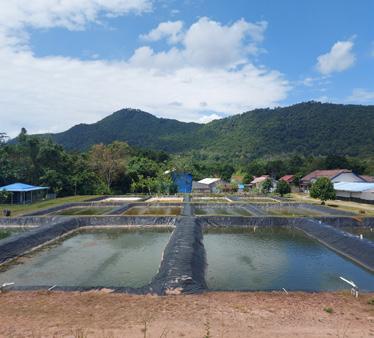
A case study was conducted on a Thai Nile tilapia farm comparing a conventional pond system and an In-Pond Raceway Systems (IPRS). The systems differ in water-quality control, feeding, circulation, and energy demand. Data from pond preparation through transportation were collected to evaluate resource flows, energy use, and emissions under both systems, focusing on the growout phase.
Results
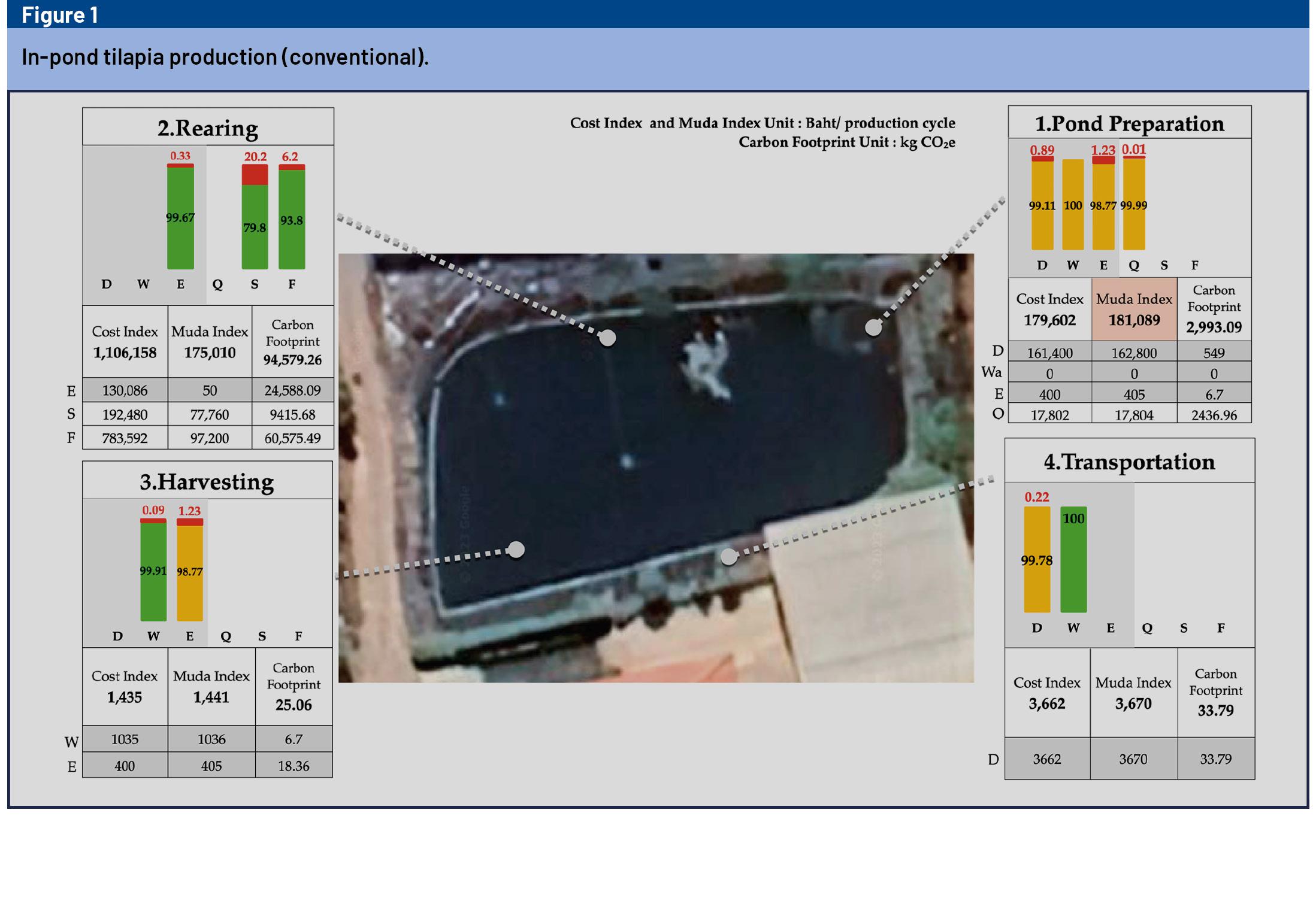
The data collected from both Nile tilapia production systems the con-
ventional pond system and the IPRS were analyzed using the established indicators. Results are presented in Figures 1 and 2.
Overall, pond preparation emerged as the most resource-intensive and critical process in both systems. This stage showed identical Consumption Intensity (CI) and Muda Index (MI) values for ponds and IPRS. Pond excavation dominated MI contributions at 89.95%, followed by quicklime application for pond conditioning at 9.83%, and electricity for water pumping at 0.22%.
Value-added (VA) processes
Feeding, water-quality management, and harvesting — processes directly linked to fish growth and customer requirements — were classified as value-added (VA) activities in both systems. They had lower MI values than pond preparation, yet represented the highest resource costs.
In the pond system, resource costs during rearing were primarily attributed to:
» Fish feed (60.70%).
» Fingerlings (14.19%).
» Electricity for aeration (10.08%).
Pond preparation costs included:
» Diesel for excavation (12.51%).
» Quicklime (1.38%).
» Electricity for pumping (0.03%).
Transportation accounted for 0.28% with no additional water cost because pond water was used directly. In the IPRS, productivity was three times higher than in the pond system, leading to proportionally greater resource use. Major rearing costs were:
» Fish feed (53.47%).
» Fingerlings (32.01%).
» Electricity for water circulation and sludge removal (7.93%).
Pond preparation remained the second most expensive process, with costs allocated to diesel (5.61%), quicklime (0.62%), and pumping electricity (0.01%). Transportation diesel contributed 0.26%. Harvesting in both systems used minimal tap water (0.08%) and required negligible additional energy.
Overall, pond preparation emerged as the most resourceintensive and critical process in both systems.
Non-value-added (NVA) and waste (W) activities
Activities such as water draining (pond system), fish rinsing, trimming, and general transportation were classified as non-value-added (NVA) unless live fish were specifically required by customers — in which case water used for fish transport became value-added. Their low MI values meant that inefficiencies in these tasks had minimal impact on overall resource intensity
Strategies to mitigate environmental impact include optimizing feeding patterns, utilizing In-Pond Raceway Systems (IPRS) controlled feeding environment to reduce excess feed, and reformulating feed by replacing fishmeal or fish oil with lower-impact alternatives.
Greenhouse gas emissions
GHG emissions showed that rearing was the dominant source of CO₂equivalent impacts in both production systems.
For the pond system:
» Total emissions: 97,640.74 kg CO₂e.
» Feeding: 60,575.49 kg CO₂e.
» Pond preparation: 2993.09 kg CO₂e.
» Transportation: 33.79 kg CO₂e.
» Harvesting: 25.06 kg CO₂e.
For the IPRS:
» Total emissions: 182,916.80 kg CO₂e.
» Feeding: 114,877.60 kg CO₂e.
» Pond preparation: 2993.09 kg CO₂e (unchanged from pond system).
» Transportation: 70.05 kg CO₂e.
» Harvesting: 42.16 kg CO₂e.
Higher emissions in the IPRS were driven by greater feed use and electricity demand associated with continuous water circulation.
Improvement strategy
MI analysis revealed that pond excavation was the activity with the highest machine-related MI due to engine start-up losses, idling, and delays. Recommended improvements include:
» Shutting down machinery during idle periods.
» Minimizing mechanical losses.
» Using more fuel-efficient engines or biomass-based fuels.
Non-machine resource loss was tied mainly to excessive quicklime use. Recommended measures include precise measuring tools and improved handling practices to prevent over-application.
The carbon footprint assessment highlighted fish feed as the largest contributor to GHG emissions in both systems. Strategies to mitigate environmental impact include:
» Utilizing IPRS’s controlled feeding environment to reduce excess feed.
» Reformulating feed by replacing fishmeal or fish oil with lower-impact alternatives such as soybean meal, poultry byproduct meal, or fish trimmings.
Additionally, quicklime — responsible for both high MI and CO₂ contributions — can be partially replaced with finely ground eggshells, which offer similar pH adjustment benefits with a lower carbon footprint.
Finally, improvements were aligned with the scopes of the GHG Protocol:
» Scope 1: Reduce fuel use via biofuels and machine shutdowns.
» Scope 2: Lower electricity demand through operational efficiency.
» Scope 3: Mitigate impacts through improved feed practices, alternative raw materials, and adoption of closed-system technologies such as the IPRS.
These strategies collectively enhance resource-use efficiency and reduce emissions across the aquaculture production cycle.
Discussion
This study introduces a framework focusing on resource efficiency and environmental impact for smallscale producers by proposing a combined REVAM and carbon footprint method. The objective was to provide a method for conducting a comprehensive assessment of resource utilization efficiency and environmental impact within the agricultural sector to allow small-scale producers to identify critical areas that utilize resources without generating value, facilitating the identification of areas with significant GHG emissions, leading to improvements in resource utilization and a reduction in GHG emissions.
The results from both the pond system and IPRS indicate that the rearing process, particularly fish feed (F), exhibited the highest waste ratios, at 20.20% and 4.75%, respectively, surpassing all other processes and resources. Despite not holding the highest MI value, the rearing process demonstrated a notable waste ratio. Therefore, REVAM not only guides improvements in areas with high MI values but also identifies waste in other areas, contributing to an overall improvement in resource use efficiency.
The application of REVAM in tandem with a carbon footprint analysis for waste reduction, resource optimization, and GHG emission minimization within diverse agricultural activities, underscores the significance of contextual factors in waste and loss generation for activity classification. Natural environmental variables, such as mortality rates, waiting times, and uncontrollable excess yields, substantially impact agricultural and
aquacultural processes. By consolidating non-machine resource usage into the results presented within the process box, a comprehensive analysis of resources can be conducted, and the origins of waste can be specifically clarified.
The rearing process, driven by the high EF value of the fish feed used, contributed the most to GHG emissions. Consistent with LCA studies on tilapia farming, feed emerged as a major environmental impact factor. Emissions are not solely dependent on the amount; the type of resource used is equally crucial. Different resources or processes for the same product yield can have different environmental impacts. The recommendations for enhancing resource use include setting operational guidelines for resource control, improving feeding efficiency (e.g., feeding control in bucket cages), exploring alternative resources (e.g., eggshells instead of quicklime and adjusted fish feed formulas), and transitioning to closed-system aquaculture to reduce environmental impacts. Moreover, the case study involved tilapia production in both ponds and the IPRS innovation.
The findings revealed that the IPRS exhibited a lower cost for each ton of fish than the traditional pond system, owing to the generation of a higher annual income due to a threefold increase in production and the maintenance of an average fish weight of 1 kg, resulting in an enhanced selling price. However, the system had a higher installation cost, leading to extended payback and investment periods. Nonetheless, it offered opportunities to enhance product quality and production capacity for foreign markets.
Conclusion
Conclude that lined ponds exhibit greater water use efficiency, a lower carbon footprint, and higher sustainable production density. This study presents a practical strategy for reducing GHG emissions by integrating REVAM with carbon footprint assessment, enabling smallholders to iden-
tify waste, improve resource use, and meet environmental expectations. By adapting industrial waste-identification methods to agriculture and applying them to IPRS aquaculture, the model supports informed technology adoption and standardized production. Although based on a single location and limited cost scope, the approach offers a valuable guideline for small producers and a foundation for future research incorporating labor and additional efficiency indicators.
This is a summarized version developed by the editorial team of Aquaculture Magazine based on the review article titled “RESOURCE EFFICIENCY AND ENVIRONMENTAL IMPACT ASSESSMENT METHOD FOR SMALL-SCALE PRODUCERS: A CASE STUDY OF POND AND IN-POND RACEWAY SYSTEM PRODUCTION FOR GROWING NILE TILAPIA”. The original article, including tables and figures, was published on FEBRUARY, 2024, through SUSTAINABILITY. The full version can be accessed online through this link: 1237. https:// doi.org/10.3390/su16031237
This informative version of the original article is sponsored by: REEF INDUSTRIES INC.
Investigating the Efficacy of Nutritional Feed Additives in Mitigating Shrimp Stress
* By Dr. Dafna Israel and Dr. Allan Heres
Stress in Shrimp Farming
Shrimp farming plays a critical role in meeting global seafood demand, but maintaining animal health under intensive farming conditions remains a major challenge. Stress, driven by complex environmental and management factors, can significantly reduce growth, survival, and overall productivity (Ciji and Akhtar, 2021). This article explores key stressors in shrimp aquaculture through a review of relevant literature and highlights how nutritional feed additives can offer targeted solutions.
Key Stress Factors in Shrimp Farming
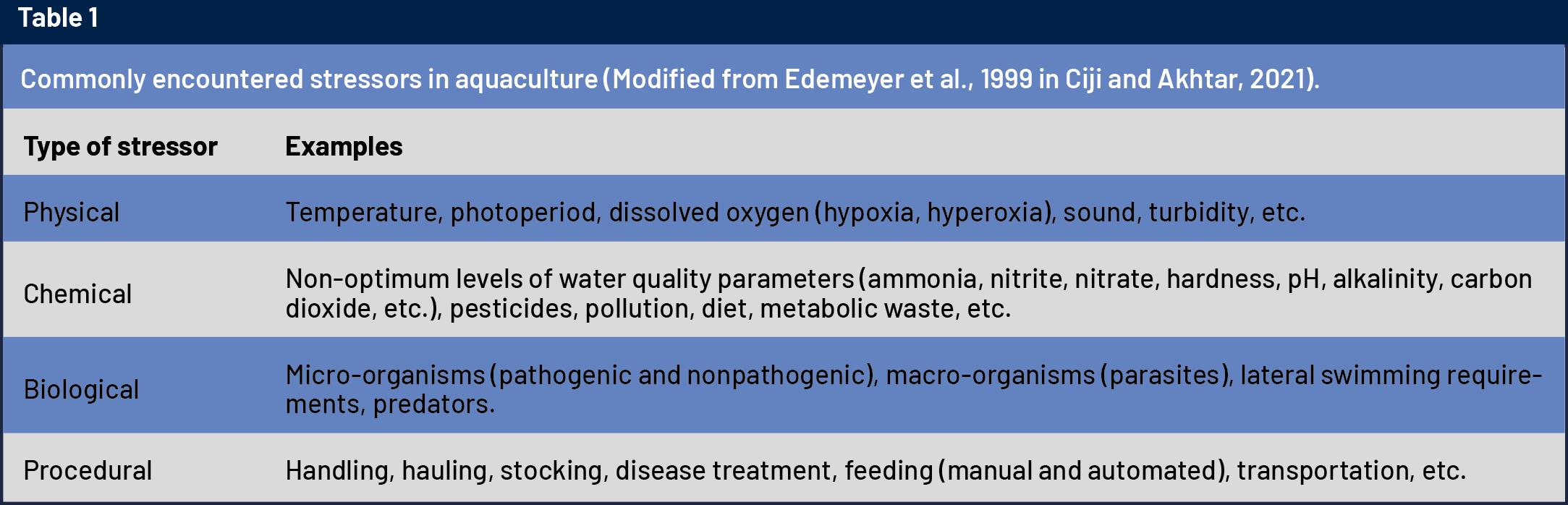
Aquatic environments are subject to various imbalances caused by physical, chemical, biological, and procedural factors (Table 1).
These stressors can lead to poor growth, immunosuppression, reduced disease resistance, and eventually, mortality in farmed shrimp (Ciji and Akhtar, 2021).
Defining a Healthy Crustacean
Coates and Söderhäll (2020) posed the question: What constitutes a ‘healthy’ crustacean? It’s not easy to define. Visible signs such as discoloration, missing limbs, or lesions may indicate stress or disease, but their absence doesn’t guarantee optimal health.
Aquatic invertebrates are continuously exposed to environmental stressors such as temperature ex-
Shrimp farming is a critical component in meeting global seafood demand, yet ensuring animal welfare in intensive farming conditions remains a significant challenge. This article explores the key stressors in shrimp aquaculture through a review of relevant literature and highlights how nutritional feed additives can offer targeted solutions, including PAQ-Gro™, a proven stress modulator that shows strong potential in protecting shrimp from various stressors.
tremes, pollutants, and pathogens (Coates and Söderhäll, 2020). Assessing stress in crustaceans involves observing behavioral changes and using biomarkers in hemolymph (blood), including hemocyte counts, enzyme activity, and metabolite levels.
Shrimp health reflects pond conditions. Poor water quality, inconsistent feeding, physical damage, and temperature fluctuations can all affect their well-being. The aquaculture industry increasingly adopts a dual approach: identifying stressors and applying targeted mitigation strategies.
Stress Mitigation Strategies
One widely adopted strategy is the use of feed and water additives. Numerous studies support their effectiveness. For instance, Bunnoy et al. (2024) tested yeast hydrolysate (YH) from sugar by-products in Pacific white shrimp (Litopenaeus vannamei) challenged with Vibrio parahaemolyticus (AHPND).
Shrimp fed YH (10 g/kg feed) exhibited significantly higher survival rates and upregulation of immuneand growth-related genes. Immune markers (Anti-Lipopolysaccharide Factor – ALF –, Lysozyme – LYZ –, Prophenoloxidase – ProPO –, Superoxide Dismutase – SOD) were upregulated in key tissues, while Insulin-like Growth Factor 2 (IGF-2) and RAP-2A were expressed in muscle and hemocytes, respectively. Interestingly, while total Vibrio counts were similar, pathogenic Vibrio colonies were significantly reduced in the intestines of YH-fed shrimp.
Another nutritional feed additive (NFA). that showed promising results under pathogenic challenge was the Zinc Oxide–Nanoscale Silicate Platelet-supported Nanoparticles (ZnONSP). This compound improved zinc accumulation, immune response, stress resilience, and resistance to Vibrio alginolyticus in white shrimp (Penaeus vannamei).
Dietary ZnONSP enhanced hemocyte immune function, including phagocytic rate and respiratory burst. Gene expression analysis showed upregulation of immune genes such as
Shrimp fed ZnONSP (800 mg/kg) had a 71.4% survival rate compared to 38.1% in the control group (Liao et al., 2024).
High stocking density (100–300 shrimp/m²) is a common physical
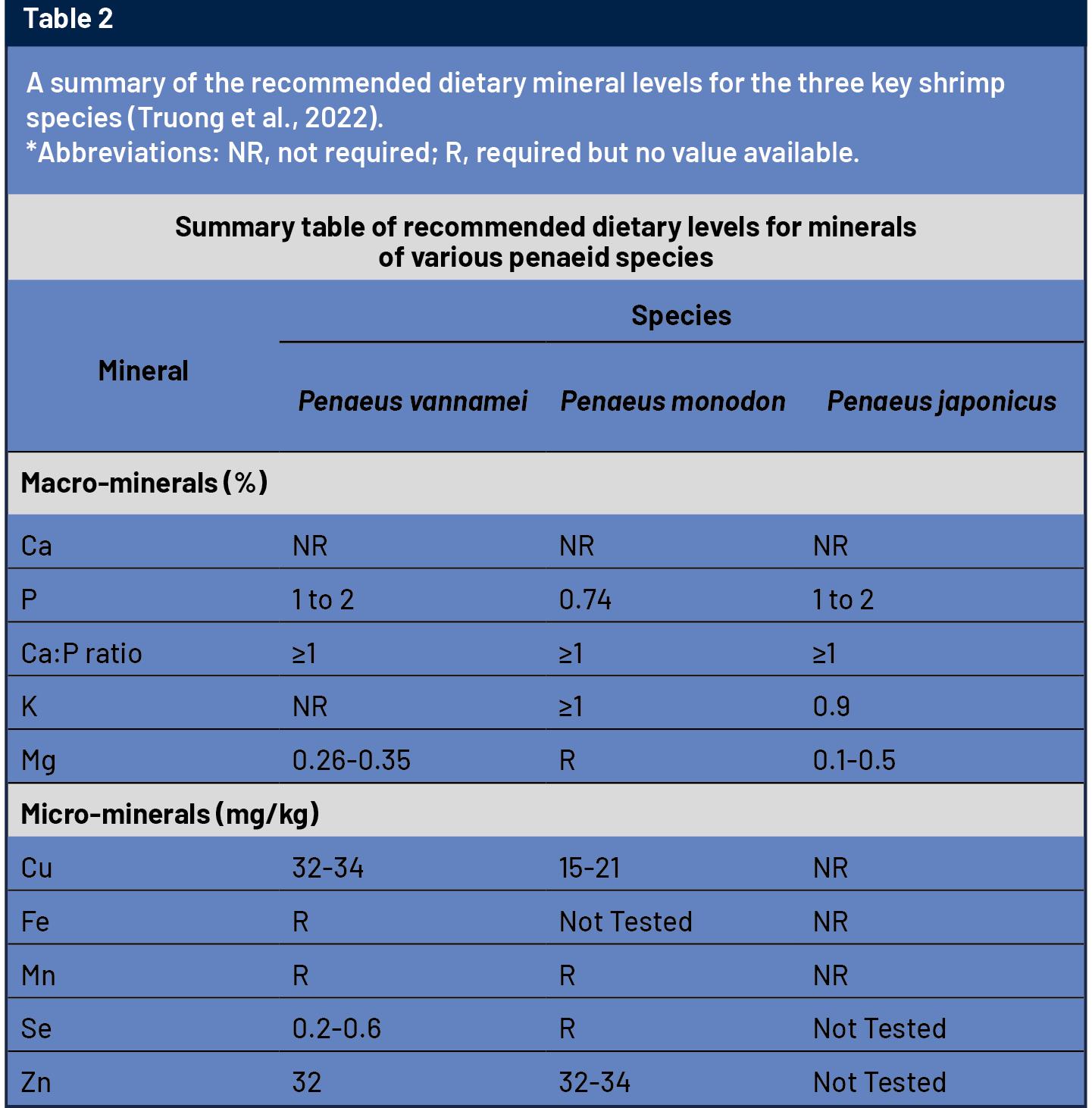
stressor that impacts mineral availability and absorption (Truong et al., 2022). A study on Penaeus spp highlighted that intensive systems can increase mineral deficiency risks due to competition and compromised water quality. The mineral content of shrimp tissues was directly affected, emphasizing the importance of monitoring and supplementing key minerals.
Testing the shrimp’s gut health
By modulating the immune system and improving resilience under challenging conditions, PAQ-GroTM can help farmers achieve better survival, feed efficiency, and profitability.
Immune Modulation with PAQ-Gro™
Phibro Animal Health Corporation has developed a proprietary nutritional feed additive (NFA), PAQ-GroTM, specifically designed to modulate the immune system and help shrimp overcome stressful periods, whether physical or pathogenic. This NFA was tested on various species in different settings and challenge models. One of the trials, conducted at the Feder-
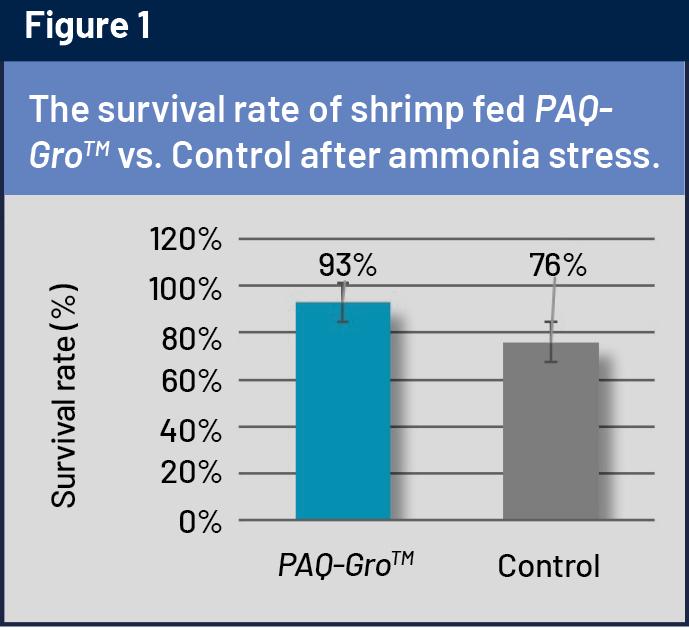
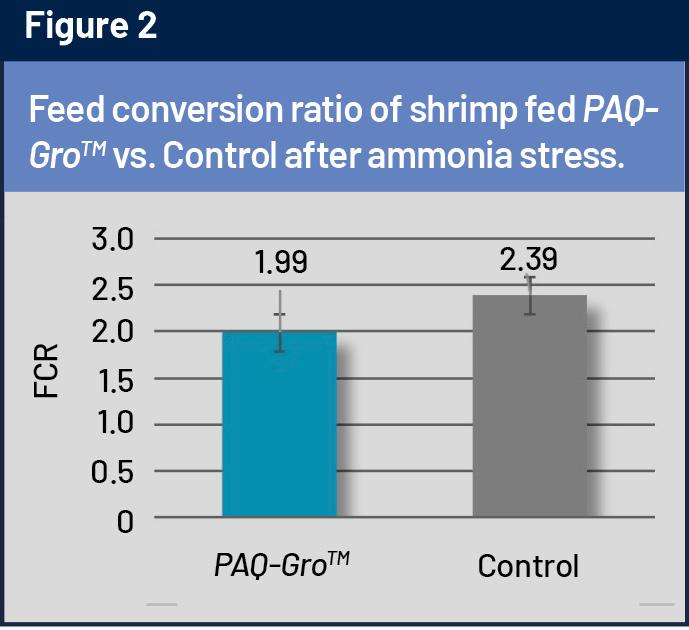
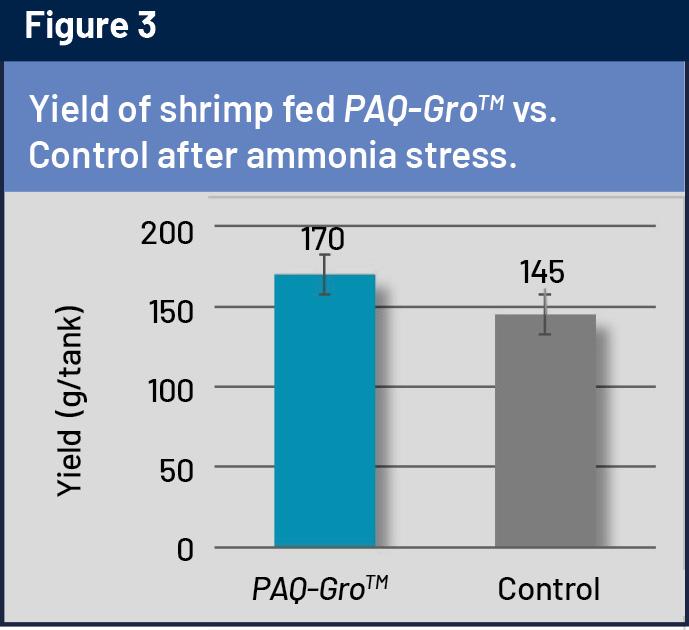
al University of Rio Grande do Norte (UFRN) in Brazil, shrimp fed PAQGroTM under ammonia stress showed improved survival (93% vs. 76%), better FCR (16% reduction), and a 17% increase in yield.
The objective of this trial was to evaluate the growth performance, survival rate, feed conversion ratio (FCR), and overall health of Pacific white shrimp (L. vannamei) when fed a commercial diet supplemented
with PAQ-Gro™, under both normal and chemically induced stress conditions. To simulate stress, two rearing environments were established: 1. Optimal water quality (control).
2. Chemical stress via ammonia challenge — achieved by adding ammonium chloride and sodium nitrite to maintain ammonia levels up to 6 mg/L and nitrite between 10–16 mg/L.
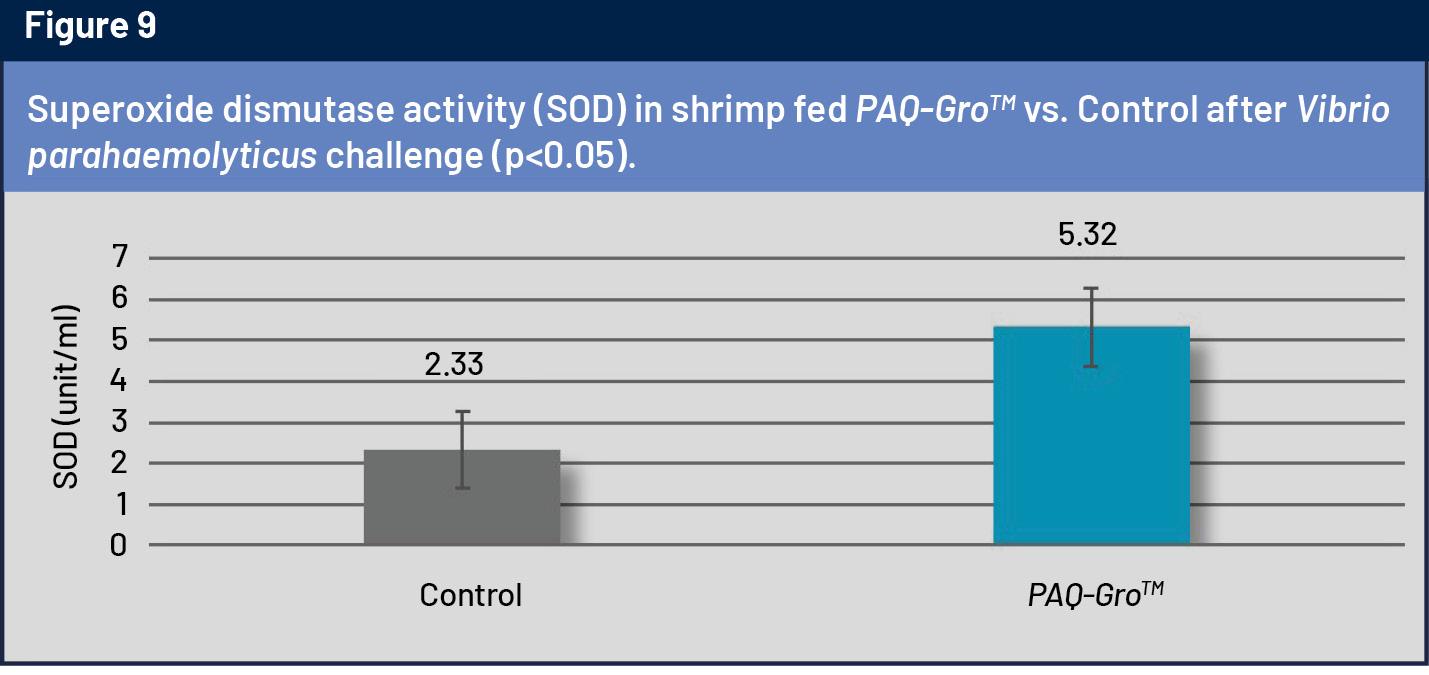
PAQ-Gro’s ability to stimulate immunerelated enzymes, including superoxide dismutase, lysozyme, and phenoloxidase, helps neutralize oxidative stress and inhibit pathogens.
This experimental design ensured that all groups (both with and without PAQ-GroTM) were exposed to identical water quality conditions, allowing the effect of the additive to be isolated.
Under ammonia stress, shrimp fed PAQ-GroTM exhibited significantly better performance:
» Survival rate increased to 93%, compared to 76% in the control group (Figure 1).
» FCR was reduced by over 16% (Figure 2).
» Overall yield improved by 17% (Figure 3).
These results highlight PAQ-Gro’s effectiveness in mitigating stress and enhancing shrimp performance. By modulating the immune system and improving resilience under challenging conditions, PAQ-GroTM can help farmers achieve better survival, feed efficiency, and profitability.
Another interesting trial demonstrated the benefit of PAQ-GroTM as a stress modulator in pathogenic challenge. The trial was conducted by the Department of Aquaculture, Faculty of Fisheries, Kasetsart University,
Thailand. In this trial two groups of (Litopenaeus vannamei) were tested: one was fed by PAQ-GroTM (6 kg/MT of feed) the other without (Control). After 4 weeks of feeding, the shrimps were challenged with Vibrio parahaemolyti-
cus by immersion treatment, and then a 14-day follow-up was conducted.
Results: Growth and Survival.
» Shrimp in the PAQ-GroTM group showed significantly higher total biomass (Figure 4).
PAQ-GroTM, specifically designed to modulate the immune system and help shrimp overcome stressful periods, whether physical or pathogenic.
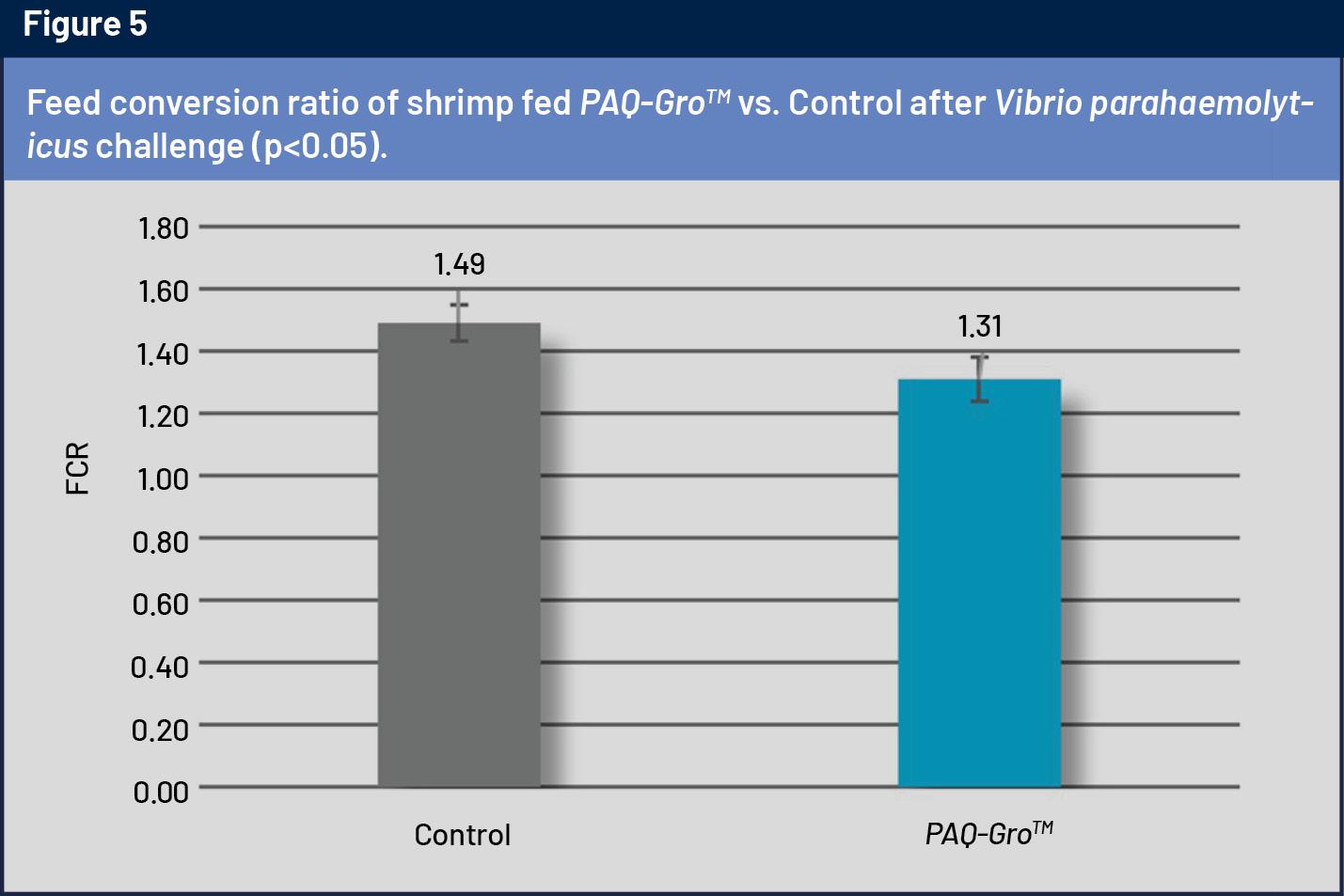
» Feed conversion ratio (FCR) was lower (Figure 5).
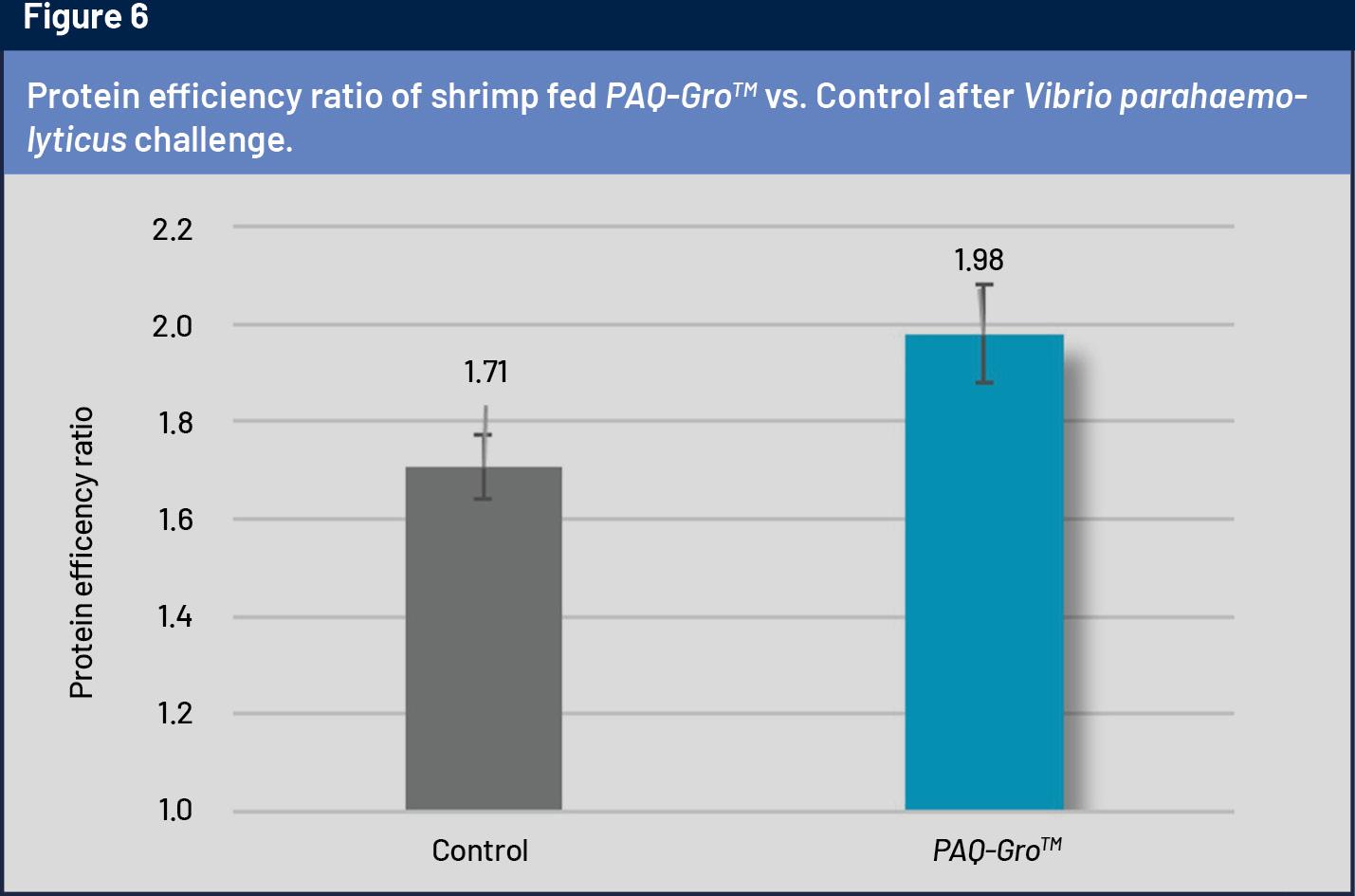
» Protein efficiency was higher (Figure 6).
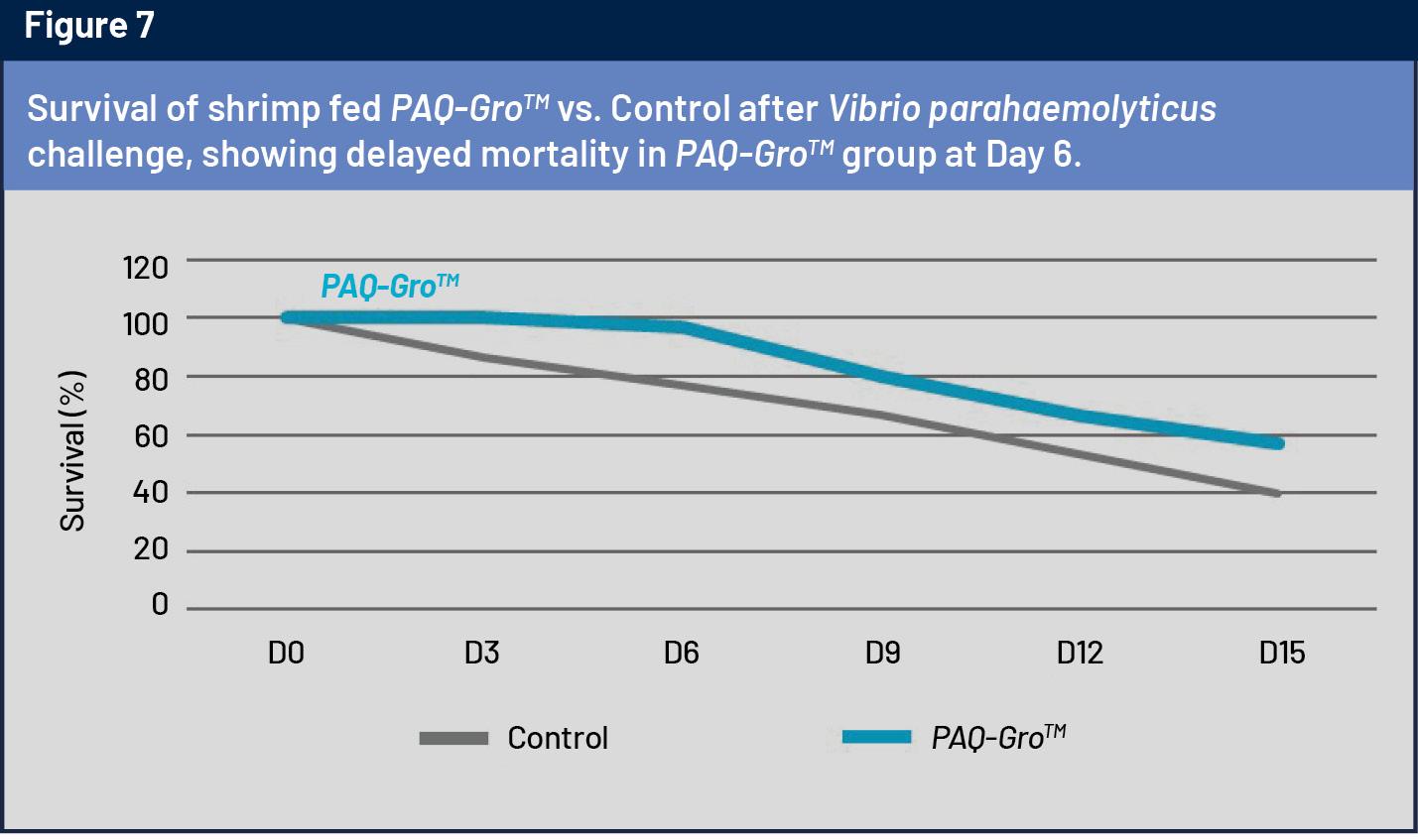
» Mortality was delayed by six days in the PAQ-GroTM group, while the control group experienced mortality immediately following the challenge (Figure 7).
Results: Immune Response.
Shrimp fed PAQ-GroTM also exhibited enhanced immune function under stress conditions:
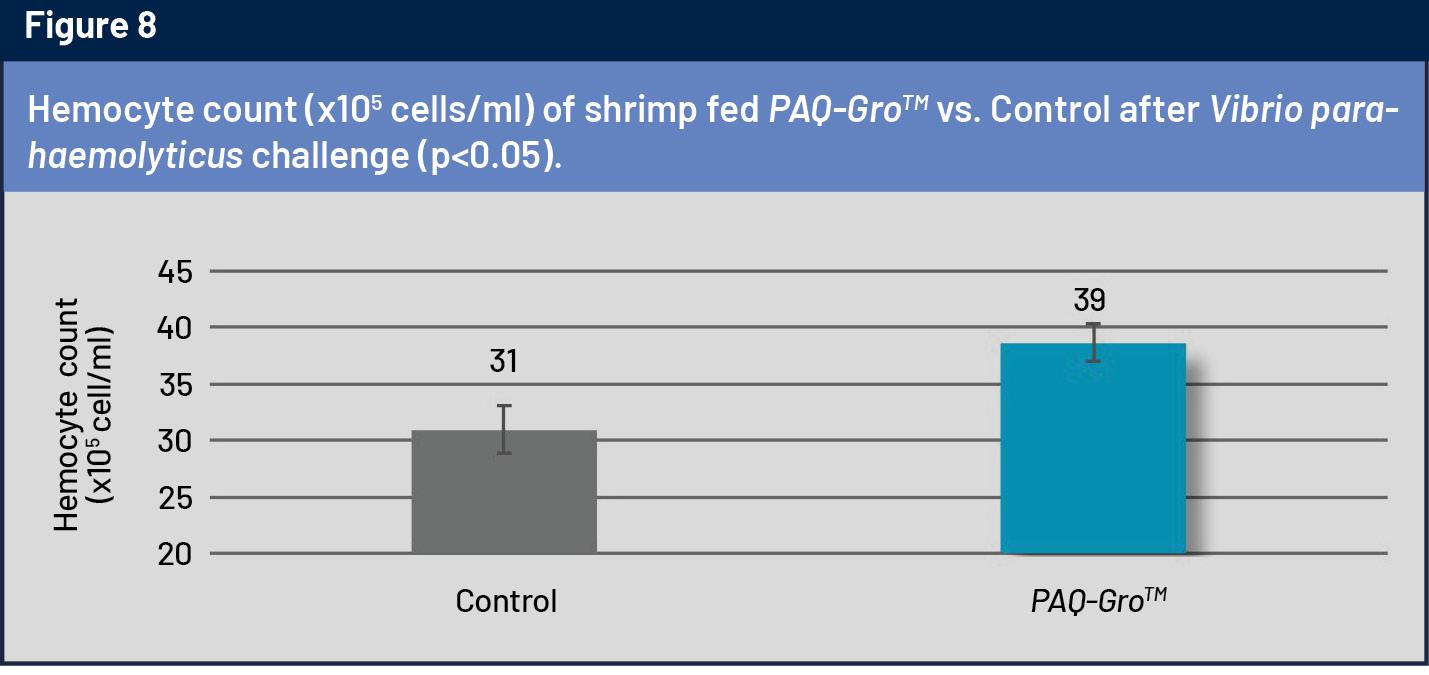
» Hemocyte counts were significantly elevated (Figure 8).
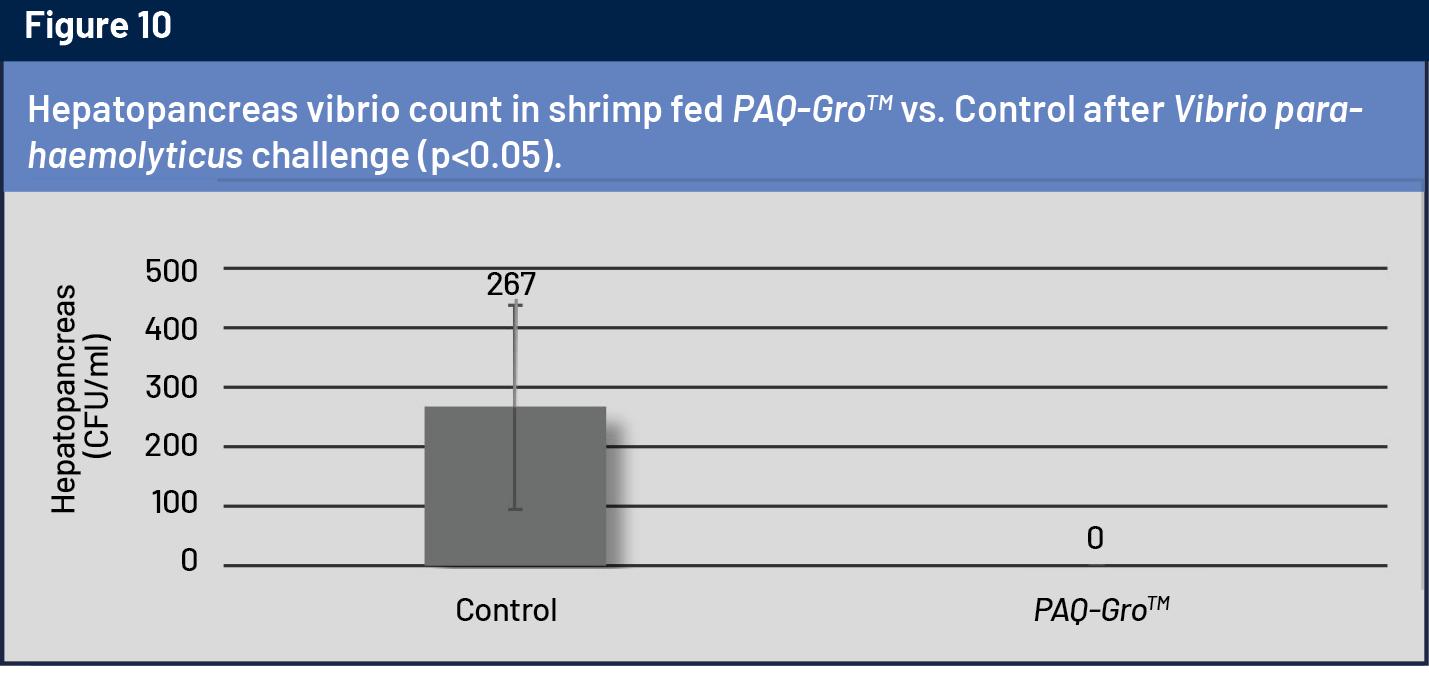
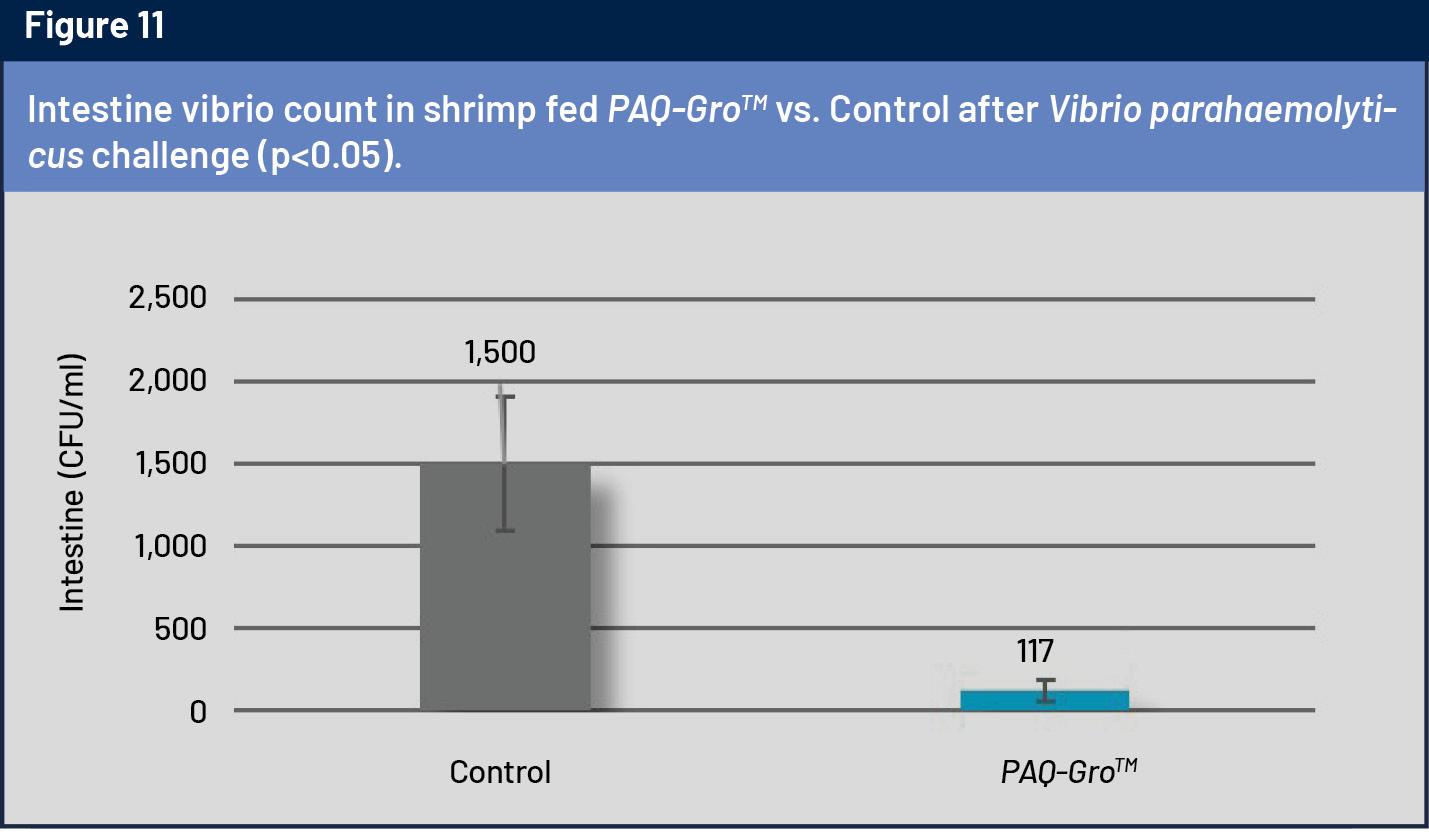
In addition, the vibrio counts were significantly lower in the hepatopancreas and intestine in the shrimp fed PAQ-GroTM (Figures 10 and 11).
This trial demonstrated that dietary supplementation with PAQGro™ at 6 kg/MT can significantly enhance shrimp growth, feed utilization, and immune response under both normal and pathogenic stress conditions.
Under Vibrio parahaemolyticus challenge, PAQ-Gro™-fed shrimp experienced a delayed onset of mortality by six days, and a 16.6% higher survival rate compared to the control. This delay offers a critical intervention window for farmers to detect disease and implement control measures before severe losses occur.
Another interesting trial demonstrated the benefit of PAQGroTM as a stress modulator in pathogenic challenge.
PAQ-Gro’s ability to stimulate immune-related enzymes, including superoxide dismutase, lysozyme, and phenoloxidase, helps neutralize oxidative stress and inhibit pathogens. Overall, this trial reinforces PAQ-Gro’s role as a powerful nutritional strategy for improving shrimp performance and resilience during disease outbreaks.
Conclusion
Shrimp aquaculture faces an unavoidable challenge: stressors. These range from water quality fluctuations to handling practices and disease pressure, all of which can negatively affect shrimp health and reduce farm productivity. Recognizing the importance of this issue, researchers are actively exploring practical solutions, with dietary interventions emerging as a promising and sustainable approach. This article highlights several potential feed additives, including PAQGro™, a proven stress modulator that shows strong potential in protecting shrimp from various stressors. By incorporating this innovative nutritional additive into shrimp diets, farmers can achieve multiple benefits: reduced stress-related impacts, improved shrimp health and well-being, and increased overall productivity.
This
is sponsored
* Dafna Israel, Ph.D. Head of Research & Development. Phibro Aqua
Allan Heres. Shrimp Pathologist. Phibro Aqua
References and sources consulted by the author on the elaboration of this article are available under previous request to our editorial staff.
For more information: Website: https://www.pahc.com/product_services/aqua/ LinkedIn: https://www.linkedin.com/company/ phibro-aqua-global E-mail: info@phibro-aqua.com
article
by: PHIBRO ANIMAL HEALTH CORPORATION
Popularity and Parity Assessment for More Inclusive and Balanced Aquaculture Development
Global aquaculture has expanded more than thirtyfold since 1970 and is now practiced in nearly 200 countries, becoming a central pillar of the world’s food system, yet this growth remains highly uneven: 90% of global production is concentrated in only 10 countries. Such imbalance raises concerns about missed opportunities, limited diversity, and the resilience of global food systems in a changing world.
* By Aquaculture Magazine Editorial Team
Concerns about global food security and nutrition ─ intensified by population growth and climate change ─ have increased interest in aquatic food production, particularly aquaculture.
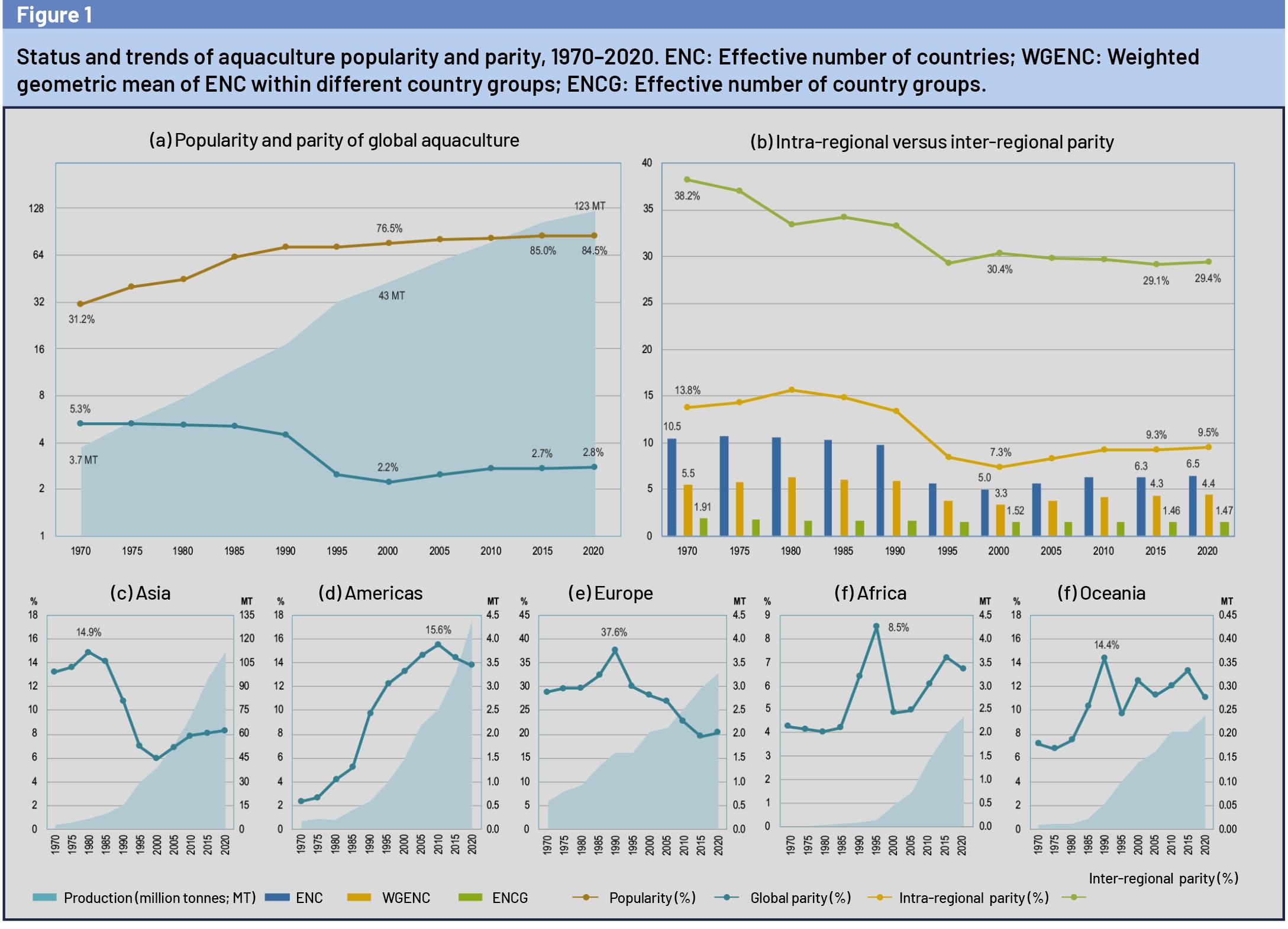
As one of the world´s fastest-growing food sectors, global aquaculture output has expanded more than 30-fold, from 3.7 million tons (MT) in 1970 to 123 MT in 2020, driven by production in nearly 200 countries, including
non-sovereign territories. This rapid growth has elevated aquaculture as a key component of the global food system. However, expansion has been highly uneven: the top 20 aquaculture countries accounted for over 95% of
In 2020, 147 countries produced less aquaculture relative to both fisheries and livestock benchmarks; bringing them to parity could add 26 MT globally. Unlocking this potential requires recognizing production gaps, addressing regulatory and financial barriers, and adopting popularity and parity metrics as mainstream policy tools.
global growth between 1970 and 2020, and by 2020, 90% of world aquaculture production was concentrated in just 10 countries, with the largest alone contributing 57%. In comparison, the top 10 countries accounted
for 57% of capture fisheries and 62% of territorial meat production.
Although differences in aquaculture development can reflect comparative advantages, the extreme concentration of production raises concerns about missed opportunities and misguided policy approaches. Despite routine monitoring, no comprehensive and quantitative assessment of this imbalance exists. Current evaluations rely largely on ad hoc
comparisons, such as the production shares of top countries. Moreover, although aquaculture is often promoted as a diverse food production system capable of enhancing global food systems resilience, limited attention has been given to the lack of diversity in production sources,
This study addresses these gaps through a systematic, quantitative assessment of aquaculture distribution across countries and regions.
Method and Data
This study develops a 10-indicator system to assess how aquaculture
These
trends reflect decelerating growth in Asia ─ especially China ─ and modest acceleration in the Americas and Oceania. Still, recent growth rates in other regions remain far Asia´s historical pace.
production is distributed among countries and regions from 1970 to 2020. Drawing on the Food and Agriculture Organization of the United Nations (FAO) databases, the analysis examines global patterns, regional differences, and imbalances across a wide variety of country groups and species groups. The framework adapts concepts originally used to measure biological diversity and applies them to production systems.
The indicator system includes: total production (#1), total number of aquaculture countries (#2), effective number of countries (ENC) (#3), intra-regional diversity (#4 and #5), popularity (#6), evenness (#7), parity (#8), intra-regional parity (#9), and inter-regional parity (#10). While all indicators are calculated, the study places special emphasis on popularity, parity, intra-regional parity, and inter-regional parity for comparing imbalances across time and country groups.
Aquaculture distribution is analyzed globally and across 85 country groups, organized into five categories: the world and “rest of world” excluding China, 27 geographic groups; 19 economic groups (e.g., NAFTA, ASEAN, EU); 17 development groups (including income and Human Development Index [HDI] classes); and 20 resourcebased groups categorized by population, land area, coastline, inland waters, and freshwater resources.
Results
Global aquaculture popularity and parity
Long-term trends (1970-2020): rising popularity, declining parity. In 1970, global aquaculture was a minor contributor to food production, yielding 3.7 MT, or 5.5% of total fisheries output. Only 62 of 199 countries practiced aquaculture, giving it a popularity of 31.2% (Figure 1a). Production was unevenly distributed across both countries and regions, resulting in low global parity (5.3%) and inter-regional parity (38.2%) (Figure 1a-b). By 2020, aquaculture reached 123 MT 57.3% of total fisheries production and popularity rose to 84.5% (Figure 1a), with 196 of 232 countries participating. Despite this expansion, global parity dropped to 2.8% accompanied by declines in intra-and-inter-regional parity (Figure 1a-b) as production became increasingly concentrated within Asia.
2000-2022: increasing global parity despite falling inter-regional parity. Between 2000 and 2020, inter-regional parity declined slightly (Figure 1b) due to Asia´s rising dominance, yet global parity increased thanks to higher intra-regional parity driven primarily by diversification within Asia as China´s share diminished. A slight rise in inter-regional parity after 2015 (from 29.1% to 29.4%) suggest a potential shift.
These trends reflect decelerating growth in Asia especially China and modest acceleration in the Americas and Oceania. Still, recent growth rates in other regions remain far Asia´s historical pace.
Comparisons with other production systems
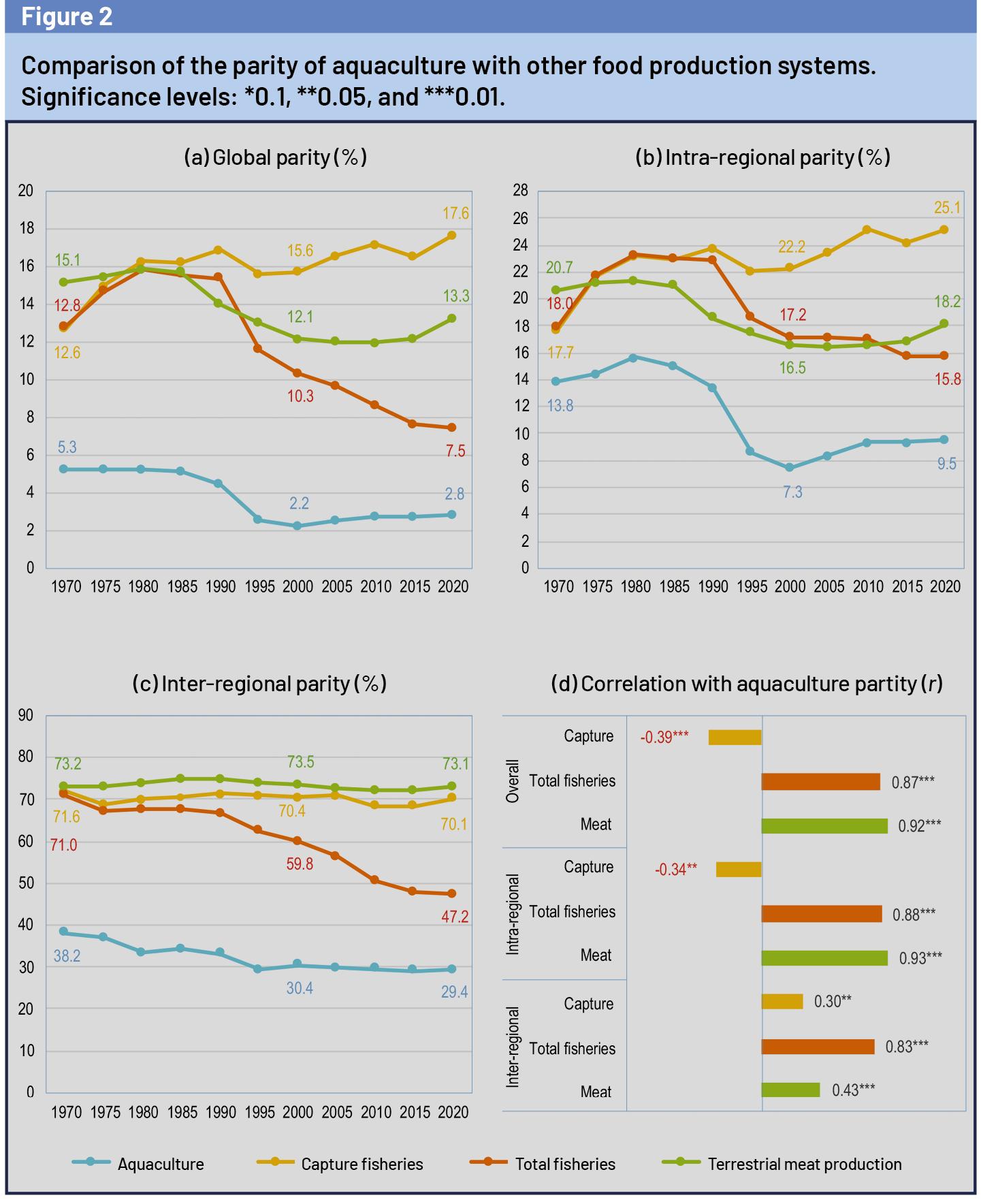
Capture fisheries practiced in nearly all countries has consistently shown much higher parity than aquaculture (Figure 2a-c). From 1970
to 2020, capture fisheries parity increased (12.6% to 17.6%), while aquaculture parity decreased (5.3% to 2.8%). Total fisheries parity declined as aquaculture expanded, whereas terrestrial meat parity rose slightly in the new millennium (Figure 2a-c). Parity trends in terrestrial meat and aquaculture were strongly correlate (r = 0.93) (Figure 2d).
Aquaculture output has expanded more than 30-fold, from 3.7 MT in 1970 to 123 MT in 2020 .
Popularity and parity across country groups
Aquaculture popularity rose in all 85 country groups. In 2020, only 35 countries lacked aquaculture, many of them island economies or Small Island Developing States (SIDS), and collectively accounting for minimal global fisheries or meat output.
Despite declining global parity, aquaculture parity increased in most country groups (58 of 85), including 18 geographic, 14 economic, 12 development, and 14 resource groups. From 200 to 2020, parity rose in 50 groups, including Africa, the Americas, and Asia.
Aquaculture expansion at the global level showed a significant negative correlation between production and parity (r = -0.74), but within-country groups it was generally balanced:
42 groups showed positive correlations, compared to only 21 negatives. In contrast, capture fisheries and terrestrial meat production showed more widespread imbalances.
In 2020, aquaculture parity was lower than both comparator systems in 63 of 85 country groups, including most Asian and African subregions.
Species-level popularity and parity
Across 43 species groups, popularity increased universally, but remained low for most groups except finfish (82%). Only tilapias exceeded 50% popularity. From 1970 to 2020, parity trends were mixed: 22 species groups increased while 20 decreased. Major groups (finfish, crustaceans, mollusks, algae, MAA) all showed downward long-term trends.
In 2020, species-level parities were uniformly low (0.4% - 4.7%), with tilapias, salmon/trout, and marine shrimps having the highest values. Inter-regional parity ranged from 20% to 63.3%, highest for mussels and salmon/trout. Across all major groups, aquaculture parity remained far below that of capture fisheries.
Discussion
Aquaculture has transformed from a niche practice in about 60 countries in 1970 into a global food-production system present in nearly 200 countries by 2020. However, this “globalization” is largely driven by finfish farming now practiced in over 80% of countries. In contrast, most of the 43 species groups analyzed especially mollusks, crustaceans, algae, and miscellaneous aquatic animals have aquaculture popularities below 50% far lower than their capture fisheries counterparts. Thus, despite the overall high popularity of aquaculture (Figure 1a), substantial room remains for expanding underdeveloped, often eco-friendly species such as algae and mollusks.
Aquaculture´s massive expansion from < 4 MT in 1979 to > 120 MT in 2020 has nevertheless reduced global parity to below 3%. This reflects rapid growth in a small number of forerunner countries, especially in Asia, widening disparities between Asia and other regions. Yet within many regions, aquaculture has become more balanced as younger industries catch up to established ones. Asia itself experienced internal diversification after 2000, and modest convergence between regions emerged after 2015. Still, aquaculture remains the least diverse foodproduction system: in 2020, global output corresponded to 6.5 Effective Number of Countries (ENC), compared to ~40 ENC for capture fisheries and ~30 ENC for terrestrial meat.
Low aquaculture parity often co-occurs with low parity in other food-production systems, reflecting structural differences in geography, climate, resource endowment, and socioeconomic conditions. Resource-
Aquaculture remains the least diverse foodproduction system: in 2020, global output corresponded to 6.5 Effective Number of Countries (ENC), compared to ~40 ENC for capture fisheries and ~30 ENC for terrestrial meat.
rich countries tend to dominate all food sectors, while small island states and countries with limited resources contribute little. Yet many well-resourced nations show disproportionately low aquaculture shares relative to their fisheries and livestock production, indicating that aquaculture’s unique barriers — not just natural factors — shape its imbalance.
These imbalances raise concerns about aquaculture’s capacity to enhance global food-system resilience. Although aquaculture is often promoted as a diversification tool, its rapid but uneven expansion has reduced the parity of total fisheries production, even as parity increased within both aquaculture and capture fisheries. This undermines resilience to climate, ecological, socioeconomic, and geopolitical risks.
Recent increases in global aquaculture parity suggest slow correction of these imbalances, but improvements remain modest and driven mainly by slowing Asian growth rather than significant acceleration elsewhere. Africa — despite vast resource potential — has seen parity decline (Figure 1f, and projections indicate persistent unevenness to 2050.
Yet high disparity signals large untapped potential. In 2020, 147 countries produced less aquaculture relative to both fisheries and livestock
benchmarks; bringing them to parity could add 26 MT globally. Success stories like Egypt — Africa’s dominant producer despite limited natural resources — demonstrate that strong aquaculture development is attainable regardless of endowment.
Unlocking this potential requires recognizing production gaps, addressing regulatory and financial barriers, and adopting popularity and parity metrics as mainstream policy tools. The indicator system developed here enables continuous monitoring, supporting more inclusive, diversified, and resilient aquaculture growth worldwide.
Conclusion
The space constraints have prevented an exhaustive analysis of all the information generated by our assessment, including results related to other food production systems (i.e., capture fisheries and terrestrial meat production), which served as benchmarks for evaluating aquaculture
performance. To facilitate a more comprehensive understanding, we have documented detailed results in the supplementary materials. Future studies could delve deeper into these findings, exploring their implications for the sustainable development of aquaculture and other food production systems. Moreover, the value of the indicator system proposed here can be amplified by extending its application to diverse sectors or scales, such as subnational assessments. Such a broader application can expand and refine our understanding of the dynamics within the global food production landscape.
This is a summarized version developed by the editorial team of Aquaculture Magazine based on the review article titled “POPULARITY AND PARITY ASSESSMENT FOR MORE INCLUSIVE AND BALANCED AQUACULTURE DEVELOPMENT” developed by: Cai, J. Fisheries and Aquaculture Division, Food and Agriculture Organization of the United Nations (FAO) and Leung, P. -University of Hawai’i. The original article, including figures, was published on OCTOBER, 2024, through SCIENTIFIC REPORT. The full version can be accessed online through this link: https:// doi. org/10.1038/ s41598- 024- 68325-7.
Krill Meal Boosts Growth and Survival in Atlantic Salmon Smolts After Seawater Transfer
The global salmon aquaculture industry increasingly seeks sustainable feed solutions. Krill meal (KM) provides essential nutrients like omega-3 fatty acids, astaxanthin, and choline, improving salmon growth, feed efficiency, and health. In a 116-day field trial, 10% KM diets showed 4.8% higher growth and 22% lower mortality, highlighting KM´s potential to enhance fish welfare and farm productivity.
* By Aquaculture Magazine Editorial Team
The global salmon aquaculture industry has expanded rapidly, increasing the need for sustainable and functional feed ingredients. Over the past decade, there has been a notable transition
from marine-based to plant-based feeds to address resource sustainability. However, plant ingredients often lead to nutritional imbalances, reduced palatability, and the presence of anti-nutritional factors, resulting in
lower nutrient utilization and higher waste output of nitrogen and phosphorus. Furthermore, their availability is affected by climate change and global market competition with human and livestock consumption.
The transition to the seawater phase poses challenges for Atlantic salmon smolts. This phase is linked
to appetite suppression, potentially reducing the intake of essential compounds necessary for optimal growth, immune system development, and adaptation to physiological changes.
In response, researchers and feed manufactures are exploring alternative raw materials such as insect meals, single-cell proteins, and fish by-products. Yet, these novel sources face challenges including regulatory costs. Among marine-derived options Antarctic krill (Euphausia superba) stands out as a sustainable and nutritionally rich ingredient.
Kill meal (KM) provides balanced amin acids, phospholipids, omega-3 fatty acids (FA) (EPA and DHA), astaxanthin, vitamins, minerals, and choline. Studies have consistently shown that KM enhances salmon growth,
feed efficiency, pigmentation, filled firmness, and immune function, while improving intestinal, liver, and gill health.
Despite these promising findings, research on KM under commercial farming conditions remains limited. The early seawater phase is particularly critical, as salmon experience stress and elevated mortality up to 15-16% annually in Norway, with onethird of deaths occurring within the first three months post-transfer. Nutritional support during this period is key to developing resilient fist capable of adapting to seawater challenges.
The present field trial aimed to evaluate the effect of incorporating KM into post-smolt salmon diets, assessing feed intake, performance, and health over 116 days following seawater transfer. Based on previous studies, an inclusion level of 8-10% KM was selected as optimal for enhancing salmon health and performance during this transitional stage.
Materials and Methods
The field trial was carried out at Oterneset, Harstad, Norway, by SalMar Farming AS, using around 200,000 Atlantic salmon (Salmo sa-
lar) smolts divided into ten sea cages (160 m diameter, 28 m deep). Two groups of five cages each were assigned to a control or a 10% krill meal (KM) diet group, balanced for initial weight (p=0.79). Average seawater temperature during the 116-day trial was 10.2 ± 2.6°C.
Fish were previously vaccinated and daily mortalities were recorded. Both groups were initially fed the same commercial diet before switching to experimental feeds: a control diet (Spirit Supreme Plus and Prime, Skretting AS) and a test diet including 10% KM from Aker BioMarine, replacing fishmeal. Feeding was automated with Huber spreaders and monitored by camera, while feed intake data were recorded in Fishtalk. A lice-reducing medicated diet was used for nine days in July.
Six fish per cage were randomly sampled for blood, liver, heart, and fillet analysis. Plasma biochemistry was measured using the Indiko Plus system for enzymes, lipids, and antioxidants. Fatty acid and astaxanthin content in tissues were analyzed via gas chromatography and near-infrared spectroscopy. Statistical differences between groups were assesses using Student´s t-test (p < 0.05).
Results
Feed intake
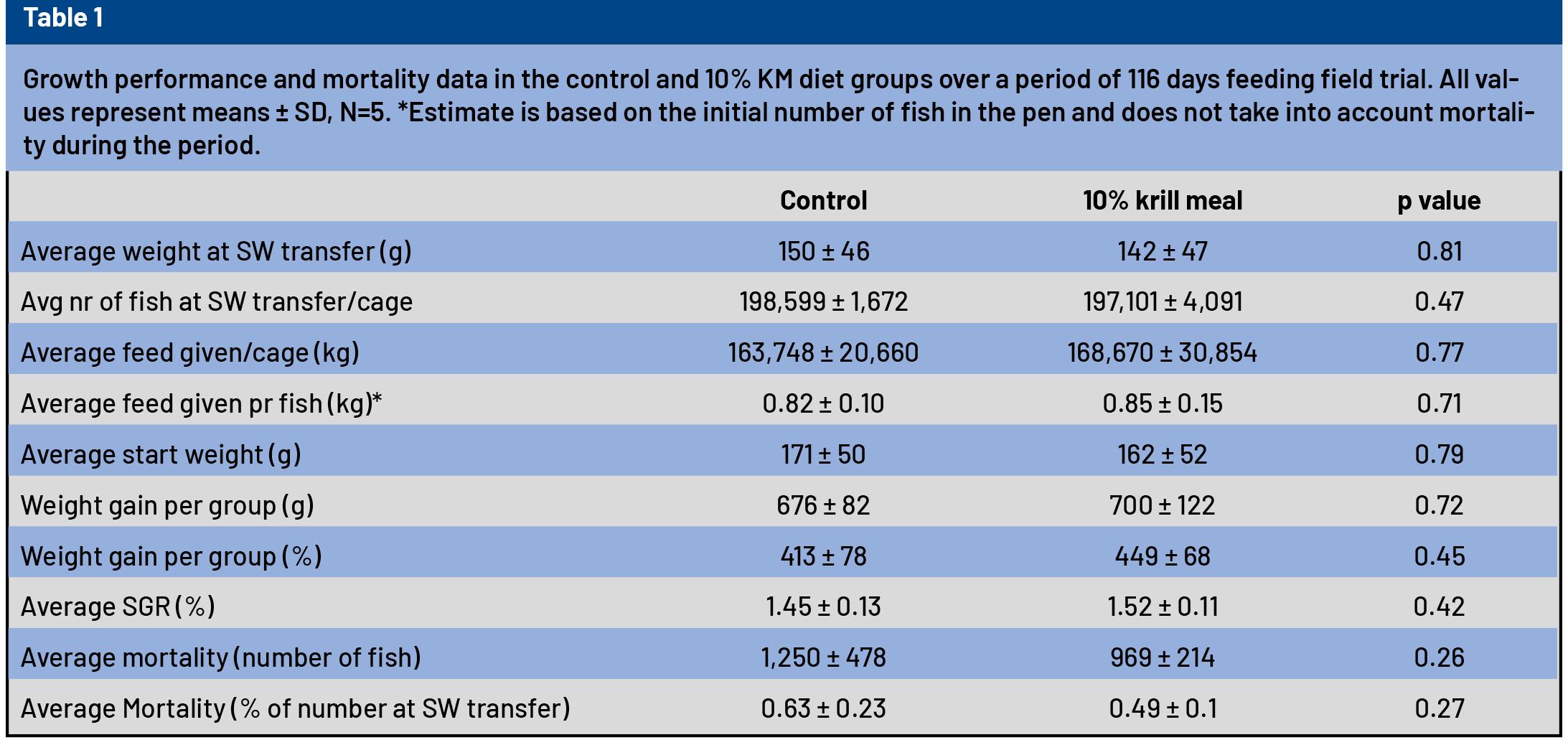
A 3% higher feed consumption was observed in the cages that were fed with 10% KM (average 168,670 kg per cage for the whole period) in comparison to control group (average 163,748 kg per cage for the whole period) as shown in Table 1. Interestingly, this was despite the initial average lower number of fish in each cage in the test group (197,101 fish) than in the control group (198,599 fish).
Growth and mortality
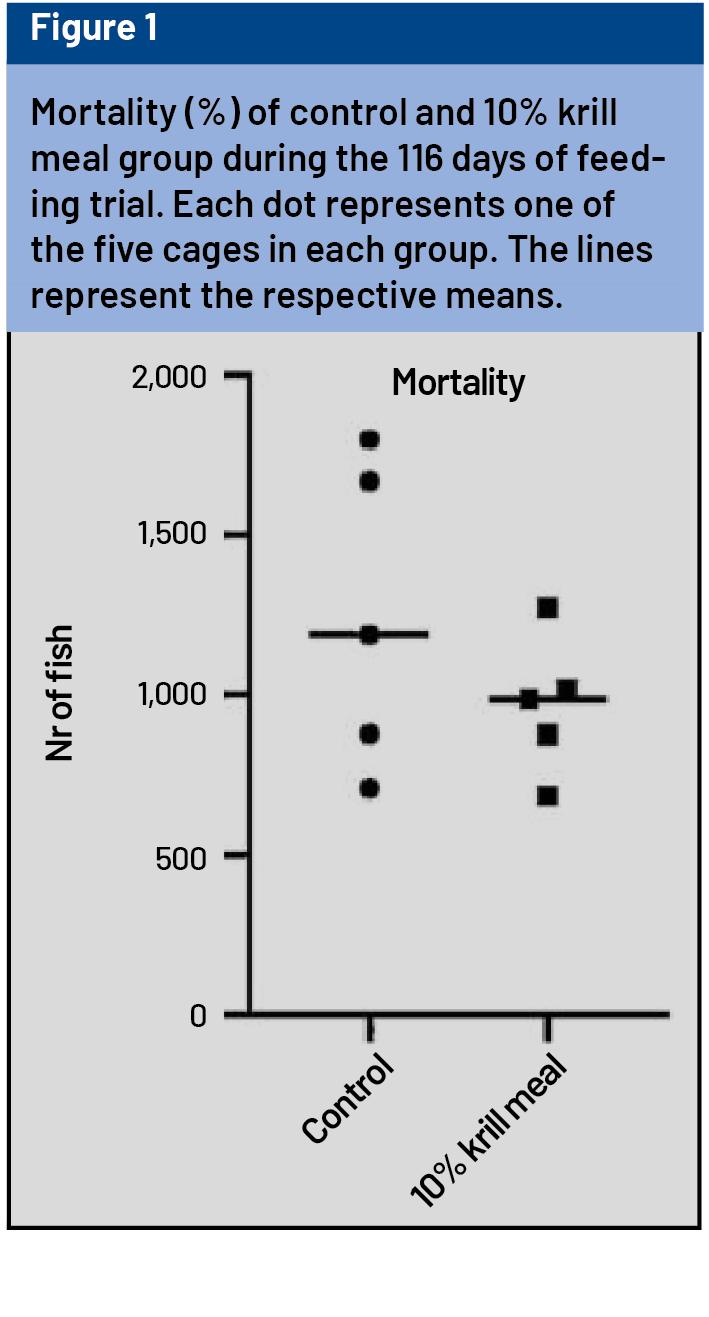
Fish that were fed a diet containing 10% KM tended to have enhanced growth over a period of 116 days, as illustrated in Figure 1 and Table 2. Specifically, the 10% KM group exhibited a 449% weight gain, reaching an average of 700 g, while the control group experienced a 413% weight gain, reaching an average of 676 g. Additionally, the SGR for the 10% KM group was 4.8% higher at 1.52, compared to the control group where the specific growth rate (SGR) was 1.45. However, the difference was statistically non-significant (p > 0.05).
The average mortality in the control cages was 0.63% of the initial
number of fish transferred to seawater, whereas in the 10% KM group the corresponding percentage was 0.49 (Table 1, Figure 1).
This represents a 22% lower mortality in 10% KM group, compared to the control group, even though it was not statistically significant.
Kill meal (KM) provides balanced amin acids, phospholipids, omega-3 fatty acids (EPA and DHA), astaxanthin, vitamins, minerals, and choline. Studies have consistently shown that KM enhances salmon growth, feed efficiency, pigmentation, filled firmness, and immune function, while improving intestinal, liver, and gill health.
Plasma Parameters and Fatty Acid Profile of Heart, Liver and Fillet
No statistically significant differences in plasma parameters between the two groups were found at any of the samplings. Plasma parameters indicated a decent health status of the fish. No significant differences in EPA and DHA content in heart and liver tissue were observed between groups. However, the test group showed significantly higher 16:0, 18:0, 18:1n7 and sum of saturated FA in heart tissue. In the liver small differences between groups were found, mainly
higher 18:1n-7 in the test group compared to the control group. Fillet quality parameters were similar between both groups at final sampling.
Discussion
This article reports a field trial using a diet with 10% KM for Atlantic salmon smolts, highlighting a potential trend towards improved growth and survival after their transfer to the seawater phase over a 116-day testing period. While in controlled experiments variations in start weight is very limited, variation in commercial scaled trials, as in case of the current study, could
be higher. To account for this, cages were divided into two groups to have as similar starting weight distribution and average weight as much as possible. A 4.8% higher SGR and 22% lower mortality rate was observed in fish fed with 10% KM compared to the control group, but without statical significance. The transition to the seawater phase poses challenges for Atlantic salmon smolts. This phase is linked to appetite suppression, potentially reducing the intake of essential compounds necessary for optimal growth, immune system development, and adaptation to physi-
Over the past decade, there has been a notable transition from marine-based to plant-based feeds to address resource sustainability. However, plant ingredients often lead to nutritional imbalances, reduced palatability, and the presence of anti-nutritional factors, resulting in lower nutrient utilization and higher waste output of nitrogen and phosphorus.
ological changes. These factors collectively impact fish health, welfare, and contribute to increased economic losses in the aquaculture industry (Bleie & Skrudland, 2014; Pincinato et al., 2021). KM, owing to its nutritional profile and palatability, has the potential to enhance feed intake and robustness during challenging periods for Atlantic salmon smolts (Hatlen et al., 2017; Kaur et al., 2022).
The 3% higher feed consumption and better growth (4.8% higher SGR)
with 10% KM in the current trial was in line with the results from a study by Hatlen et al. in 2017, where significantly improved growth was observed in Atlantic salmon smolts with 7.5% and 15% KM inclusion during a 13-week period in seawater (Hatlen et al., 2017). The higher palatability resulting in enhanced growth may be attributed to the presence of nutrients such as short peptides, free amino acids, nucleotides, and trimethylamine N-oxide (TMAO) in KM.
A 22% reduction in mortality was observed with 10% KM. This is especially noteworthy considering the concerning mortality rates at Atlantic salmon farms, with a remarkable 56.7 million Atlantic salmon reported to have died during the seawater phase in 2022 (Grefsrud et al., 2023), marking a record high in salmon losses. These alarming figures demonstrate an urgent need to reduce these mortalities at salmon farms both for better fish welfare and for economic
reasons. High quality nutrients from sustainable sources such as KM to enhance Atlantic salmon’s growth and robustness and reducing mortality could be a part of the attempts needed to achieve a more thriving salmon industry.
The differences in growth parameters and mortality observed in the present study were not statistically significant. This may be attributed to confounding factors, such as fluctuating environmental conditions in the cages, which likely introduced high variability, making it more difficult to detect significant differences compared to the controlled conditions typically seen in laboratory trials. Nevertheless, it is important to emphasize that while the differences were not statistically significant, the observed trends with 10% KM inclusion — 4.8% improved growth and 22% reduced mortality — could significantly impact salmon farmers and the aquaculture industry. These improvements not only promote better fish welfare but also offer economic advantages to farmers. Reduced fish losses lead to higher yields, enhancing overall efficiency as more fish reach market size, ultimately boosting potential revenue. Thus, even marginal improvements in growth and survival can translate
The findings of this study suggest that feeds with 10% KM inclusion showed trends toward better growth and lower mortality in Atlantic salmon smolts during the initial period after seawater transfer.
into substantial economic benefits for farmers.
Finally, the author acknowledges that the higher cost of krill meal may limit its adoption, despite its potential for better growth and reduced mortality. To address this, future studies should focus on evaluating its cost-efficiency through comprehensive economic analyses, detailed cost-benefit assessments, and comparisons of the cost-effectiveness of krill meal in conventional feeds.
Conclusions
The findings of this study suggest that feeds with 10% KM inclusion showed trends toward better growth and lower mortality in Atlantic salm-
on smolts during the initial period after seawater transfer. These improvements could enhance fish welfare and provide economic benefits to farmers.
This is a summarized version developed by the editorial team of Aquaculture Magazine based on the review article titled “KRILL MEAL BOOSTS GROWTH AND SURVIVAL IN ATLANTIC SALMON SMOLTS AFTER SEAWATER TRANSFER” developed by: Kaur, K. and Burri, L - Aker Biomarine Antartic AS, Lysaker; Knudsen, D., Gröner, F., Lagos, L., and Berge, K. - Skretting AS. The original article, including tables and figures, was published on JULY, 2025, through TURKISH JOURNAL OF FISHERIES & AQUATIC SCIENCES. The full version can be accessed online through this link: https:// doi.org/10.4194/TRJFAS27771
Non-Native Species Fuel Over a Third of Global Aquaculture Annually
* By Francisco J. Oficialdegui and Antonín Kouba
Background
Aquaculture is a cornerstone of global food production, contributing significantly to several UN Sustainable Development Goals by supporting food security, nutrition, employment, and livelihoods (Troell et al., 2023). In recent decades, global aquaculture production has grown substantially because of rising global food demand and technological advances allowing
diversification and intensification. Its rapid global expansion has also resulted in the translocation of species beyond their native ranges. Nonnative species are species that are translocated accidentally or intentionally by human intervention out of their natural distribution ranges, and once they escape or are released into new environments, they can survive, establish self‐sustained populations, thrive, become abundant, and spread
geographically. Then, they are considered invasive non-native species (Soto et al., 2024). Thus, aquaculture is regarded as one of the most important pathways for the introduction of aquatic non-native species, particularly in freshwater ecosystems. Although non-native farmed species are highly productive and contribute significantly to the global food supply, they also pose environmental and socioeconomic risks when they
In recent decades, global aquaculture production has grown substantially because of rising global food demand and technological advances allowing diversification and intensification. Its rapid global expansion has also resulted in the translocation of species beyond their native ranges. Although non-native farmed species are highly productive and contribute significantly to the global food supply, they also pose environmental and socioeconomic risks when they escape and establish in non-native ecosystems.
escape and establish in non-native ecosystems.
The Fact: Farming Non-Native Species Is Increasingly Common
In a recently published research paper, Oficialdegui et al. (2025) showed that global aquaculture has increasingly relied on farming species outside their native ranges. Indeed, the study identified that the annual growth rate of non-native species
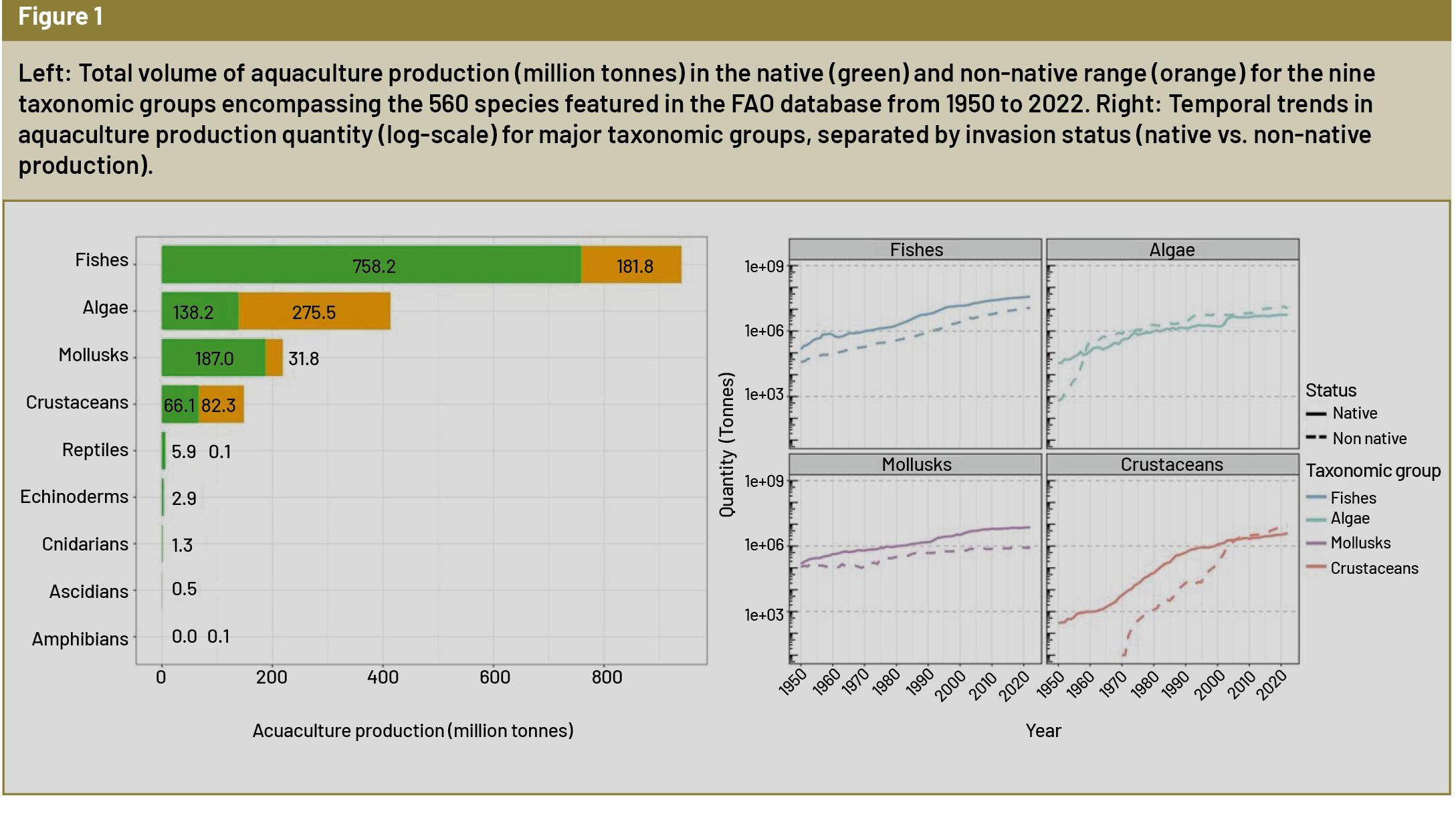
produced in aquaculture now exceeds that of native species — and in 2022 alone, 32 million tonnes of nonnative aquatic species were farmed, accounting for 37% of the world’s total aquaculture production. Globally, one-third of the 560 species used in aquaculture (n = 160) have been farmed outside their native ranges since 1950, resulting in 571.6 million tonnes of production valued at USD 1.17 trillion. Over 80% of global production of non-native species has
come from just 10 countries — mostly in Asia. The most striking example is China, where cumulative production between 1950 and 2022 reached 340.8 million tonnes, accounting for 59.6% of global non-native production. Fish dominate aquaculture output overall (940 million tonnes), with non-native fish alone accounting for 182 million tonnes — 19% of that total. Non-native algae and crustaceans represent even higher shares within their groups: 67% and 55%, respectively (Figure 1).
Particularly striking is the more than 11,000% rise in non-native crustacean production since 2000, compared with the previous twenty years, driven largely by the production of whiteleg shrimp (Penaeus vannamei) and the red swamp crayfish (Procambarus clarkii) in non-native areas. For example, the whiteleg shrimp, native to the tropical eastern Pacific from the United States to Peru, was introduced into China in 1988 and has since become the dominant shrimp species farmed along the country’s eastern coast (see Figure 2 in Chang et al., 2020). Production reached over 930,000 tonnes in 2016, according to the Ministry of Agriculture of the People’s Republic of China, and exceeded 2 million tonnes by 2022 (Oficialdegui et al., 2025). This finding aligns with the generally higher per-unit market value of crustaceans compared with that of fish, supporting the notion that the motivation to farm crustaceans in aquaculture is driven more by economic security, while fish farming is typically associated with food security.
World Production of Major Aquaculture Species: Ecological and SocioEconomic Impacts
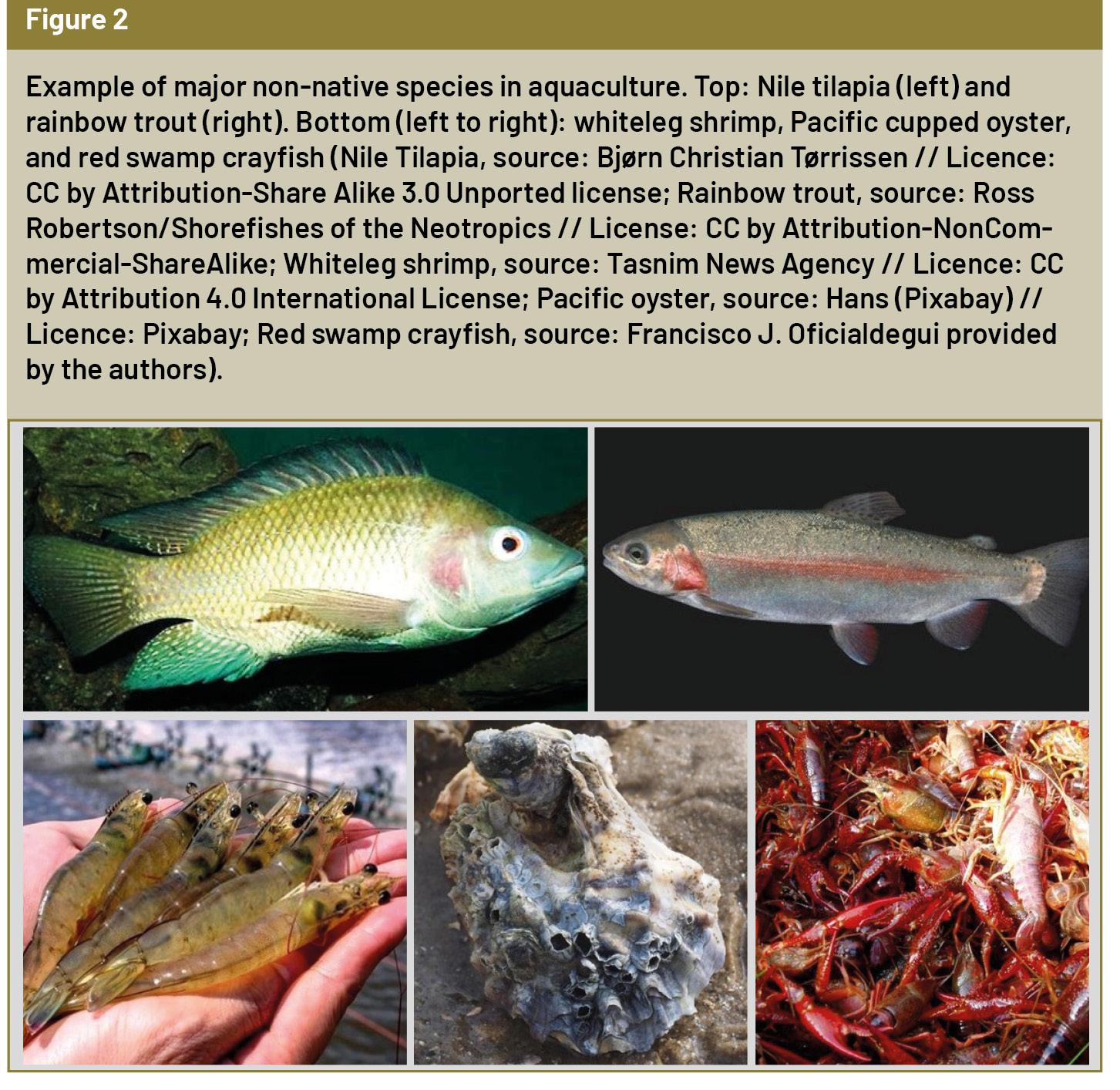
The major farmed species in terms of global production, as reported by the FAO, have accounted for approximately 92.8% of total global aquaculture output (1,606.89 million tonnes) since 1950, of which approximately 560 million tonnes represent non-native production. These highyielding species (e.g., Nile tilapia, Oreochromis niloticus; rainbow trout, Oncorhynchus mykiss; Pacific cupped oyster, Magallana gigas; whiteleg shrimp or red swamp crayfish; Figure 2) farmed outside their native ranges are linked to considerable ecological and socioeconomic impacts (see Table 2 in Oficialdegui et al., 2025). These include, among others, documented declines in native species populations, disruptions to food web dynamics, alterations in nutrient cycling, and the loss of traditional fisheries - many of which cannot easily be quantified in economic terms.
Over 80% of global production of non-native species has come from just 10 countries — mostly in Asia.
Beyond Profitability: Benefits and Costs Cannot Be Directly Compared
Despite their profitability over the past 75 years (valued USD 1.17 trillion), non-native farmed species have generated substantial monetary costs. Data from the InvaCost database (Diagne et al., 2020) show that 27 of the 160 non-native species farmed globally (according to FAO) have caused documented damages of up to USD 10 billion to ecosystems and economies. Similar approaches focusing on aquaculture and aquaculture-related species (i.e., species both intentionally introduced for consumption and introduced through aquaculture activities, such as the topmouth gudgeon, Pseudorasbora parva) have estimated costs of up to USD 15 billion (Jiang et al., 2025). However, major reporting gaps across regions and time suggest that these values are likely underestimated. For example, Brazil and China rarely reported economic costs, despite being major players in global aquaculture production. Although cost–benefit analyses are commonly used to assess business profitability, direct comparisons here are difficult. Economic gains from non-native species production may be short-lived or cumulative (e.g., development, employment, protein supply), whereas environmental costs can be irreversible and difficult to quantify (e.g., biodiversity loss, ecosystem degra-
dation). Even if benefits accrue over time, they may not outweigh longterm costs (environmental or biodiversity damage and management actions), given the challenges of valuing environmental change.
Notably, 40% of all non-native farmed species have been officially listed as invasive on regional or global invasive species lists — suggesting that the true extent of monetary costs may be far greater. These findings highlight the urgent need for improved biosecurity measures, the prioritisation of native species in aquaculture, and stronger international policies to mitigate the longterm ecological and economic risks associated with invasive species.
Aquaculture Sustainability
The need to provide food for the world’s growing population is so great that, in 2022, aquaculture production surpassed capture fisheries. Considering this increase, aquaculture must expand its availability while minimising environmental harm and protecting aquatic biodiversity. While the environmental impacts of biohazardous discharges, water use, and disease spread are commonly considered in sustainable practices,
The
whiteleg shrimp, native to the tropical eastern Pacific from the United States to Peru, was introduced into China in 1988 and has since become the dominant shrimp species farmed along the country’s eastern coast.
the challenges linked to the use of non-native species in aquaculture remain a long-standing, complex, and pressing issue. Aquaculture of non-native species can stimulate local economies, particularly in lowand middle-income countries. However, most facilities in these regions rely on intensive or semi-intensive farming (monoculture or polyculture systems) in earthen ponds or open systems, which present advantages but also drawbacks. On the one hand, these ponds provide a more natural environment for the farmed species, are less costly to maintain, and can improve water quality, and support plant growth. On the other hand, they are associated with water loss through seepage, challenges in disease control due to the presence of other non-target species, increased predation risk, and, importantly, the escape of non-native aquaculture species. Such escapes can occur accidentally through extreme climatic events, farm infrastructure failures, or water discharge carrying live organisms. The use of non-native species in such aquaculture systems entails potential risks that may impose substantial ecological impacts on surrounding environments. These risks must be minimized through coherent national and international policies, underpinned by stringent biosecurity measures. Decisionmakers are therefore urged to con-
sider the environmental risks associated with non-native (invasive) species alongside productivity goals in aquaculture planning, as shortterm economic benefits may lead to long-term ecological costs.
References and sources consulted by the author on the elaboration of this article are available under previous request to our editorial staff.
This is a summarized version based on the review article titled “NON-NATIVE SPECIES IN AQUACULTURE: BURGEONING PRODUCTION AND ENVIRONMENTAL SUSTAINABILITY RISKS” developed by: OFICIALDEGUI, F.; SOTO, I.; BALZANI, P.; CUTHBERT, R.; HAUBROCK, P.; KOURANTIDOU, M.; MANFRINI, E.; SERHAN TARKAN, A.; KURTUL, I.; MACÊDO, R.; MUSSEAU, C.; ROY, K. AND KOUBA, A. The original article was published, including tables and figures, on JUNE, 2025, through in REVIEWS IN AQUACULTURE. The full version can be accessed through this link: https://doi.org/10.1111/raq.70037
* Francisco J. Oficialdegui University of South Bohemia in České Budějovice, Faculty of Fisheries and Protection of Waters, South Bohemian Research Center of Aquaculture and Biodiversity of Hydrocenoses, Czech Republic
Department of Conservation Biology and Global Change, Doñana Biological Station (CSIC), Seville, Spain
E-mail address: oficialdeguifj@gmail.com
Antonín Kouba University of South Bohemia in České Budějovice, Faculty of Fisheries and Protection of Waters, South Bohemian Research Center of Aquaculture and Biodiversity of Hydrocenoses, Czech Republic
Offshore Seaweed Farming Is Gaining Momentum: Needs Less Hype and More Substance
Seaweed is having a moment. Whether it’s being hailed as a climate solution, a superfood, or a miracle input for regenerative agriculture, seaweed seems to promise a fix for everything.
It’s easy to get swept up in the optimism — but as someone who works on seaweed aquaculture, I believe the most important story isn’t about hype or headlines. It’s about how researchers, industry partners, and coastal communities are working through the hard, complex questions of what seaweed farming really takes.
* By Lindsey White
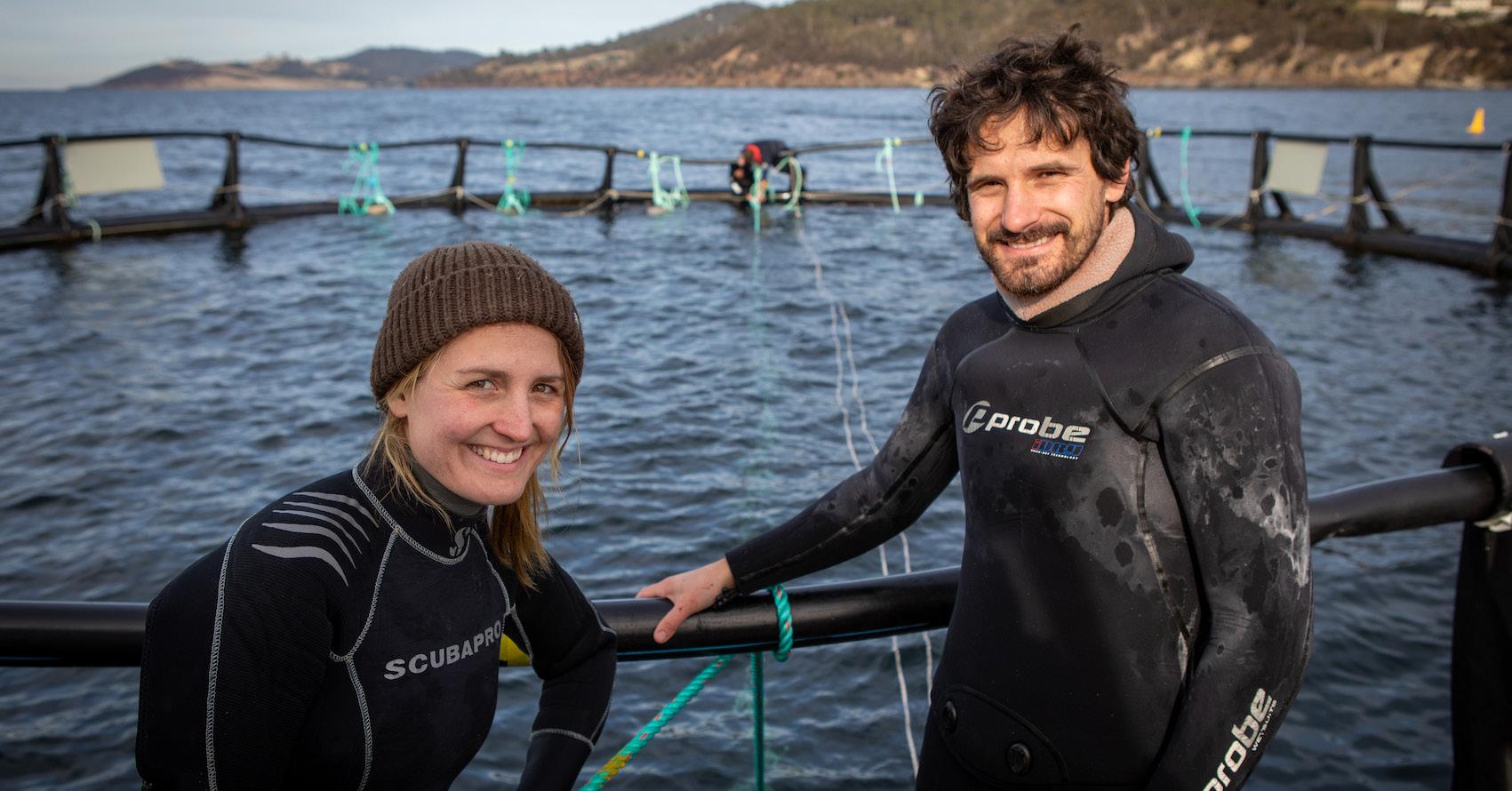
Recently, I joined more than 50 participants at a two-day offshore seaweed aquaculture workshop hosted by the Blue Economy Cooperative Research Centre (BE CRC) in Hobart. The aim wasn’t to celebrate seaweed’s potential — it was to build alignment around
what’s actually working, where the biggest knowledge gaps are, and how we move from scattered pilot projects to a functioning, scalable sector. The outcome: cautious momentum, with shared recognition that offshore seaweed farming is promising — but far from plug-and-play.
Why Seaweed? And Why Offshore?
Seaweed farming offers a unique set of benefits. It doesn’t need freshwater, fertilizer, or arable land. Certain species, such as Asparagopsis, can reduce methane emissions when used in livestock feed. Others, like
initial outplanting. More info is here: https://blueeconomycrc. com.au/microscopic-kelp-bumperharvest/
bull kelp, have value in biostimulants, and additives. Seaweed can also help regenerate degraded marine environments, support biodiversity, and — when well designed — contribute to circular economy goals.
That said, growing seaweed offshore, particularly in high-energy
There’s no doubt that seaweed aquaculture holds potential. But if we want to realize that potential, we have to avoid skipping steps. That means investing in field trials, listening to coastal communities, designing consent pathways that are fair and consistent, and focusing on value chains that actually work.
waters, is a technical and regulatory challenge. You need robust infrastructure that can survive swell and storms. You need hatcheries and processing facilities that don’t currently exist at scale. You need site access, consents, and insurance — all of which are difficult to secure in
emerging sectors. And you need clarity around who benefits and how. This is where hype doesn’t help. For every viral story about seaweed fixing the planet, there’s a community wondering why a seaweed farm is being proposed off their coastline. There’s a researcher flagging that
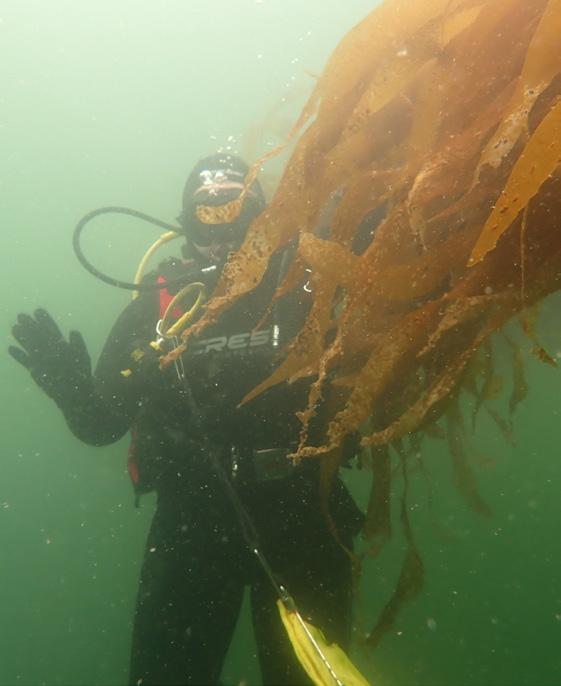
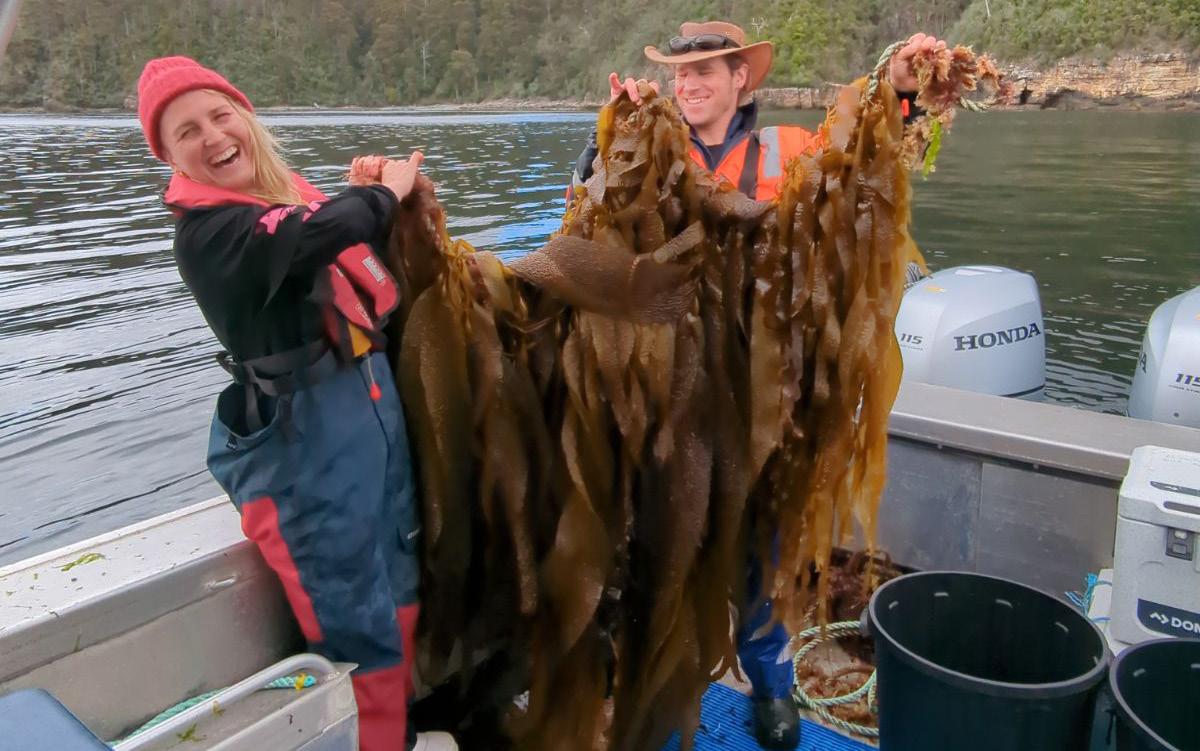
The successful harvest of giant kelp (Macrocystis pyrifera), from the Tinderbox kelp lease in Tasmania just 6 months after
The successful harvest of giant kelp (Macrocystis pyrifera), from the Tinderbox kelp lease in Tasmania just 6 months after initial outplanting. More info is here: https://blueeconomycrc.com.au/microscopickelp-bumper-harvest/
we still don’t fully understand how large-scale cultivation affects nutrient dynamics or marine food webs. There’s an investor asking, “Where’s the roadmap?”
What We Heard at the Blue Economy CRC Workshop
The BE CRC workshop brought together people from every part of the seaweed “ecosystem” — researchers from AUT, IMAS, CSIRO, and the Cawthron Institute; industry voices from Seasol, Fremantle Seaweed, and others; government observers from both Australia and New Zealand; and representatives of First Nations communities. Some clear messages emerged:
» Offshore seaweed farming is moving beyond the lab. Pilot trials, particularly around kelp, are showing promising results. For instance, in trials led by Dr. Jeff
A functioning offshore seaweed sector needs specialized vessels, affordable processing options, skilled workers, and ways to store or transport biomass. None of that is simple — especially in remote regions.
Wright and colleagues at IMAS, juvenile bull kelp (Durvillaea) cultivated in hatcheries have successfully survived transplanting and early growth in offshore sites off Tasmania. These trials are helping establish protocols for spore collection, nursery cultivation, and deployment — crucial steps toward commercial viability.
» Collaboration is a strength in this region. Australia and New Zealand are not global leaders in seaweed aquaculture, but the research community here is unusually integrated. Teams are openly sharing data and coordinating trials. Fremantle Seaweed, in partnership with Moonrise Seaweed Co., is trialing cultivation techniques that align with First Nations values and regenerative outcomes. Indigenous leadership, particu-
larly from groups like Te Whānaua-Apanui in New Zealand is gaining visibility.
» We still lack basic infrastructure. A functioning offshore seaweed sector needs specialized vessels, affordable processing options, skilled workers, and ways to store or transport biomass. None of that is simple — especially in remote regions.
» Regulations are evolving but uneven. Approval pathways differ across states and countries. A national or trans-Tasman approach could unlock progress, but we’re not there yet.
A Roadmap to 2029
One of the intentions that emerged from the workshop was to co-develop a shared roadmap for offshore seaweed aquaculture — not a grand
strategy, but a practical plan for supporting better decisions by all players: farmers, investors, policy-makers, and communities.
While a formal roadmap hasn’t materialized, there was strong support for the creation of a shared seaweed knowledge platform. The idea was to pool trial results, site and species information, economic models, and case studies into a resource that could help people navigate the complex and emerging space of offshore seaweed farming.
The concept included developing demonstration farms — one in a temperate region, one in the tropics — as real-world test beds for infrastruc-
ture, monitoring, and commercialization models. While these efforts are still at the early discussion stage, they reflect a shared desire across the sector: to move from promise to practicality.
Seaweed’s Future Is in the Details
There’s no doubt that seaweed aquaculture holds potential. But if we want to realize that potential, we have to avoid skipping steps. That means investing in field trials, listening to coastal communities, designing consent pathways that are fair and consistent, and focusing on value chains that actually work.
enterprise, and for better marine stewardship. That’s what many of us are working toward.
But to get there, we need fewer slogans — and more sea trials.
The Blue Economy CRC
The Blue Economy Cooperative Research Centre (CRC) is established and supported under the Australian Government’s CRC Program, grant number CRCXX000001 (previously 20180101). The CRC Program supports industry-led collaborations between industry, researchers and the community.
Seaweed farming offers a unique set of benefits. It doesn’t need freshwater, fertilizer, or arable land.
If well supported, offshore seaweed farming could provide alternative livelihoods for coastal communities, diversify marine economies, and offer new materials for bio-packaging, food, and climate-positive products. But none of that happens without robust trials, knowledge sharing, and Indigenous partnership at the core.
Seaweed is not a silver bullet. But it can be a platform — for regenerative ocean industries, for food and materials innovation, for Indigenous
Planting of baby kelp on grow lines at Tinderbox kelp lease by the Blue Economy CRC project team led by UTAS. More info is here: https://blueeconomycrc.com.au/kelp-mariculture/
AI- Driven Innovations in Aquaculture
Aquaculture is a rapidly expanding sector crucial to global food security, nutrition, employment, economy, environmental sustainability, healthcare and providing livelihoods. Traditional farming methods face various limitations in aquaculture production while Artificial Intelligence (AI) is transforming aquaculture by improving efficiency, accuracy and sustainability. AI integration is poised to make aquaculture more sustainable and productive, empowering fish farmers with smart tools to meet growing global demands efficiently and responsibly.
Introduction
In recent times, the world faces critical challenges such as hunger, malnutrition, and nutrientrelated diseases. Aquaculture has emerged as a key solution, especially as the growing global population increases demand for sustainable food sources (FAO, 2022). With a history of over 4,000 years, aquaculture now supplies 15% of global animal protein and 6% of total protein intake (FAO, 2024). However, traditional fish farming methods are not very reliable. They can cause problems like fish diseases, water pollution, overfishing, high labor required, time taking and damage to the environment. These issues can also lead to lower profits, financial losses and a lack of information about market risks for farmed fish. Proper planning is needed to solve social health,
environmental and economic problems related to fish farming both national and international level. To solve these challenges, recent advancements have been driven by Artificial Intelligence (AI), which is revolutionizing the sector by improving efficiency, sustainability and productivity. AI’s role in aquaculture was first recognized in 2000 when the University of Texas Medical Branch in Galveston developed a fuzzy logicbased control system for denitrification in a closed recirculating system (Lee et al., 2000). This system used real-time sensor data such as dissolved oxygen, oxidation-reduction potential and pH to autonomously adjust pumping rates and carbon feed, optimizing bioreactor performance. Since then, AI has become a vital tool in modern aquaculture research and operations.
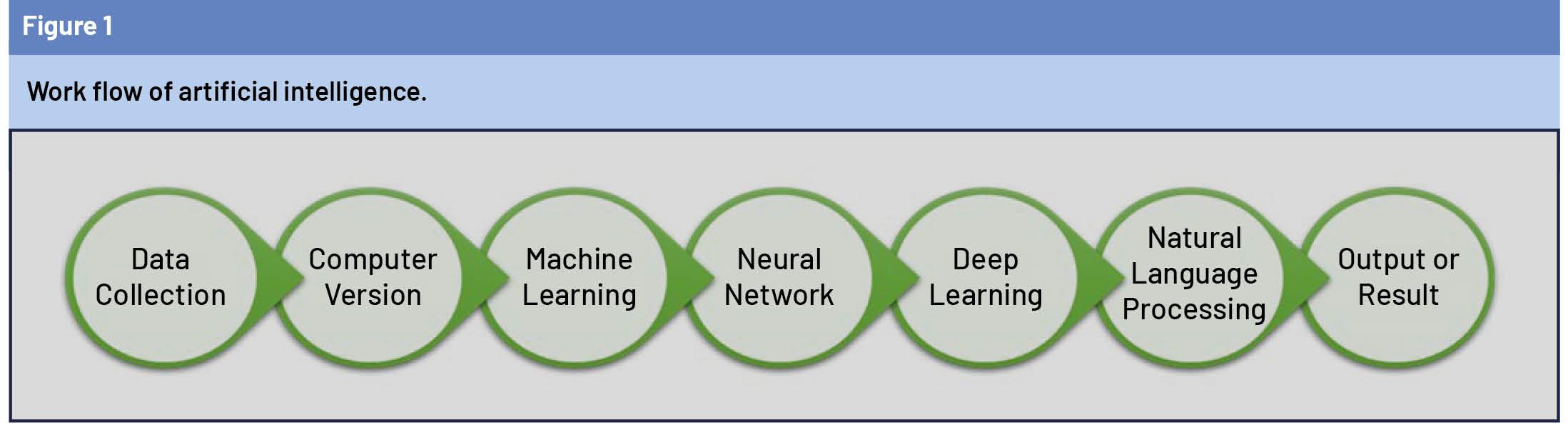
Work Flow of AI
AI refers to machines, robots or computer software capable of performing human-like tasks. These systems utilize cameras (similar to human eyes), sensors (sensitive devices) and computers (acting as the brain) to understand language, recognize objects, make decisions and respond effectively (Xu et al., 2021). Therefore, to ensure the sustainable growth of aquaculture, the use of AI in existing resources can help create favorable conditions (Figure 1).
AI Powered Innovations in Aquaculture
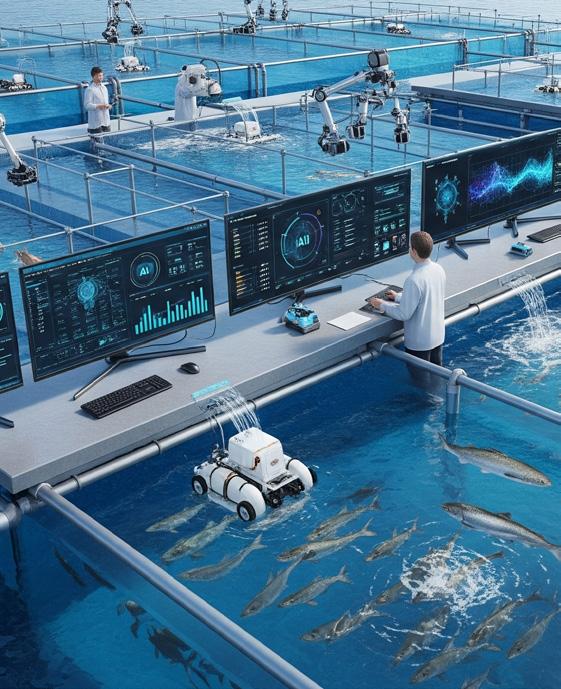
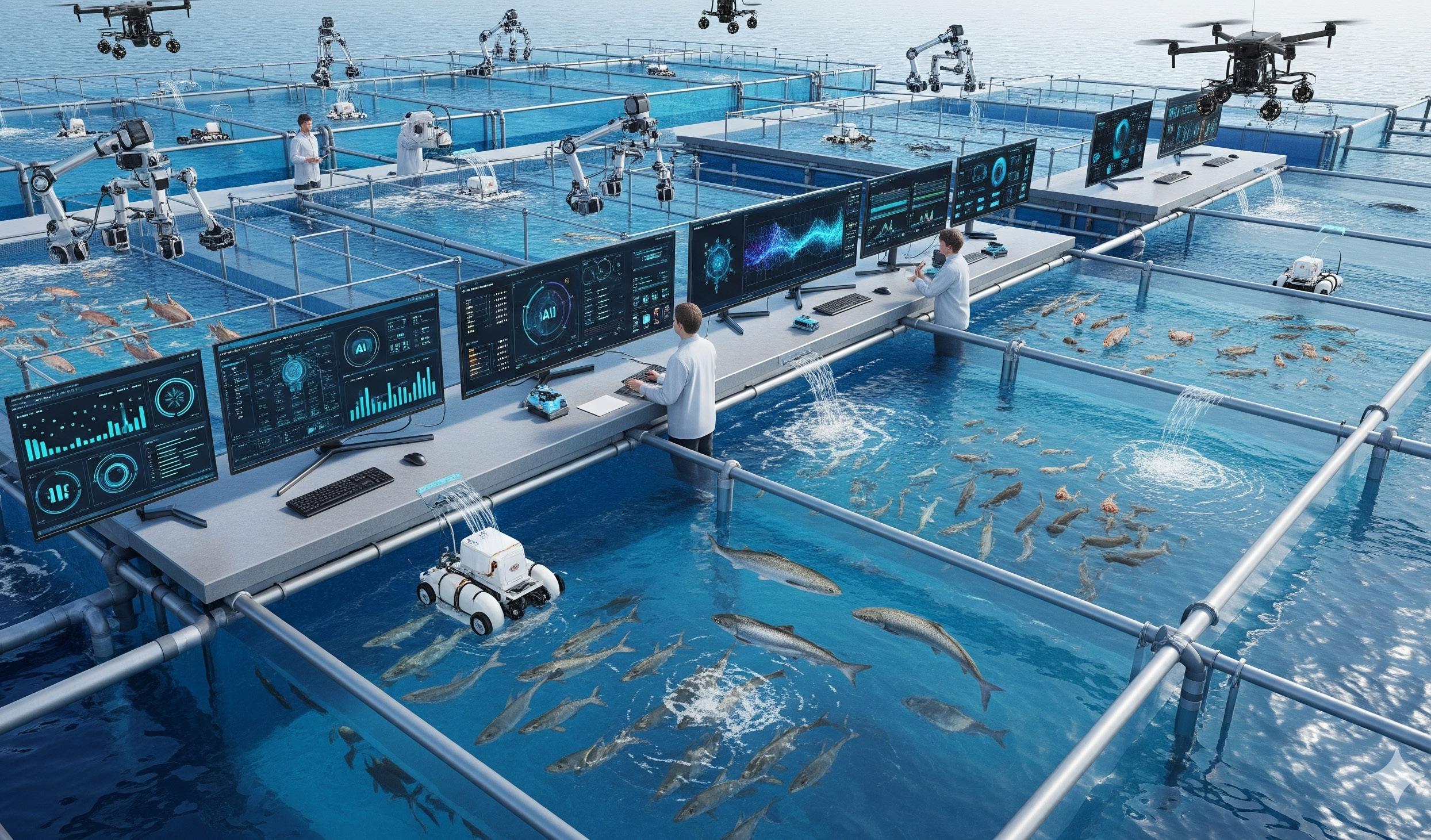
To overcome the challenges of traditional aquaculture farming, AI-powered innovations are being adopted to enhance efficiency, sustainability and productivity across the industry
* By Anil Singh, Shashank Singh, Arya Singh, Suman Dey, Harshit Singh and Vikash Kushwaha
AI-powered innovations are being adopted to enhance efficiency, sustainability and productivity across the industry without impact on the environmental conditions, water quality and fish health.
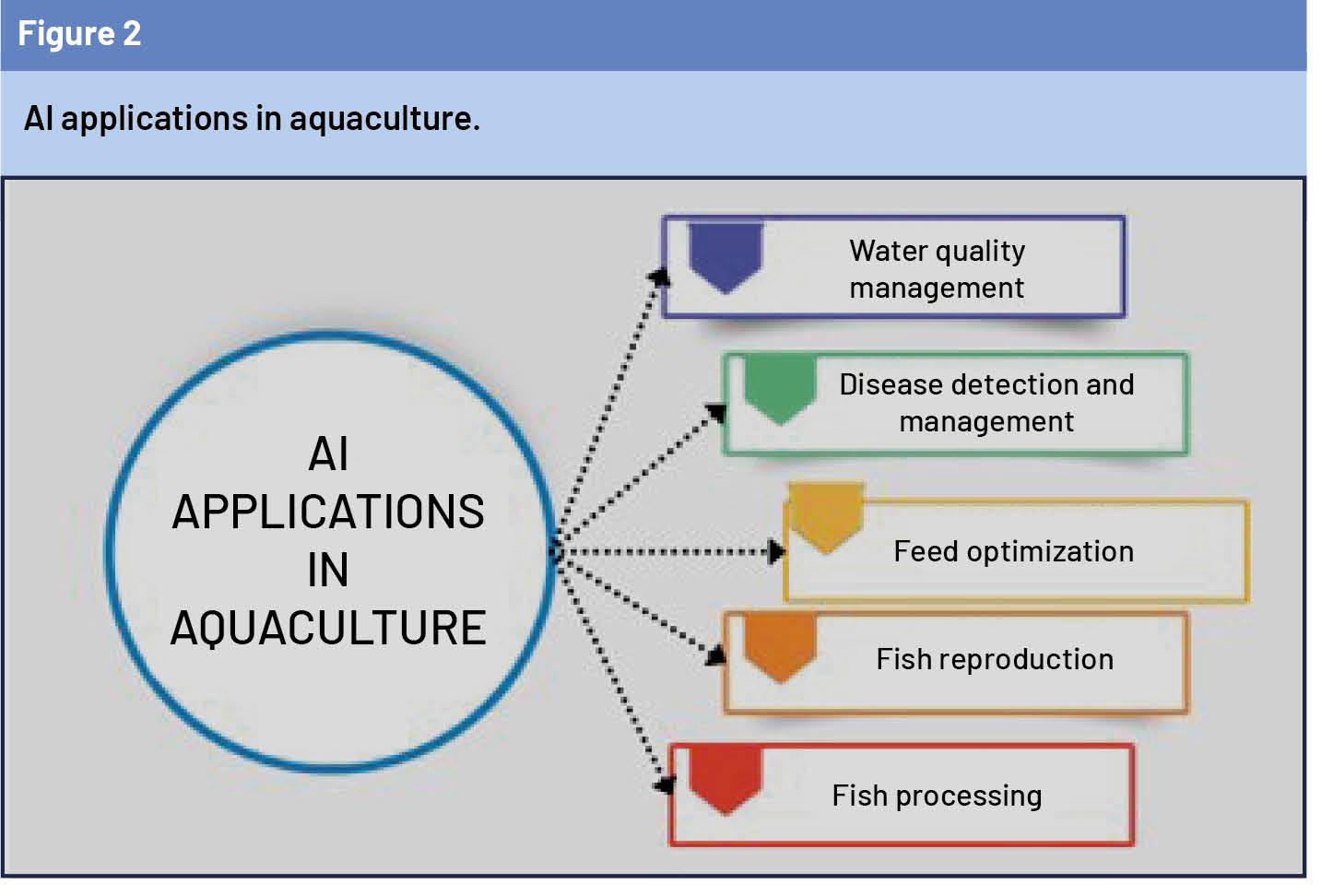
without impact on the environmental conditions, water quality and fish health. AI helps optimize resources and streamline operations (Chrispin et al., 2020). Key applications include automated feeding, site monitoring, growth tracking, temperature and water quality control, aeration, disease detection, fish classification, harvesting, biomass estimation, supply chain management, and aquatic vegetation
control, making aquaculture more efficient and sustainable (Figure 2).
AI in water quality management
Effective water quality monitoring is crucial for aquaculture, as fish health depends on stable environmental conditions (Lindholm-Lehto, 2023).
AI enhances monitoring by analyzing real-time sensor data such as
temperature, dissolved oxygen, pH, and ammonia to detect anomalies and predict issues (Zhao et al., 2022). It enables timely action, reducing fish mortality and improving farm efficiency (Javaid et al., 2022). AI can also forecast water quality changes using historical data, weather and feeding patterns (Saeed et al., 2022), and tailor conditions to specific fish species (Chiu et al., 2022). Models like NARNET,
LSTM, SVM, and K-NN have proven effective in predicting and classifying water quality (Aldhyani et al., 2020). Overall, AI provides fish farmers with accurate insights, early warnings and data-driven decision-making tools for sustainable aquaculture.
AI in disease detection and management
Several studies highlight AI’s growing role in fish health monitoring, disease detection, and control in aquaculture. AI systems use data from underwater cameras and sensors to analyze fish behavior, appearance, and swimming patterns, helping identify signs of stress or illness early (Li et al., 2023). These tools detect clinical signs like lesions or discoloration, enabling timely treatment and reducing antibiotic use (Chen et al., 2023). Overall, AI enhances disease management and promotes healthier, more sustainable aquaculture systems.
AI in biomass monitoring
Biomass is a vital indicator of fish health and growths during cultivation (Li et al., 2020). Traditional methods like netting and weighing are labor-intensive, stressful for fish and prone to errors (Aung et al., 2025). To address these issues, researchers have turned to AI-based approaches
to more efficient and accurate for biomass estimation. Technologies such as machine learning and computer vision can estimate fish size, weight and count using image analysis (Monkman et al., 2019). CNNs have proven effective in predicting fish weight from images, while other models use infrared cameras and classifiers to automate weight and length estimation (Lopez-Tejeida et al., 2022). These AI tools reduce stress on fish, improve accuracy, and support sustainable aquaculture practices.
AI in size, sex and age determination
Fish body length is vital for resource management, but traditional manual measurement is slow and inaccurate. AI models, using datasets like Image Net, have improved efficiency; for example, Monkman et al. (2019) used R-CNN and OpenCV to estimate European bass length with just a 2.2% error. Traditional sex identification methods were often harmful and error-prone. Machine learning combined with machine vision offers a non-invasive, accurate alternative by analyzing morphology, as explained by Barulin (2019) using Boruta and Random Forest algorithms on starlet sturgeon. This highlights AI’s strong
AI systems use data from underwater cameras and sensors to analyze fish behavior, appearance, and swimming patterns, helping identify signs of stress or illness early.
potential in fish sex determination. Fish age is commonly determined by analyzing otolith images, a process enhanced by deep learning. Moen et al. (2018) applied transfer learning with CNNs for expert-level age estimation, though accuracy was lower for the youngest fish.
AI in feed optimization
Fish feed costs make up above 4050% of aquaculture expenses, with about 60% of feed wasted, leading to water pollution and reduced fish growth (Mattos et al., 2022). Accurately matching feed to fish appetite is essential but challenging. AI helps optimize feeding by analyzing factors like water temperature, oxygen levels and feed composition to predict ideal feeding times and amounts (Hu et al., 2022). AI also monitors fish behavior via sensors and cameras to adjust feeding in real-time. Personalized feeding strategies based on genetics, age, and weight further enhance growth while minimizing waste and environmental impact, supporting sustainable aquaculture (Chen et al., 2025).
AI in promoting growth
Optimal fish growth depends on maintaining species-specific temperatures, with deviations harming
growth rates (Mandal et al., 2024). AI supports aquaculture by monitoring growth through technologies like stereoscopic and sonar cameras, even in challenging environments (Li et al., 2020). AI-driven models use environmental data temperature, oxygen, nutrients to predict growth rates, optimize feeding and improve yield forecasts. Studies show machine learning can create individualized feeding plans, enhancing growth and feed efficiency (Quispesivana et al., 2022). Overall, AI improves aquaculture efficiency, growth, and sustainability.
AI in fish behavior monitor
Fish behavior, including feeding and social interactions, is closely influenced by temperature. Warmer water often increases aggression in species like tilapia, largemouth bass and Atlantic salmon, raising stress and disease risks. Conversely, colder temperatures slow metabolism and activity, prompting species like trout, catfish, carp, pike and walleye to seek warmer or deeper waters to conserve energy. These temperature-driven behaviors impact fish health and growth, making thermal management vital for aquaculture. An example of AI use is Umitron Corporation’s Tokyo-based system that monitors fish swimming behavior in real-time to optimize feeding, reducing waste and improving feed efficiency (Rather et al., 2024).
AI in fish reproduction
AI is transforming fish reproduction and breeding by optimizing environmental conditions and using predictive models to enhance outcomes. In reproduction, AI helps manage temperature, feeding, water quality, and disease control, improving spawning success and aligning breeding with ideal conditions (Prapti et al., 2022). In breeding, AI analyzes genomic data to predict traits like growth and disease resistance, enabling faster, more accurate selection and healthier fish stocks (Mandal & Ghosh, 2023). These AI-driven approaches support more efficient, sustainable, and profitable aquaculture.
AI in fish processing
Demand for processed seafood is rising, AI-powered robots have transformed fish and shrimp processing by performing tasks like cutting, filleting, cleaning, grading, packing, and transporting with high accuracy and speed (Ravishankar et al., 2024). These automated systems reduce labor costs and require minimal supervision. Iceland’s company Marel produces AI-based robots that handle the entire processing workflow efficiently.
AI in aquatic animal conservation
Human activities have rapidly reduced aquatic animal populations, making conservation challenging, especially in open seas. AI drones equipped with vision sensors and cameras can quickly track endangered fish and analyze their habitats more efficiently than humans. Larger species like sharks and humpback whales are monitored using transmitters on their fins, aiding behavioral studies and improving conservation efforts (Isabelle et al., 2024).
Merits and Demerits of AI in Aquaculture
AI significantly enhances aquaculture productivity by improving efficiency, accuracy and disaster prediction across all stages, from hatcheries to processing. It automates key advantages such as water monitoring, feeding optimization, early disease detection, enabling farmers to manage larger operations with fewer resources. By adjusting environmental conditions in real time, AI boosts growth rates, feed efficiency and sustainability through reduced waste and environmental impact (Alshater et al., 2023). Despite its benefits, AI adoption faces several challenges. High initial and maintenance costs can be a major barrier, especially for small-scale farmers. Automation may also lead to job losses in the fishing industry (Li et al., 2022). Furthermore, AI systems require high-quality, domain-specific data, which is often scarce in remote areas. The need for advanced equipment and trained personnel further limits accessibility (Mustapha et al., 2021).
Future Opportunities of AI in Aquaculture
The future of AI in fisheries and aquaculture is highly promising and full of potential. With the help of AI, fish farmers can reduce labor costs, diseases, feed wastage and mortality rates. AI holds great importance in aquaculture, offering applications in weather forecasting, livestock assessment, fish resource management, hatchery operations, water quality monitoring, disease detection, and highly efficient management. In the future, there is a strong possibility that these tasks will be carried out fully automatically without human intervention (Wang et al., 2021).
Conclusion
AI is reshaping the aquaculture industry by offering innovative solutions that enhance productivity, sustainability and operational efficiency. From real-time data monitoring to disease detection and feed optimization, AI enables smarter, data-driven decision-making across the entire aquaculture value chain. While challenges such as high costs, data limitations and skill requirements remain, the benefits of AI such as reduced labor, improved fish health and minimized environmental impact highlight its trans-formative potential. As technologies continue to advance, AI will play an increasingly vital role in achieving sustainable aquaculture, supporting global food security, and ensuring long-term economic and environmental resilience.
References and sources consulted by the author on the elaboration of this article are available under previous request to our editorial staff.
Anil Singh, Shashank Singh*, Harshit Singh and Vikash Kushwaha Department of Aquaculture, College of Fisheries. Corresponding author*: drssaqua@gmail.com
Arya Singh Department of Aquatic Animal Health Management, College of Fisheries.
Suman Dey Department of Fisheries Extension, College of Fisheries.
Acharya Narendra Deva University of Agriculture and Technology, Kumarganj, Ayodhya-224229, (U.P.), India.
Youth is the Future, and It Is Within Each of Us
* By Antonio Garza de Yta, Ph.D.
The 2025 World Food Forum (WFF 2025), held in Rome, emphasized the importance of youth as agents of change in transitioning to sustainable agrifood systems. The opening ceremony of the Global Youth Forum, which took place at the headquarters of the Food and Agriculture Organization of the United Nations (FAO), brought together thousands of young leaders and global stakeholders to promote action under the slogan “Hand in hand for better food and a better future.” FAO Director-General QU Dongyu emphasized the importance of youth leadership, encouraging bold collaboration and innovation. Supported by the Global Youth Action Initiative, the youth-led forum has backed over 500 innovative projects and engaged nearly 30,000 young
individuals from over 180 countries. This initiative has established a network of over 120,000 individuals dedicated to food transformation. During the main week, youth participation was evident in over 300 events, including the Youth Assembly, the Youth Film Festival, and the School Assembly. These events fostered dialogue, creativity, and political advocacy. The launch of 38 new National Youth Chapters expanded the local impact. The message was clear: A better food future for all will only be achieved by working “hand in hand.”
The WFF demonstrates that transformative change is already underway.
The events at the FAO, held as part of its 80th anniversary celebrations, evoked fond memories. They reminded me that many experienced aquaculture professionals today started
out wanting to change the world — dreaming and passionately pursuing their ideals. Many experts began their careers by working pro bono, either in the Peace Corps or simply trying to be the agents of change that would save the future of humanity. I once wrote that the world belongs to the crazy. Perhaps now I should write that the world belongs to the young, who undoubtedly have a little craziness inside them.
But youth is all about attitude. I like to use Roy Palmer as an example. He’s the youngest person I know, even though he’s already in his seventies. I’m always surprised by Roy’s energy, positive attitude, joy, and completely selfless outlook on life. He is someone who came into this world to change it and make it a better place for future generations.
Many of today’s experts started out working for free. Others were simply trying to be the agents of change that would save humanity’s future. I once wrote that the world belongs to the crazy. Perhaps now I should write that the world belongs to the young, who undoubtedly have a little craziness in them.
The structure of the Global Youth Forum, led by young people, is supported by the Global Youth Action Initiative, which has backed more than 500 innovative projects and involved nearly 30,000 young people from more than 180 countries, forming a network of 120,000 committed to food transformation.
Nearly 20 years ago, Roy Palmer and I, along with other renowned experts, formed the Global Initiative for Life and Leadership through Seafood (GILLS). GILLS was intended to be a repository for scientific articles supporting the benefits of eating fish and seafood. It was also intended to combat the false and unsubstantiated opinions emerging at the time against aquaculture. The idea was necessary, and the organization survived for a few years. However, as we all know, good news doesn’t sell. The movement gradually faded away due to a lack of funding. However, Roy never lost his enthusiasm and has led many interesting projects since then. The most recent is the Seafood Consumers Association (SCA), which we will undoubtedly discuss in a future column.
Source: https://www.world-food-forum.org/es
Today, I would like to discuss the importance of maintaining the magic that makes aquaculture special. Unfortunately, I have witnessed some universities transform from places where professors lived, ate, breathed, and sweated aquaculture into workplaces for people who don’t care that much about it. Many of us started out like Roy, and some of us still support him unconditionally. However, little by little, life made us take aquaculture too seriously. Hopefully, this new generation will remember how important it is to maintain their passion and never forget that aquaculture can transform the future of humanity.
While it’s true that the future of humanity lies with the young, it’s equally true that youth lies within each of us.
and
and
Source: https://www.world-food-forum.org/es
* Antonio Garza de Yta is COO of Blue Aqua International-Gulf, Vice President of the International Center for Strategic Studies in Aquaculture (CIDEEA), President of Aquaculture Without Frontiers (AwF), Past President of the World Aquaculture Society (WAS), Former Secretary of Fisheries
Aquaculture of Tamaulipas, Mexico,
Creator of the Certification for Aquaculture Professionals (CAP) Program with Auburn University.
Is There a Best Way to Use Microbial-Based Bioremediation Products in Aquaculture?
Many products are sold for use in aquaculture, ostensibly to improve outcomes. Considering the global market, all too often many of these products are potentially of limited use and the purveyors often rely on natural pond to pond variability for marketing and claims of efficacy. The handful of products that work consistently regardless of this variability face challenges in terms of how to best use them. The general conclusion, partly common sense and partly experience over 46 years, which appears to be obvious is that how (what, when, where and how much) these products are used impacts efficacy.
* By Stephen Newman, Ph.D.
When I first began working with aquaculture in 1979, the global production of shrimp was a fraction of what it is today. In 1991, I was working for a publicly traded
small company and, using VC money, developed a product, a parabiotic, that provided animals with a cost benefit that was observable in the field. Targeted primarily against vibriosis, working with cooperative part-
ners in the lab and the field, we determined that it was an effective tool for lessening the impact of disease (parabiotics) among other things.
We concluded from our lab and field observations that the impact was
The first thing I noted, which, as a microbiologist with fermentation experience, was a problem with empowering this approach to people that did not appreciate the large potential downside. While the Bacillus would grow so would other airborne and water borne bacteria, including vibrios, some species of which reproduce in ten minutes or so.
limited in duration and non-specific. Under the “right” conditions the benefit noted in lab and field trials was less disease issues (apparently as a result of lowering of specific pathogen loads and reducing certain sourc-
es of stress), better growth, less wasted feed, etc. However, when the environment changed so did the benefit.
We observed that under both lab and field conditions with a single exposure the effect seemed to last 60
days or so, but we also noted with repeated pathogen exposure and under what would be deemed to be stressful production conditions (defined as a result of any environmental impact that disrupts the animals’ normal ho-
meostatic mechanisms), the protective benefit did not offer consistency. We concluded that at the very least a short-term exposure in the hatchery was sufficient to protect animals against modest levels of pathogens for at least 60 days and that additional exposure in the feed could enhance this. When and where and how much dictated the outcome as well as environmental conditions and the presence of stressors on the animal.
Around that time there were a few companies that were selling microbial products for use in bioremediation in aquatic environments (they have been used for many years is waste water management) and some of the reported observations strongly suggested a benefit. Roughly 25 years ago, Dr. Roland Larimore, one of the founding fathers of global shrimp farming and a partner in establishing the efficacy of the aforementioned parabiotic we developed, asked me if I was interested in evaluating a pat-
ented product for use in catfish. This was a blend of Bacillus spores that had been evaluated in shrimp farming in the US with some very positive results (Duda Trial Florida, 1999).
Aquaintech Inc. tested this product on a shrimp farm in Belize. At that time, activation, typically incubating the spore-based products in order to produce large numbers of metabolically active cells, was the norm. The first thing I noted, which, as a microbiologist with fermentation experience, was a problem with empowering this approach to people that did not appreciate the large potential downside. While the Bacillus would grow so would other airborne and water borne bacteria, including vibrios, some species of which reproduce in ten minutes or so. This contamination made this approach risky, although short term activation in clean water with an added carbon source to kick start growth was less of a risk. After the first tests where we did see
Based on our earlier experiences with the parabiotic we noted that as we fined tuned the use of the tablets there were critical factors that impacted how well the product worked.
a modest and weakly statistically significant positive impact, I wondered if there might be a better approach. Knowing that in the wastewater industry there were a few companies marketing tableted (pelleted) spores I decided to test this on the farm. This approach had none of the risks of activation on pond side and allowed the spores to be placed directly into those areas where the organic matter accumulated. The benefits observed were significant and the use of the tablets became a standard operating procedure in the farm (RMSF Belize PRO4000X benefits). Today this approach is widely used globally.
The vast majority of products marketed for use in shrimp act on the environment. Despite the many published observations which imply that some act as true probiotics (defined as bacteria ingested orally that colonize the gut and via their metabolome impact animal health) lab studies for the most part cannot be used to make claims that products will work in the same manner in the field. Demonstrating that they are true probiotics is not straightforward as what happens in the lab under controlled conditions is not the same as what one would see in the field. Technically as well, there are some that believe that claims of this nature could be defined as drug claims forcing a much more rigorous registration process.
Based on our earlier experiences with the parabiotic we noted that as we fined tuned the use of the tablets there were critical factors that impacted how well the product worked. Bacillus spore-based products and the few spray dried/freeze dried and metabolically suspended non spore forming organisms sold for use in aquaculture are living organisms that thrive under specific conditions and do not survive for extended periods of time in most environments that they are introduced into. These products were developed for the environment. Their purpose is to accelerate the rate of biodegradation of organic matter beyond what the naturally occurring bacteria can do as well as denitrifying nitrates, detoxifying ammonia and reducing the loads of some types of heterotrophic bacteria, specifically some of the more virulent vibrio strains and some may function as non-specific immune stimulants.
What Is in the Product?
Strains make the product work, not a given genus and species. Strains with weak or poor enzyme profiles will not work as efficiently, if at all, as strains with strong profiles that produce high levels of a variety of enzymes. It is a common misconception that all members of a given species invariably have the same properties. As an example, consider Vibrio parahaemolyticus. As with most other species
Spore-based products should be added at low levels to is to start with gradual increases in the dosage levels and frequencies as the cycle progresses.
there are a range of strains within the taxon. These strains have a common metabolic and structural base which allows taxonomists to classify them as a given species, but they can vary greatly in the presence of certain genes that produce proteins that are virulence determinants (part of the metabolome). Their regulation and expression determine how virulent a given strain is. There are strains of V. parahaemolyticus that can kill humans quickly and others that kill shrimp, fish, etc. Many are however benign. There is a very wide range of enzymatic abilities among the dozens of species classified today as Bacillus and the many hundreds that
have been reclassified (Paenibacillus, Lysinbacillus, etc.).
Many commercial products for aquaculture contain strains of Bacillus, facultative aerobes (they can grow in the presence or absence of oxygen) spore forming gram-positive bacteria that can be sold in a dried form with an indefinite shelf life. There are a number of major factors, above and beyond the specific enzyme profiles, that are essential for ensuring that the user will see the maximum benefits.
How Much Is Used?
This is perhaps the most difficult aspect of ensuring optimum benefit. Failure to use enough and not using it
when and where it needs to be used is highly likely to result in the product not appearing to perform as expected. All too commonly farmers ignore this. From day one I advocated that farmers start with smaller amounts and gradually increase the amount ensuring that the observed benefit occurs by real time monitoring. This is why the first farm we worked with tablets saw the benefits that they did. These are biological products that perform based on the nature of the environment you put them in. They
are not widgets that perform the same independently of where you use them.
Some of the more important considerations are:
1. Ponds when they are first stocked usually have little organic matter present. Dumping high levels of spores in them is wasteful ($$). Since spores germinate over time, the spores that germinate later will die off quickly for lack of nutrients. Most heterotrophic bacteria use organic matter as nutrients with metabolic by products so there is already competition present.
3. As the cycle progresses the amount of organic matter present increases. Organic matter is typically composed largely of uneaten feed (often in the form of fines as the shrimp (Litopenaeus vannamei) grind feed twice before it enters their digestive tracts), feces, molts, dead and dying bacteria, and the phytoplankton and zooplankton that are always present in healthy outdoor open systems. In RAS systems organic matter also increases although without all of these components.
Many commercial products for aquaculture contain strains of Bacillus, facultative aerobes (they can grow in the presence or absence of oxygen) spore forming grampositive bacteria that can be sold in a dried form with an indefinite shelf life.
2. Adding high levels of spores to start can make it harder for Bacillus species to establish themselves. Starting with lower dosages allows them to form biofilms (this is environment dependent) and ensures that with subsequent dosing you replenish them in a manner that minimizes the system from taking dramatic steps to lower them. Many things can act against them aside from competing heterotrophs. One example is that of bacterial viruses, known as phages. They can be specific and target certain species ensuring that under most circumstances no one bacterial species dominates. Creating an environment that ensures high levels of these will make it harder for the added Bacillus to survive and do their jobs.
4. Proper management of ponds requires monitoring them. Typically, this is resource and experience dependent. In general water needs to be sampled for pH and DO levels. NH3-N and metabolic products including NO2 and
Before and after farm in Ecuador.
Gram stain of Bacillus subtilis
We concluded that at the very least a short-term exposure in the hatchery was sufficient to protect animals against modest levels of pathogens for at least 60 days and that additional exposure in the feed could enhance this.
NO3, pond odor, physical appearance such as water color, clarity, and outgassing from anaerobic sediments should be monitored. There should be less black sludge if adequate dosing has been used. Animals need to be sampled regularly to ensure that feed is being consumed and not wasted, that they are growing as expected and that no disease processes are impacting the population that can be mitigated. These are all useful in telling the user that the product is working and adjusting dosages if needed.
Starting out with a low dosage and increasing it as the cycle progresses coupled with observations
during and post cycle and adjusting the dosage as needed is the most economical and efficient way to use these products.
Each pond is unique-like a human fingerprint. One can have two ponds right next to each other built at the same time using the same approach and configuration and stocked with PLs that are from the same parents and reared in the same hatchery tanks where one sees two completely different outcomes for no apparent readily discernable reasons. The most effective approach in ponds that start out “clean” is to start out using levels and a frequency to effectively reduce the accumulated levels of organic matter. Start out low and grad-
ually increase the levels as the cycles progress.
No product will consistently permanently colonize highly variable production environments. All must be added repeatedly. As we tested and developed the use of tablets, we fined tuned their use and our suggested approach is based on field observations in many environments in shrimp and fish ponds.
When the Product Is Used?
Waiting until there are high levels of accumulated organics ensures that the bacteria will not be as effective as they can be when they are used from the onset of the cycle (or before). Gradually increasing the dosage
Proper management of ponds requires monitoring them. Typically, this is resource and experience dependent. In general water needs to be sampled for pH and DO levels. NH3-N and metabolic products including NO2 and NO3, pond odor, physical appearance such as water color, clarity, and outgassing from anaerobic sediments should be monitored.
and frequency of application is the best approach as the cycles progress. Ponds that have never been treated and that have been used more or less continuously may have very high levels of accumulated organic matter that no bacteria can possibly digest in a reasonable amount of time unless one is willing to use them without any added sources of organics for an extended period of time, i.e. in ponds with no animals in them.
Using the product based on how it is working in your ponds will ensure that you see the maximum possible cost benefits.
Where the Product Is Used?
The tablets were developed for targeted delivery to those areas in the ponds where organic matter accumulates. There are now tablets that are added to automatic feeders that disperse the spores around the feed-
ing areas (ask if you want more information). The bacteria in our products are motile, i.e. they have flagella and move of their own volition through the environment. Being small they are also readily moved with any water movement, such as aeration or animal movement. As the tablets dissolve the bacteria that germinate in contact with the sediment can move through the sediment. Some clients will push them into the moist sedi-
ment where the entire spore content will germinate and act on the anerobic sediment around them reducing hydrogen sulfide levels and degrading organic matter resulting in healthier sediments. The environment that the products are used in impacts how they should be used. For example, if the paradigm is old earthen ponds stocked at low to moderate densities (let’s assume 30 or less per m2) that are allowed to fallow for weeks to months ensuring that the sun bakes the remaining organic
We observed that under both lab and field conditions with a single exposure the effect seemed to last 60 days or so, but we also noted with repeated pathogen exposure and under what would be deemed to be stressful production conditions, the protective benefit did not offer consistency.
matter and destroys it or it is physically removed, how best to use the product is not going to be the same as it would be if one were using it in a lined pond stocked at higher densities with sumps. No two ponds are identical in terms of their microbial composition so the user must be open to adjusting how they use these microbial products to ensure the maximum cost benefit. Use the Bacillus where they are needed the most. Most farmers can tell you exactly where they see the worst accumulations post-harvest.
Any product that is used in aquaculture must have a cost benefit. Directly impacting and reducing the overall costs of production by favorably impacting those factors that contribute to profitability is the goal. Using tableted bacteria weekly or every other week at low levels in ponds that have high densities and high levels of accumulating organic matter is not generally going to result in the best results. Under most circumstances starting out with lower loads and increasing them as the cycle progresses and letting your pond observations tell you what is going on and if you need to use more is the best approach to take.
To summarize, spore-based products should be added at low levels to is to start with gradual increases in the dosage levels and frequencies as the cycle progresses. This is the best way to determine what usage rates will
give the best results and ensure cost beneficial usage. The amount of organic matter in your system should determine utility not a formulaic approach that advocates using the products at the same levels and frequencies throughout the production cycle. As we saw in the trials in Belize, and many elsewhere, proper use can have a wide range of benefits that one can expect to see consistently once the product usage rates are fine tuned for one’s specific environment.
* Stephen G. Newman has a bachelor’s degree from the University of Maryland in Conservation and Resource Management (ecology) and a Ph.D. from the University of Miami, in Marine Microbiology. He has over 40 years of experience working within a range of topics and approaches on aquaculture such as water quality, animal health, biosecurity with special focus on shrimp and salmonids. He founded Aquaintech in 1996 and continues to be CEO of this company to the present day. It is heavily focused on providing consulting services around the world on microbial technologies and biosecurity issues.
Before (10/2019) and after (12/2019). Viera Cruz, Gulf Islands of Guayaquil.
Standards: USA versus Australia
* By FishProf
Australia is a nation defined by the sea, with a proud tradition of sustainable, high-quality safe seafood production. Yet, when it comes to formal national standards, especially for processed retail seafood like those mentioned above Australia takes a notably different approach.
Hence FishProf asks the questions ‘what are NOAA’s seafood standards, why does the U.S. use them, and where does Australia’s seafood standards framework diverge or excel?’
This article aims to unpack these critical, but often misunderstood, systems.
What Are NOAA’s Seafood Standards?
The United States National Oceanic and Atmospheric Administration (NOAA) Fisheries Office of International Affairs, Trade, and Commerce operate arguably the world’s most extensive formal seafood grading and inspection framework. Recent updates, including broadening the “U.S. Grade Standard for Frozen Raw Breaded Shrimp” to now encompass all “Frozen Battered or Breaded shrimp” reflect the U.S. desire to regulate and certify seafood quality and wholesomeness at a federal level.
NOAA, via its Seafood Inspection Program (SIP), offers:
» Mandatory and voluntary product grading standards for a wide suite of major species and presentations: shrimp, salmon, crab, tuna, catfish, mollusks, and more.
» Fee-for-service inspections to guarantee compliance with U.S. and international food safety, quality, and labelling requirements for domestic and export markets.
» Detailed grading manuals and product-specific standards (e.g., shrimp size, breading percentage, moisture, defects, and handling protocols).
» Sensory workmanship, and analytical assessments — such as moisture retention, quality defects, and sensory scoring.
The
FishProf was reading about the new/revised U.S. Grade Standard for Frozen Battered or Breaded Shrimp announced by NOAA Fisheries and wondering why Australia does not have a full equivalent to US-style federal seafood grading.
NOAA’s standards dovetail with broader FDA and USDA rules, but their grading and inspection protocols are uniquely stringent, reflecting the U.S. consumer and retailer preference for clearly ranked, gradelabeled foods across many food categories.
Authority for the USDC Seafood Inspection Program (SIP) to provide product inspection (audit) services can be found within the Agricultural Marketing Act of 1946, the Fish and Wildlife Act of 1956. This handbook provides procedures of how services shall be scheduled, planned, conducted, documented and describes services that conform to global activities that harmonize inspection protocols.
Additionally, USDC (United States Department of Commerce) — NOAA grades (A, B, C) displayed on packaging as official marks of quality. Other features include grading for products like catfish, shrimp, salmon, and mollusks and defined criteria for defects (blood spots, bruises, foreign matter, breading %).
The Inspection Manual (can be seen at https://www.fisheries.noaa. gov/national/seafood-commercetrade/seafood-inspection-manual) are aligned to HACCP-based protocols, and regular updates (as per NOAA’s recent revisions to breaded shrimp standards).
NOAA and the USDC have established guidelines and regulations aimed at standardizing fish species naming to ensure clarity and consistency among scientists, fishermen, and consumers. However, despite these efforts, gaps remain, particularly in the comprehensive and con-
sistent use of scientific names, which are crucial to avoid confusion and ensure accurate communication across all stakeholders. Furthermore, there is a recognized need for enhanced consumer education programs to promote awareness of scientific names and to combat seafood fraud effectively. This patchy approach to fish naming can create significant confusion among consumers, potentially undermining trust and leading to misinformation regarding seafood products. Unlike Australia’s Australian Fish Names Standard (AS 5300) — a comprehensive, although voluntary, national standard containing over 5,000 standard fish names — NOAA/USDC’s fish naming approach lacks a fully codified, universally applied standard, which some may argue diminishes regulatory clarity and consumer protection in the US market. FishProf believes this situation calls into question NOAA/USDC’s current framework and highlights the potential benefits of adopting a more formalized, enforceable fish naming standard to reduce confusion and better safeguard consumer interests.
Why Doesn’t Australia Have Equivalent Federal Seafood Grading Standards?
Australia has strict, but fundamentally different, standards for seafood built around food safety, suitability, and traceability not product quality “grade” or sensory benchmarks per se.
The Australia New Zealand Food Standards Code — particularly Standard 4.2.1 — establishes comprehensive requirements for seafood safety, hygiene, and traceability, ensuring that every step of the supply chain is
strictly regulated from wild catch or aquaculture through to processing, transport, and retail sale. To support businesses and enforcement agencies, the “Safe Seafood Australia” guide offers plain language interpretation and practical examples for meeting these legal requirements. Additionally, all seafood retailers and food businesses must adhere to detailed state health laws and stringent labelling standards, which cover critical information like species identification, origin, storage conditions, and allergen declarations — letting consumers make safer, more informed choices.
Australian seafood — both wildcaught and farmed — is regularly tested under the National Residue Survey (NRS), with aquaculture and wildcaught products averaging over 99%
compliance with safety standards in 2023–24. Currently, SafeFish is conducting a comprehensive review of contaminant monitoring practices in Australian seafood, aiming to ensure ongoing confidence in the safety and quality of local products and to identify any emerging risks or opportunities for strengthening surveillance and industry standards (SafeFish Issues Paper, September 2025).
While Food Standards Australia New Zealand (FSANZ) sets the national standards for seafood safety, labelling, and traceability through the Australia New Zealand Food Standards Code, it plays no role in policing or enforcement. Instead, responsibility for compliance and oversight falls to individual state and territory agencies, resulting in a patchwork system where rules may be interpreted and
NOAA and the USDC have established guidelines and regulations aimed at standardizing fish species naming to ensure clarity and consistency among scientists, fishermen, and consumers.
enforced differently across jurisdictions. This decentralized approach creates significant challenges for Australian consumers, as gaps and
Atlantic salmon stir fry.
Recent updates, including broadening the
“U.S. Grade Standard for
Frozen
Raw
Breaded
Shrimp”
to now encompass all “Frozen Battered or Breaded shrimp” reflect the U.S. desire to regulate and certify seafood quality and wholesomeness at a federal level.
inconsistencies between various bureaucracies can undermine effective regulation and erode public trust. For example, while traceability requires rigorous record-keeping at each point in the supply chain and labelling legislation references AS5300 for fish names, adherence to the Australian Fish Names Standard (AFNS) remains voluntary for domestic sales. Consequently, species warnings for pregnancy, food recalls, and the prevention of mislabeling are compromised, allowing untrained retailers to persistently use incorrect naming without uniform consequences. The lack of FSANZ enforcement and the resulting inconsistencies reveal a major vulnerability in the seafood regulation framework that urgently needs to be addressed for robust consumer protection.
Australia maintains robust export standards for seafood products that include high-level product testing, comprehensive documentation, facility accreditation, and strict adherence to importing countries’ requirements. Exporters must ensure their fishery operations are approved and undergo frequent audits under the Environmental Protection Biosecurity and Conservation Act. While seafood exporters must comply with the Australian Fish Names Standard (AS5300) to guarantee accurate species identification, they are notably not provided with any formal sustainability certification aligned with the export health certification process. This means that while health and biosecurity compliance is rigorously enforced, including necessary testing and traceability, sustainability as-
surances remain outside the scope of mandatory export certification. This regulatory framework is designed to maintain market access, protect public health, and ensure the integrity of products sold internationally, yet highlights a gap in formally recognizing or verifying sustainable practices within export protocols (Department of Agriculture, Fisheries and Forestry, 2025; SafeFish Issues Paper, 2025).
Despite this, Australia does not operate a national, consumer-facing product grading or quality certification scheme for seafood comparable to NOAA’s system. The primary reason FishProf believes is that Australia’s seafood system was engineered primarily around safety (reducing illness/ outbreaks), quarantine (biosecurity), and compliance, not “fine-grained” product quality or sensory grades.
Japanese seafood.
Australia’s seafood industry enjoys a prestigious platform through the Royal Sydney Show Aquaculture Competition, an event that uniquely showcases the excellence and diversity of Australian aquaculture products. FishProf used to be a volunteer in this process and found the experience to be top level.
This competition provides harvesters with an invaluable opportunity to present their seafood for evaluation by independent specialists who judge entries based on stringent criteria such as visual presentation, flavor, texture, and overall condition. Medals — gold, silver, and bronze — are awarded to highlight outstanding products, conferring significant credibility and recognition within
industry circles. Established officially in 2001 but with seafood judging history dating back to the 1870s, the competition has evolved into a highly respected arena where aquaculture producers benchmark their products against the best in the country.
Given its role in driving product excellence and consumer trust, this competition should be more widely promoted as a hallmark of the quality, sustainability, and innovation encompassed by Australia’s aquaculture industry.
Conclusion: Different Roads to “World-Class” Seafood –Challenges and Opportunities
While the United States, through NOAA and USDC, employs detailed,
federally regulated, consumer-facing seafood grading and inspection protocols catering to a vast and complex domestic and export market, Australia’s seafood system emphasizes robust safety, transparency, and compliance frameworks.
Both countries are failing consumers regarding harmonized fish names processes.
Although Australia boasts the comprehensive Australian Fish Names Standard (AS5300), its voluntary status domestically creates gaps — undermining clear species identification, consumer safety, and the management of recalls or pregnancyrelated warnings. This gap contrasts with the U.S., where fish naming regulations, albeit incomplete, fall within
NOAA’s standards dovetail with broader FDA and USDA rules, but their grading and inspection protocols are uniquely stringent, reflecting the U.S. consumer and retailer preference for clearly ranked, grade-labeled foods across many food categories.
an integrated federal oversight system. This situation adds complexity and risks confusion despite Australia’s advanced safety regimes.
On the positive side, Australia holds distinctive strengths in prestigious quality recognition, notably exemplified by the Royal Sydney Show Aquaculture Competition. This competition offers a respected, independent platform where aquaculture producers showcase their products and have them rigorously judged against key sensory and quality criteria by expert panels. The awarding of medals serves as a high-profile endorsement of product excellence, sustainability, and innovation. This competition not only drives continuous improvement across Australia’s aquaculture sector but also presents a valuable opportunity to promote Australian seafood globally as a premium, credible choice — filling some
of the void left by the absence of formal grading.
Looking forward, Australia’s seafood sector has the opportunity in the coming decade to leverage its worldclass safety compliance and sustainability credentials, coupled with respected peer-reviewed quality recognitions, to meet growing consumer and export demands for premium, branded quality. Selective adoption of formal product grading or certification schemes, possibly aligned with existing frameworks, could complement its current strengths, provide clearer consumer guidance and further reduce species mislabeling risks.
In essence, the Australian and U.S. seafood frameworks reflect different historic, cultural, and regulatory paths: one leaning towards federally mandated product grades and integrated quality standards, the other prioritizing stringent safety
controls, voluntary naming standards, and industry-driven quality awards. Through targeted policy evolution and enhanced certification, both countries are well-positioned to learn from each other, bridge current gaps and build a globally competitive, trusted seafood industry for the future.
References and sources consulted by the author on the elaboration of this article are available under previous request to our editorial staff.
P. vannamei cooked prawn cutlets (tail on).
OCTOBER 2025
LAQUA 2025
Oct. 6-9, 2025
Puerto Varas, Chile
T: (+1) 760 751 5005
Fax: (+1) 760 751 5003
E: worldaqua@was.org
W: www.was.org
SHRIMP MASTERCLASS 2025
Oct. 13-15, 2025
Miami, USA
T: +1 754 268 2951
E: info@shrimpmasterclass.com
W: www.shrimpmasterclass.com
AQUAEXPO GUAYAQUIL 2025
Oct. 20-23, 2025
Guayaquil, Ecuador
T: +593 99 377 1572
E: aquaexpoec@cna-ecuador.com
W: https://www.aquaexpo.com.ec/
NOVEMBER 2025
BUSAN INTERNATIONAL SEAFOOD & FISHERIES EXPO 2025 (BISFE 2025)
Nov. 5-7, 2025
Busan Metropolitan City, Korea
T: +82-51-740-7518,7519
E: bisfe@bexco.co.kr
W: https://bisfe.com/eng/sub01/sub01.php
WORLD AQUACULTURE 2025
Nov. 10-13, 2025
Hyderabad, India
T: (+1) 760 751 5005
Fax: (+1) 760 751 5003
E: worldaqua@was.org
W: https://was.org/Meeting/code/WAI2025
TRANSFER SUMMIT 2025
Nov. 11, 2025
Puerto Montt, Chile
W: www.transfersummit.cl
INTERNATIONAL CONFERENCE ON FISHERIES AND AQUACULTURE (ICFA)
Nov. 11-12, 2025
George Town, Malaysia
T: +91 8280047516 (Call 9.00 AM to 7.00 PM)
E: papers.asar@gmail.com
W: https://asar.org.in/Conference/53624/ICFA/
XXI FEIRA NACIONAL DO CAMARÃO
Nov. 11-14, 2025
Natal, Brazil
T: +55 84 3231.6291
E: fenacam@fenacam.com.br
W: https://www.fenacam.com.br/
REGIONAL FESTIVAL OF SUSTAINABLE FISHERIES AND AQUACULTURE