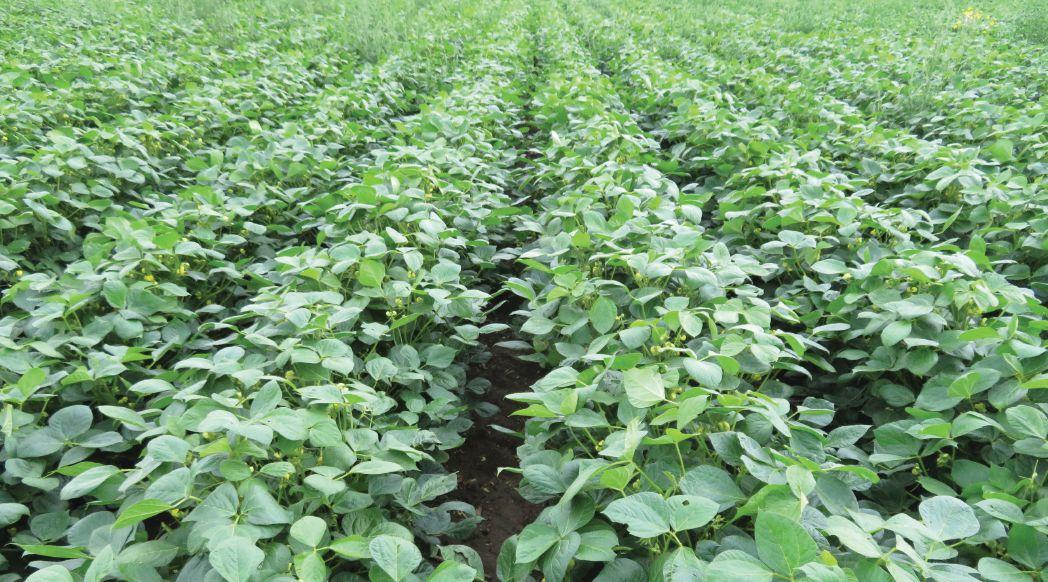
Adzuki bean acreage continues to grow. Can agronomy catch up? PG. 14
A TINY, TERRIBLE YIELD-ROBBER
Identifying soybean genes to resist soybean cyst nematode.
PG. 16
8 | Can epigenetics help guide plant breeding?
Making the most of these temporary, whereditary stress responses in plants.
By Julienne Isaacs
4 In their genes By Alex Barnard
14 | Ontario’s “mini-Cinderella” crop
Adzuki bean acreage continues to grow. Can agronomy catch up?
By Julienne Isaacs
By Carolyn King
ON THE WEB
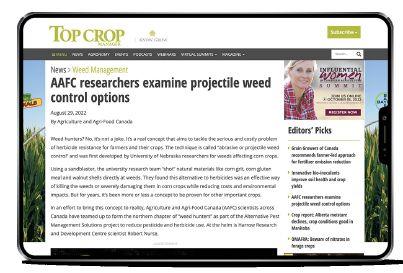
A cross-country team of Agriculture and Agri-Food Canada research scientists, led by Robert Nurse of the Harrow Research and Development Centre, are testing projectile or abrasive weed control as a way of tackling herbicide resistance. The technique, first developed by researchers at the University of Nebraska, involves shooting natural materials like corn grit, corn gluten meal and walnut shells directly at weeds with a sandblaster.
16 | Tackling a tiny but terrible yieldrobber
Identifying new soybean genes to resist soybean cyst nematode.
By Carolyn King
10 Health Canada is clarifying the regulation of gene-edited crops By Julienne Isaacs
ALEX BARNARD EDITOR
IN THEIR GENES
Genetic modification of crops and gene-editing technology are often misconstrued by the general public as a sort of boogeyman. The 1999 Simpsons episode wherein the family accidentally crosses tomato and tobacco to create the addictive “tomacco” (with the help of some plutonium) is probably the first representation of genetic modification as food science gone wrong in pop culture that I ever saw, and it stands out in my memory still.
Consumers are more interested in where their food comes from and the processes involved in creating it than they’ve been in decades – likely not since more people grew their own food. But this interest hasn’t necessarily been matched by getting informed. Consider the marketing around some breads and the focus on “non-GMO wheat,” when there is no genetically modified wheat grown in Canada.
Consumers also have the power to guide food industry decisions – and sometimes with unintended consequences. Take Kellogg’s decision in 2020 to stop accepting cereal crops where preharvest glyphosate had been used by 2025. Glyphosate has been demonized for its adverse effects, particularly on pollinators and aquatic organisms – justifiably in some cases, as supported by scientific evidence. But the fact remains that glyphosate is widely used because it can control extremely challenging weeds, and removing it as an option for farmers without considering the fallout or offering alternatives is putting too much of the onus on growers.
This is especially true when genetically modified crops are also demonized by the public. Gene-editing can make crops more resistant to pests, better adapted to growing conditions, and require fewer inputs in a scientifically supported and sustainable way. With newer technologies like CRISPR, genetic modification is more precise, accurate and safe than ever before. But the perception of genetic modification as some uncontrolled, horrific “spray and pray”-style mutation has about as much in common with the reality as the creature in Mary Shelley’s novel Frankenstein has in common with the lumbering, nonverbal movie monster.
In fact, most of the time consumers wouldn’t be able to pick a genetically modified crop out of a line-up – because many genetic modifications aren’t about altering the end product, as discussed in the article on page 10 clarifying Health Canada regulations for gene-edited crops. Most changes are for the benefit of growing the crop, such as increasing its resistance to abiotic and biotic stresses.
Misunderstandings can be difficult to rectify, as no one really likes to admit they’re wrong. It seems even more difficult in recent years, where changing an opinion on something is framed as losing rather than learning.
But it is vital that these instances of misinformation are addressed and not left to fester and rot public understanding and faith in Canada’s food systems and agriculture. Changing people’s minds is challenging, no doubt about it – but agriculture is challenging, too. I’ve often heard it said that farming is a calling for many who stick with it year after year. You might say it’s in their genes.
THE SOYBEAN SYSTEM YOU CAN’T RESIST.
What makes the Roundup Ready ® Xtend Crop System the #1 grown soybean system in Canada*? It’s the only system that combines the high yield potential of Roundup Ready 2 Xtend® soybeans with built-in tolerance to both glyphosate and dicamba chemistries.
Applying the higher rate of Roundup Xtend® 2 with VaporGrip® Technology in your rst pass provides short-term residual activity on small seeded broadleaves** with the added ability to effectively manage resistance concerns.
STAY AHEAD OF WEEDS WITH THE EARLY SEASON CONTROL OF CANADA’S #1 GROWN SOYBEAN SYSTEM.
traits.bayer.ca
*Based on market research surveys conducted in 2021 with Canadian soybean growers.
**Performance may vary from location to location and from year to year, as local growing, soil and weather conditions may vary. Growers should evaluate data from multiple locations and years whenever possible and should consider the impacts of these conditions on the growers’ elds. Bayer is a member of Excellence Through Stewardship ® (ETS). Bayer products are commercialized in accordance with ETS Product Launch Stewardship Guidance, and in compliance with Bayer’s Policy for Commercialization of Biotechnology-Derived Plant Products in Commodity Crops. These products have been approved for import into key export markets with functioning regulatory systems. Any crop or material produced from these products can only be exported to, or used, processed or sold in countries where all necessary regulatory approvals have been granted. It is a violation of national and international law to move material containing biotech traits across boundaries into nations where import is not permitted. Growers should talk to their grain handler or product purchaser to con rm their buying position for these products. Excellence Through Stewardship® is a registered trademark of Excellence Through Stewardship.
ALWAYS READ AND FOLLOW PESTICIDE LABEL DIRECTIONS. It is a violation of federal law to use any pesticide product other than in accordance with its labeling. NOT ALL formulations of dicamba or glyphosate are approved for in-crop use with products with Roundup Ready 2 Xtend® soybeans. ONLY USE FORMULATIONS THAT ARE SPECIFICALLY LABELED AND APPROVED FOR SUCH USES. Contact the Pest Management Regulatory Agency with any questions about the approval status of dicamba herbicide products for in-crop use with Roundup Ready 2 Xtend® soybeans or products with XtendFlex® Technology.
Roundup Ready 2 Xtend ® soybeans contains genes that confer tolerance to glyphosate and dicamba. Glyphosate will kill crops that are not tolerant to glyphosate. Dicamba will kill crops that are not tolerant to dicamba. Contact your Bayer retailer, refer to the Bayer Technology Use Guide, or call the technical support line at 1-888-283-6847 for recommended Roundup Ready ® Xtend Crop System weed control programs.
Certain cover crops help reduce root disease in the following field crop.
by Carolyn King
AP.E.I. research project has uncovered connections between cover crop type, soil microbiome characteristics, and disease in the following barley or soybean crop.
“Cover crops are a really important part of crop rotations. They have a number of well known and well characterized benefits like reducing soil erosion, increasing organic matter and even things like nitrogen fixation and increasing pollinators. But the microbial communities of cover crops have not really been examined in a lot of depth,” says Adam Foster, cereal and oilseed pathologist with Agriculture and Agri-Food Canada (AAFC) in Charlottetown.
“In our project, we wanted to determine if certain cover crops may have additional benefits by suppressing plant pathogen populations, which could lead to reduced disease pressure for soybean and barley grown the next season.”
This project was part of a larger study to examine the effects of cover crops on no-till soybean and barley. The study was funded by the Atlantic Grains Council and took place at AAFC’s Harrington Research Farm.
For their project, Foster’s research team and his graduate student Harini Aiyer conducted two small-plot field trials, one in 2018 and 2019, and the other in 2019 and 2020.
In the first year of each trial, the following cover crop options were grown: crimson clover: alfalfa; brown mustard; oilseed radish; buckwheat; phacelia; sorghum-sudangrass; annual ryegrass; buckwheat and crimson clover mix; brown mustard and phacelia mix; buckwheat, crimson clover and brown mustard mix; and a check plot with bare soil. The cover crops were planted in early summer and mowed at the end of the growing season.
In the second year, each plot was split in half, with one half planted to barley and the other half to soybean. The barley and soybean plots were seeded in a no-till system, directly into the cover crop residues.
In the cover crop year, Foster’s team sampled the soil throughout the growing season. In the field crop year, they sampled the soil and cover crop residues, and they monitored for crop disease, including rating the severity of root disease.
Then in the lab, they used DNA sequencing to determine the fungal and bacterial communities in the soil and crop residue samples. As well, they isolated and identified the microbes found in the barley and soybean plants.
In the trials, the most prevalent disease in barley and soybean was Fusarium root and crown disease. Levels of this disease highest were after oilseed radish and lowest after sorghumsudangrass.
Microbiome and disease effects
The researchers have already prepared a scientific paper delving into the effects of cover crop choice on the soil fungal and bacterial communities and disease in the following crops.
“The big key finding was that the cover crops had a lot of different effects on the soil microbiome, with different cover crops
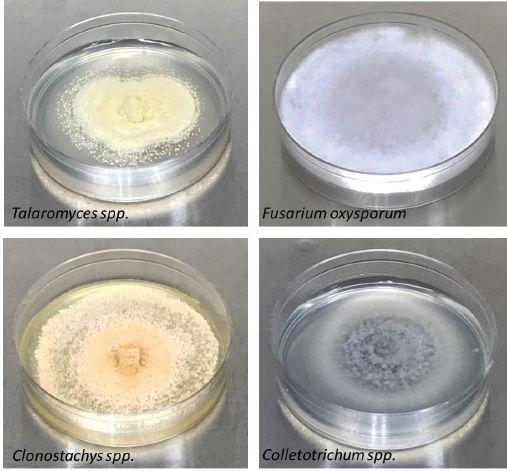
Fungi isolated from the barley and soybean roots included fungal pathogens like Fusarium oxysporum and Colletotrichum and beneficial fungi like Talaromyces and Clonostachys.
having different effects,” says Foster.
“Of note, we found that beneficial microbes like mycorrhizal fungi tended to increase after growing sorghum-sudangrass or buckwheat. We also found a lower abundance of pathogens in the soil after growing sorghum-sudangrass.
“Other cover crops had mixed effects on the soil microbiome. For instance, with oilseed radish, alfalfa and phacelia, we found the abundance of fungal pathogens actually increased after growing those cover crops, but there weren’t necessarily clear links to crop disease in the next year.”
The most prevalent disease in both barley and soybean was Fusarium root and crown disease. This fungal disease can be caused by many different species; in these trials, it was caused by several species including Fusarium oxysporum and Fusarium cerealis.
Foster notes, “We had an extreme weather event in 2019 followed by a drought in 2020; I think those conditions may have limited some of the other pathogens that we might have otherwise seen.”
Fusarium root and crown disease was also the only disease that was strongly affected by the cover crop type.
Overall, levels of this disease were highest in both barley and soybean after oilseed radish, while levels were lowest in both crops after sorghum-sudangrass. Reduced levels of this disease were also observed in barley after alfalfa and in soybean after buckwheat and phacelia.
The team took an in-depth look at Fusarium root and crown disease, including some greenhouse experiments. “The main thing we learned from our work on Fusarium root and crown disease was how complicated the interactions are between the crops and this disease, particularly because the disease can be caused by a number of different fungal species. We found that different fungal species were associated with different cover crops. And we could culture all of these species out of the roots of barley and soybean in the next season,” he says.
“We are now working on a second paper to see if we can disen-
tangle some of this complexity by exploring the microbiome of the cover crop residues into which the barley and soybean crops are planted in a no-till system.”
Soybean and barley yields were examined only in 2020 because the 2019 plots were severely impacted by post-tropical storm Dorian in September of that year. Foster says, “Looking at the 2020 results, barley had the highest yield after alfalfa, and soybean had the highest yield after annual ryegrass. There were only some small yield differences between some of the other cover crops.” With only one year of yield data, it was difficult to link soil microbiome characteristics to crop yields.
Storm boosted pathogen populations
Post-tropical storm Dorian gave the team an opportunity to examine the effects of an extreme storm event on the microbiome.
“The post-tropical storm caused a lot of damage including lodging and mechanical damage to leaves, and soybean pods were particularly damaged. What really surprised us was just how quickly the microbiome changed following the storm,” he says.
“A number of different microbes increased, many of which were plant pathogens. We suspect this might be due to all the damaged plant material present after the storm, which boosts the populations of the pathogens that are taking advantage of the damage.”
He adds, “We think major storms can increase pathogen populations that are already present in an area just by giving them more material to feed on. But major storms also have the potential to bring in pathogens from the regions they have travelled through, so they can be a source of spreading disease.”
In the case of Dorian, Foster notes that the following year was very dry, which may have lowered some of the pathogen levels that had been elevated by the 2019 storm.
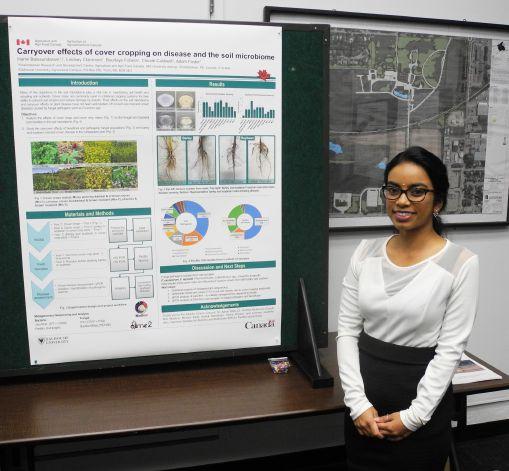
Graduate student Harini Aiyer worked with Foster’s research team to compare the effects of different cover crops on disease in the following barley and soybean crops.
PLANT BREEDING
CAN EPIGENETICS HELP GUIDE PLANT BREEDING?
Making the most of these temporary, hereditary stress responses in plants.
by Julienne Isaacs
Plants have clever ways of quickly adapting to environmental stress. They can even pass these changes on to their progeny without changing their DNA sequences. The study of epigenetics focuses on these kinds of changes.
Researchers are looking at whether they can make some of these natural adaptations to stress permanent – or use them to find markers to guide the selection process in breeding programs.
As an example, plants subjected to a particular kind of stress over a few generations, like drought, can develop improved tolerance to that stress and pass that tolerance on to their progeny. “Many studies have now demonstrated the existence of such ‘stress memory,’” says JeanSébastien Parent, a research scientist with Agriculture and Agri-Food Canada at the Ottawa Research and Development Centre.
Remove the stress, and the plant’s descendants can drop that particular stress-tolerance phenotype; that’s because the epigenetic change isn’t a permanent change to the plant’s DNA, Parent says. But this kind of stress-tolerance might be increasingly valuable as climate change rapidly alters environments and negatively impacts crop production.
Parent is co-author, with master’s student Haley Turcotte, of a recent review paper in the journal Agronomy looking at whether epigenetics can be used to guide the production of better-adapted cultivars – or cultivars more tolerant to climate fluctuations.
Parent likes to use the analogy of a cookbook to describe how epigenetics works. “If the genome is your cookbook and a gene is your recipe, then you could imagine that if it was your mother’s cookbook,
she could have left some helpful notes in the margins about cooking a particular meal – all of her little tricks to make it better that you’d find useful,” he says. “Epigenetics is a kind of information on top of the more basic information, which is the coding sequences that would be the recipes in that analogy.”
Genomes are “a massive affair,” Parent says, but only a small part of genomes are coding for genes, which means they’re transcribed into RNA. “Obviously, the cell itself doesn’t want to make all the genomes into RNA; it wants to focus on those key parts of the genome, the genes themselves. Epigenetics in that way is helpful for finding which part of the genome should be activated and which should be silent. That is my explanation of the core function of epigenetics.”
Can epigenetic changes “stick?”
Parent says epigenetic changes have been studied in a variety of model organisms, including Arabidopsis thaliana. On a genomic scale, it’s “unmistakable” that modifications can be made in a plant during its lifetime, and some of these get passed on. “It’s not anecdotal,” he says.
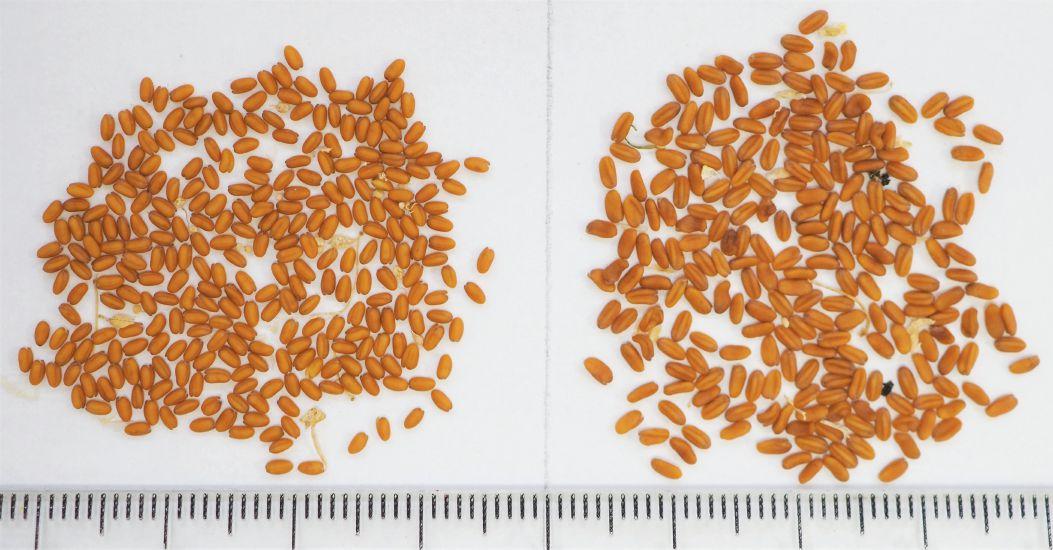
TOP: Parent and his research team are altering the epigenetic landscape of different plants to evaluate their hidden potential. In the above picture, a wild-type line of the oilseed plant Camelina sativa (left) has been epigenetically modified (right), leading to larger seeds. The team is now trying to identify which part of the genome is causing the change.
“Epigenetic variations are much more common than mutagenic variations, or variations in the DNA sequence, but they get passed on a lot less. Where it fits on the evolutionary timescale is sort of hard to say, but the main opinion out there is that it’s somewhat of an intermediary state between the DNA mutation, in that it occurs more frequently but isn’t passed on as frequently – so it’s a tool evolution uses, but how much is still an open question.”
Parent says there’s historically been limited interest in epigenetics in plant breeding programs because heritable traits that might be desirable to plant breeders could be lost after a few generations.
Some of these traits get “reset” during reproductive stages, he says. This acts as a kind of built-in protection for plants so they don’t accumulate all the changes they undergo in response to stress that might disappear over time. From an evolutionary perspective, it makes sense to Parent that epigenetics could be related to short-term survival of plants.
“To me it’s a very rational idea that it would be there to complement the DNA changes or mutations, in that it can be stimulated by the environment quickly, to provoke a change faster, and also if that change is not a good idea long-term it could also be reset,” he says.
Epi-markers in breeding
How could epigenetic markers, or “epi-markers,” be used in plant breeding? In the paper, Parent and Turcotte focus on the most widely studied epi-marker: DNA methylation, a natural, biological process in which methyl groups are added to the DNA molecule without changing the DNA sequence.
“If you don’t have genomic markers, there’s no way to map traits
in certain regions of the genome,” Parent explains. “DNA methylation [behaves] like a genomic marker, in that [it] is very strongly bound to DNA. In chemistry we call it a covalent bond, which is as good a bond as any – it’s very stable, which makes it easy to detect. In many ways, it would behave exactly like a genetic marker – the only difference is that you could have epigenetic markers where you have no genomic markers.”
Epi-markers could be used to help map portions of genomes where genomic markers are absent. But these markers could also be closely associated with the environmental conditions of the plants being studied, triggered by particular cues.
“There’s a real possibility that we could develop environmental stress markers that would target epigenetic modifications, and that could be useful in assessing how much of your field has undergone stress, and that could instruct how to take care of your plants and how to boost yields,” he says.
But that’s just one of many ways that epigenetics could be used to benefit agriculture. Parent notes another key way is in potentially improving plants that don’t – or can’t – undergo traditional breeding without compromising their marketability, such as pinot noir grapes or hops used in beer.
As extreme weather rocks agriculture markets around the world, finding strategies to help plants quickly adapt will become increasingly important.
Parent says, “Epigenetics is tied to environments and environmental responses, and from my point of view it’s worth investing and trying to understand that relationship better and use it for helping plants to adapt to extreme weather.”
That's a rough break... Sounds like there’s a lot going on. Let's talk about it.
In agriculture, we can’t always be close together but that doesn’t mean we’re far from help. Talking about our mental health can be as easy as talking about the weather. Rather than toughing it out, let’s talk it out, together. That’s why we’re here. The Do More Ag Foundation connects you to mental health counseling, training, and education tailored for Canadian farmers and their families. Visit domore.ag for agriculture-specific mental health tips and resources.
Tough year for your farm this year, huh?
Yep, I can’t seem to catch a break with this weather, but that’s farming for you.
HEALTH CANADA IS CLARIFYING THE REGULATION OF GENE-EDITED CROPS
What does the decision mean for breeders –and farmers?
by Julienne Isaacs
When it comes to plant breeding and the release of new varieties, understanding Canada’s regulatory landscape can be a challenge.
But new guidance published by Health Canada in May – which stipulates that gene-edited crops that are not considered novel can be treated like conventional crops and bypass pre-market safety evaluations – is meant to simplify new variety development.
Gene editing describes the use of different techniques, including CRISPR-Cas9, to make extremely specific changes in the DNA sequence of an organism. In plant breeding, it’s used to increase resistance to biotic and abiotic stresses, among other applications.
André Gagnon, a spokesperson for Health Canada, says the decision is consistent with the agency’s traditional approach – namely, to focus on the product, rather than how the product is developed.
“Canada has always taken a product-based approach to the regulation of products of plant breeding,” Gagnon says. “It is the final characteristics of the product, rather than the method used to make the product, that determine the level of regulatory oversight. This regulatory approach is scientifically supported, as it is the characteristics of a product, like whether it contains an allergen or a toxin, that determine if it is safe to eat.”
Rob Duncan, a professor and Brassica breeder at the University of Manitoba, says it’s important to understand that, no matter what technology is used in the development of a plant product – traditional breeding, transgenic approaches or gene editing – if that product is deemed “novel,” it must go through a pre-market safety assessment in Canada.
But what determines whether a trait or product is “novel?” Duncan says that has to do with how much a product differs from existing products in the marketplace.
He offers an example. “Let’s say the natural variation of a crop had a protein content around 40 per cent for whatever crop we’re talking about. If I was able to produce something with a substantial difference from the natural variation – for example, 60 per cent protein – that could be deemed ‘novel.’ That doesn’t mean a gene-edited crop would automatically be deemed novel – the method doesn’t determine the outcome of that novelty.”
Safety concerns
Much of the conversation around gene-edited crops, particularly among consumer groups, has focused on whether or not crops developed using gene-editing tools are safe for human consumption and for the environment.
Duncan says this might have to do with lack of awareness about how gene-editing technology like CRISPR works. There’s broad consensus within academia, industry and government groups that geneediting technology presents few safety concerns.
In fact, compared to some “traditional” methods used in plant breeding, which produce many random changes, Duncan says it’s safer, because it’s far more specific and targeted at specific genes.
Chemical mutagenesis is one example. The decades-old technique
TOP: Consumers are concerned with the human and environmental safety of gene-edited crops. Academia, industry and government broadly agree they presents few safety concerns.
is considered “traditional,” but involves exposing seeds to chemicals and watching for desirable traits in subsequent generations of plant progeny.
Duncan explains that scientists are always on the alert for unintended consequences, no matter the breeding technique, but these are more likely when the breeder is using non-specific methods.
“[Whether you’re] using gene editing or traditional breeding, an unintended consequence could occur through either method – traditional or mutagenesis or transgenic methods. For decades, chemical mutagens have been used and can introduce random changes into the genome, but it’s been deemed ‘acceptable’ because it doesn’t introduce information from other organisms,” he explains.
“Gene editing is incredibly precise. The best analogy is a word processing document – you can delete or add words down to the letter.”
But Duncan also makes the point that gene editing isn’t solely used to create commercial end-products, but also on the “fundamental science side of things” – for example, discovering what gene controls resistance to a particular plant pest, or the production of an allergen.
“My graduate students, who are doing this fundamental research, can utilise this technology to figure out the genetics underlying a trait or improve that fundamental knowledge. Then, they can take that knowledge and apply it to a potential commercial product,” he says.
“In the past, if you were using traditional transgenic methodology, you’d have to do that fundamental research, then you’d use traditional transgenic techniques – but again, that insertion or deletion could be random in the genome. It could easily take years. I think this precision has the potential to reduce the amount of time it takes for new varieties to get out to the field.”
François Eudes, director of Research, Development and Technology and lead director for Novel Breeding Technologies with Agriculture and Agri-Food Canada based in Lethbridge, Alta., says the updated guidance from Health Canada will help keep Canada competitive and adaptable to a changing climate.
Eudes says, “This technology could reduce the need for pesticides, added fertilizer and other inputs, lessening the impact to the surrounding environment as well as improving the farmer’s bottom line.”
CONGRATULATIONS
2022 INFLUENTIAL WOMEN
The incredible nominations we received for this program’s third year highlighted just how many influential women there are working in Canada’s agriculture industry.
To our Top 7 recipients, those who nominated an influential woman, those who offered support through social media or tuning into the podcast series on AgAnnex Talks, and to our generous sponsors:
CONGRATULATIONS
WOMEN IN CANADIAN AGRICULTURE WINNERS
Christine Noronha
Heather Watson
Karen Tanino
Lana Shaw
Lisa Mumm
Mary Ruth McDonald
Valerie Carney
SPECIAL CROPS
ONTARIO’S “MINI-CINDERELLA” CROP
Adzuki
bean acreage continues to grow. Can agronomy catch up?
by Julienne Isaacs
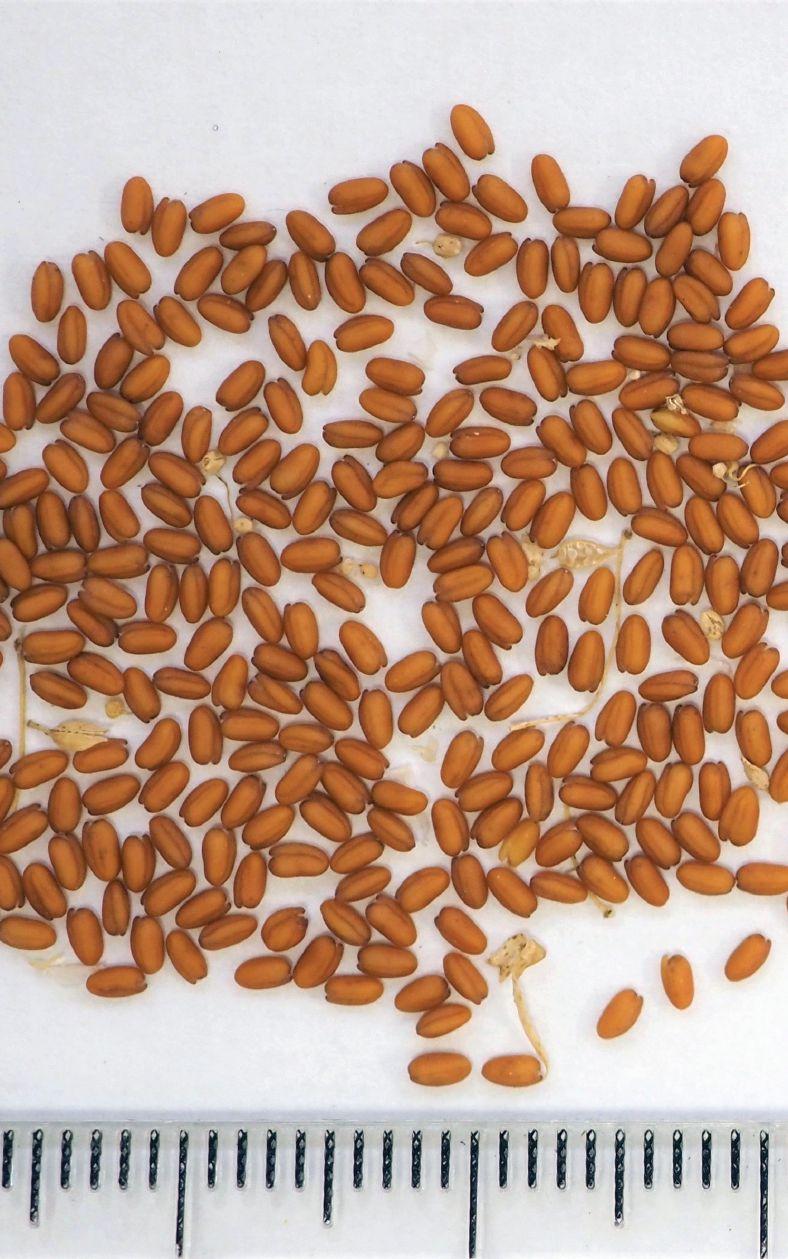
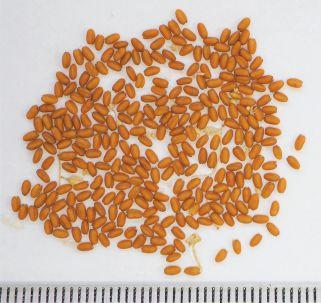
There isn’t much name recognition for adzuki beans, a red edible dry bean used for bean paste in sweet East Asian dishes. There also isn’t much agronomy for eastern Canadian growing conditions. There’s very little research, period.
But adzuki bean acreage went from around 13,000 acres in Ontario in 2021 to nearly 18,000 acres this year.
That’s still not enough to meet demand, according to Maitland Underwood, a board member at Ontario Bean Growers (OBG) and plant manager at Underwood Grain Ltd., a family-owned grain elevator and processor in Wingham, Ont. He says Japan and South Korea are the two biggest markets for Canadian adzuki beans. China used to be a major adzuki bean producer until many adzuki acres shifted to soybean in an attempt to shore up domestic supply, Underwood says. So, Canadian adzukis are well positioned to meet East Asian demand.
“Adzuki are the one market class at the grain elevator that we get calls about every day. We’re dying for adzukis. If we could grow another 10,000 acres of adzuki bean, there would be homes for them,” Underwood adds.
Ten years ago, there were perhaps 6,000 acres of adzuki bean in Ontario. Mike Donnelly-Vanderloo, chair of OBG, says the crop has made impressive strides in the province.
“Out West they call canola the ‘Cinderella’ crop. Adzuki bean is our mini version of a Cinderella bean crop in Ontario,” he says. “They
Adzuki bean acreage is growing in leaps and bounds, but Ontario Bean Growers’ Maitland Underwood says there’s room in the market for at least another 10,000 acres of the crop.
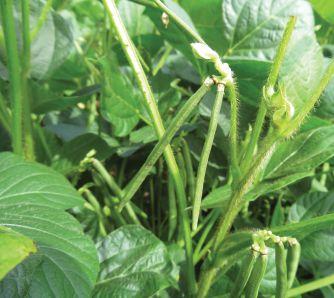
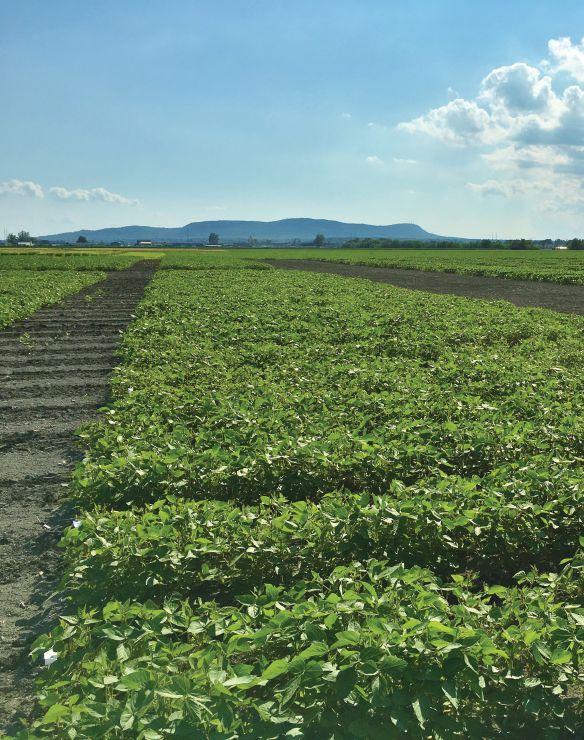
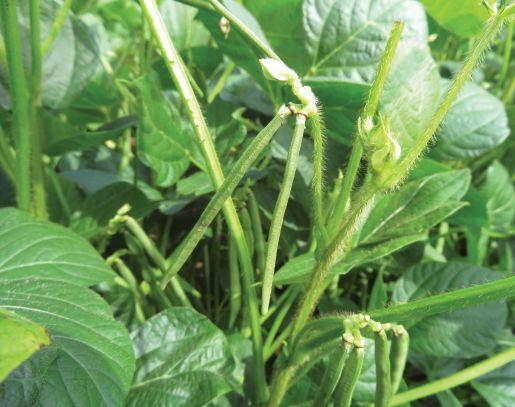
MIDDLE: The lack of agronomic information for Ontario growers and the crop’s specific challenges means growing adzuki beans involves some trial and error.
TOP:
started off on a very small scale and now they’re around our second biggest dry bean market class in Ontario [after navy beans].”
Agronomy
Adzukis aren’t going to be for everyone, however. There’s profitability to be had growing them, Underwood says, but they’re “intensely involved.”
Adam Ireland, who also serves on the OBG board and is the Ontario representative for Pulse Canada, echoes the warning. Ireland has grown adzuki beans for seven years. This year, he planted 450 acres.
“Adzuki are the one market class at the grain elevator that we get calls about every day. We’re dying for azukis. If we could grow another 10,000 acres of adzuki bean, there would be homes for them.”
“[It’s a] less-known crop, so you don’t have as much historical data to lean back on,” he says. “There are a lot of field passes to grow a crop, and it can vary in yield, which is frustrating when you have put a lot of work into a crop. I started with 60 acres and worked my way up. I’d recommend that strategy to new growers.”
There’s little to no agronomic advice out there for adzuki bean growers in Ontario, Ireland says; he’s had to work most issues out for himself through trial and error.
Like any edible bean crop, there are more field passes than for other crops, he says.
Ireland applies nitrogen, because there’s consensus that the crop doesn’t fix enough N on its own, as well as phosphorus and potassium.
There are fewer herbicide options for adzuki bean than soybean, he says. Typically, he’ll do a pre-emergent application of Pursuit or Prowl, then a graminicide in-season. Adzuki beans will continue to flower as long as there’s sun and moisture, so he says a pre-harvest desiccant is necessary. Adzuki bean has what Underwood calls a “legacy” issue with volunteers, and Ireland says that, in the year following the crop, a pre-plant herbicide with residual action is also necessary.
“All of my higher management goes into the adzuki bean,” he says. “I could rotate it out and grow soybean maybe three years after adzuki bean, but I wouldn’t want to grow soybean the year after – that would be a recipe for disaster.”
A new scholarly review by Peter Sikkema, a professor at the University of Guelph specialising in field crop weed management, highlights the need for early season weed management in adzuki bean due to their lack of early season vigour.
But the crop is sensitive to many herbicides, he notes in the paper.
“Growers should avoid atrazine, Sencor, EPTC, Zidua, Command, Valtera, Authority, Frontier, and Dual applied pre-plant incorporated and (or) pre-emergence, and Permit, Pinnacle, and Basagramn applied post-emergence, due to poor adzuki bean tolerance to these herbicides,” Sikkema writes.
“There is an adequate margin of crop safety to Treflan, Prowl, Permit, and Pursuit soil-applied, Reflex applied post-emergence for broadleaf weed control, and Assure, Poast, Select, and Venture applied post-emergence for grass control.”
Inputs aside, Ireland also notes that harvest has its challenges. The chief one is that harvest requires a lot of time and patience. “If you drive too fast, anything over 2.5 miles per hour will push them over. Even if you drive extremely slowly, you’re going to have some harvest loss, so there’s a lot of volunteer adzuki bean that grow in the following year.”
If IP soybean are a large part of a producer’s operation, Ireland warns that adzuki bean might not be a good fit due to the volunteer issue.
New varieties
Underwood says most varieties of adzuki bean have traditionally been bred in Japan and they’re tightly guarded with intellectual protection. Producers in Canada have been using the same variety of adzuki bean, called Erimo, for 50 years.
That could soon change. At the University of Guelph, K. Peter Pauls, a professor and breeder in the department of plant agriculture, leads an adzuki bean-breeding program.
Pauls says Erimo has excellent qualities for bean paste but has small seeds and a short stature, which contribute to harvest losses.
“The goals of the breeding program are to develop high-yielding, upright adzuki bean varieties with large, well-coloured seeds and excellent paste-making qualities. The long term goal of the breeding program is to provide improved adzuki bean varieties for Canadian producers suited for production in Canada that will command premium prices in international markets,” he says.
Pauls’ program began by crossing Erimo with other adzuki bean lines with larger seed sizes and taller stature. Field trials were performed in two Ontario locations – Woodstock and Elora – in 2020 and 2021, with really promising results.
Seed weight scores from lines with at least two years of Advanced Yield Trial information were greater than 10, the average for Erimo. Most lines outyielded Erimo, and a number of the high-yielding lines boasted harvestability scores equal to or better than Erimo, Pauls says. A number of these lines were also taller than Erimo and better suited to harvesting by direct combine.
The breeding program’s industry partner, Hensall Co-op, is also the largest adzuki bean buyer in Ontario. Hensall sent samples of the best-performing lines to contacts in Japan for end-use quality testing.
“We have agreed to initiate breeder seed production of a line in Idaho to produce enough seed for larger scale evaluations of this line,” Pauls says. “The seed size of this line is 20 per cent larger than Erimo; it is 12 per cent higher yielding than Erimo and 12 per cent taller than Erimo. It was identified as a desirable line in the quality assessments performed by Japanese paste manufacturers.”
It’ll be a few years before this yet-unnamed variety reaches Canadian fields. But demand shows no signs of slowing. And if producers take their time learning about the crop’s unique requirements, it can be rewarding.
“Know your herbicide options and problem weeds before starting,” Ireland notes. “Be prepared for lots of sprayer time and combining is slow. But it is a rewarding crop to grow when it goes well.”
TACKLING A TINY BUT TERRIBLE YIELD-ROBBER
Identifying new soybean genes to resist soybean cyst nematode.
by Carolyn King
Resistant soybean varieties are a critical tool for managing soybean cyst nematode (SCN). However, most of these varieties rely on a single resistance source. So, the threat of this major pest adapting and overcoming the resistance is very real.
This threat is spurring researchers towards new advances in SCN management. One of those researchers is Agriculture and Agri-Food Canada (AAFC) scientist Bahram Samanfar.
He and his research group in Ottawa are working to identify new, effective SCN resistance genes.
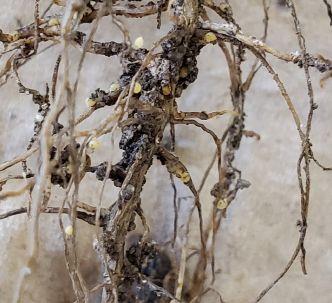
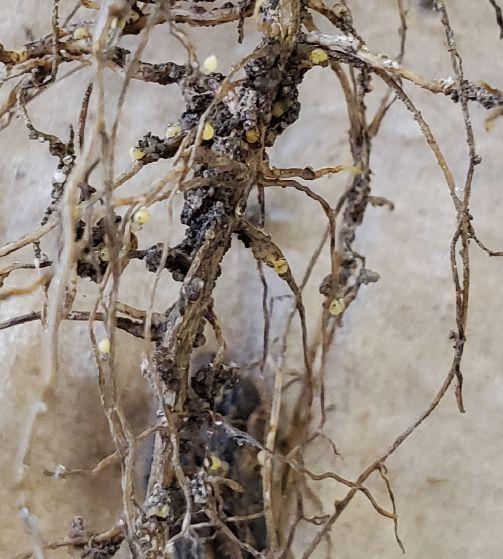
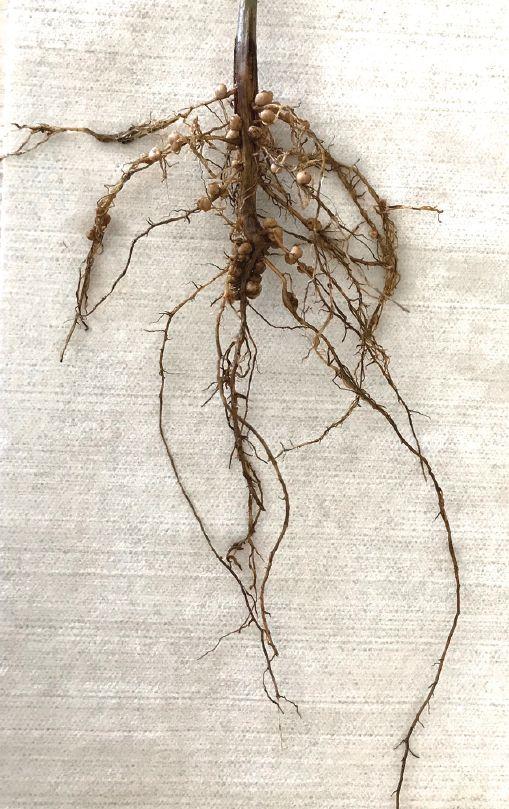
Soybean cyst nematode is a microscopic, soil-dwelling pest that feeds and reproduces on soybean roots. The nematode’s name comes from its pinhead-sized cysts on the plant’s roots. The cysts, which contain the nematode’s eggs, change from white to yellow to brown over time. Aboveground SCN symptoms include yellowing, stunted or dead plants in patches in a field.
This pest can cause yield losses of 80 per cent or more in susceptible soybean cultivars growing in highly infested fields.
Early signs of resistance breakdown
Genetic sources for SCN resistance are identified by the soybean line that was the original source of the resistance. Samanfar notes that the two main resistance sources used in soybean varieties are Plant Introduction (PI) 88788, which has been widely used for many years, and PI 548402, a variety known as Peking.
“Various seed companies have PI 88788 and Peking in their mix. PI 88788 still accounts for 90 to 95 per cent of the SCN-resistant soybean varieties available in Ontario and elsewhere,” says Albert Tenuta, field crop pathologist with the Ontario Ministry of Agriculture, Food and Rural Affairs (OMAFRA).
“PI 88788 has been very durable, and it’s still very effective in Ontario. However, we are starting to see some Ontario fields where PI 88788 is no longer as effective, where 50 or 60 per cent of the field’s SCN population can reproduce on those soybean plants. Yields in those fields are dropping from around 60 bushels per acre down into the 20s and low 30s.”
Tenuta outlines how the nematode gradually overcomes a resistance source. “Soybean cyst nematode in a field is not one uniform population. It’s a smorgasbord of what we call HG types, or what used to be called races. Some HG types can reproduce on a particular resistance source and others cannot.” Repeatedly growing the same SCNresistant variety in a field leads to a gradual buildup of those HG types that can reproduce on that variety.
“The good news is that we are starting to see some other resistance sources coming into U.S. soybean varieties, such as Hartwig (PI 437654) and a newer source from Syngenta called PI 89772,” he says.
“We are anticipating the potential for some new sources in Ontario varieties as well.” For example, Milad Eskandari, a soybean breeder at the University of Guelph’s Ridgetown campus, has lines with Hartwig that are being evaluated in field trials.
Tenuta also underlines the value of the work by Samanfar’s group and others to identify new SCN resistance genes, especially because of the potential to stack resistance genes together in a soybean variety to achieve more durable resistance.
Promising progress
Soybean cyst nematode resistance genes are known as Rhg genes:
ABOVE: The small white cysts on this soybean root contain the eggs of the soybean cyst nematode.
“R” for resistance and “hg” for Heterodera glycines, the scientific name for the nematode. A soybean plant’s ability to resist different HG types depends on which particular alleles (variants) of which specific Rhg genes are present and how many copies of those genes are present.
“The resistance in current soybean varieties generally comes from two genes: Rhg1 and Rhg4,” notes Samanfar, a molecular geneticist and applied genomicist. PI 88788 contains rhg1-b, which is an allele of a recessive form of Rhg1. Peking contains rhg1-a, a different allele of Rhg1, and Rhg4.
The first phase of Samanfar’s project to find new candidate genes involved sifting through mountains of data on soybeanSCN interactions at the fundamental level of genes and their proteins. To do that, he and his research group used a bioinformatic tool called Protein-protein Interaction Prediction Engine, or PIPE.
“In a collaboration between Carleton University and AAFC, we developed a new version of PIPE to work with soybean and also to predict interactions between soybean and the nematode,” Samanfar says. “We have a massive amount of the data from that. Then we also added other databases available for soybean, such as functional genomics databases, single nucleotide polymorphism databases, and RNA sequencing databases.
“You might ask what is predicting protein-protein interactions going to give to you? Well, we use it for a concept called ‘guilt by association,’” he explains.
“My old supervisor always gives this example to explain the concept: Imagine you are trying to understand criminal activity
in your community. You know the big head criminals, you know which neighbourhoods they live in, where they go – you know their patterns. Now imagine a new person comes to the community. You see that person in those same neighbourhoods, going to the same places, becoming friends with those big criminals. Then you can assume that person may be a criminal, too.
“We have used this ‘guilt by association’ concept to try to identify more SCN resistance genes. So, we know about Rhg1 and Rhg4, our big players. Then we ask: do we have any gene, any protein in our databases which follows the same routes, the same interactions and behaves exactly like Rhg1 and Rhg4?”
To find the answer to that question, Samanfar’s senior PhD student Nour Nissan, in collaboration with an expert coder from Carleton University (Eric Arezza from Jim Green’s research group), developed a new coding package. That package re-analyzed and re-filtered the enormous amount of data in all those huge databases.
The result was a new list of soybean genes of interest that likely have an important role in the host-pathogen interaction between soybean and SCN.
Next, the researchers examined the DNA of a diverse set of soybean lines to identify allelic variations in each of those genes of interest in the lines. Then, they tested those soybean lines against different HG types in the greenhouse and quantified the level of SCN resistance.
Those greenhouse tests have produced a shortlist of promising candidate genes that are probably effective SCN resistance genes.
Next steps
Within the next three years, Samanfar’s group will be conducting further tests using tools such as CRISPR to confirm which of those candidate genes are definitely effective SCN resistance genes.
As an example, he outlines how they plan to use CRISPR as a confirmational tool. “Let’s say we think the presence of gene A probably causes SCN resistance in a plant. If we use CRISPR to knock-out that gene and the resistance goes away, then that confirms the gene is playing a key role in the resistance.”
For each confirmed new resistance gene, Samanfar and his research group will create an allele-specific marker to identify the particular allelic variation of the gene that causes the resistance. The marker will allow breeding programs to very quickly screen many breeding lines to identify which offspring carry that specific allele.
Samanfar emphasizes that collaboration is key to this project. AAFC collaborators include Benjamin Mimee, a nematologist, and Elroy Cober, a soybean breeder. PIPE collaborators at Carleton University include Ashkan Golshani, Jim Green, Kevin Dick and Frank Dehne. Samanfar adds, “A lot of the achievements in this project would not have happened without the initiative and hard work of Nour Nissan.”
This project was funded in part through AAFC and Grain Farmers of Ontario (GFO), the province’s largest commodity organization.
Managing SCN
Once a field is infested with SCN, eradicating this pest is very tough. However, the nematode can be managed. Tenuta summarizes the main management strategies.
“Number one: grow resistant varieties. We have exceptionally good SCN-resistant varieties. Even under low SCN pressure the resistant varieties often will perform as well as or better than most non-resistant varieties. In infested fields, resistant varieties have shown consistently in our studies and others in the U.S. that they outperform non-resistant varieties,” he says.
“Two: rotate those resistant varieties. That includes rotating among different varieties with PI 88788, because they can have different degrees of resistance [depending in part on the number of copies of the resistance gene in the variety]. And try to include
varieties with Peking resistance in the rotation.”
Tenuta adds, “Information about which resistance source is in an SCN-resistant variety is usually available either in the company’s literature or on the bag. But if not, always ask.
“Three: consider using an SCN seed treatment. These products can help slow down SCN reproduction. In our trials, we have seen anywhere from a 30 to 60 per cent reduction with some of the products, but they are not a ‘silver bullet’ and are best used in an integrated SCN management program.
“Four: include non-host crops in your crop rotation. When it comes to SCN, the main crops that are most at risk for us are soybeans and dry beans. Corn, wheat and other non-legume crops are good non-host crops. Maintaining them in your rotation, whether it’s a two- or three-year rotation, can help reduce SCN reproduction.”
Tenuta also advises regular scouting for the nematode, whether or not you already know that you have the pest.
“If you know you have SCN, you need to sample every four to six years to determine what your cyst levels are. If you see the levels increasing quite a bit, that would likely mean you’re starting to see adaptation to the PI 88788 source of resistance,” Tenuta notes.
“And just because you don’t see above-ground symptoms in your field doesn’t mean SCN is not there. [You can have yield losses nearing 25 per cent without obvious above-ground symptoms.] So, dig up some plants and check the roots for cysts.”
Reasons for optimism
Tenuta sees many promising trends in research and technology for SCN management.
“We’re starting to see the development of new alternative SCN control methods besides genetics and rotation. Along with chemical seed treatments, we’re starting to see more bacterial seed treatments and other bioagents. There is also a lot of research around cover crops and alternative cropping systems to help manage the nematode,” he says.
“OMAFRA is also conducting a nematode survey across Ontario this year. If you want to know whether you have SCN and at what levels, you can contact me. We will analyze your samples for free with the help of the University of Guelph’s nematode lab. This survey is looking at nematodes in field crops and horticultural crops, not just SCN. It will give us a good baseline so we can prepare for nematode issues in corn and other crops, as well as soybeans.”
Tenuta also notes, “A couple of companies are reporting that they are close to potentially releasing transgenic soybean varieties against SCN. One such partnership was announced recently (June 2022), but it will still be many years until they are available to growers. There is also a lot of work on stacking available resistance genes into soybean varieties to help provide multiple levels of protection against SCN.”
Although substantial progress is being made when it comes to SCN resistance in soybeans, Samanfar says, “There are still a lot of gaps in our understanding of the interactions between soybean and soybean cyst nematode. Many factors play their roles: some of them we know, some of them we don’t. But we definitely need to keep working on this to help ensure effective, durable soybean cyst nematode resistance.”
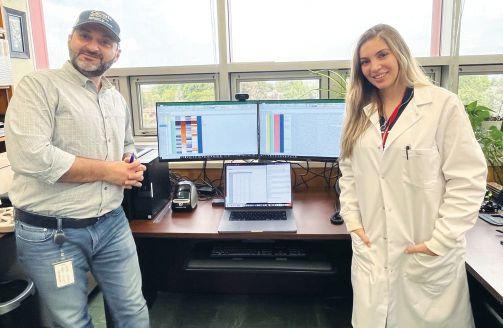
Samanfar (left) and his senior PhD student Nissan are seeking new soybean genes for resisting soybean cyst nematode.
COVER CROPS AND THEIR SOIL MICROBIOMES
CONTINUED FROM PAGE 7
In the trials, the most prevalent disease in barley and soybean was Fusarium root and crown disease. Levels of this disease highest were after oilseed radish and lowest after sorghum-sudangrass.
Take-homes and next steps
“For barley and soybean growers, we hope this research has given some insight into how cover crop choice may have effects on their future crops beyond perhaps the reasons why they originally planted the cover crops,” he says.
“In particular, growers might be interested in the benefits of buckwheat and sorghum-sudangrass for reducing root disease and increasing the abundance of beneficial microbes.”
Many PEI growers are familiar with these two cover crops. According to Foster, sorghum-sudangrass is one of the cover crops recommended for use in potato rotations to improve soil health by preventing erosion and improving soil organic matter.
Buckwheat is widely grown in PEI potato rotations these days because research by AAFC entomologist Christine Noronha has shown that buckwheat can really reduce tuber damage caused by wireworms.
Interestingly, Foster’s project found that buckwheat’s soil
microbiome benefits included an increase in certain anti-insect fungi that might have the ability to suppress wireworms. “We are currently working with Dr. Noronha to see if we can isolate these fungi and determine if they do have an effect on wireworms.”
In addition to their current look at the microbiomes of the cover crop residues and the wireworm/buckwheat work, Foster and his team also have a couple of cover crop-related research proposals that are under consideration for future funding.
One project proposes to examine the relationship between cover crops, the microbiome and disease in different cropping systems, particularly focusing on corn rotations. The other aims to explore ways to reduce and prevent lodging in oats, which has links to the microbiome, cropping history and extreme weather.
As researchers like Foster discover more about the links between cover crops, the microbiome, and the effects on the following crop, crop growers will be able to get a more comprehensive picture of the pros and cons of different cover crop options.
OCT. 18, 2022
10:00AM MT / 12:00PM ET
INSPIRE | LEARN | LEAD | CONNECT
Register for this free, virtual mentorship-style event with some of the most influential female leaders in Canadian agriculture.
Hear from the 2022 Influential Women in Canadian Agriculture program and other industry trailblazers on important topics such as leadership, balance, and communication.
Join Lana Shaw, Megz Reynolds, Valerie Carney, Heather Watson, Lisa Mumm and more for an afternoon of interactive discussions as they share their experience, offer guidance and discuss their journey in agriculture.
Gold Sponsors
Bronze Sponsor
Platinum Sponsor
Trecepta® combines the power of three di erent modes of action for broad-spectrum control of above-ground feeding pests, including Western Bean Cutworm.