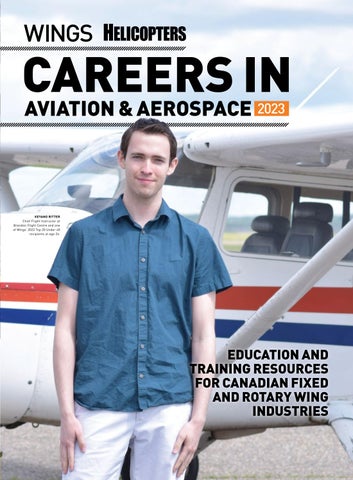
CAREERS IN AVIATION
& AEROSPACE 2023
AND TRAINING RESOURCES FOR CANADIAN FIXED AND ROTARY WING INDUSTRIES

REACH FOR THE SKY



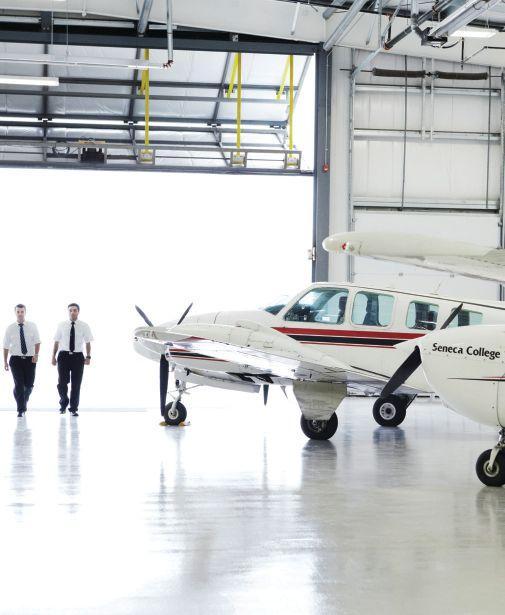
As one of Canada’s premier aviation schools, we o er state-of-the art facilities and innovative flight instruction methodology. Start your career with a competitive edge. Available programs
• Aviation Operations
• Aviation Safety
• Flight Services
• Flight Services – Operations & Cabin Management
• Honours Bachelor of Aviation Technology
senecacollege.ca/aviation-flights
PILOT AND TECHNICIAN DEMAND OUTLOOK
The Boeing Company in July 2022 released its annual Pilot and Technician Outlook, which provides detailed analysis of global industry shifts for the next 20 years. New personnel demand is calculated based on a 20-year fleet forecast for commercial aviation aircraft with more than 30 seats. This is then supported by Boeing analyzing fleet growth, aircraft utilization, attrition rates and regional differences in crewing specific to aircraft type to form the Pilot and Technician Outlook (PTO) report.
The 2022 PTO forecasts the need for 2.1 million new aviation personnel over the next 20 years to support the expected growth in commercial air travel. The longterm forecast shows that 602,000 pilots, 610,000 maintenance technicians and 899,000 cabin crew members will be needed to support the global commercial fleet over the next two decades. The worldwide fleet is expected to nearly double and grow to 47,080 airplanes by 2041, according to Boeing’s recently released Commercial Market Outlook, which is also published annually in conjunction with the PTO.
This year’s PTO represents a 3.4 per cent increase from 2021, excluding the Russia region, which was not forecast in this year’s PTO due to sanctions that prohibit exports of aircraft manufactured in western countries and market uncertainty. Boeing notes that China, Europe and North America represent more than half of the total new personnel demand. The fastest growing regions are Africa, Southeast Asia and South Asia, with all three regions expected to grow more than four per cent.
“As the commercial aviation industry recovers from the pandemic and plans for long-term growth, we anticipate a steady and increasing demand for aviation personnel, as well as the ongoing need for highly effective training,” said Chris Broom, vice president, Commercial Training Solutions, Boeing Global Services, discussing the findings of the PTO report. “Our customer-centric approach and digital expertise includes a commitment to delivering data driven, competency-based training and assessment
solutions as well as technologies that meet the evolving needs of our customers.”
New digital solutions to enhance the efficacy and efficiency of training would include immersive learning experiences and virtual learning platforms. The Boeing report explains that the ability to meet projected pilot, aircraft technician and cabin crew demand is wholly dependent on industry’s investment in a steady pipeline of newly qualified personnel to replace those who have left or will soon leave the industry through retirement, recent layoffs and furloughs, and ongoing attrition.
The Canadian aviation industry, like all domestic aviation industries, will be developing even greater partnerships between airlines and educational organizations to build better pipelines. These school-industry partnerships will become key differentiators for students looking for a career in aviation. Many organizations are also building stronger internal training programs to help new entrants develop reward careers. (See page C18 for an Sponsored Content article on how NAV CANADA has built a training network to feed its entire organization with skilled employees.)
As Boeing notes in its PTO report, the global aviation industry will need to keep
a sharp focus and engage in collective efforts to build a diverse talent pipeline through more educational outreach and recruitment programs, development of new pathways to aviation careers, investment in early-career learning opportunities, and deployment and adoption of more efficient learning methods.
Opportunities for those aspiring to build an aviation career will abound, notes Boeing, while operators will face stiff competition in recruiting and retaining top tier talent. The outlook for the next 20 years will clearly put tremendous earning potential in hands of new aviation professionals.
Importantly, Boeing in its 2022 Pilot and Technician Outlook report notes a growing trend in the aviation sector, for both fixedand rotary-wing operators, as training methodologies progress toward a holistic approach that focuses on competencies rather than prescriptive tasks.
In other words, the type of training you receive is likely to hold a greater measure of sway beyond the traditional methods of measuring flight hours, which of course remain vital for gaining experience and often introduces aspiring professionals to exciting and unexpected forms of Canadian aviation. | W
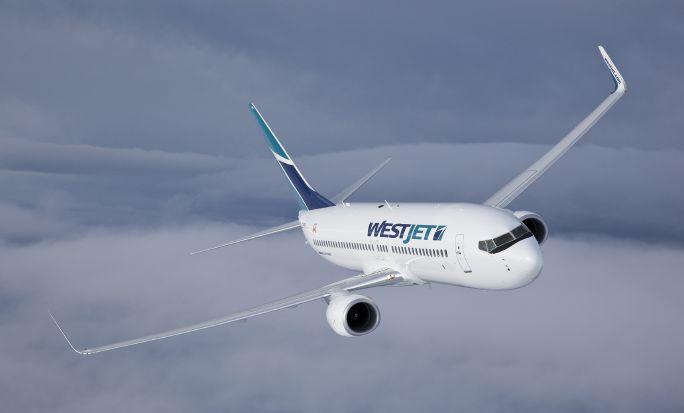
WestJet has been busy growing one of North America’s youngest Boeing fleets with 787 Dreamliners and 737 Max aircraft to develop new routes on the continent and overseas.
FLIGHT TRAINING
FIXED- AND ROTARY-WING TRAINING CENTRES BY PROVINCE AND TERRITORY
YUKON
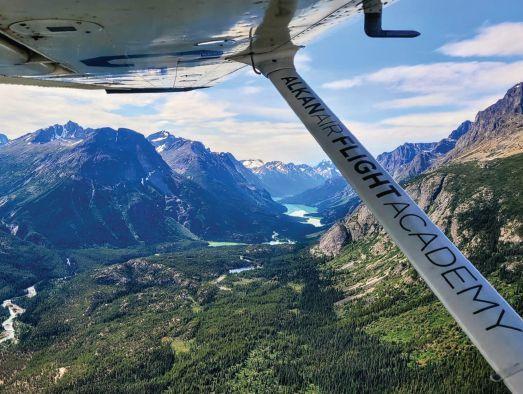
Alkan Air Flight Academy | Whitehorse
Alkan Air is partnered with Yukon College to offer one year or 30 credits toward the school’s two-year Aviation Management diploma program. The majority of ground school courses occur during the evening at Alkan Air and flight training must take place during daylight hours (exception is night time flight training). Alkan Air itself provides Private Pilot and Commercial Pilot License training. The operation provides a unique environment to learn in a northern climate, with access to an international airport and gravel strips in remote areas.
BRITISH COLUMBIA
Canadian Flight Centre | Boundary Bay and Kamloops
Canadian Flight Centre opened in 1979 at B.C.’s Boundary Bay Airport, near Vancouver, and became one of the first flight schools to specialize in instrument flying and other advanced training. CFC has trained thousands of pilots and today its students come from six continents (Antarctica excluded). Kamloops proximity to the mountains provides the opportunity for mountain checkouts.
Canadian Helicopters | Penticton
Canadian Helicopters operates its flight school under the name HNZ Topflight, providing training programs to both company pilots and external clients. The school traces its origins to 1951 when it was known as the Canadian Helicopters School of Advanced Flight Training.
Chinook Helicopters | Abbotsford
Chinook Helicopters began training operations in 1982 at the Abbotsford Airport, from where it continues to operate. The Abbotsford area is well suited for
year-round helicopter training. Chinook utilizes the expansive Fraser Valley for all initial flight exercises, and the Coastal Mountain Range for intermediate and advanced exercises.
Coastal Pacific Aviation | Abbotsford
Coastal Pacific Aviation, located at Abbotsford Airport, partners with The University of the Fraser Valley to combine a diploma or degree together with a Commercial Pilot’s Licence with multi-engine and instrument rating. Its programs also include Seaplane Endorsement, Private Pilot Licence, Commercial Pilot Licence, Multi-Engine Rating, Instrument Rating, Night Rating and Instructor Rating.
Glacier Air | Squamish
Glacier Air, operating from Squamish Municipal Airport, trains within the Sea-to-Sky corridor from Vancouver to Whistler, specializing in mountain training for fixed- and rotary-wing aircraft. Glacier also offers survival ground school, which includes studies in weather, flight techniques, effects of density altitude, emergencies, route planning and aircraft preparation, and survival gear.
Ocean Air Floatplanes | Victoria
Ocean Air training specializes in seaplanes for both commercial and private licenses, helping more than 300 pilots earn their Canadian Seaplane Rating since 2002. With Transport Canada Floatplane/Seaplane Endorsement training, the company provides 15- and 50-hour programs amid the Gulf Islands with close proximity to Vancouver.
Okanagan Mountain Helicopters | Kelowna
Okanagan Mountain Helicopters started as a helicopter flight training school in 2003. Its courses are designed to address commercial helicopter companies with a range of operational flying. Its facility at Kelowna International Airport also introduces students to controlled radio
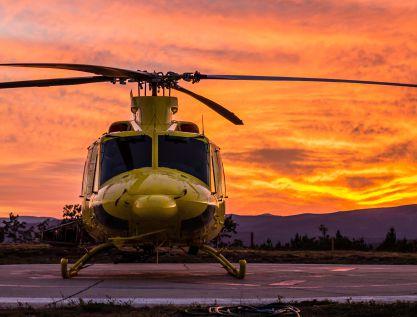
procedures, multiple training locations for confined areas and mountain flying introduction within a control zone, and the best blend of controlled and uncontrolled practice areas.
Pacific Flying Club | Boundary Bay
The Pacific Flying Club (PFC) was formed in 1965 as the Canadian Pacific Airlines Employees Flying Club. Students train at Boundary Bay Airport, where it has been located since 1985, just south of Vancouver. It is the first flight training centre in the Lower Mainland to achieve accreditation with the Private Post-Secondary Education Commission of BC (PPSEC) (now known as Private Career Training Institutions Agency of British Columbia (PCTIA) and is a fully participating member of the Air Transport Association of Canada and the British Columbia Aviation Council. The organization has a fleet of more than 25 aircraft and three simulators. It is a partner with the British Columbia Institute of Technology’s flight program.
Southern Interior Flight Centre | Kelowna
Southern Interior Flight Centre is located at Kelowna International Airport in the Okanagan Valley, which allows for exposure to every level of controlled and uncontrolled environments a pilot might encounter. It provides a range of flight training programs, including the ability to obtain a Commercial Aviation Diploma Program, Flight Instructor Rating, Commercial Pilot Licence, Private Pilot Licence, Recreational Pilot Permit, Night Rating, Instrument Rating, Multi-Engine Rating, and VFR-OTT. The centre’s VFR Over-The-Top Rating (VFR OTT) builds on the knowledge you have learned in your Private Pilot training, and allows you to fly aircraft under Visual Flight Rules (VFR). If you can meet the weather, skill and equipment requirements, the CFR OTT Rating is a great way to keep flying when others are stuck on the ground. Southern Interior Flight Centre was the training ground

A Leader in Aviation Training
Train for Your Career
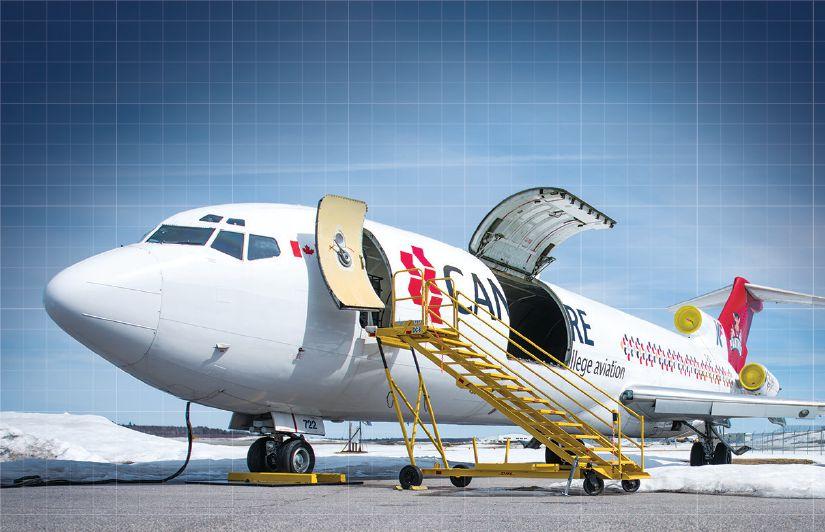
Largest number of aircraft out of any Ontario college
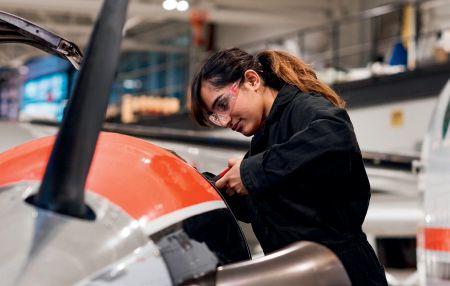
Over 40,000 sq. ft. of premium aviation lab training space
17,000 sq. ft. hangar filled to capacity with aircraft
The campus is located next to Jack Garland Airport’s 10,000 ft. runway
Quality Full-time Programs
• Aircraft Structural Repair
• Aircraft Maintenance – Technician/Technology
• Avionics Maintenance –Technician/Technology
• Helicopter Flight Training
• Aviation Fundamentals
Canadore Aviation Hangar Tour canadorecollege.ca/tours
CIA2023
for the 2022 Webster Memorial Trophy champion, awarded to Canada’s top amateur pilot after a week of competition.
Victoria Flying Club | Sidney
The Victoria Flying Club has been training professional pilots since 1946. VFC works with its students to develop a customized training program that will help you achieve any of your flying goals. It operates a fleet of 10 Cessna 172SPs, a Piper Seminole, and three recreational rental aircraft (C172N, PA-28-140, & PA28R-200) for CPL time building. It also offers training and private rental of a Redbird FMX simulator. The VFC is accredited as a Private Training Institution with the Ministry of Advanced Education, as well as a Designated Learning Institution federally. As such, VFC’s students can seek student aid as well as using their RESP and/or VETB funding towards their post PPL flight training.
ALBERTA
Calgary Flying Club | Calgary
The Calgary Flying Club (CFC), based CYBW Springbank Airport, provides a range of flight training, including Private Pilot Licence Commercial Pilot Licence, Multi-Engine Rating, and Advanced IFR Program. Its advanced IFR program is designed for either single or multi-engine aircraft.
Centennial Flight Centre | Edmonton
Centennial Flight Centre, in operation since 1967, is located at Villeneuve Airport, approximately 20 kilometres northwest of Edmonton. It provides training for Recreational Pilot Permit, Private Pilot Licence, Commercial Pilot Licence, Multi-Engine and Instrument Rating.
Edmonton Flying Club | Edmonton Edmonton Flying Club, home of the Edmonton Flight College, is located just west of Edmonton, operating out of Parkland Airport in Parkland County. Originally founded in 1927 as the Edmonton and Northern Alberta Aero Club, the club’s first president was Canadian World War 1 flying ace, Wilfrid R. May. Today, the Edmonton Flying Club is a member-owned organization with a diverse fleet of aircraft and providing flight training at all levels from recreational pilots to Commercial Multi-Instrument rated, career-ready pilots.
Mountain View Helicopters | Springbank
Mountain View Helicopters (MVH) has trained pilots for commercial or private
helicopter licences from its Springbank Airport location since 1995, near Calgary International. MVH is able to provide flying weather found on the prairies and also proximity to mountains.
Super T Aviation | Medicine Hat Super T Aviation is one of the premier flight schools in Western Canada. Serving southern Alberta since 2008, Super T Aviation is a family owned operation and part of the Bar XH Sales group of companies. In 2019, Super T purchased a modern ALX simulator from Alsim. This is Super T’s second Alsim simulator after purchasing an AL200, which has been in operation since 2014.
SASKATCHEWAN
Mitchinson Flight Centre | Saskatoon
Mitchinson Flight Centre’s Professional Pilot Course consists of three categories, including: Private Pilot License with a one year estimated length of program; Commercial Pilot License with a one year estimated length of program; and Multi Engine Instrument Rating, which is included in CPL program above. Mitchinson also operates an Advanced RPAS Training program consists of online ground school instruction that meets Transport Canada Requirements and the practical exam portion once the candidate completes the written exam through Transport Canada. All flight training, including RPAS, is conducted in and around the YXE John G. Diefenbaker Airport in a controlled environment.
MANITOBA
Brandon Flying Club | Brandon
The Brandon Flying Club’s Flight Academy has served the region since 1936. Located at Brandon Municipal Airport, just outside of Winnipeg, BFA offers a continuous ground school, as well as Recreational, Private, and Commercial courses. Night VFR Over the Top and Instrument Ratings are also available. Transport Canada Written Recreational, Private, Ultra Light, and Helicopter exams can be completed at the centre as well.
Harv’s Air | Steinbach
Harv’s Air is a family owned and operated air service with locations near Steinbach and St. Andrews, both in the Winnipeg, Manitoba, Canada area. Our air service offers flight training, air taxi, and aircraft maintenance service since 1973 with the current owner and operator. Having two locations allows us to offer amazing
resources for flight training including examiners, instructors, aircraft maintenance engineers. We offer accelerated but very comprehensive courses for pilot licences both for a career in aviation and for personal enjoyment.
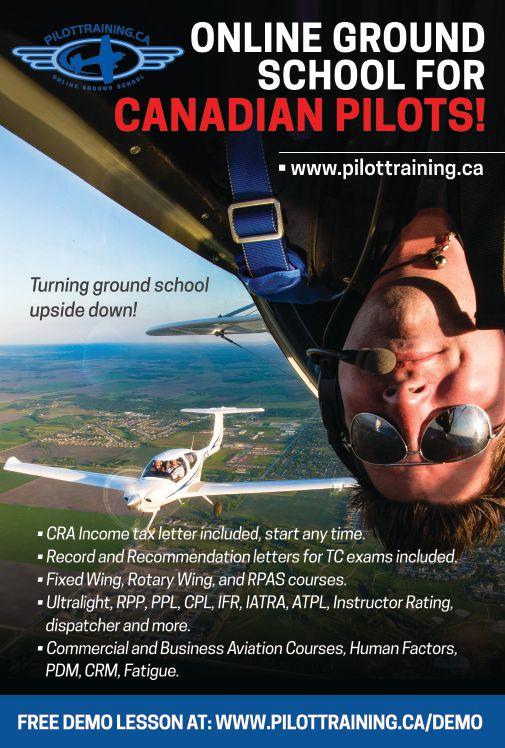
PilotTraining | Steinbach
Founded in 1999, PilotTraining.ca provides online instruction for aviation written examinations. Courses can be used as credit toward the Transport Canada ground-school requirement. The operation is approved to conduct ground schools with Harv’s Air, its parent company. Courses are completed by using multimedia tools such as video, mp3, presentations, animations, web pages, and automatic correcting and referenced practice questions.
Prairie Helicopters | Gimli
Prairie Helicopters, which also provides charter helicopter services, describes itself as Manitoba’s only turbine helicopter flight school. Its head office and main hangar are located at the Gimli Airport approximately 45 minutes north of Winnipeg. The operation holds a fleet of Bell 407, Bell 206L3 and Bell 206B helicopters.
Winnipeg Aviation | St. Andrews
Winnipeg Aviation has provided pilot training for more than 45 years. The school is based at St. Andrews Airport, 15 kilometres outside of Winnipeg. This provides for proximity to an international airport and uncontrolled grass strips. St. Andrews holds three runways for training with and without crosswinds.
ONTARIO
Altohelix | Markham and Oshawa
Altohelix is partnered with Toronto Airways to run full time UAV ground school and flight training with units based in two Greater Toronto locations, including Markham and Oshawa. It provides training required for the Transport Canada Special Flight Operation Certificate (SFOC) and Pilot Permits.
Aerocourse | Oakville
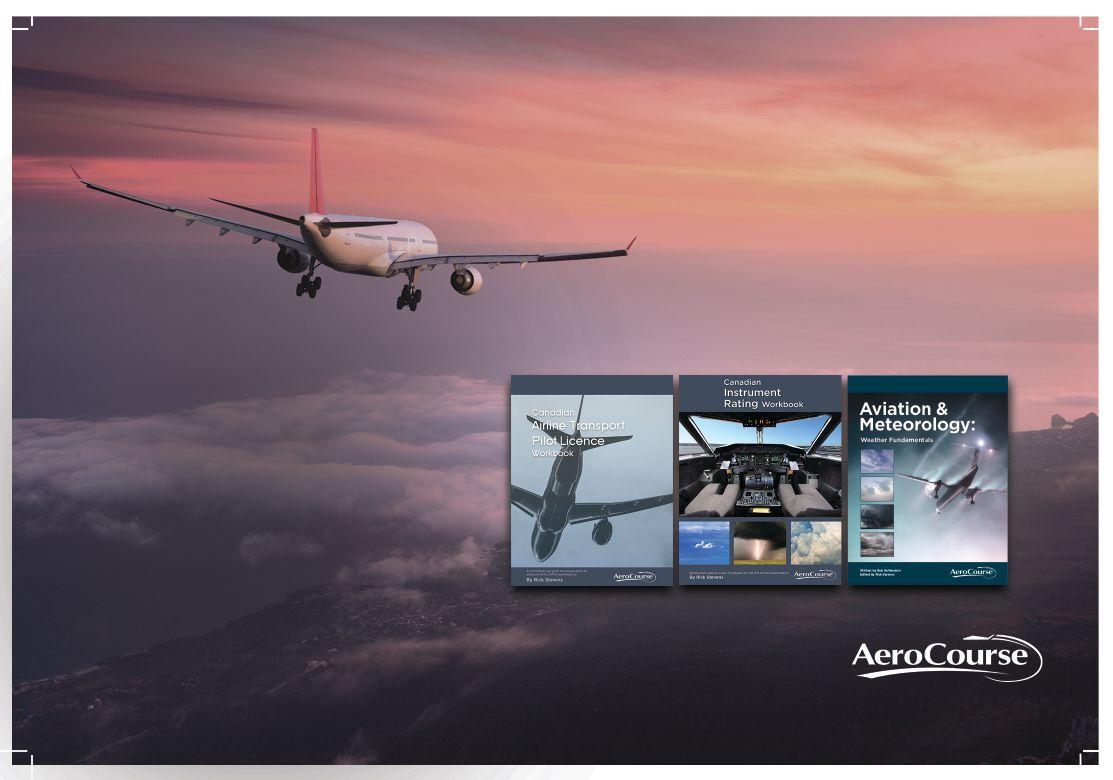
AeroCourse provides advanced pilot ground school training. IFR and ATPL ground school seminars are conducted across Canada virtually and in-person which are designed to lead students through the knowledge necessary to be successful on their Transport Canada exams and to become better IFR and airline pilots respectively. We work with several flight schools and offer an Advanced multicrew Training Program. The advanced
program is a six- to seven-month course with over 270 hours of ground school training covering all the requirements for airline transition. It includes over 30 hours of multicrew simulator training. We are also part of the BFC Integrated ATPL Program designed to meet the flight crew skill needs of airlines. Students receive training in flight and ground school subjects approved by Transport Canada and cover the requirements of air carriers for new hire pilots as well as, providing trainees with insights into getting a job in the industry.
Brampton Flight Centre | Brampton
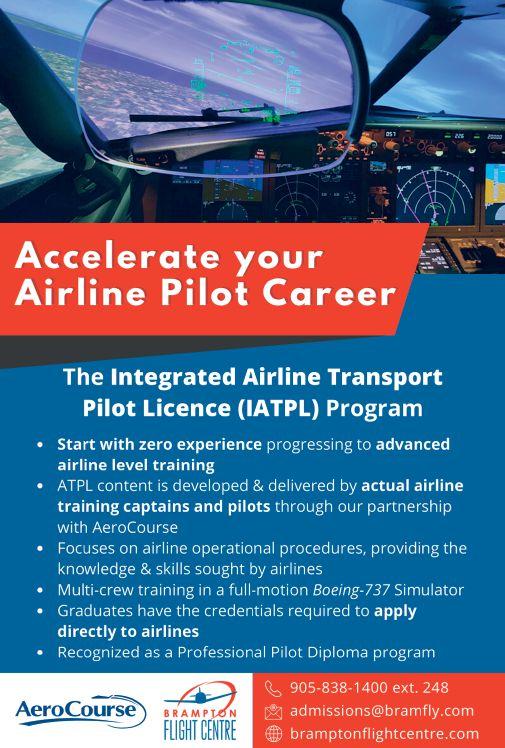
The Brampton Flight Centre, which includes the Brampton Flight College, has been training pilots since 1946. It provides training for those interested in pursuing a career or for recreational purposes, as a recognized Private Career College and Designated Learning Institute. There are several program options available, including fast track (aviation diploma) as its Professional Pilot Licence program or self-paced (certificate) as its Commercial Pilot Licence program. Brampton Flight Centre also provides Flight Instructor Rating (certificate); ratings for night multi and instrument; upgrades for Tail
Dragger Checkout and 182 Glass Cockpit; and Checkout, Remotely Piloted Aircraft System (RPAS) training. The school’s IATPL program progresses to advanced airline level training with multi crew training in 737 Simulator. This includes content developed and delivered by airline training captains and pilots through its partnership with AeroCourse. The organization also has working relationships with the Jazz Aviation Pathways Program, Destination Porter Pilot Mentorship and CAE. Brampton Flight Centre makes resources readily available with an online booking system, which includes access to a fleet of 20-plus aircraft and 30-plus instructors on staff, including pilot examiners. The organization holds its own airport facilities including aircraft maintenance, fuel operations, pilot shop and restaurant..
Brantford Flight Centre | Brantford
As one of the oldest flight training schools in Canada, the Brantford Flight Centre (BFC) has been providing quality flight training in Brantford, Ontario since 1929. Its instructors hold a vast history of experience from the aviation industry, offering students extensive knowledge of the Airline, Corporate and Instructor fields.
Located in uncontrolled airspace, BFC allows students to avoid costly delays due to airspace congestion.
Canadian Flight Academy | Oshawa Toronto Airways, through its Canadian Flight Academy subsidiary, provides an Integrated Airline Transport Pilot Licence curriculum, which also inlcudes support for new flight instructors. Based at Oshawa Executive Airport, the Canadian Flight Academy (CFA) provides opportunities through new collaborations with Seneca College.
Diamond Flight Centre | London
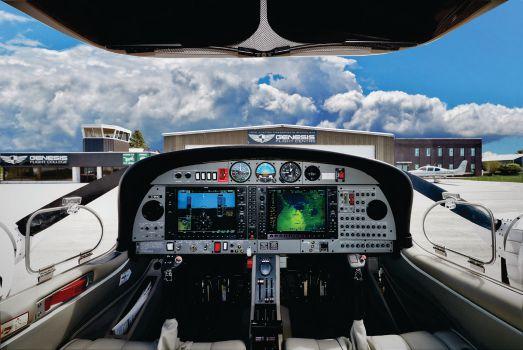
Diamond Flight Centre has been training pilots at the London International Airport since 2009 and, as a registered Private Career College (PCC) in the province of Ontario, holds a full-time staff of certified flight instructors. The school also holds a fleet of 10 training aircraft manufactured in London, ON, by Diamond Aircraft, which develops modern glass-cockpit aircraft like the 2-seat DA20 and the new 7-seat DA62.
Genesis Flight College | Collingwood
Genesis Flight College is a registered

CIA2023
Private Career College providing an emersive one-year commercial pilot diploma program. Located at Collingwood Regional Airport, students can enjoy the surrounding landscape and many activities available in the region. The most significant advantage of the Genesis is that 100 per cent of the flying is in advanced aircraft with glass cockpits.
Durham Flight Centre | Oshawa
Durham Flight Centre is based at the Oshawa Executive Airport, a municipal airport in the north end of the city. Durham offers training for all phases of recreational and professional licenses as a Transport Canada registered Flight Training Unit and a private career college. It has been offering aspiring pilot training since 1997.
Great Lakes Helicopter | Waterloo
Great Lakes Helicopter is a Transport Canada-approved, Ontario Private Career College, while also offering charters. Based at the Region of Waterloo International Airport, the operation offers training year-round and focuses on both commercial and private licensing. Great Lakes is partnered with Conestoga College for a program that provides both a Commercial Helicopter Pilot’s Licence and a diploma.
Helicopters Canada | North Bay Helicopters Canada for approximately 20 years has provided commercial and private flight training to both domestic and international students. Its training area is situated at the Jack Garland Airport, which provides access to heavily forested areas with lakes and rivers for developing the skills needed for a large sector of the helicopter industry.
Journey Air Pilot Training | Windsor
Journey Air Pilot Training flight school is a registered Private Career College and focuses on providing hands-on theory and practical education. It holds a fleet of modern composite Diamond aircraft which hold advanced avionics for pilot training. Journey also provides flight training devices, including the Redbird FMX 1000 or and an ALSIM AL42, manufactured specifically to replicate the Diamond DA42. Located at Windsor International Airport, Journey Air is able to provide you with opportunities for your Private Pilot Licensing (PPL), Commercial Pilots License (CPL), Single-Engine Rating, Multi-Engine Rating, Instrument Flight Rating, and Night Rating. .
St. Thomas Flight Centre | St. Thomas
Established in 1996, the St. Thomas Flight Centre offers flight training from
Recreational Pilot Permit through to Commercial Pilot Licence and MultiEngine Instrument Ratings. The centre holds Private Career College status and operates out of St. Thomas Airport in an uncongested flight training environment. School offices are located in the main terminal building and ground school classes are held on site.
Spectrum Airways | Burlington Spectrum Airways has been training pilots for more than 40 years. The training facility is situated at the heart of Burlington Executive Airport, one of the busiest airparks in Ontario. The airport averages 30 flights on weekdays. Registered as a Private Career College, Spectrum’s training programs include Private Pilot License, Commercial Pilot License, Night Rating, Multi-Engine Rating, Instrument Rating/Multi Instrument Rating and Instructor Rating.
Waterloo Wellington Flight Centre | Breslau
Waterloo Wellington Flight Centre (WWFC) is located at the Region of Waterloo International Airport, offering a range of aviation training programs for fixed-wing aircraft, as well as its Remotely Piloted Aircraft Systems. Specific fixedwing programs, licences and ratings available at WWFC include: Recreational Pilot Permit, Private Pilot Licence, Commercial Pilot Licence, and Integrated ATPL, as well as Multi-Engine Rating, Instrument Rating, Night Rating, and Flight Instructor Rating. WWFC has partner programs with aviation programs of the University of Waterloo and Conestoga College. WWFC also offers four annual LIFT Scholarships to support WWFC students with up to $4,000 per scholarship. WWFC’s RPAS program was established in 2014 and provides certification for Instruction for Basic and Advanced RPAS piloting.
Windsor Flying Club | Windsor
The Windsor Flying Club (WFC) was incorporated in 1944 and has been in continuous operation since – now entering its 77th year of high-level training for pilots as one of the longest serving original flying clubs in Canada. The club holds approximately 280 members and is also home to the Canadian Historical Aircraft Association.
QUEBEC
Air Richelieu | Montreal
Air Richelieu is an accredited flight training centre with facilities that include multimedia classrooms and flight preparation
rooms. The school is located at St-Hubert Airport, approximately 20 minutes from Montreal, and controlled by the Montreal Flying Club.
CQFA Aviation Industry Training | Montreal
Established in the late-1980s, the CQFA offers more than 50 different on-demand aviation courses, providing assistance for a range of training like Accredited Check Pilot, Crew Resource Management, Flight Crew Training, GPS, CFIT Avoidance Training, and Proficiency Checks.
Laurentide Aviation | Montreal
Laurentide Aviation has been providing professional flight training since 1946. Based at Les Cedres Aerodrome, an uncontrolled airport, approximately 25 kilometres west of Montreal, Laurentide offers bilingual inflight and ground school instruction, as well as recreational, private and commerical pilot lisence courses.
NOVA SCOTIA
Debert Flight Centre | Truro
Debert Flight Centre is part of the Truro Flying Club and operates out of Debert Airport, which has been home to the club since 1972. Debert Airport is an uncontrolled air space located less than five minutes flight time from training areas.
NEW BRUNSWICK
MFC Training | Dieppe
MFC Training was founded in 1929 and is now one of the largest and most experienced flight schools in Canada. Its Aviation Career Pilot Programs provide all required flight hours and examinations to graduate with a Commercial Pilot License, Multi-Engine and Instrument ratings. Its program structure is designed to achieve maximum learning efficiency by ensuring that both flight training and in-class content is integrated through all phases. These programs allow future pilots to move through the modules in a condensed time frame and provide a quicker transition to becoming airline Captains.
NEWFOUNDLAND
GFT Aerospace College | Gander
GFT has provided flight training since 1992, evolving from its roots as EVAS Air. Its facility is located at Gander International Airport. The aerospace college provides a fleet of 17 aircraft, including a helicopter, a flight simulator, and a large technical library for students. | W
CIA2023
FLIGHT TRAINING COLLEGES
CANADIAN COLLEGES WITH FLIGHT TRAINING PROGRAMS BY PROVINCE
YUKON
Yukon College | Whitehorse
The Aviation Management diploma program at Yukon College comprises a block transfer of pilot training credentials earned at Alkan Air (or other recognized flight schools) that equals one year or 30 credits and an additional 30 credits earned at Yukon. Students are expected to earn a Commercial Pilot License while concurrently earning academic credits. However, students may enter the program with some pilot training (a Private Pilot License, for example) or a completed commercial license. Students may complete the ground school and flight training component of the Aviation Management diploma in a flexible manner.
BRITISH COLUMBIA
British Columbia Institute of Technology | Burnaby
The British Columbia Institute of Technology is partnered with Pacific Flying Club to provide students with the skill set to become airline pilots. The program is fully integrated, combining flight training with industry focused academic training. Flight training for fixed-wing aircraft is conducted at Pacific Sky Aviation’s flight school at Boundary Bay Airport, just outside of Vancouver. Students receive training required to qualify for a Private Pilot Licence (PPL), Commercial Pilot Licence (CPL), Multi Engine Rating, Instrument Flight Rating, and a Diploma. Rotarywing flight training, for those interested in becoming helicopter pilots, is provided by Chinook Helicopters in Abbotsford.
British Columbia Institute of Technology’s Airport Operations diploma program is designed for the demands of airport operation environments. The 16-month Airport Operations program provides students with a comprehensive, interdisciplinary program of study. The British Columbia Institute of
Technology also offers an online Airport Operations Part-time studies Associate Certificate.
College of New Caledonia | New Caledonia
The College of New Caledonia provides an Aviation Business diploma program, which accepts applications for continuous intake. The program is designed to provide trained single engine VFR pilots for entry-level pilot in command positions with Canada’s northern air carriers and with similar air taxi companies operating in difficult conditions around the world. The program centers around a PilotPlus approach to providing a supply of pilots to Canada’s northern air carrier industry. If taken in the minimum possible time, the ABD is a five semester program running over 24 months, with a four month break between semesters two and three.
Douglas College | New Westminster
Douglas College’s Associate of Arts Degree for Future Professional Pilots is a program for students who wish to continue to a career in the aviation industry. This program is jointly offered with Professional Flight Centre, located at Boundary Bay Airport in Delta. Douglas provides the academic instruction leading to the Associate of Arts Degree and Professional Flight Centre provides the ground and flying instruction with enough flight experience to obtain a Commercial Pilot License and Multi-engine Instrument Rating.
Okanagan
College | Kelowna
The Commercial Aviation diploma program at Okanagan College consists of two distinct and separate areas of study: flight training and business studies. The business portion is completed at Okanagan College and normally consists of two business courses per semester for a total of eight courses over two years. The flight-training portion taken with Southern Interior Flight Centre, out of
Kelowna Airport, and consists of flight training, theory and exams.
ALBERTA
Red Deer College | Red Deer
Red Deer College’s (RDC) partnership with Sky Wings Aviation Academy combines a foundation in business with flight training. The 1-year Certificate program holds its business management courses at the Donald School of Business. Ten Business Administration courses are required to complete the Business Certificate. Sky Wings Aviation Academy is located in Penhold, Alberta, near Red Deer and halfway between Calgary and Edmonton. Sky Wings states its students can expect a wide variety of flying conditions during their training. Flight training is provided approximately ten minutes from the RDC campus at Red Deer Regional Airport. Sky Wings Aviation Academy has providing flight training since 1982. Highlights of the Aviation Diploma Program include a transcontinental flight crossing the Canadian/ U.S. border, familiarization training for a regional or national airline and crew resource management. Most RDC courses are university transferable.
SASKATCHEWAN
Saskatchewan Polytechnic | Saskatoon
The Saskatchewan Polytechnic is a member of Polytechnics Canada, an alliance of 11 research-intensive, industry-responsive post-secondary institutions. The Polytechnic’s Commercial Pilot program is offered in partnership with the Saskatchewan Aviation Council, a membership-based association. The Commercial Pilot diploma program provides a strong foundation in the basic principles of aviation. Students study aviation-related topics such as the theory of

To Take Flight

THE FUTURE OF AEROSPACE AND AVIATION.
The Bombardier Centre for Aerospace and Aviation at Downsview Campus is a dedicated training ground for aerospace and aviation mechanics. With focused courses, cutting-edge equipment and industry professionals guiding our programs, your aircraft are always in good hands with a Centennial College graduate. centennialcollege.ca
CIA2023
flight, advanced aircraft systems and flight. Flight training takes place at a student’s home flying school.
ONTARIO
Algonquin College | Ottawa
Algonquin College’s Aviation Management is a two-year diploma program designed to provide students with the knowledge and skills required to become a commercial pilot. Through a series of classroom courses and practical labs, students have the opportunity to complete the Transport Canada Commercial Pilot Licence written examination (CPAER) and practical flight test. Algonquin has contracted the Ottawa Flying Club and Ottawa Aviation Services to provide up to 250 hours of flight time experience. During the final term, students can select one of the following areas of specialization: flight instructor, Initial Airplane Type Rating (IATRA) or seaplane rating. Flight Training is a non-funded activity and is an additional cost to complete this program of study.
Canadore College | North Bay
The partnership between Canadore and Helicopters Canada offers a unique blend of academic, operational and hands-on rotary wing training. The college-structured classes combined with extensive practical training, both on the ground and in the air, will provide you with the skills, knowledge and attitude necessary to operate helicopters safely and efficiently under various flight conditions and remote geographical locations. Graduates will receive a Transport Canada Commercial Helicopter Pilot Licence, Canadore College Pilot Preparedness Certificate and numerous industryrecognized courses.
Conestoga College | Kitchener
Conestoga provides the opportunity to earn an Ontario College Diploma in its twoyear Aviation, General Arts and Science, program. The pilot training portion of the program provides students with a choice between flying airplanes at Waterloo Wellington Flight Centre or flying helicopters at Great Lakes Helicopter. Training takes place at the Region of Waterloo International Airport. In addition to the regular Conestoga College tuition costs, fees for the Waterloo Wellington Flight Centre and Great Lakes Helicopter training are additional. The pilot training of Conestoga program is designed to allow students to undertake the Transport Canada commercial pilot license testing.
Confederation College | Thunder Bay
The Aviation Flight Management program at Confederation College combines business,
management and flight training into one program. The 2 1/2-year program has been running at Confederation since 1973. The business and management training provide students with background knowledge to complete a detailed and comprehensive understanding of today’s aviation industry, while the college operates its owns aircraft (13) and three advanced flight simulators at its Aviation Centre of Excellence hanger at Thunder Bay International Airport.
A student’s private pilot flight training begins in the first week of the first semester right from our hangar at the Thunder Bay International Airport. This training provides the opportunity become a commercial pilot. Confederation College explains its graduates have found aviation employment in northwestern Ontario, as well as with major (international) airlines, medevac and charter operations, scheduled services, flight instruction and the Canadian Armed Forces.
Fanshawe College | London
Fanshawe College’s Norton Wolf School of Aviation and Aerospace Technology provides a range of programs, including: Aircraft Maintenance Engineer, Structural Repair Applied Aerospace Manufacturing; Aircraft Maintenance Engineer, Maintenance; Aircraft Maintenance Engineer, Avionics; Aircraft Maintenance Engineer, Maintenance & Avionics; Commercial Flight and Aviation Leadership; Composites and Advanced Materials Aerospace Manufacturing; Flight Services (including Flight Attendant/Cabin Crew training); and Remotely Piloted Aerial Systems Commercial Operations. The school recently added its Aerospace Operations Management program. The school’s Commercial Flight and Aviation Program provides a three-year diploma, focusing on safety management systems, Canadian air regulations, flight operations and logistics and airline operations. This program allows students to complete a fixed-wing Canadian Private and Commercial Pilot license with Multi Engine and Instrument Ratings.
Georgian College | Barrie
Georgian’s three-year Aviation Management advanced diploma program consists of 38 courses, and students graduate with both a management and aviation skillset. Management courses are designed to give students an understanding of marketing, human resource management, communications and project management. A variety of aviation courses provide a solid understanding of the aviation industry in Canada and around the world. Students will also complete the examination to receive their Restricted Aeronautical Radio Operation License. The program, which has a fall 2022 intake, includes three hands-on co-op opportunities within the aviation industry.
The program has a very active advisory committee that helps maintain program relevancy by keeping the course content current – reflecting industry trends – and ensuring graduates are job ready with the required skillset. There are several educational pathways for graduates. Georgian’s Aviation Management program is the only three-year program in Canada that allows students direct entry into Griffith University’s Master of Aviation Management, which can be completed with only an additional one-and-a half years of study. Students can also choose to complete one of four Bachelor of Science degrees with Embry-Riddle Aeronautical University, with only one additional year of study.
Sault College | Sault Ste. Marie
Sault College`s Aviation Technology – Flight program is designed to prepare students for a career as a professional pilot. Graduates of the program who meet qualification criteria established by Transport Canada, will have successfully completed the requirements for the Integrated Commercial Pilot License Aeroplane, including the multi-engine instrument rating (CPL(A)IR). This licence meets all the requirements for a student to be a commercial pilot. Individuals with previous flight training start with a modified flight training program in the beginning; however, all students will be at the same level by second year. Students gain handson training with the college’s own fleet of aircraft, including 10 Zlin and two Seminole Piper planes. These aircraft are supported by advanced flight simulators. Each aircraft includes advanced radio navigation systems and real-time aircraft tracking systems.
Seneca College |
Peterborough and Toronto
Seneca College, through its School of Aviation, is now educating students at the degree level with its 4-year Honours Bachelor of Aviation Technology program, which provides a technology-based curriculum and application of this theory to aviation. Flight training and classroom instruction for students in year’s two to four of the program takes place at Seneca’s Peterborough Campus. As a graduate, students may pursue future career options like professional pilot, flying instructor, air traffic controller, and civil aviation inspector. Seneca’s Airline Pilot Operations program focuses on the study of airline operations and administration.
Offered at its Toronto campus, Seneca’s Flight Services program encourages students to develop career-related skills, knowledge and behaviours needed for passenger service. Seneca has a range of partnerships with industry partners like Toronto Airways, CAE, Sunwing Airlines and Jazz Aviation, including direct entry into airlines. | W
CIA2023 UNIVERSITY PROGRAMS
AVIATION AND AEROSPACE DEGREE PROGRAMS BY PROVINCE
BRITISH COLUMBIA
University of the Fraser Valley | Fraser Valley
The University of Fraser Valley offers a two-year Business Administration - Aviation diploma that provides a strong foundation in business and allows students to earn credit for advanced flight training. Business courses as part of this diploma cover core areas such as accounting, marketing, and economics. The program allows student to pursue pilot training at a flight school of your choice and earn Transport Canada certifications and licenses. You can complete the aviation certifications and licenses prior to, during, or after completing academic course requirements, and you have the option to switch flight schools. Once complete, UFV will award you credit towards your diploma. You can also pursue a Bachelor of Business Administration in Aviation.
University of British Columbia | Vancouver
University of British Columbia does not offer a specific aerospace engineer program, while offer a range of programs within its engineering department, including Mechanical. However, the school supports a range of aerospace-oriented, student-led teams.
ALBERTA
MacEwan University | Edmonton
MacEwan’s partnership with Transport Canda allows allows students to earn a Business Management diploma with a specialization in aviation management. To complete the Aviation major, students must apply to the Business Management program. Upon graduation students declare the Aviation major. Students can block transfer credits to the third year of MacEwan’s Bachelor of Commerce.
Mount Royal University | Calgary
Mount Royal University’s two-year Aviation Diploma program combines an
academic diploma with the flight training needed to become a commercial pilot. The diploma is recognized as one of Canada’s elite Aviation Accreditation Board International (AABI) accredited programs, integrating academic preparation with flight simulator training for a Commercial Pilot Licence (CPL) with multi-engine and instrument ratings. The program allows you to learn aviation and business theory, while building connections with MRU’s airline partners, including Jazz, WestJet, Porter, AirSprint, and Sunwing. The program also focuses on giving students an understanding for how to fly in single- and two-pilot operations using crew resource management skills. Students graduate as a highly trained pilot, with a minimum of 200 hours of flying time, ready for a career in your field. A Canadian Private Pilot Licence (PPL) is required for entry into this program and must be completed by August for the upcoming regular school calendar.
ONTARIO
Carleton University | Ottawa
Carleton’s Aerospace Engineering program emphasizes the development of analytical, computational, and hands-on engineering and design skills related to the aerospace field. The broad range of topics and applications included in this discipline are covered in four main streams: Aerodynamics (aerospace propulsion and atmospheric flight); Aerospace Structures (lightweight vehicles for flight and space travel); Aerospace Electronics and Systems (aircraft control, communication and navigation systems); and Space Systems Design (astronautics and space/ satellite technology). All four streams emphasize the development of practical and problem-solving skills based on hands-on laboratory and design work.
Queen’s University | Kingston Engineering and Applied Science provides opportunities geared at aviation and aerospace design. Mechanical engineers
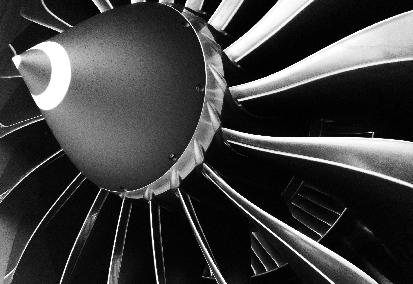
are needed wherever there is machinery. They drive every stage of design, manufacturing, construction and research. In this program you will combine the study of basic engineering with practical courses in machine design, robotics and manufacturing methods. Hands-on design is integral to this program, so you may find yourself involved in designing artificial joints, or even a spacecraft, depending on your specialization. If you choose the Materials option, you’ll study the exciting developments in materials and nanotechnology. Areas of specialization include aerospace, mechatronics, biomechanical, manufacturing, materials, and thermofluids.
Toronto
Metropolitan University | Toronto
Toronto Metropolitan University’s Aerospace Engineering bachelor’s program provides students with the opportunity to study aerodynamics, stress analysis and structural design, flight mechanics, stability and control, aircraft performance, propulsion, avionics and systems. Students also learn to design, test, manufacture and maintain aircraft or spacecraft, as well as vehicles for transport on land and water. The program provides knowledge to work in fields involving commercial and military aircraft or spacecraft engineering; space exploration, teaching, research, military service; air transportation and space-based telecommunications. Pursue a graduate degree (MEng, MASc, PhD) in aerospace engineering.
University
of Toronto | Toronto
Students who wish to study Aerospace Science and Engineering at the University of Toronto enroll in the four-year undergraduate Engineering Science program. In the first two years, this program emphasizes mathematics, chemistry, physics and computing. Towards the end of the second year of Engineering Science, students must select a speciality option for their third and fourth years of study. This includes an Aerospace
Engineering option, taught primarily by UTIAS professors. UTIAS is the university’s graduate program focused on scientific exploration and aerospace research. UTIAS faculty members are international leaders in computational aerodynamics, micro and nanosatellites, combustion and propulsion, robotics for space and terrestrial applications.
University of Waterloo | Waterloo
Established in 2007, Waterloo’s Aviation program allows students to earn a Bachelor of Science degree and, working with the Waterloo Wellington Flight Centre, a Commercial Pilot Licence. Welcoming approximately 45 new people each year, Students in the Aviation program have a choice of pursuing either the Geography and Aviation (BES) and Science and Aviation (BSc). In the BSc program students have a choice of specializing in either Earth Sciences or Physics or remaining in the broadly based unspecialized program. Students in the BES program will automatically receive a Geomatics option.
University of Windsor | Windsor Windsor’s Aeronautics Leadership program combines a liberal arts and leadership-focused education with commercial flight training. Students enroll in a Bachelor of Arts, Liberal Arts and Professional Studies. This includes courses in arts, humanities, social sciences, business, science, and engineering. This is coupled with flight training run by industry partner Journey Air.
Western University | London
Western’s Commercial Aviation Management program allows students to earn a Bachelor’s degree in Management and Organizational Studies, with specialized courses in aviation management. Within the program, students have the option to combine a degree with professional pilot flight training, ultimately receiving a Transport Canada approved Integrated Commercial Pilot License with MultiEngine and Instrument Ratings.
York University | Toronto
The Space Engineering program at York’s Lassonde School of Engineering provides an Beng degree. It focuses on areas of study from orbit control and space-based optics to ground station communications and robotics. Students learn about the management of complex multidisciplinary projects,
including missions within the solar system. The co-op program allows students to gain professional experience.
QUEBEC
Concordia University | Montreal
Concordia’s Aerospace Engineering (BEng) program is offered by the Department of Mechanical, Industrial and Aerospace Engineering, Gina Cody School of Engineering and Computer Science. The program allows students to specialize in Aerospace and Propulsion, Aerospace Structures and Materials, or Avionics and Aerospace Systems. It provides access to areas like mechanical, electrical, computer, and industrial engineering to the conception, design, implementation and operation of aerospace systems.
École Polytechnique de Montréal | Montreal Ecole Polytechnique de Montreal provides undergraduate and graduate Aerospace engineering programs. Students in the graduate program follow at least two specialization courses (with the exclusion of case studies) given by the other participating institutions.
NEW BRUNSWICK
Mount Allison University | Dieppe and Sackville
Mount Allison University provides two distinct degree routes tied to earning an Integrated ATP. This includes a Bachelor of Commerce – Aviation route and a Bachelor of Science with Major in Aviation route. Aviation is an interdisciplinary degree program combining professional flight training with studies in subjects relevant to the field of aviation in either science or business. As a Commerce student, you will study a variety of business areas such as accounting, finance, marketing, and management, providing you with a strong foundation in the key disciplines of management education. As a Science student, you will be able to combine your flight training with in-depth studies in subjects related to the field of aviation in the Faculty of Science, such as geography, environmental science, mathematics, physics, and computer science. MFC Training at the Moncton Airport provides the Flight Training. There are two scholarships available: Rob Robichaud, Vantage Airport Group Aviation Scholarship and the Ross A. Stanway Entrance Scholarship (Aviation). | W
•
• Flight Services Diplomas
•
•
Advanced Diplomas
•
• Commercial
Graduate Certificates
•
•
•
•

LOOK UP
For some the sky is the limit, to NAV Canadians it is just the beginning
By David Carr
Think air navigation and you immediately think airport control towers and people with binoculars and radios skillfully guiding airplanes onto and off runways from their glass-enclosed perch high above the airfield. But, like the proverbial iceberg, there is more action below the surface.
NAV CANADA plays a unique and critical role managing 18 million square kilometres of Canadian civil airspace and the North Atlantic oceanic airspace, one of the largest regions of airspace in the world. About 22 per cent of airplanes that appear on NAV CANADA’s radar will not land or take off from a Canadian airport.
The task of keeping such a large amount of airspace safe comes down to a highly integrated network of 42 air traffic control towers, seven area control centres (ACC), 54 airport advisory flight service stations, and five flight information centres, staffed by personnel with the right abilities, training and ongoing development. For anyone who wants to keep their feet on the ground while exploring a fast-paced career in aviation, NAV CANADA is an attractive and lucrative career destination.
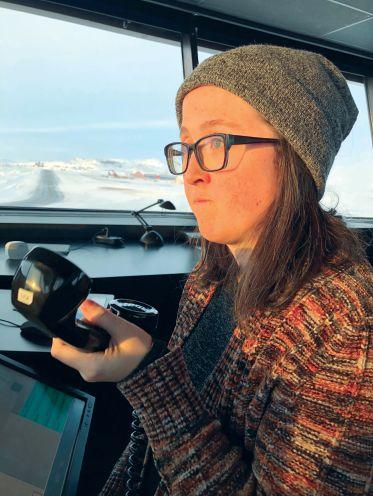
“It’s an awesome job because it is different every single day, especially the weather,” says Kaitlyn Haynes, a recent graduate of the NAV CANADA Flight Service Specialist training program and now an active Flight Service Specialist based at Iqaluit, Nunavut. Haynes is responsible for aircraft flying in and out of the airport, briefing operators about traffic, providing hourly weather reports (including special bulletins during severe weather) and relaying clearances provided by ACCs. “If you’re interested in aviation, you also see a lot of cool airplanes.”
What distinguishes NAV CANADA from other companies in the aviation and aerospace sector is the requirement to get in the front door. No post-secondary education is necessary. Applicants need to be at least 18 years of age, a Canadian citizen or permanent resident with a high school degree or equivalency. “You
don’t need an aviation background to be an air traffic services professional,” says Kaitlyn Turner, a Talent Acquisition Specialist at NAV CANADA. “Previous work experience isn’t a requirement because we provide the training. We’re all about competencies.”
This unique approach to recruitment gives the air navigation service provider access to a much larger talent pool, including individuals looking to course correct their careers after a few years in the job market. “There are high school graduates, people with a Master’s degree, former teachers and nurses. You get the full gambit,” Turner adds.
To ensure candidates possess competencies needed to take on responsibility for the safety of thousands of passengers and react calmly and professionally during an emergency, NAV CANADA puts applicants through an engaging screening process, including an introductory online assessment, computer-based evaluation at one of its centres and an interview with a manager and human resources professional. Successful applicants are assessed for careers in air traffic control, flight services or both, based on test results.
The company’s air traffic controllers direct airplanes either from the ‘cab’ of an ATC tower or on a radar screen at an ACC. Working with pilots operating all types of aircraft, from a helicopter or single-engine Cessna to the largest and most sophisticated passenger jets, an air traffic controller instructs pilots to climb, turn, descend and move safely, whether they are on the ground at an airport or thousands of feet in the sky. Air traffic controllers ensure aircraft maintain vertical, lateral or time separation, while following strictly defined rules, procedures, and regulations. Base annual salaries for qualified air traffic controllers range from $84,347 to $170,241.
Flight service specialists work out of flight information centres and flight service stations in some of Canada’s busiest cities and most remote sites. They play a critical role in assisting pilots before departure, during flight and at arrival, providing

NAV CANADA is recruiting for careers in Air Traffic Services. Candidates need only a high school diploma or equivalency to apply, and accepted students are paid to train.
airport advisory services, delivering essential weather reports and hazardous meteorological conditions, and processing flight plans and itineraries. Additionally, they serve as a communications link between pilots, airlines, medevac operators, other NAV CANADA teams, and much more. Base annual salaries for certified flight service specialists range from $68,464 to $104,811.
NAV CANADA does not contract training to a third-party. All instruction is carried out in house using an industry-leading training model that involves working on NAV CANADA equipment with lessons delivered by learning specialists experienced in adult education. Unlike third-party training, the NAV CANADA model makes for a more seamless transition from classroom to workplace.
Students can expect to be placed in a class of anywhere from four to 12 people. There is both classroom-based learning and simulator training. Self-study, using resources and supports provided by NAV CANADA, is also a critical part of the training program. “It takes resilience and dedication, and many students make connections that last a lifetime,” Turner says.
Kaitlyn Haynes agrees: “The training is tough. You have to go from zero to 100 very quickly. It takes a lot of work and effort.” Haynes, who holds a university degree, chose a career with NAV CANADA to pursue her passion for meteorology (clouds especially) and likens the training to a one-year university course compressed into six months. “It’s very intense and very rewarding to get through. It is a career of a lifetime.”
Intense, yes, but NAV CANADA has built in safety rails to set students up for success. They are paired with a confidential ‘Thrive Peer’ to discuss their experiences while in training, express concerns or just ‘let off steam’, as well as access to a network of health and wellness specialists. “We have built in a tonne of supports in hopes that students achieve the highest levels of success possible,” Turner says.
Another advantage that separates NAV
CANADA from other organizations is that students are paid to train and are entitled to company benefits and pension after successfully completing the first phase of the training program. “It’s a different approach,” Turner reflects. “It’s not like a regular training school where you pay to learn. We pay you to train with us.”
The global aviation industry is made up of millions of individual pieces moving at the same time. Air navigation service professionals are at the heart of this very complex system. For those with pre-set ideas of what air navigation is about (usually based on the movies) understanding the reality of how Canada’s air navigation service provider operates is a step out of the ordinary.
NAV CANADA was the first global air navigation service provider to be privatized. It is an independent, non-profit corporation that invests in the latest air-to-ground digital communications, radar and needed technologies to support its more than 40,000 customers worldwide, including mom-and-pop single airplane operators up to the world’s largest airlines.
Employees earn excellent salaries and benefits in a unique and rewarding work environment. In addition to air traffic control and flight services, NAV CANADA offers a host of career paths, including the installation and maintenance of critical technologies and infrastructure, corporate services such as supply chain and program administration, finance and audit, strategic planning and much more. As aviation aggressively bounces back from COVID-19, NAV CANADA offers Canadians a clear path to join one of the world’s most rewarding and innovative industries.
For students considering a career in aviation, there is no greater and more exciting window on the industry. If you’re ready to take your career to new heights, visit navcanada.ca/lookup.
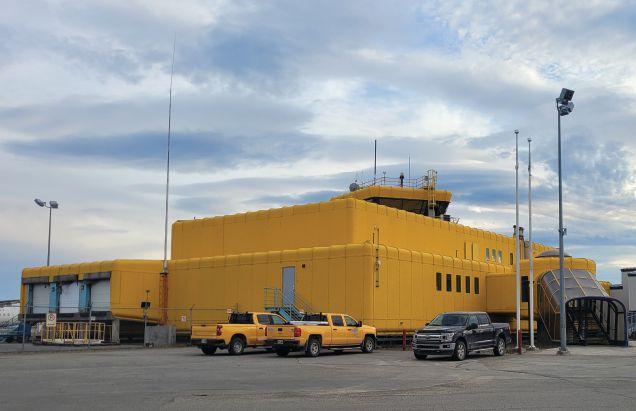
The unique Flight Service Station in Iqaluit, Nunavut, is a key piece of NAV CANADA’s infrastructure to manage 18 million square kilometres of civil airspace.
Kaitlyn Haynes is a recent graduate of the NAV CANADA Flight Service Specialist training program and now an active Flight Service Specialist based at Iqaluit, Nunavut.
AVIATION TECHNICIAN COLLEGES
MAINTENANCE, REPAIR AND OVERHAUL COLLEGE PROGRAMS BY PROVINCE
BRITISH COLUMBIA
British Columbia Institute of Technology | Vancouver
British Columbia Institute of Technology (BCIT) School of Transportation prepares students for careers as Aircraft Maintenance Engineers, Aviation Maintenance Technicians (Avionics) and Gas Turbine/Jet Engine Technicians. Its Aerospace Technology Campus is located at Vancouver International Airport with a 40,000-square-foot hangar that holds BCIT’s fleet of light piston, turboprop, corporate and jet transport aircraft, as well as light and medium helicopters. BCIT’s Airport Operations diploma program is designed for the demands of airport operation environments. The 16-month Airport Operations program provides students with an interdisciplinary program of study. In addition to category M and E technician programs, the school also provides courses for fixed- and rotary-wing pilots, and RPAS.
Northern Lights College | Dawson Creek
Northern Lights College (NLC) opened the Aerospace Centre of Excellence in 1981 at its Dawson Creek Campus. Students and current aircraft maintenance engineers receive hands-on training in a 26,000-square-foot hangar. Its fleet includes helicopters such as a Robinson R44, MD500D, AS350D, Hughes 300C, Bell 205 and 206; and fixedwing airplanes like a Cessna 180, Cessna 310, Piper Aztec 250, King Air B90, and British Aerospace JetStream 31.
ALBERTA
Southern Alberta Institute of Technology | Calgary
The Southern Alberta Institute of Technology provides two primary programs,
Aircraft Structures Technician and Avionics Technology. The Avionics Technology program offers the student the knowledge and skills required to start a career as an aircraft maintenance engineer (AME) E. As an E-licensed AME, you will be responsible for the servicing and repair of aircraft electrical and electronic systems and maintaining the aircraft communication, navigation and data systems. The Avionic Technology program covers all the aspects of aircraft avionics systems used in general aviation, corporate, charter, transport category aircraft, and helicopters. The Aircraft Structures Technician program offers the student the knowledge and skills required to enter a career to become an aircraft maintenance engineer (AME) S. The Aircraft Structures Technician program covers all the aspects of aircraft structure repair to general aviation, corporate, charter, transport category aircraft, and helicopters.
MANITOBA
Red River College | Winnipeg
Red River College (RRC) Aircraft Maintenance Engineer program is designed to develop the knowledge and skills in maintenance of both large and small airplanes and helicopters. It is designed to develop skills in maintenance of both airplanes and helicopters. Time in the program is split between the study of aircraft maintenance theory and practical projects. Upon graduation, if the student attained Transport Canada approved training status, they will be granted 19 months of the 48 months aviation maintenance experience.
ONTARIO
Algonquin College | Ottawa
The School of Advanced Technology at Algonquin College features With 23
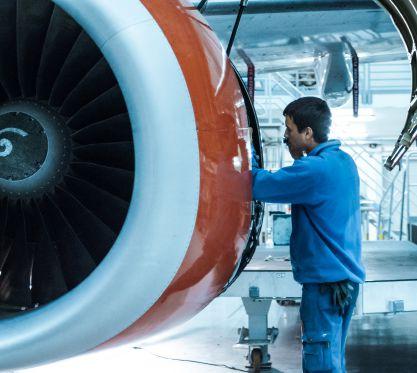
laboratories, including precision machining, automotive, electronics, optical fiber, high-powered laser labs, mechanical modeling and element analysis, industrial controls, aviation maintenance and robotics labs. The includes two diploma programs in the school’s Transportation Technology segment called Aircraft Maintenance Technician and Aviation Management, General Arts and Science – both running for two years.
Canadore College | North Bay
Canadore Canadore College’s programs includes: Aircraft Structural Repair Technician; Aviation Technician – Aircraft Maintenance; Aviation Technician – Avionics Maintenance; Aviation Technology – Aircraft Maintenance and Avionics; Aviation Technology – Aircraft Maintenance and Structures; First Peoples’ Aviation Technology – Flight; Aviation Fundamentals; and Helicopter Flight Training. The Aircraft Structural Repair Technician program allows students to specialize in repair, upgrading and the modification of an aircraft. Graduates receive 10 months accreditation towards a Transport Canada-Issued Aircraft Maintenance Engineer’s Licence, Category S. The Aviation Technician – Aircraft Maintenance program trains students how to troubleshoot vital aircraft components and systems, including piston and turbine engines, electrical systems, hydraulics, and navigation and communication systems. .
Centennial College | Toronto
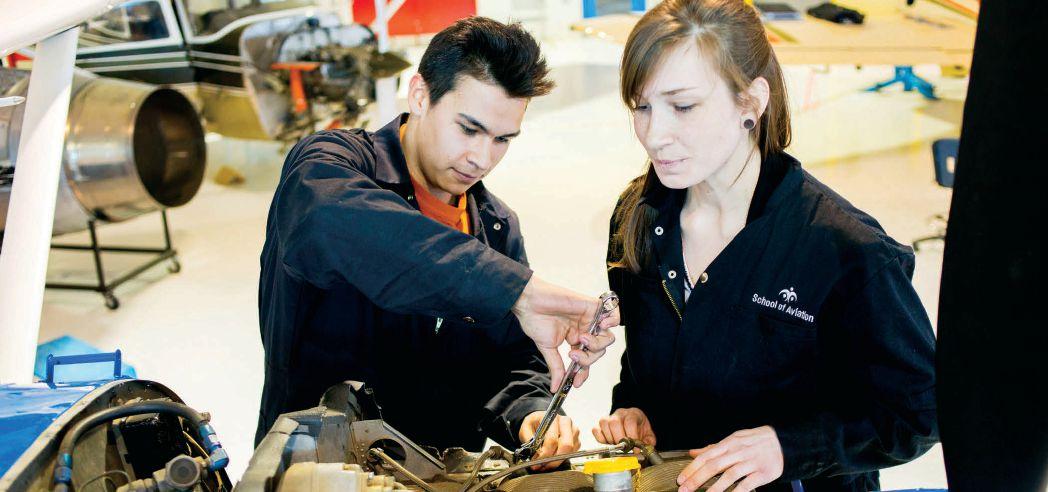
Centennial College’s aviation technician programs offered within the School of Transportation include: Aviation Technician (Aircraft Maintenance), Aviation Technician (Avionics Maintenance), Aviation Technology (Aircraft Maintenance & Management), and Aviation Technology (Avionics Maintenance & Management). The Aircraft Maintenance program provides mechanical, electrical, electronic

















CIA2023
and other science skills related to aircraft maintenance. It emphasizes the repair of electrical and mechanical systems within the aircraft. Students will study hydraulics, fuels, environmental systems, engines, flight controls, landing gear system and airframes and structure. The Avionics Maintenance program covers aircraft communications, navigation and data systems, and inspection and troubleshooting of basic electronics circuits.
Confederation College | Thunder Bay Confederation College’s Aviation Technician – Aircraft Maintenance Co-op program has been running strong for more than 50 years. The program is delivered at the Aviation Centre of Excellence located at the Thunder Bay International Airport. Relatively new to the program is a mandatory paid co-op work placement between years one and two which provides our graduates with direct industry experience. Students train on helicopters, fixed wing aircraft, piston and turbine engines, all while learning about safety, standard practices, electrical, and structural repair. Approximately half of the program is delivered hands-on in various shop classes. Depending on the length and type of the co-op work term completed, graduating students of the two-year program receive 21 months of accreditation towards
their Aircraft Maintenance Engineer M1/M2 license.
Fanshawe College | London
Fanshawe’s Norton Wolf School of Aviation and Aerospace Technology provides a range of programs, including: Aircraft Maintenance Engineer, Structural Repair Applied Aerospace Manufacturing; Aircraft Maintenance Engineer, Maintenance; Aircraft Maintenance Engineer, Avionics; Aircraft Maintenance Engineer, Maintenance & Avionics; Commercial Flight and Aviation Leadership; Composites and Advanced Materials Aerospace Manufacturing; Flight Services (including Flight Attendant/Cabin Crew training); and Remotely Piloted Aerial Systems Commercial Operations. The Norton Wolf School of Aviation recently added a Aerospace Operations Management program. Its Aircraft Structural Repair program prepares students to repair, overhaul, and modify commercial aircraft in accordance with high standards of safety.
QUEBEC
École nationale d’aérotechnique | Montreal ÉNA provides programs in Avionics, Aircraft
Maintenance, and Aerospace Engineering Technology, all of which combine practice and theory. In addition to these three-year programs in French, Aircraft Maintenance is also offered in English. Graduates from two programs, Avionics (in French), and Aircraft maintenance (in English) earn Transport Canada recognition when they apply for the Aircraft Maintenance technician license to certify aircraft airworthiness.
NOVA SCOTIA
Nova Scotia Community College | Dartmouth
The Nova Scotia Community College’s (NSCC) Aviation Institute is located in a 43,000-square-foot training facility. The school provides a two-year Aircraft Maintenance Engineer, Mechanical, diploma program. Courses focus on aircraft servicing and ground handling functions, Canadian Aviation Regulations, using specialized equipment to repair and maintain aircraft systems, interpret wiring diagrams and aircraft drawings, and assess sheet metal damage and appropriate repair procedures.
PRINCE EDWARD ISLAND
Holland College | Summerside Holland College provides a one-year Aircraft Turbine Technican certificate program at its Summerside Waterfront Campus in PEI. Aircraft turbine technicians inspect aircraft engines, troubleshoot issues with mechanical systems, and modify, repair, and test turbine engines. Students learn techniques, procedures, and documentation requirements with an emphasis on practical training.
NEWFOUNDLAND
College of the North Atlantic | Gander
The College of the North Atlantic is part of the Lufthansa Technical Training network. The two-year Aircraft Maintenance Engineering Technician program is located at the school’s Gander campus. Graduates earn North American and European certification and can attend the Institute of Technology in Carlow, Ireland, to earn an undergraduate degree in Aircraft Systems Maintenance with only one additional year of school. The Aircraft Structural Repair Technician program also takes place at the Gander campus.| W
LOOKING TO JOIN A HIGH-PERFORMING TEAM WITH A SHARED PASSION FOR HELICOPTERS?
•COMPETITIVE COMPENSATION
•HEALTH BENEFITS
•FAMILY OWNED COMPANY WITH A GLOBAL PRESENCE
•WORLD RENOWNED MRO FACILITY
•OPPORTUNITY TO WORK ON MAJOR OEM PLATFORMS SUCH AS BELL, LEONARDO AND SIKORSKY
•HEADQUARTERED IN CALGARY, ALBERTA, CANADA WHY JOIN EAGLE COPTERS?