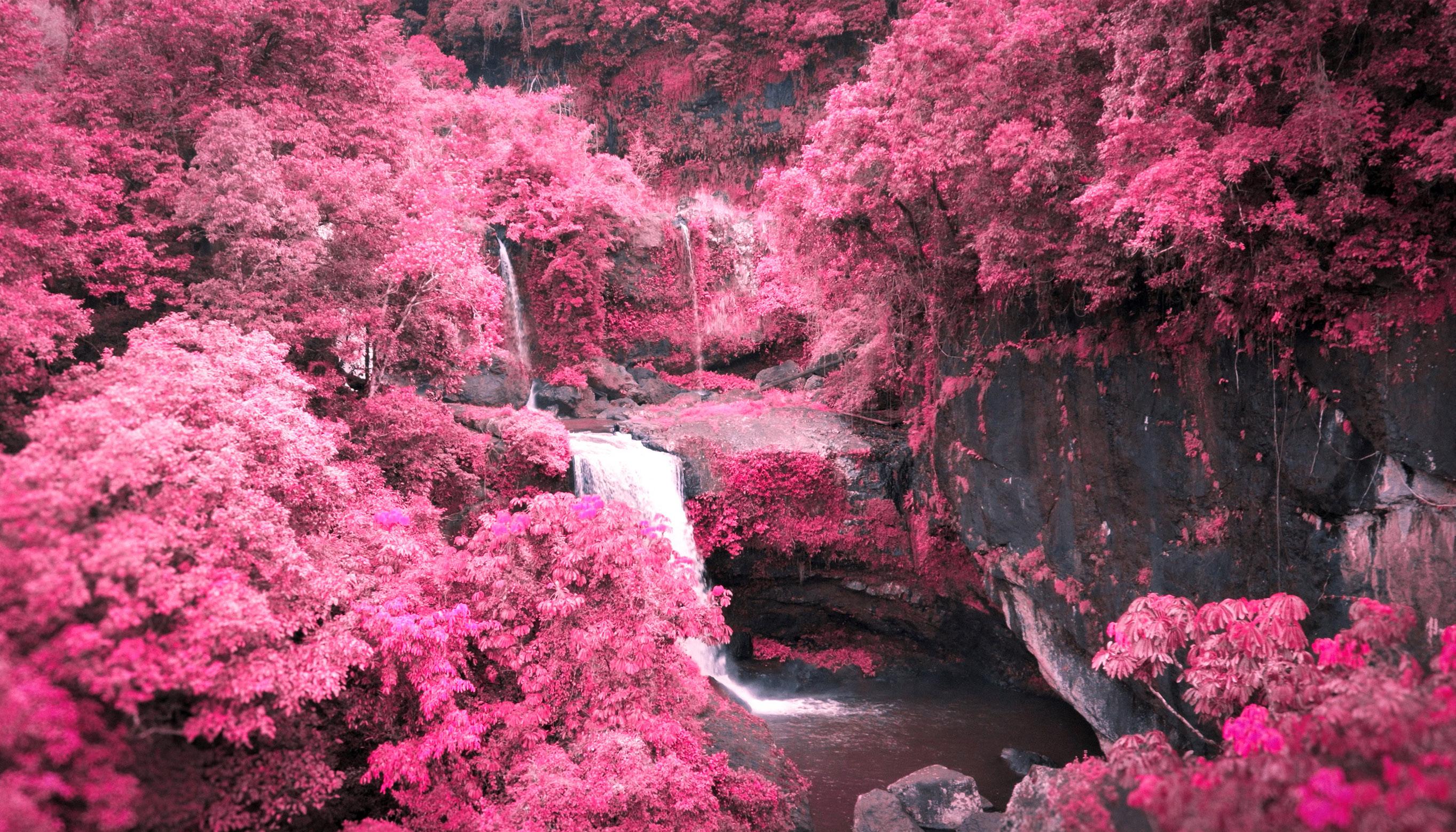
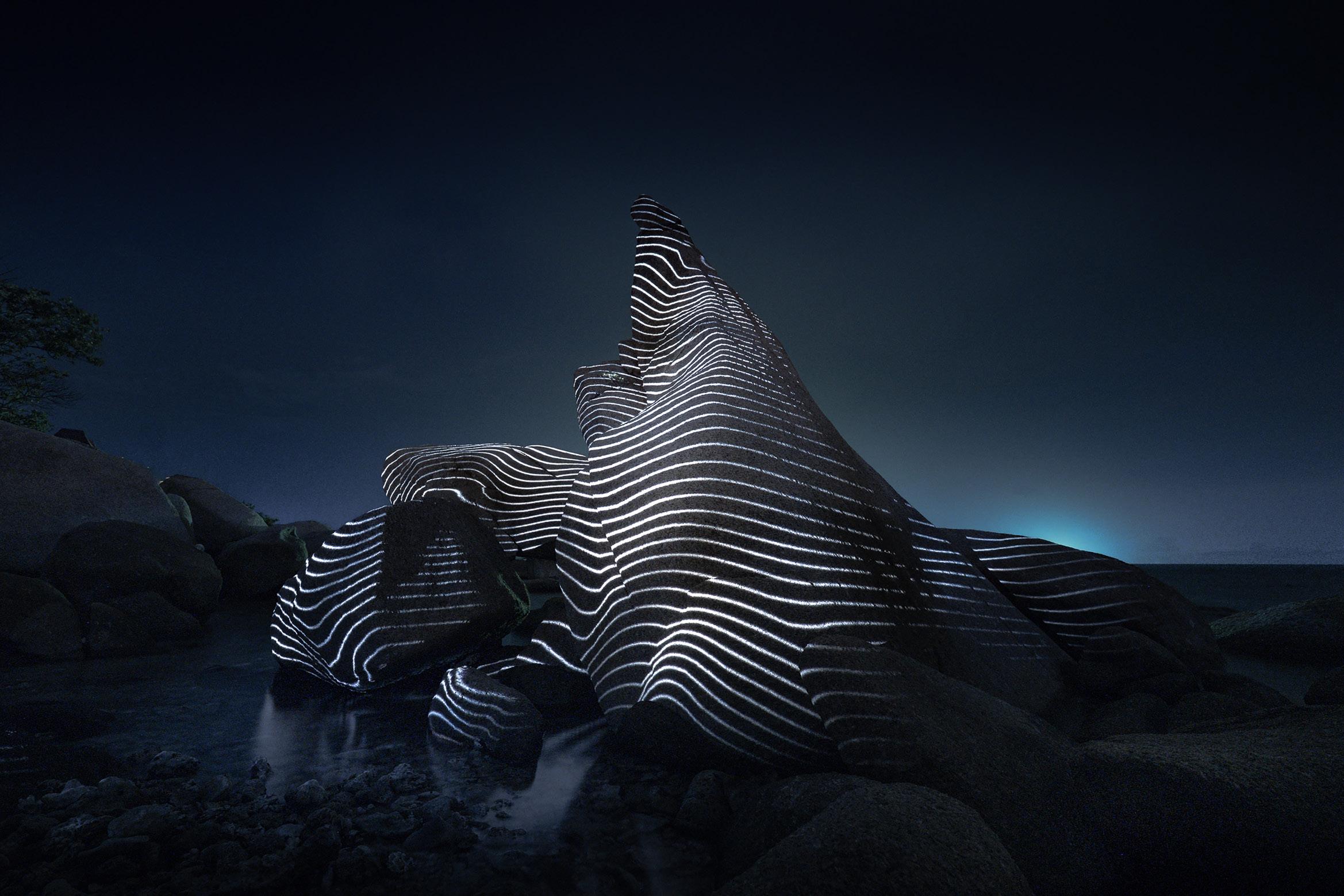
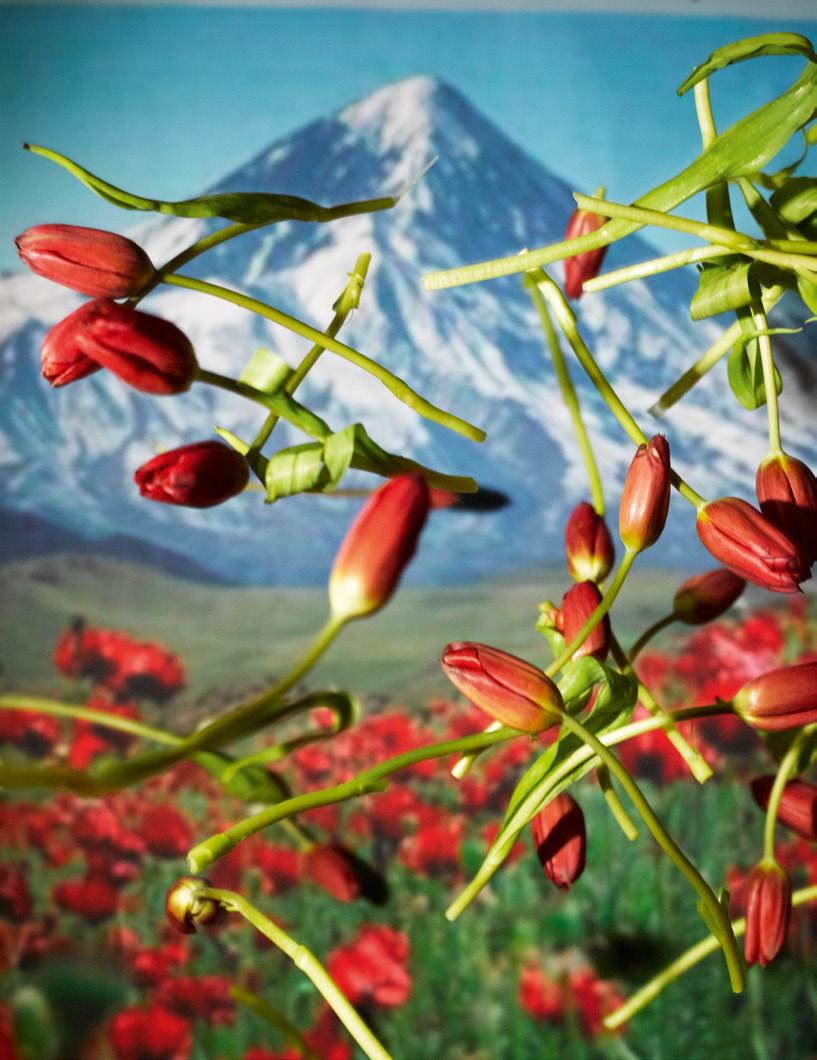
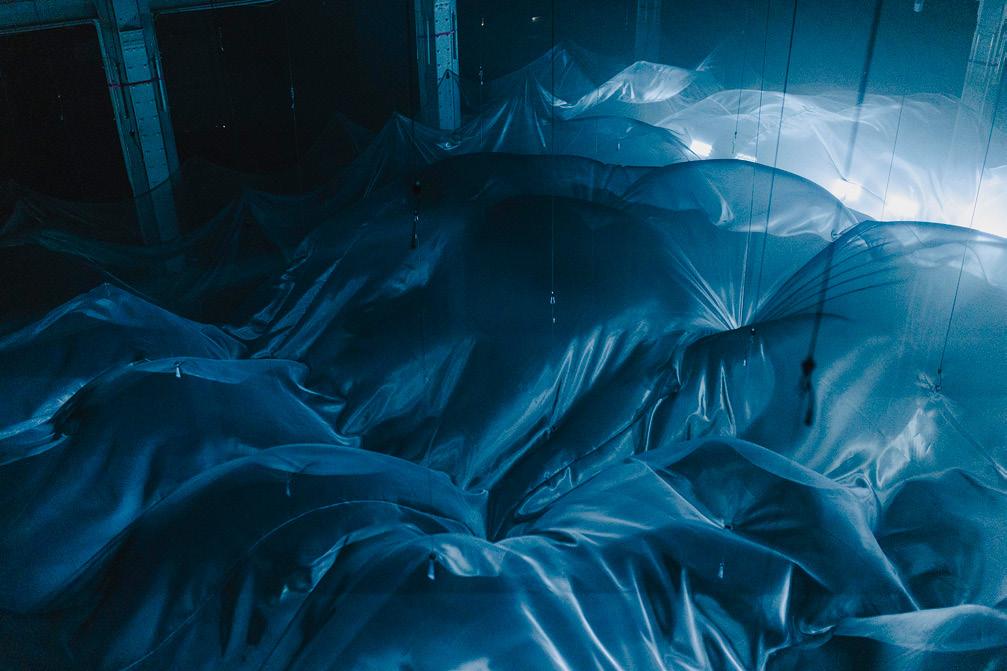
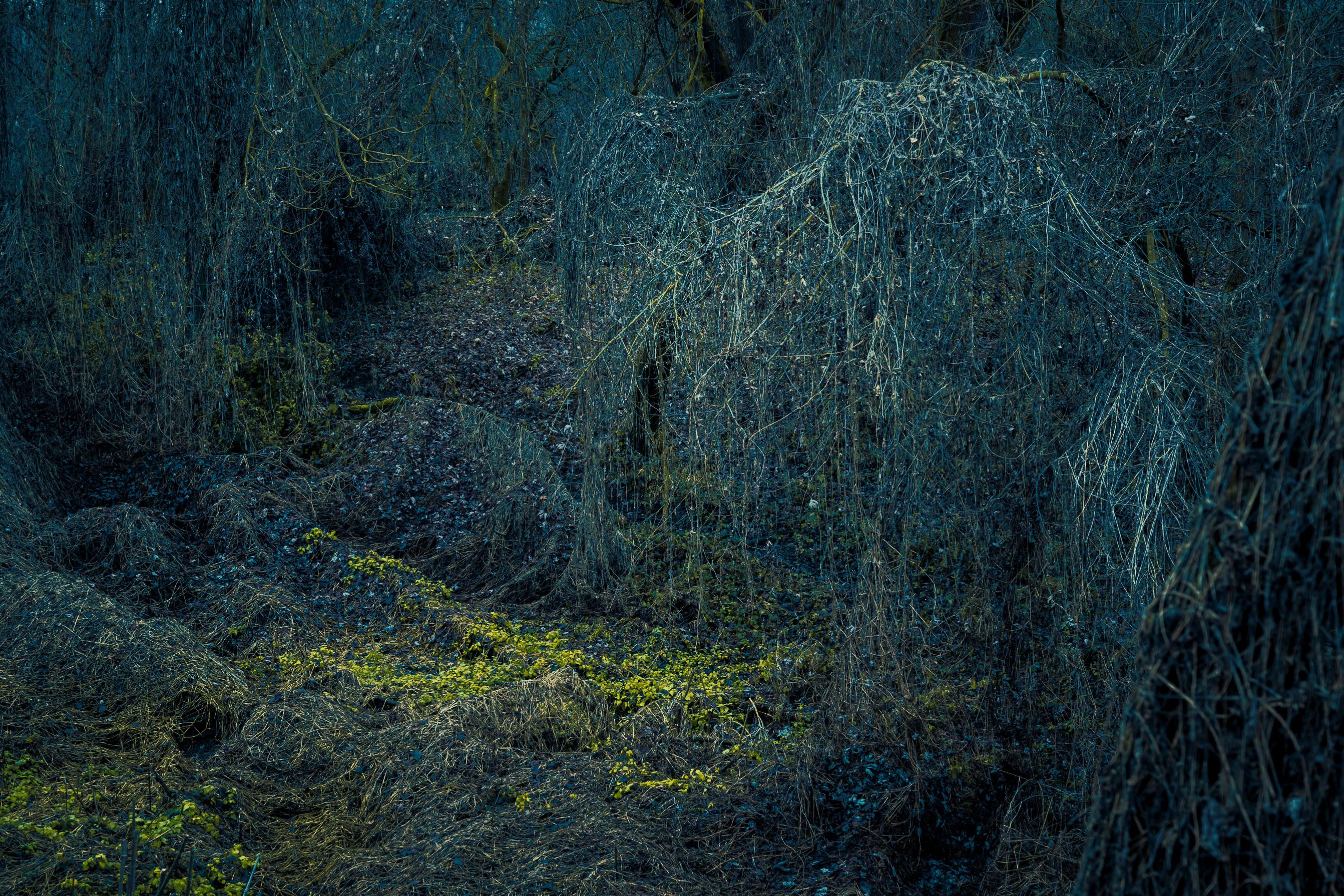
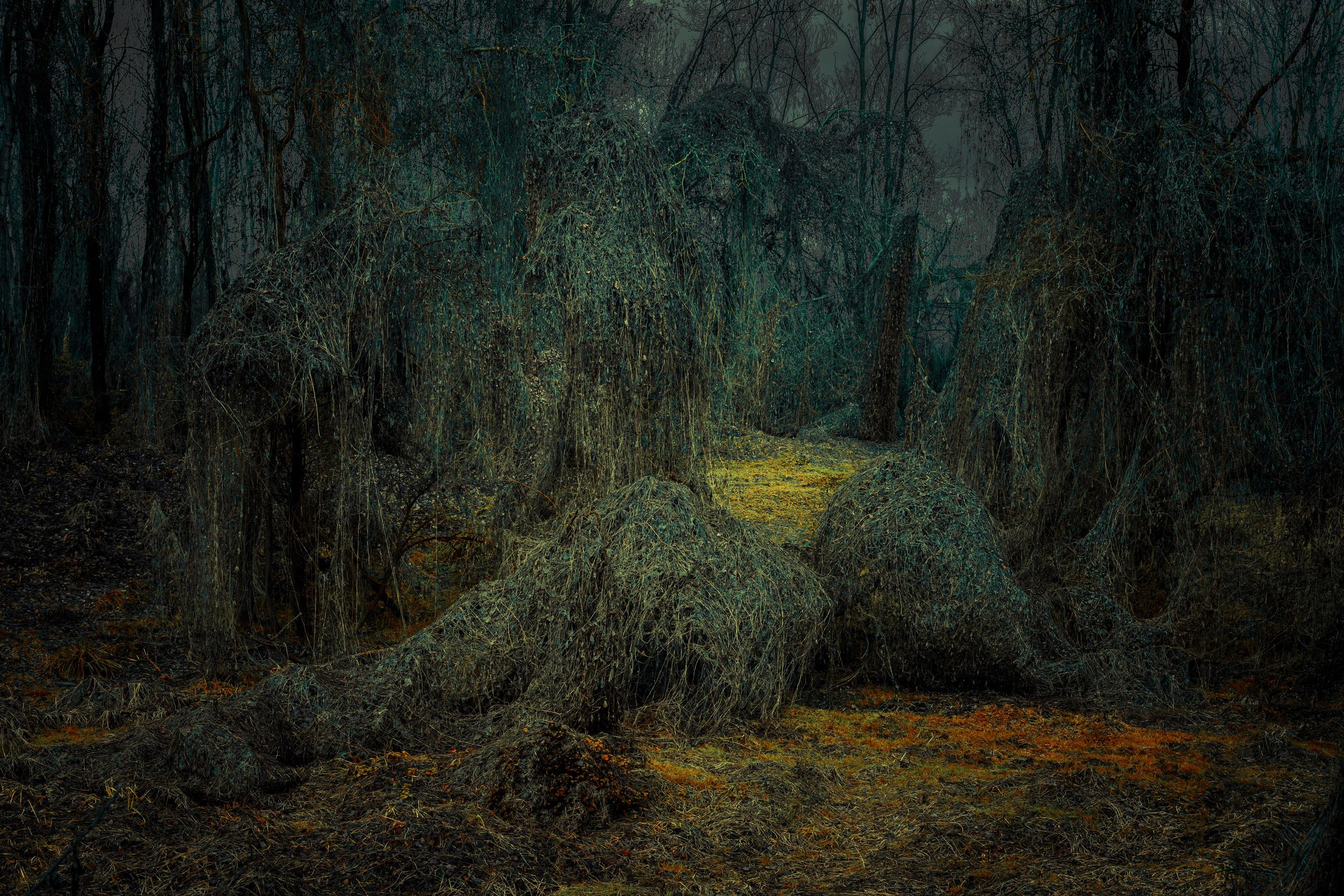
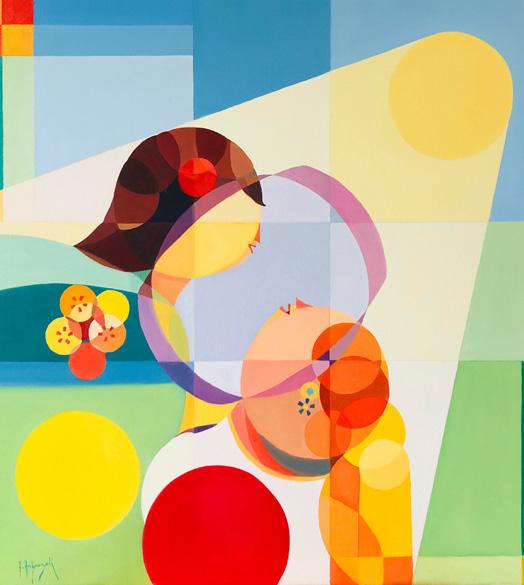
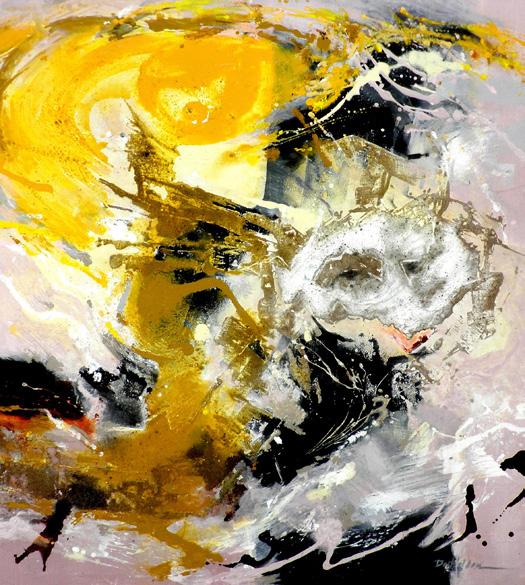
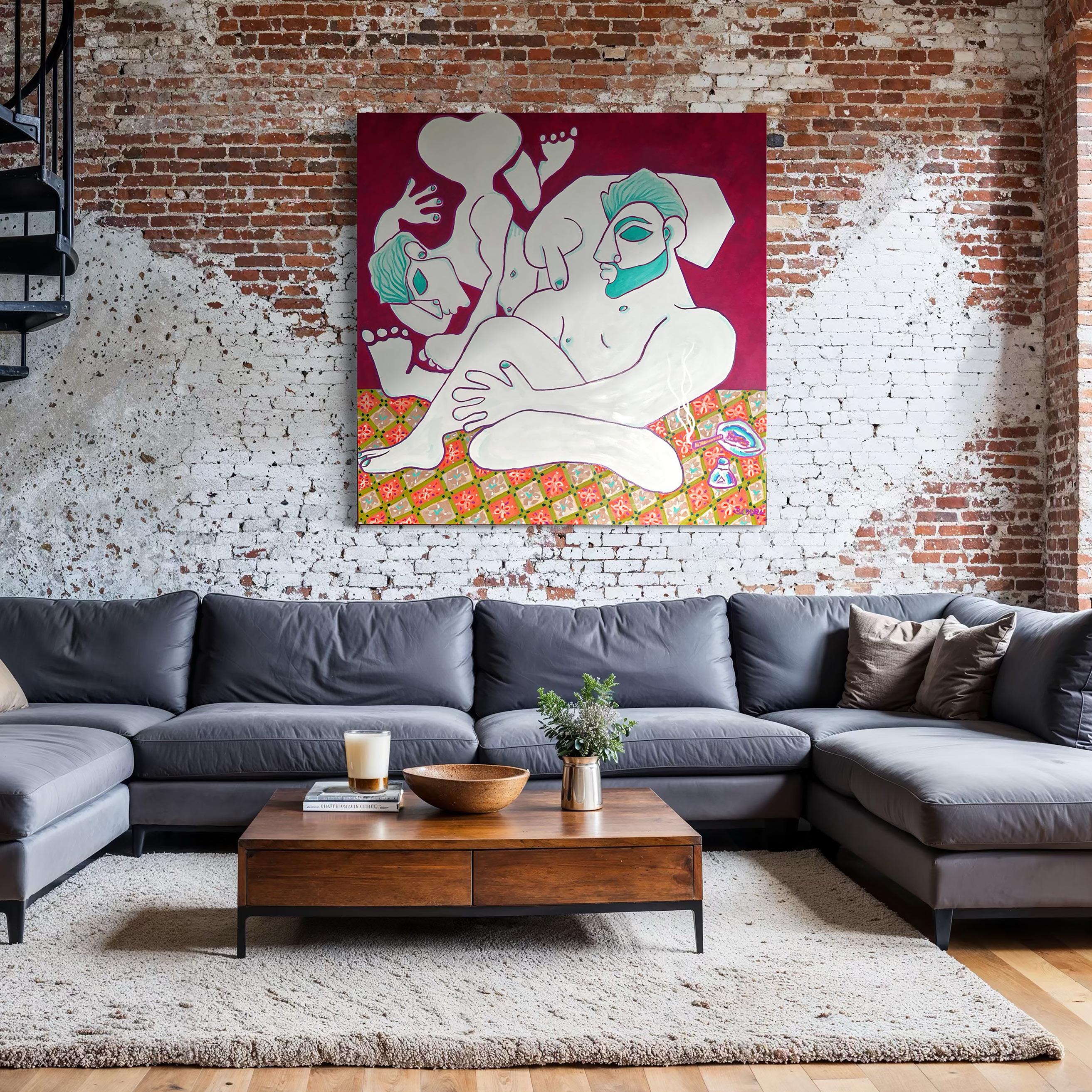
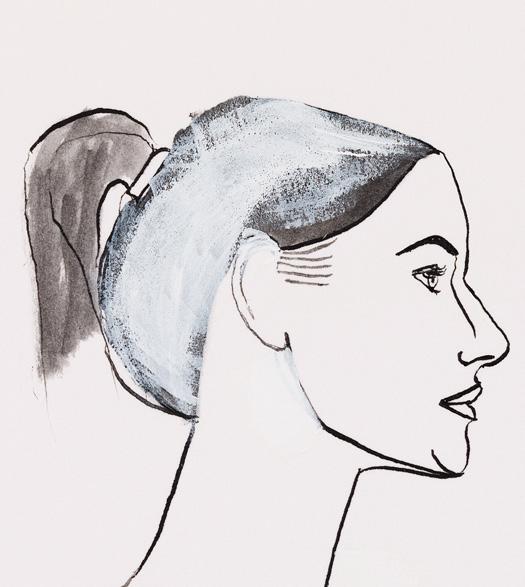
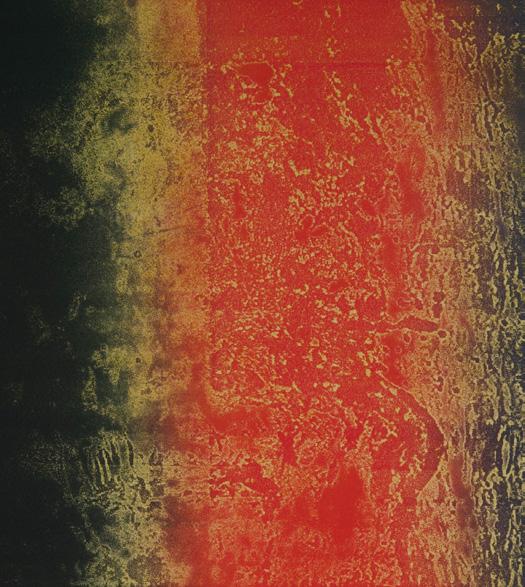
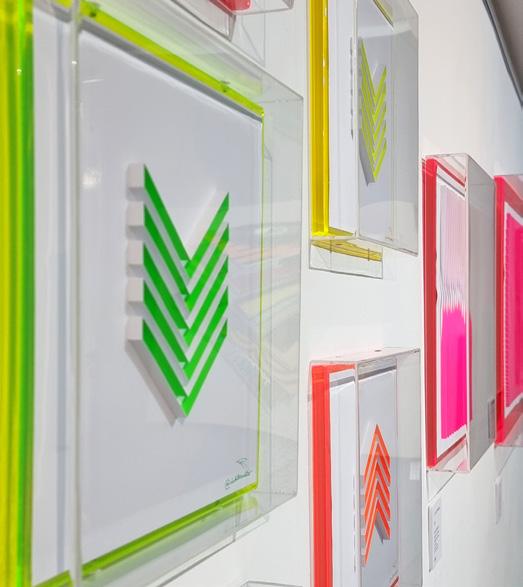
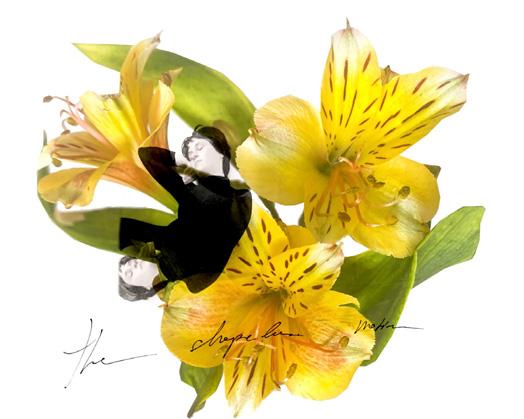
The Aesthetica Art Prize 2025 champions trailblazing voices
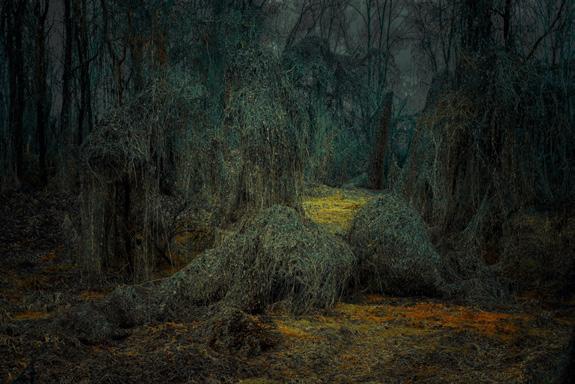
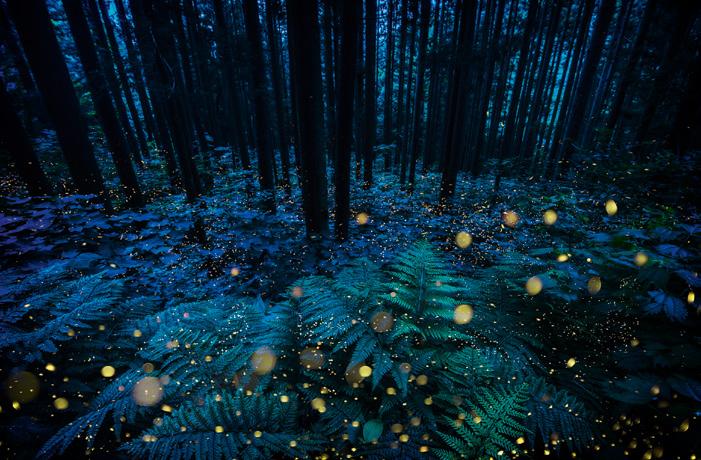
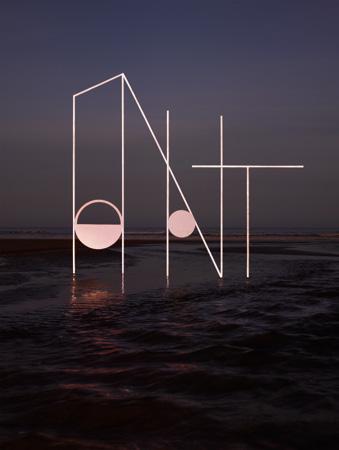
FORESTS ILLUMINATE
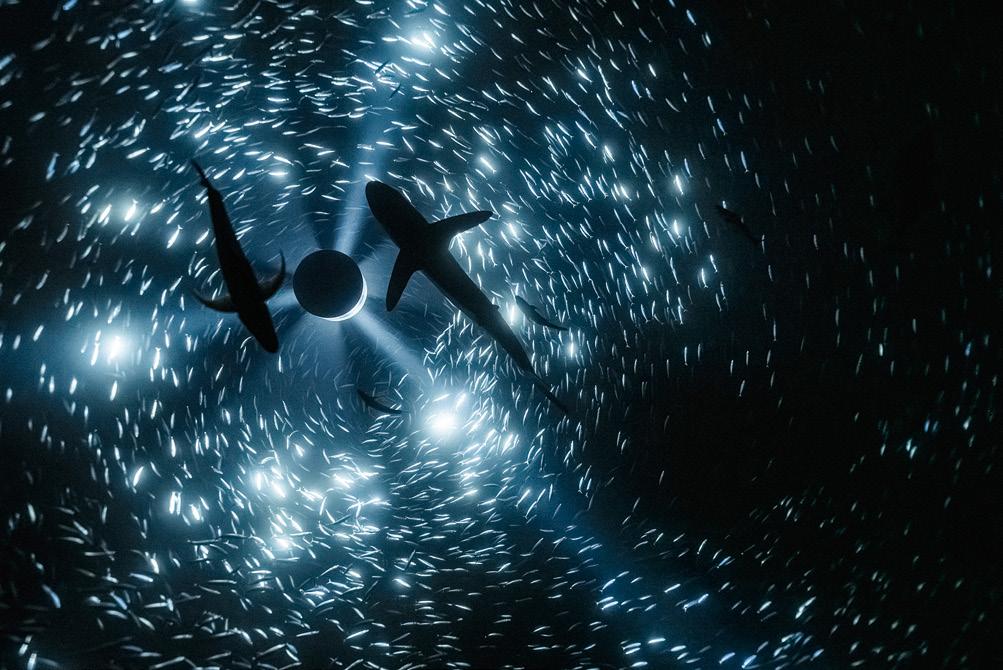
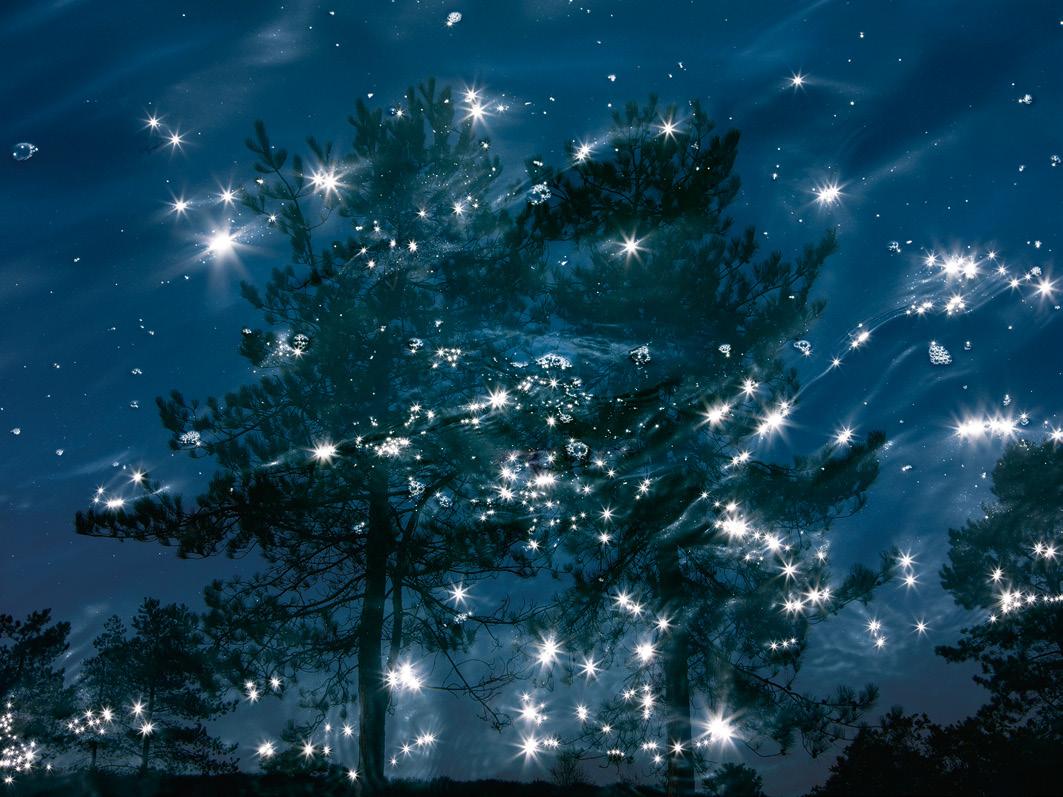
Glowing fireflies transform the woodlands of Japan after dark
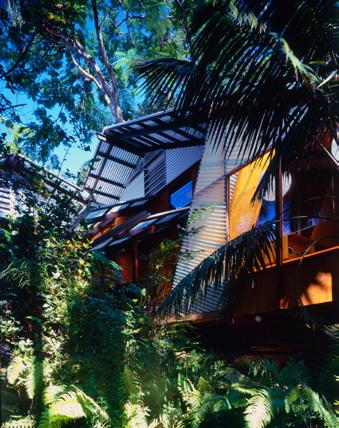
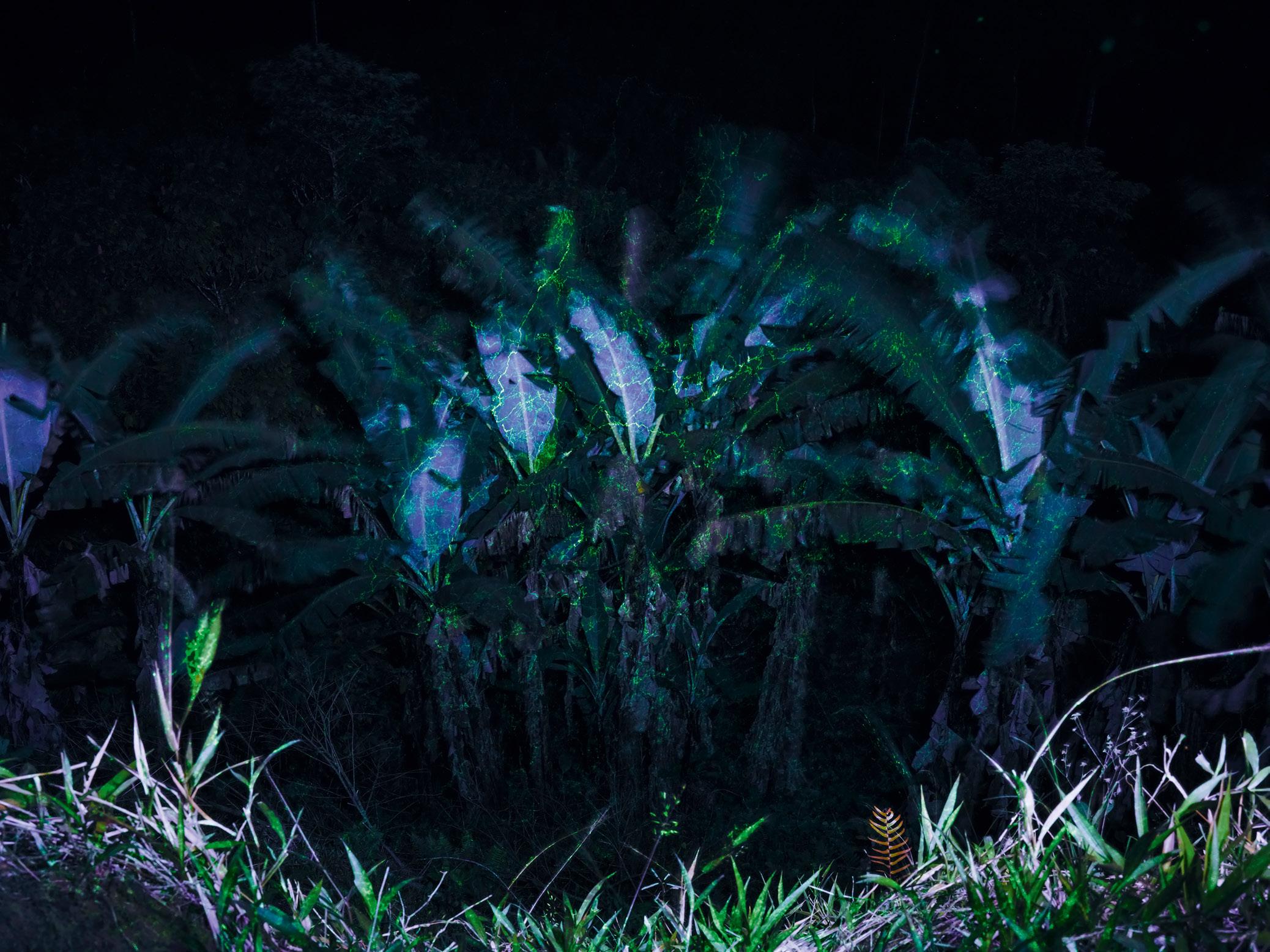
CLIMATIC RESPONSES
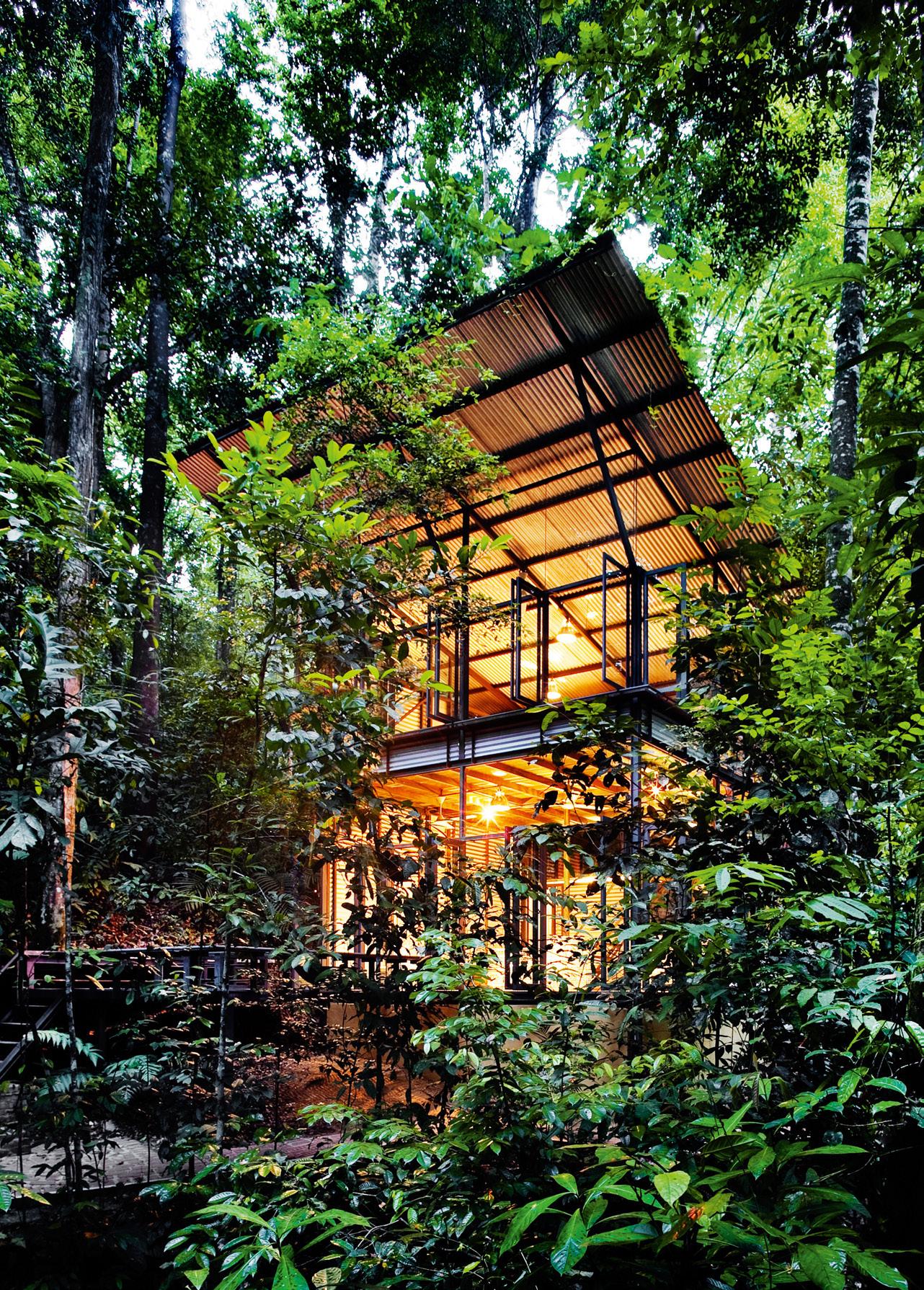
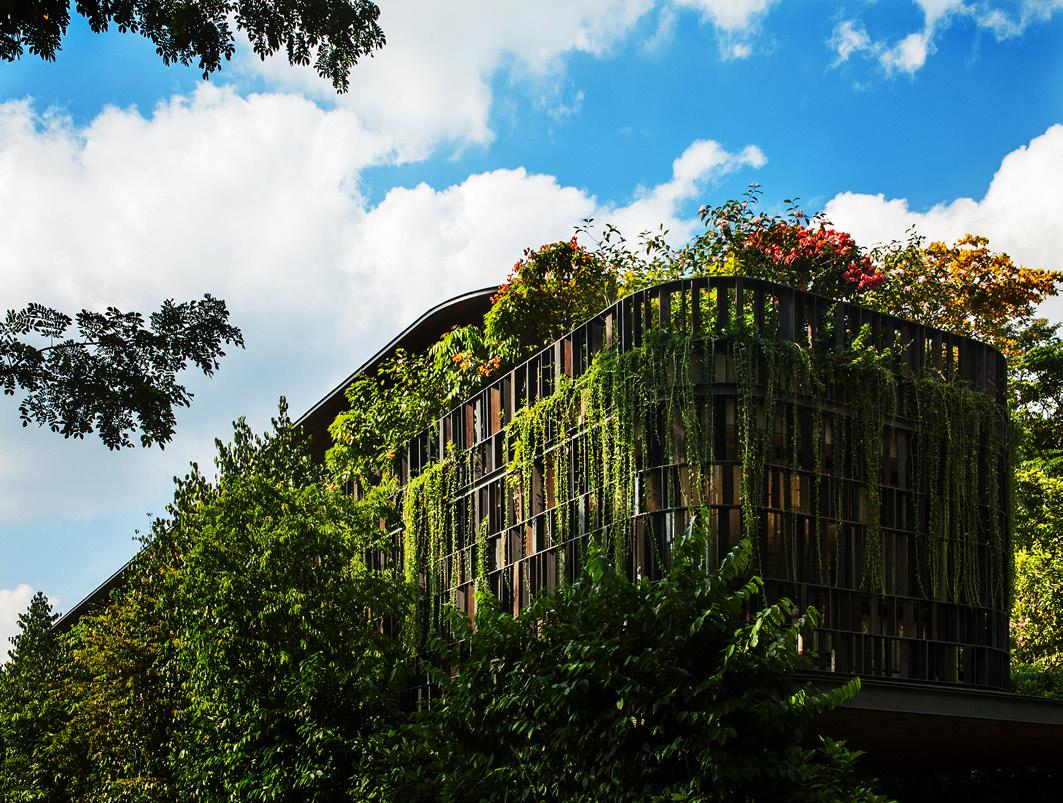
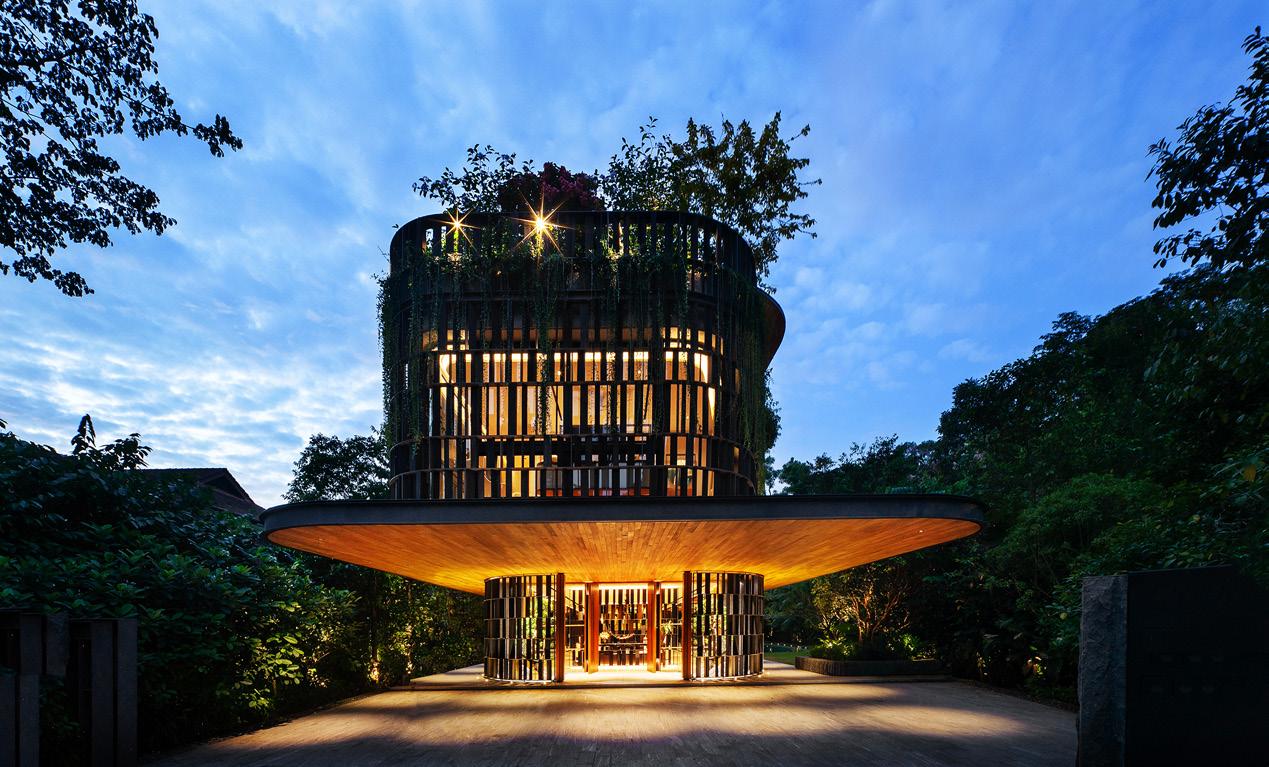
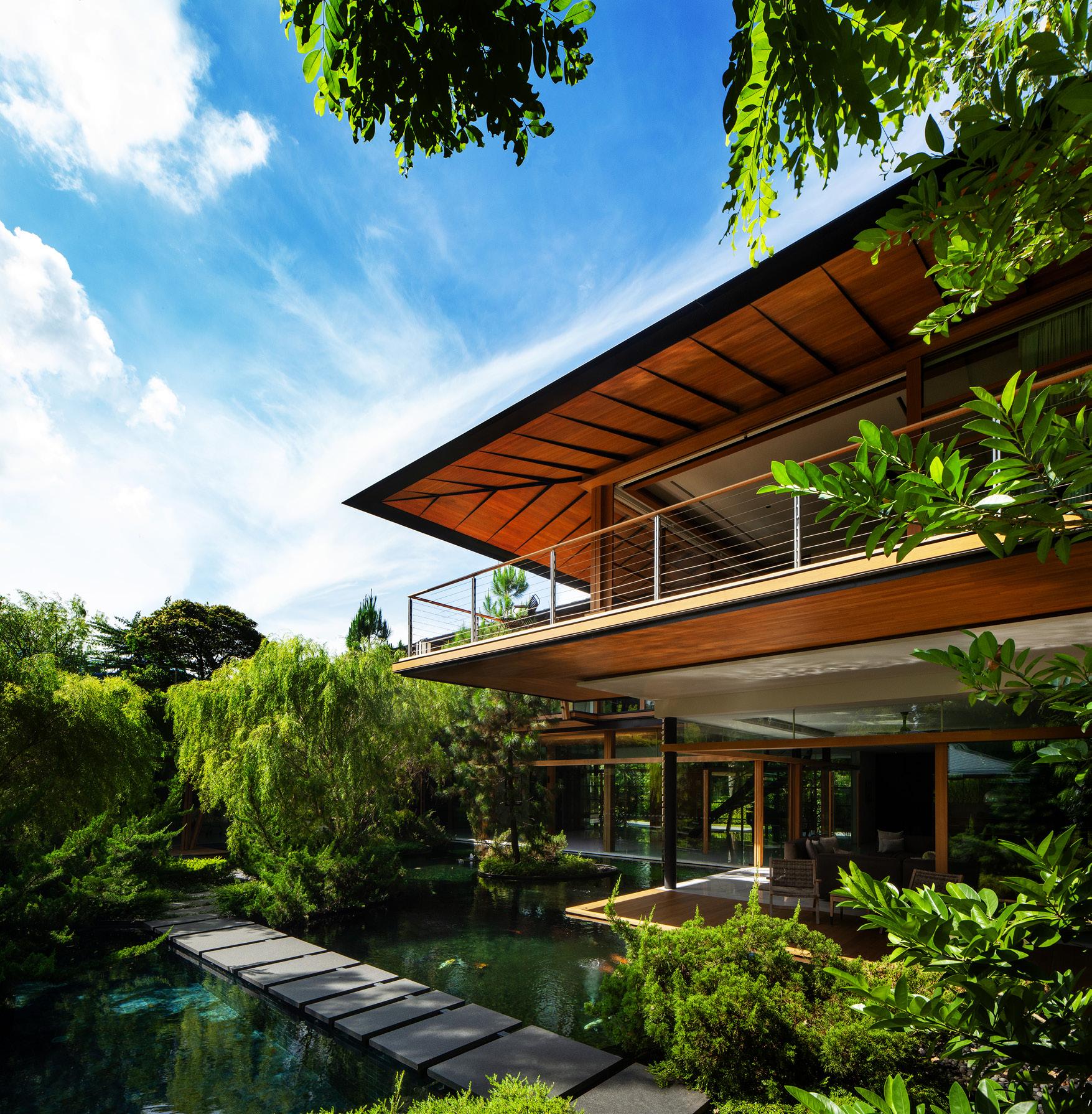
A survey of houses that attune to life in tropical environments
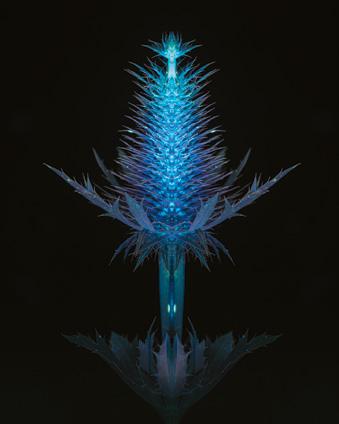
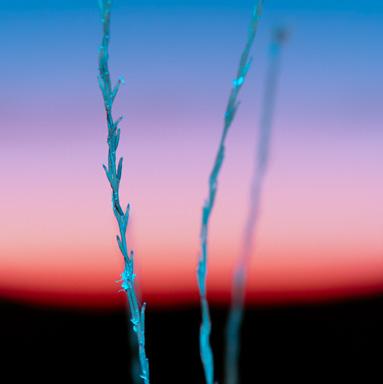
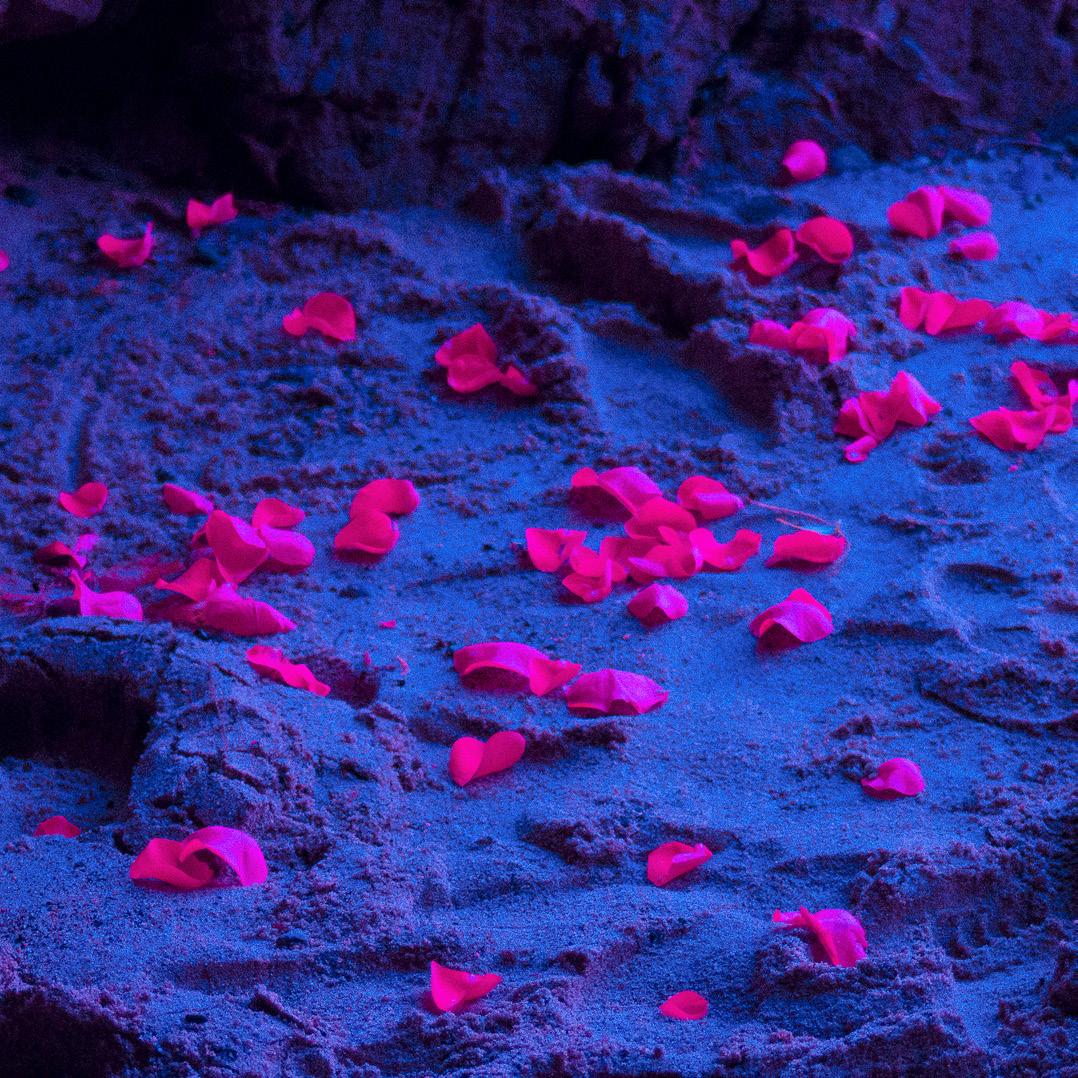
RADIANT BOTANICALS
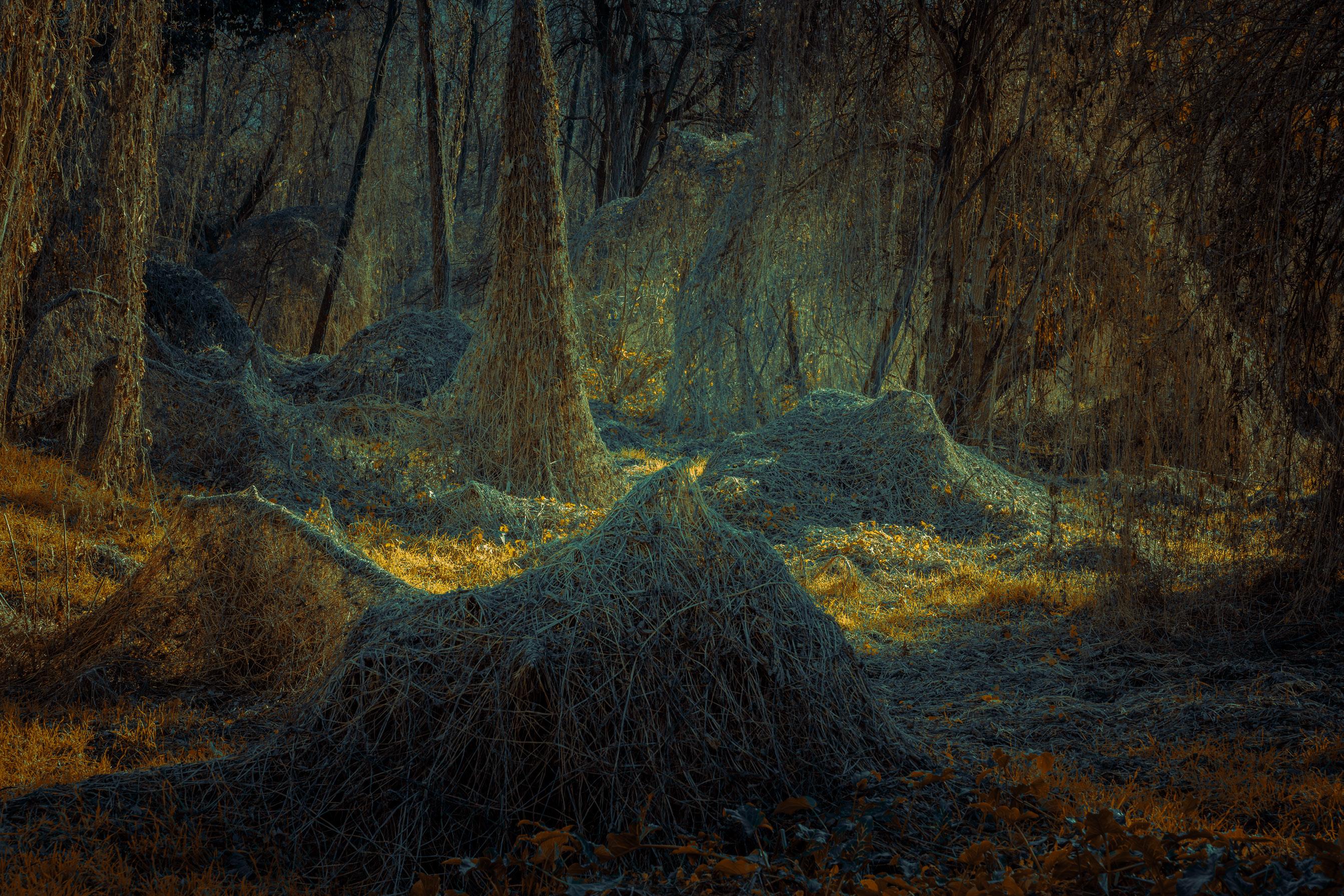
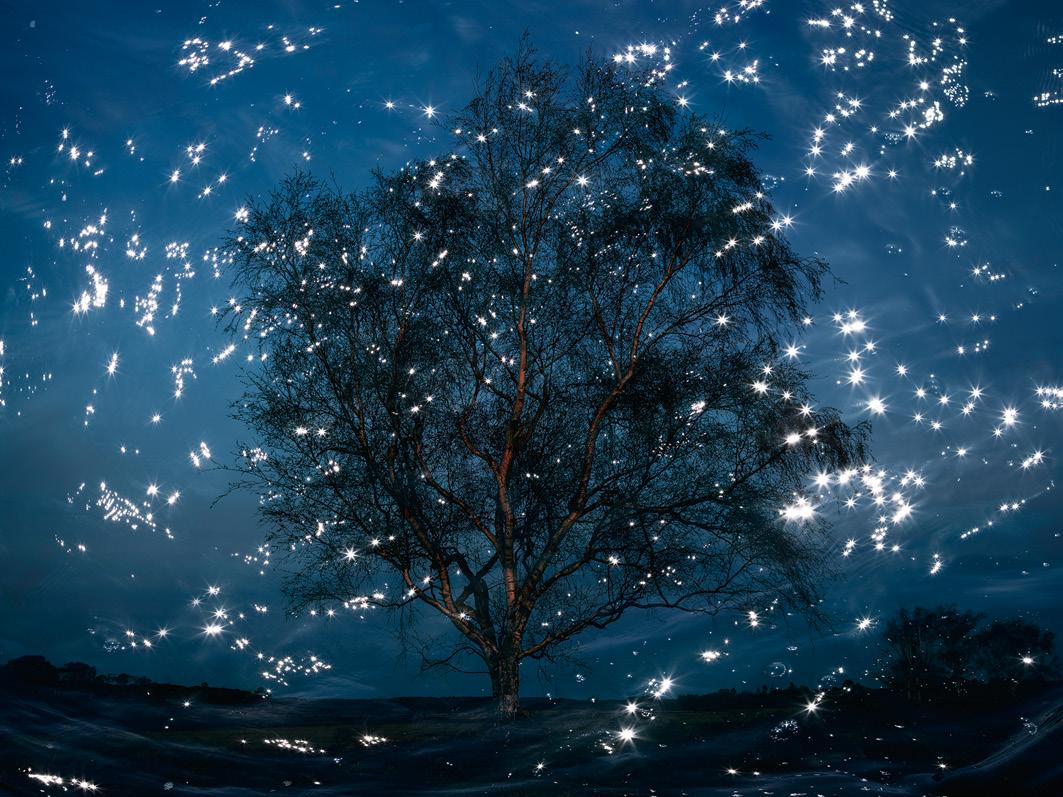
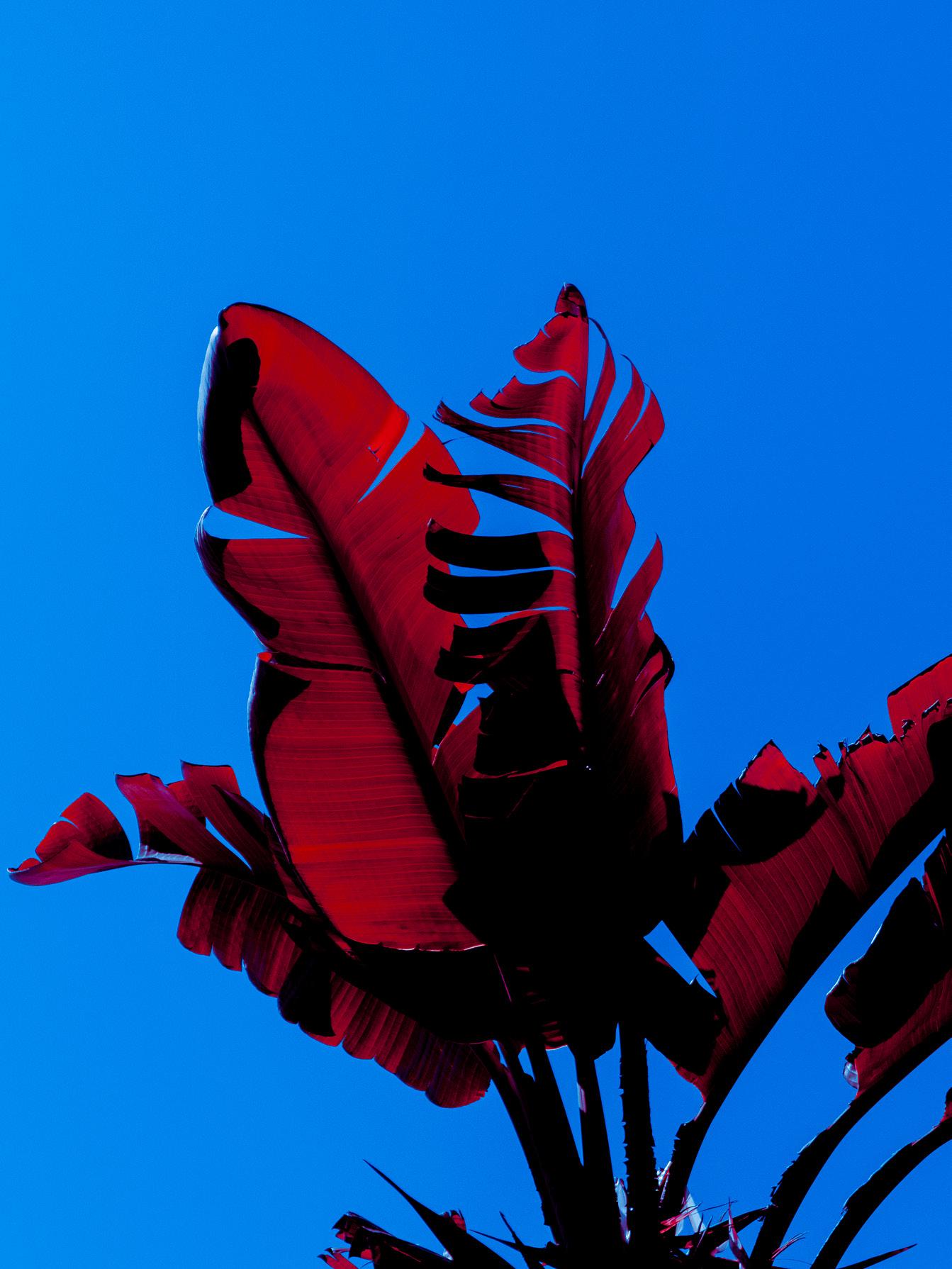
Plants and flowers are captured like never before under UV light
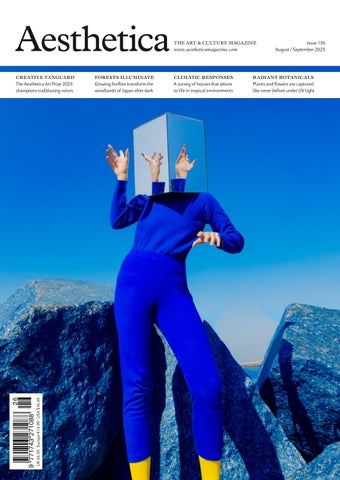
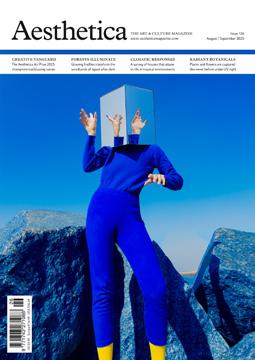
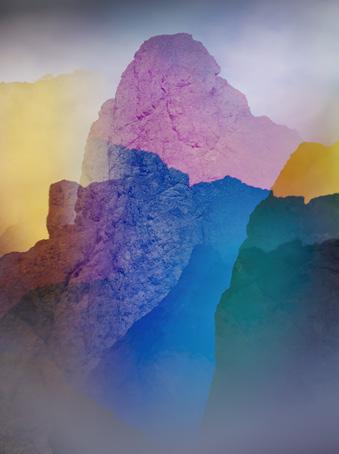
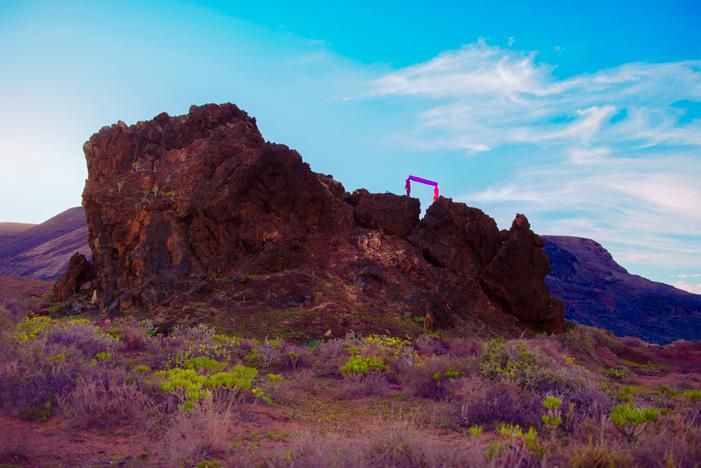
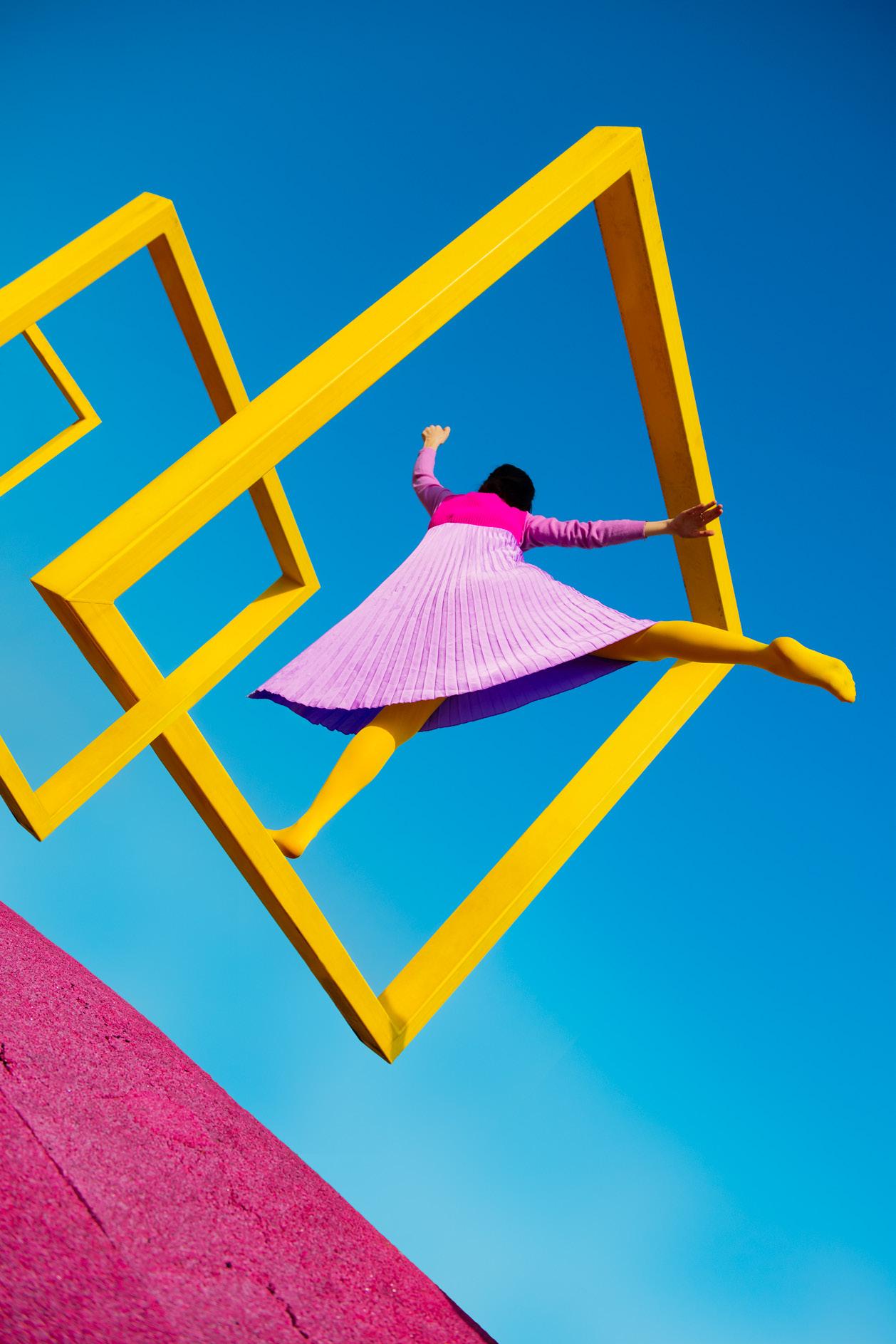
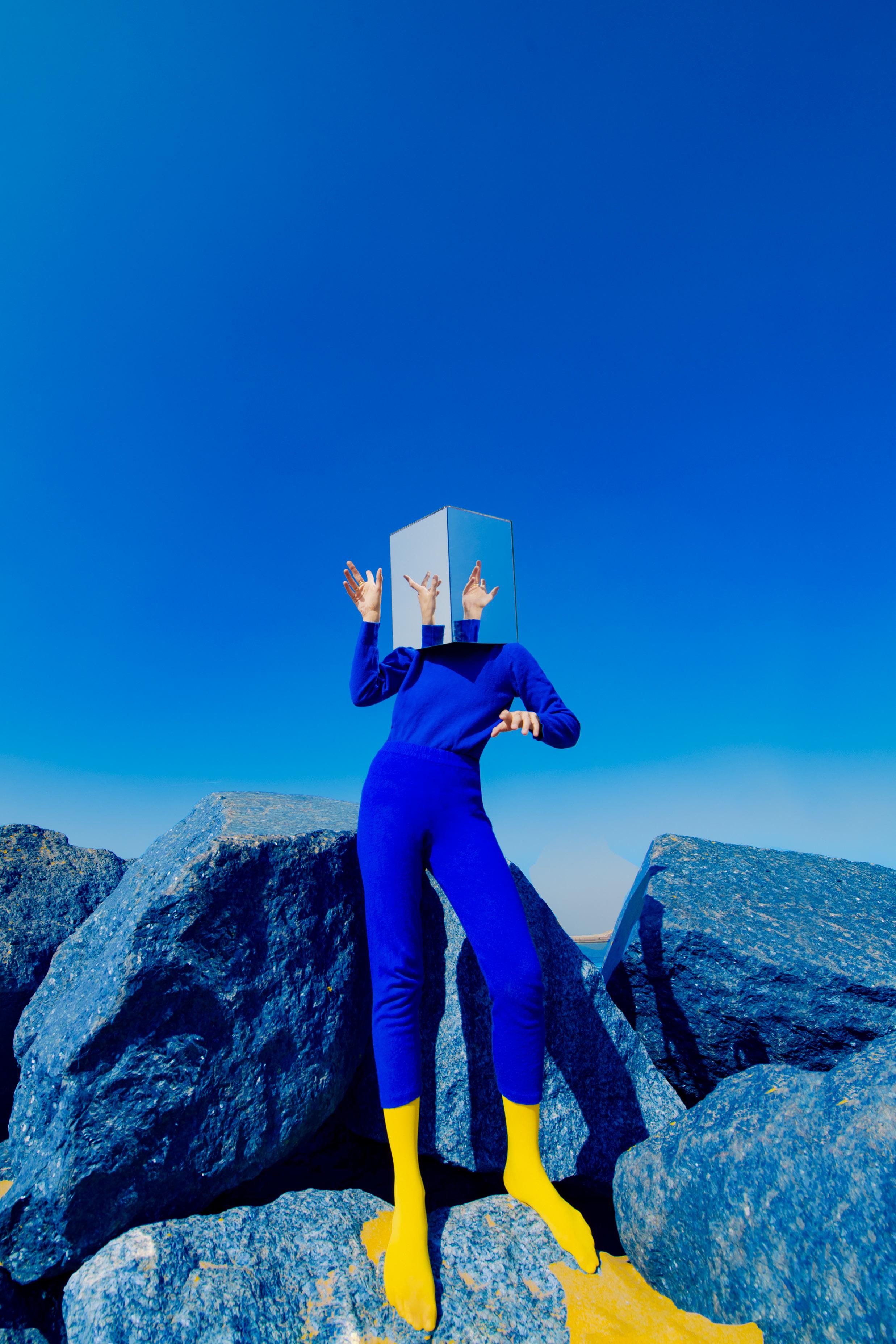
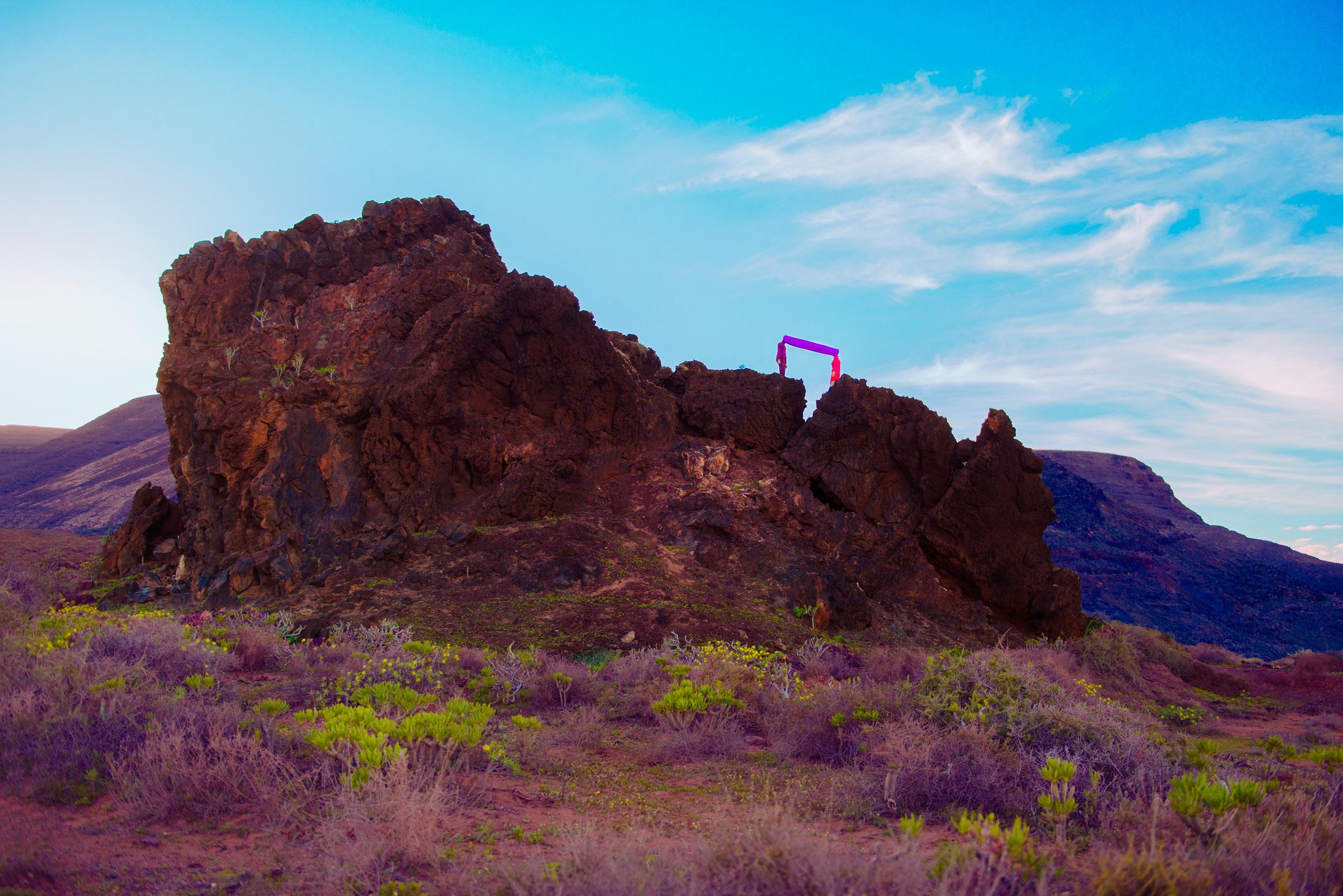
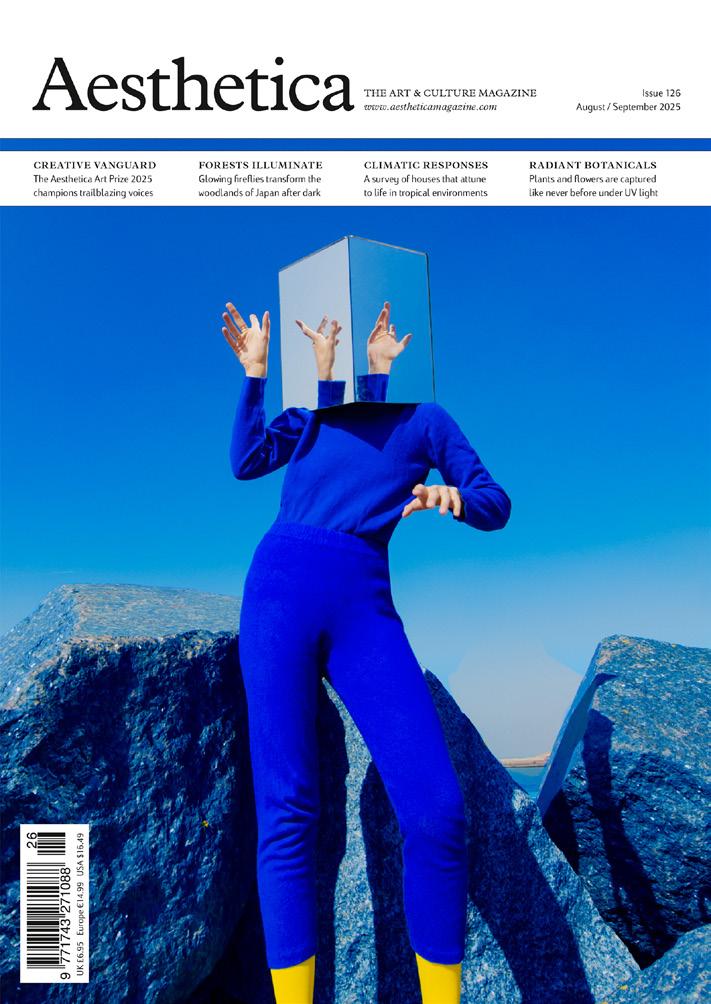
On the Cover
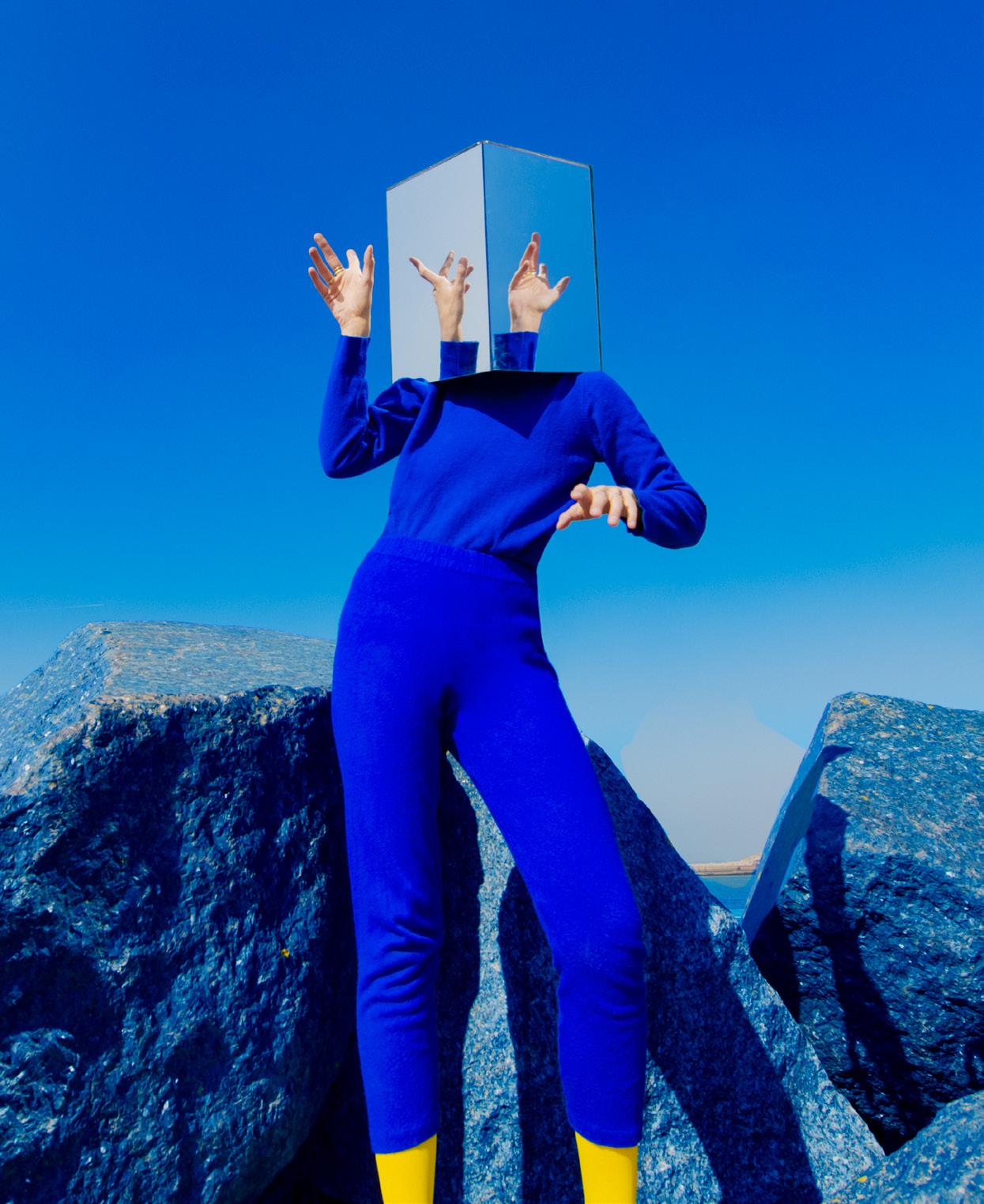
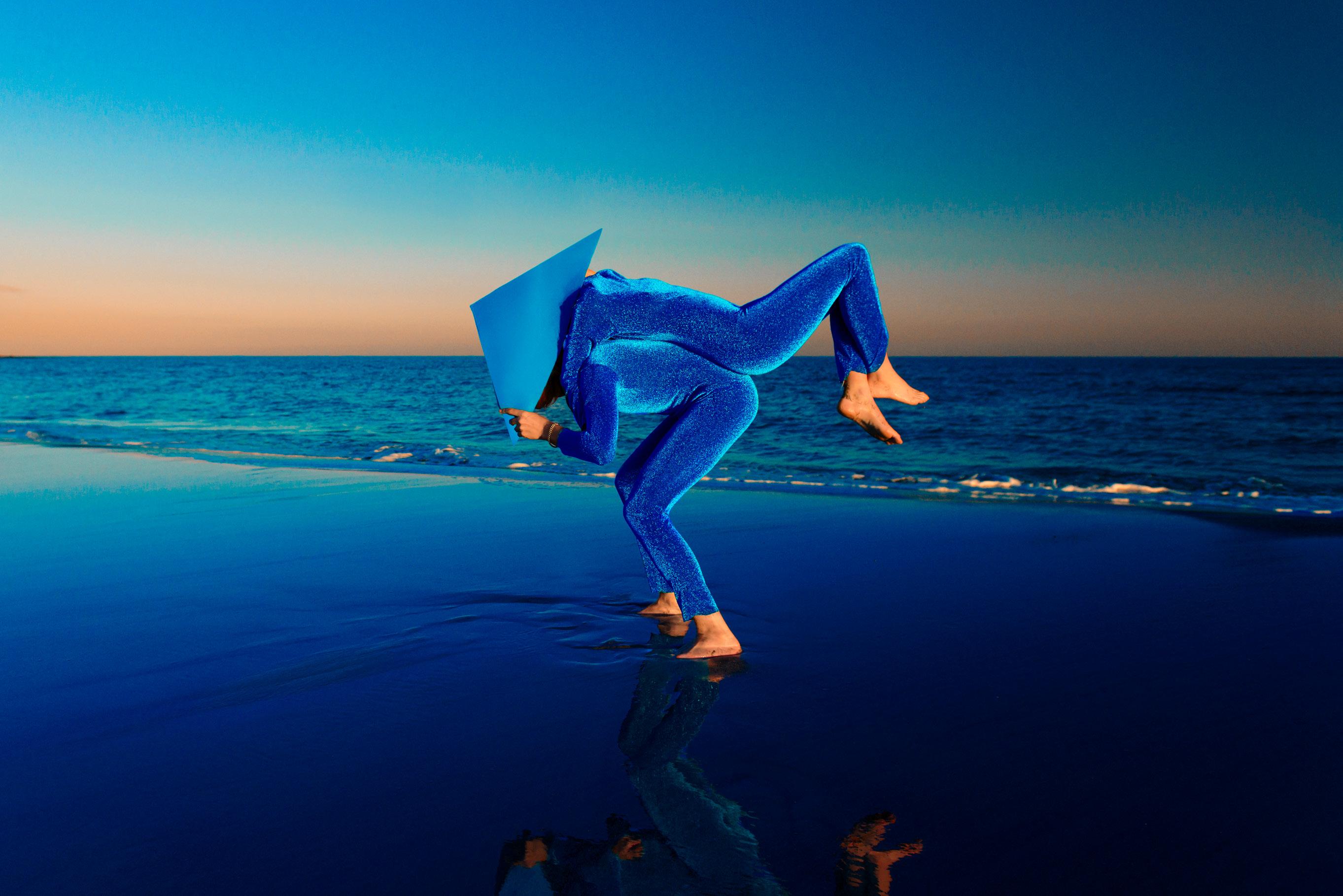
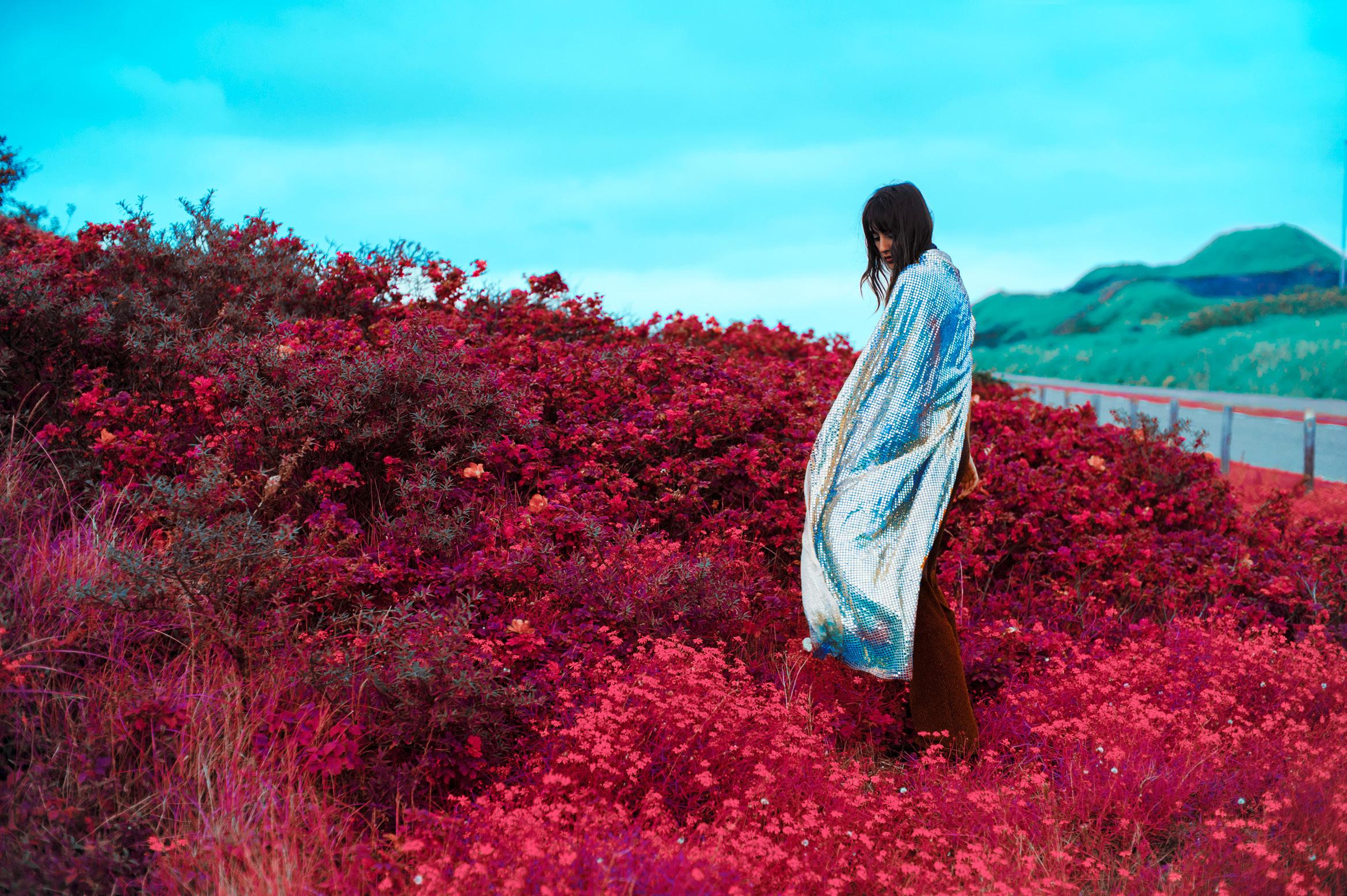
Sanja Marušić is a Dutch-Croatian artist, based in Amsterdam, who builds otherworldly images in which collage, painting and photography collide. Marušić travels extensively, capturing performances where figures move through surreal landscapes. (p. 98)
Welcome
Editor’s Note
There’s something quietly radical about choosing to slow down. In an age of endless updates and perpetual motion, pausing feels almost defiant. Recently, I’ve been thinking about what it means to truly pay attention – to notice, absorb and sit with complexity rather than rushing past it. Art invites this kind of deep looking. It asks us to hold space for ambiguity, to question what we know and to lean into curiosity. Moments of reflection aren’t passive: they’re where bold thinking begins and new ideas emerge. Inside this issue, we embrace that space of introspection and innovation. The Aesthetica Art Prize 2025 shortlist is a guide to today’s most dynamic artists. Morgan Quaintance, shortlisted for the Jarman Award, interrogates memory and representation. Joanne Coates captures rural life with tenderness and critique. Sarah Maple contributes biting humour and cultural insight. Sujata Setia’s work powerfully blends personal storytelling with social issues, using art to challenge perceptions within marginalised communities. Venice Biennale Musica and Oscar-shortlisted Brendan Dawes navigates emotion and technology through digital form whilst Mónica Alcázar-Duarte looks at identity, memory and cultural heritage. Ayo Akingbade and Àsìkò challenge colonial legacies. Future Tense, our second major exhibition, showcases immersive environments by Liz West and Squidsoup. They are talents shaping the future of experience. We also feature Kazuaki Koseki, Earth Photo 2025 shortlistee, whose work draws attention to fragile ecosystems. The Iconic Tropical House explores climate, minimalism and architecture as a way of life. In photography, we highlight Agnieszka Ostrowska, Ashley Chappell, Debora Lombardi, Neil Kryszak and Terri Loewenthal – artists offering bold visions of light, perception and transformation. Our cover photographer is Sanja Marušić. The Last Words go to Craig Bentley, Director at the National Railway Museum in York, where architecture, art, engineering and science combine to reopen a national treasure.
Cherie Federico
Cover Image: Sanja Marušić, Singles, (2020). Image courtesy of the artist.
15 Welcome
An introduction to the themes of this edition of Aesthetica, including how art can encourage us to slow down, look closely and reflect deeply.
38 Radiant Botanicals
Debora Lombardi employs ultraviolet-induced visible fluorescence to reveal pigments hidden within flowers, which emit a mesmerising glow.
68 Climatic Responses
A new publication looks back over 50 years of environmentally attuned buildings that blend inside and outside, responding to landscapes.
98 Stories in Colour
Sanja Marušić uses collage, costume, painting and the camera to craft otherworldly settings in which playful, surreal narratives can unfold.
Reviews
126 Exhibitions
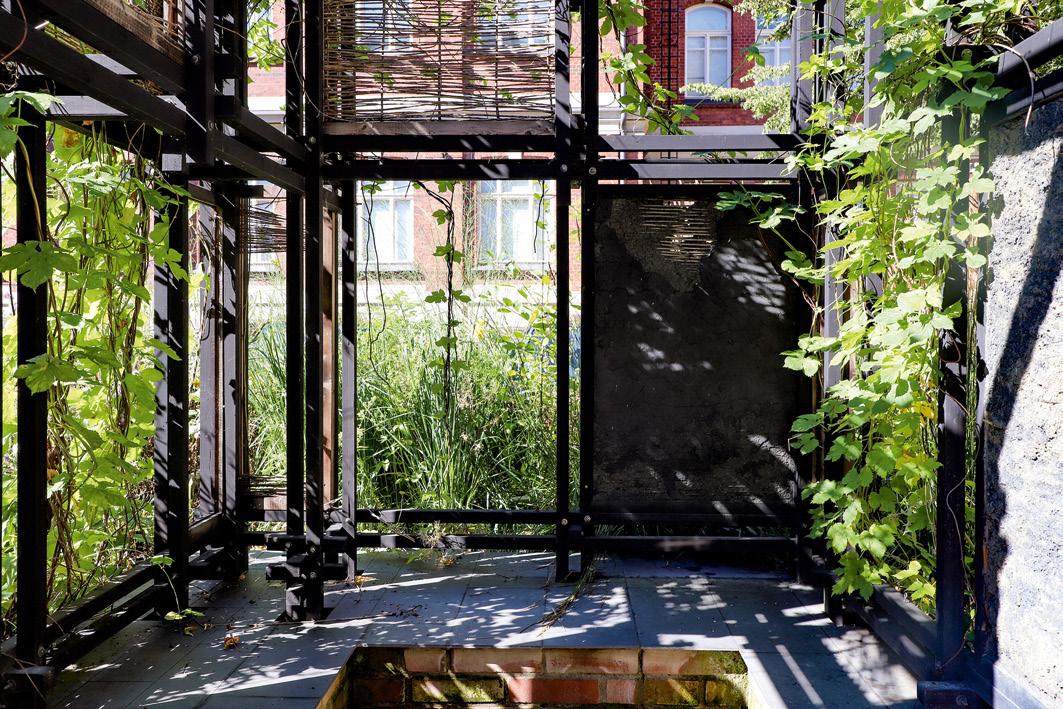
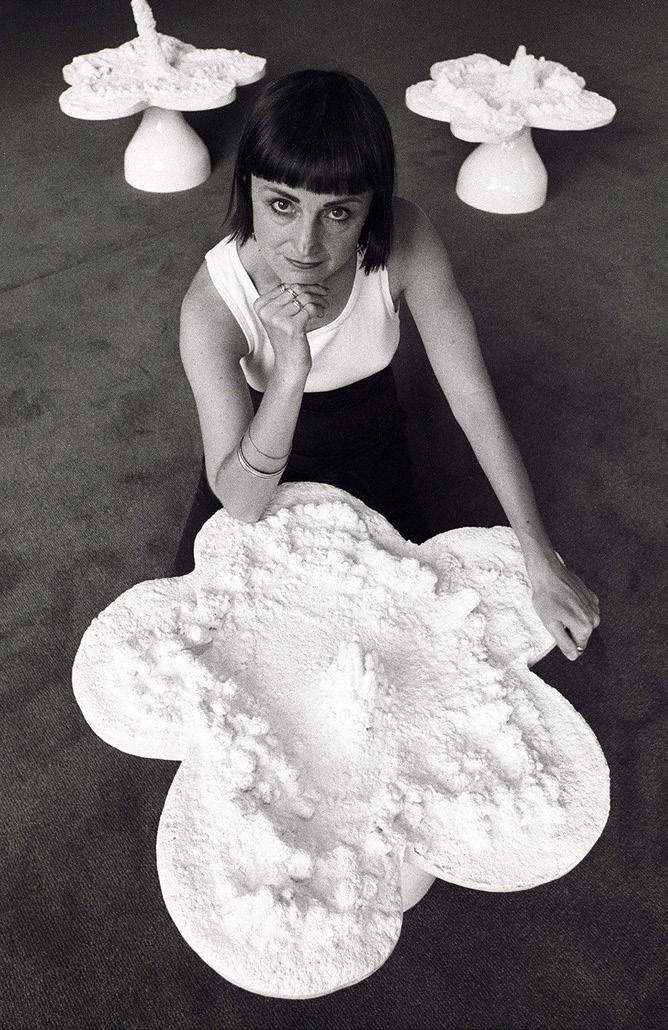
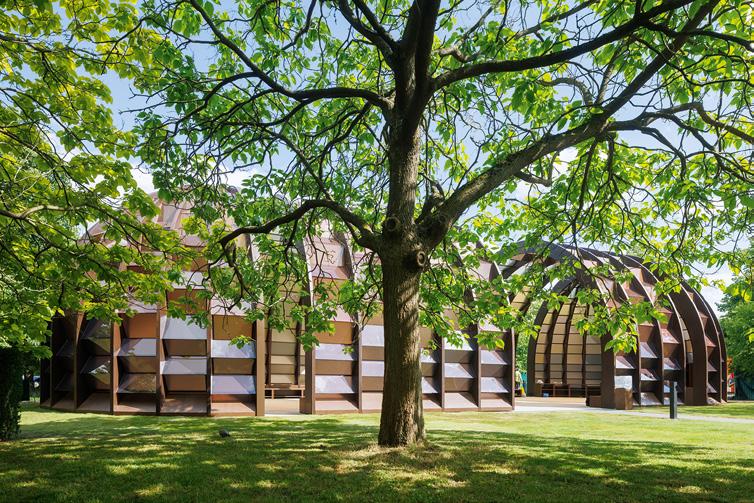
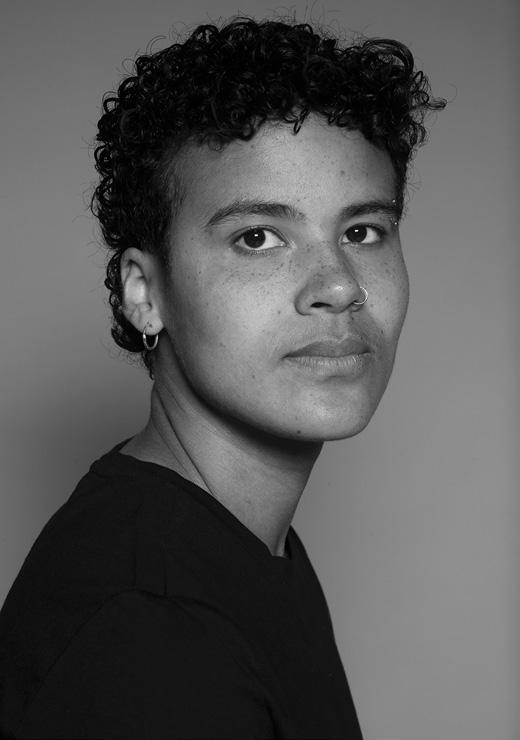
Visiting key retrospectives of Rashid Johnson in New York and Helen Chadwick in Wakefield, plus the 25th anniversary Serpentine Pavilion.
Books
135 The Latest Publications
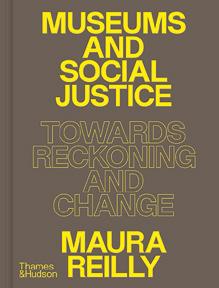
Recent book releases include Museums and Social Justice, which is a defining text for the socio-political and curatorial moment now.
Some of the very first photographs had nature as their subject: think William Henry Fox Talbot’s botanical specimens or Anna Atkins’ distinctive cyanotypes. As the craft developed, artists remained fascinated by the outdoors, with household names like Ansel Adams and Edward Weston focusing on recording the landscape. Today, practitioners are using the subject matter as a means of pointing to wider societal themes – from Richard Mosse, who harnesses infrared to reveal man-made destruction in the Amazon, to Taryn Simon's political floral arrangements. The After Nature Ulrike Crespo Photography Prize, launched in 2024, champions those working at the intersection of art and ecology. This year's winners are Lisa Barnard (b. 1967) and Isadora Romero (b. 1987). Barnard is best-known for the acclaimed project The Canary and The Hammer, currently on view at Soho Photography Quarter in London, which takes a deep dive into gold's troubled history. In Berlin, she presents research into echolocation, revealing how the technique – used by bats, dolphins and other animals – has influenced the development of driverless vehicles, lithium mining and nuclear testing sites. Isadora Romero, meanwhile, uses three case studies in Ecuador to examine the coexistence of humans and forests – in the past, today and into the future. Her collaborations with scientists and local communities create a nuanced narrative about the spiritual, political and environmental importance of tropical rainforests. Together, Barnard and Romero encourage us to reconsider the landscape and push beyond familiar, entrenched perspectives.
Fostering Connection
FLOW: FRAGILE IS PRECIOUS
Various Locations, Occitanie | Opens 20 September theeyes.eu
FLOW is an exciting new cultural and civic event launching in the Occitanie region of France. The inaugural edition presents the work of nine photographers and visual artists, and engages with the biggest questions facing today's world: exile, migration and the fragility of global ecosystems. What's notable is that it takes place across four heritage sites, with venues including a 13th century cathedral and an Art Nouveau château. There's a curatorial dialogue between then and now, and a drive to expand the parameters of where art can be shown and enjoyed. Time and memory are, fittingly, potent throughlines. Anne Immelé reframes caves linked to Phoenician civilisation (1500300 BC) in the context of today's ongoing migrant crisis. Elsewhere, Oleñka Carrasco brings a deeply personal stance to the topic; she speaks to the history of Venezuela and its exiled people through the lens of her own loss. In 2020, she learned via video call – at a distance – that her father had passed away. Ryan Hopkinson takes a more abstract approach to the topic by visualising large metallic sculptures in outdoor settings, where they will gradually integrate with their surroundings. It's an exploration of what endures and what fades. Likewise, Samuel Bollendorff considers longevity and impermanence in nature. In 2019, Bollendorff joined the Tara Microplastics mission, collecting 2,700 samples from 45 sites. His photographs tell a grim story of the ephemerality of maritime landscapes. FLOW is a promising new addition to the art calendar, encouraging us to consider various threads of connection across time and place.
Beyond the Visible
RAGUSA FOTO FESTIVAL 13
Various Locations, Ragusa | 28 – 31 August ragusafotofestival.com
The idiom "don't judge a book by its cover," whilst timeworn, still holds an important message: you shouldn't make assumptions on people, places, or things simply by looking at them. The 13th edition of the Ragusa Foto Festival, titled Beyond Appearance, is about just that. Taking place in a Sicilian UNESCO World Heritage site, and spanning exhibitions, workshops and awards, it asks: what is it possible to see when you look past the superficial?
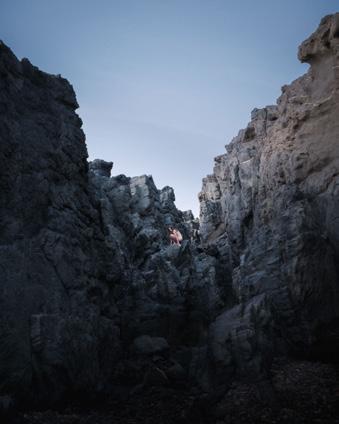
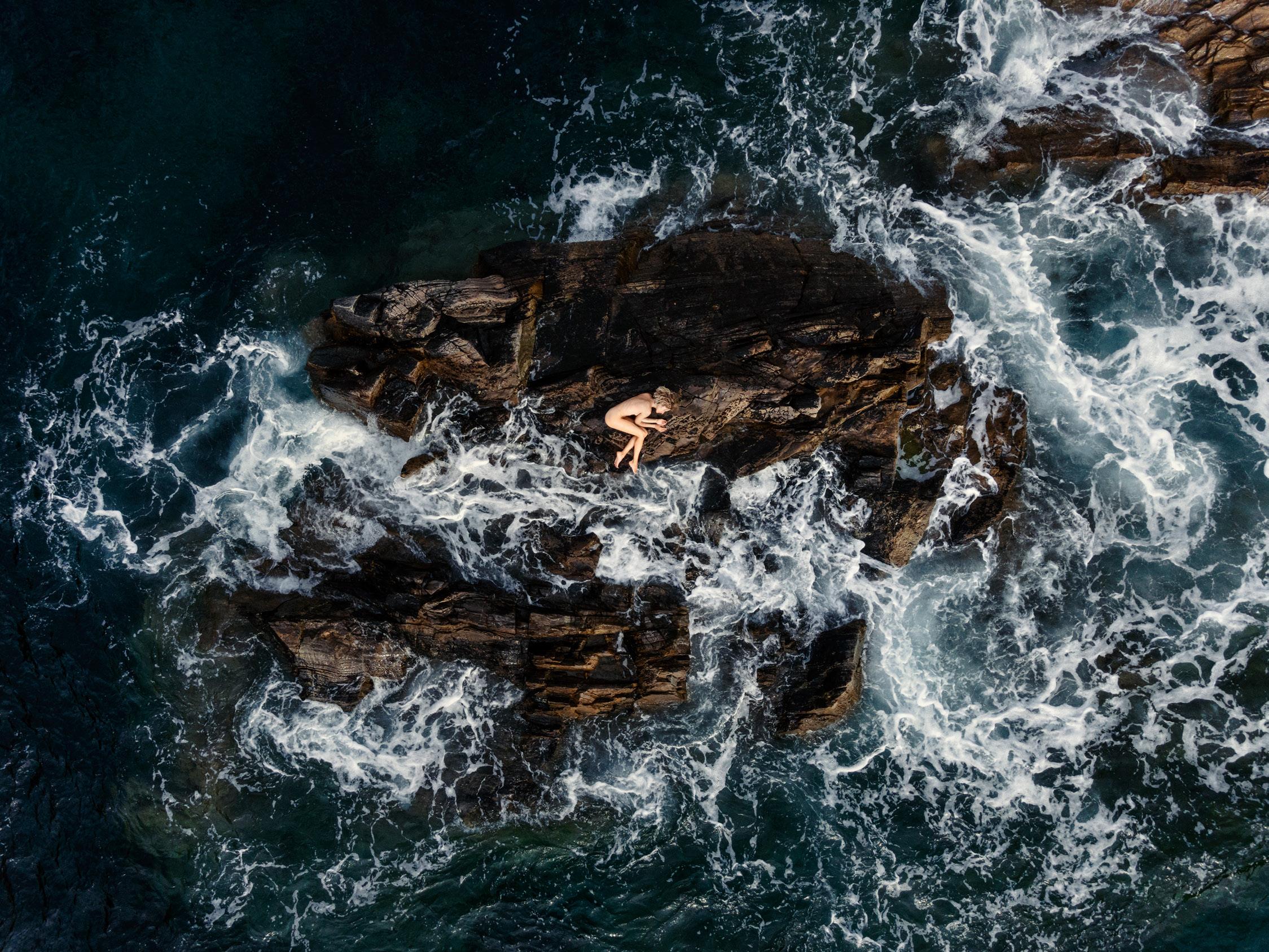
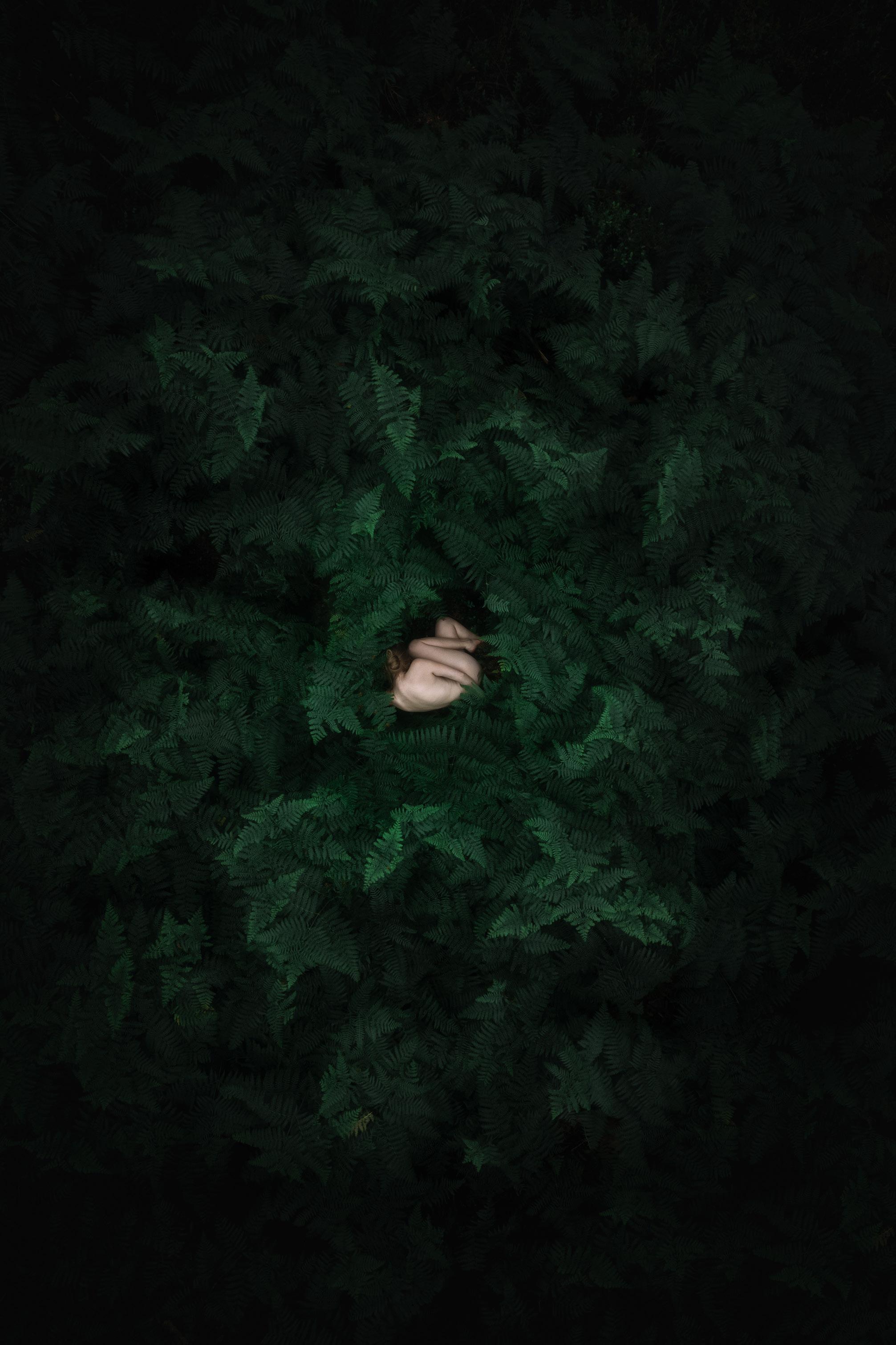
This year's annual showcase is, in large part, a celebration of vulnerability, healing and strength. One such example is Cristina Vatielli’s aerial self-portraits. The pictures, captured using drones, show the artist in various rugged settings: naked, curled in a fetal position. The series is a reflection on the experience of infertility and its impact on mental health, a conversation which can be taboo in society. Elsewhere, Finnish photographer Maria Lax revisits her homeland, confronting the past "after travelling all her life, constantly haunted by the feeling of not belonging." There's a strong focus on perceptions of place – how they can, and should, develop over time. Jessica Backhaus documents Nętno, a small rural town in Poland which serves as a symbol for the transformations resulting from the fall of the Berlin Wall – a huge, historic moment of cultural transition. Alessia Rollo, meanwhile, seeks to redefine stereotypes of southern Italy, reimagining the region's iconographic heritage from a new angle. Whatever the subject matter, Ragusa Foto Festival's message is clear: it's about digging beneath the surface, harnessing photography to illuminate the complicated truths of our inner lives.
Powerful New Voices
FIRECRACKERS
Thames & Hudson | Published August 2025 thamesandhudson.com
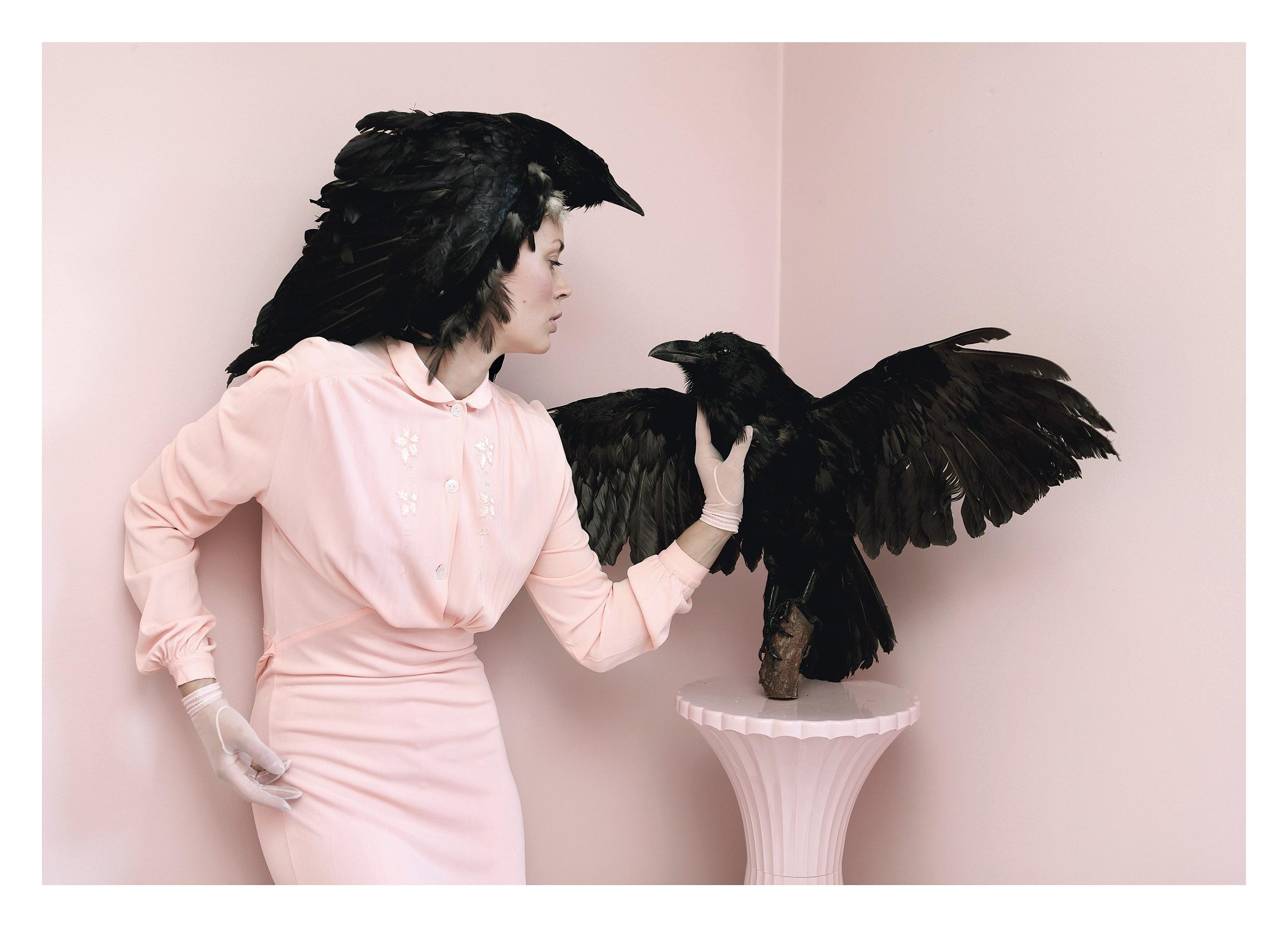
In 2024, a British Journal of Photography survey found that women working in the photography industry earn 30% less than their male counterparts. Fifty five per cent had experienced discrimination, and only 34% of major award winners have been women over the past five years. Firecracker is changing the narrative. The world-leading hub is the brainchild of Fiona Rogers, who launched an online network in 2011 to offer international female artists community, funding and a platform. It's now expanded into a publication, and this is its second edition. Firecrackers features more than 30 practitioners from around the world, including Aïda Muluneh, Alma Haser, Bieke Depoorter, Diana Markosian, Evgenia Arbugaeva, Juno Calypso, Newsha Tavakolian and Poulomi Basu. There are contributions from Anja Niemi, a photographer, model, stylist and director who probes the construction of femininity in society, using the tropes of cinema to do so – think Hitchcock and Lynch. Her compositions, are often uncanny; a particularly arresting example is The Taxidermist, in which a figure – dressed in and surrounded by pastel pink – grasps a raven, with a similar bird draped across her head. The artists in this volume span an array of approaches, from photojournalism to fine art. Their images distil countless aspects of the female experience, but also transcend gender labels. In its opening pages, Co-Editor Max Houghton sums up Firecrackers as: "a pursuit of freedom, both personal and artistic. These young women, from various continents, are documenting contemporary life, which will become part of future history."
Framing the Horizon
Various Locations, Helsinki | Until 21 September helsinkibiennaali.fi
In March 2025, it was announced that Finland had topped the World Happiness Rankings for the eighth year running. As well as social security, a carefully protected work-life balance and a focus on community living, many residents put this enduring contentment down to time outdoors. Finland’s capital, Helsinki, is made up of 40% green spaces, whilst beyond the city limits, the country is awash with 190,000 lakes, 76,000 islands and almost endless forests. It is not surprising, then, that Helsinki Biennial takes an optimistic approach to ecological activism and conservation, inviting visitors to reconnect with the natural world.
For 2025, Helsinki's landscape becomes part of the artwork, with the biennial's curators describing it as a "protagonist." Vallisaari Island, just a 15-minute ferry ride from the mainland, is a former military base. It's had a protected status for decades, keeping it entirely preserved from residential dwellings. Visitors are encouraged to move through the island, engaging with its wild sights and sounds. This is an ambitious premise, but it demonstrates how human and nonhuman stories interconnect. Even throughout the biennial's more conventional displays, exhibiting artists are responding to their natural surroundings.
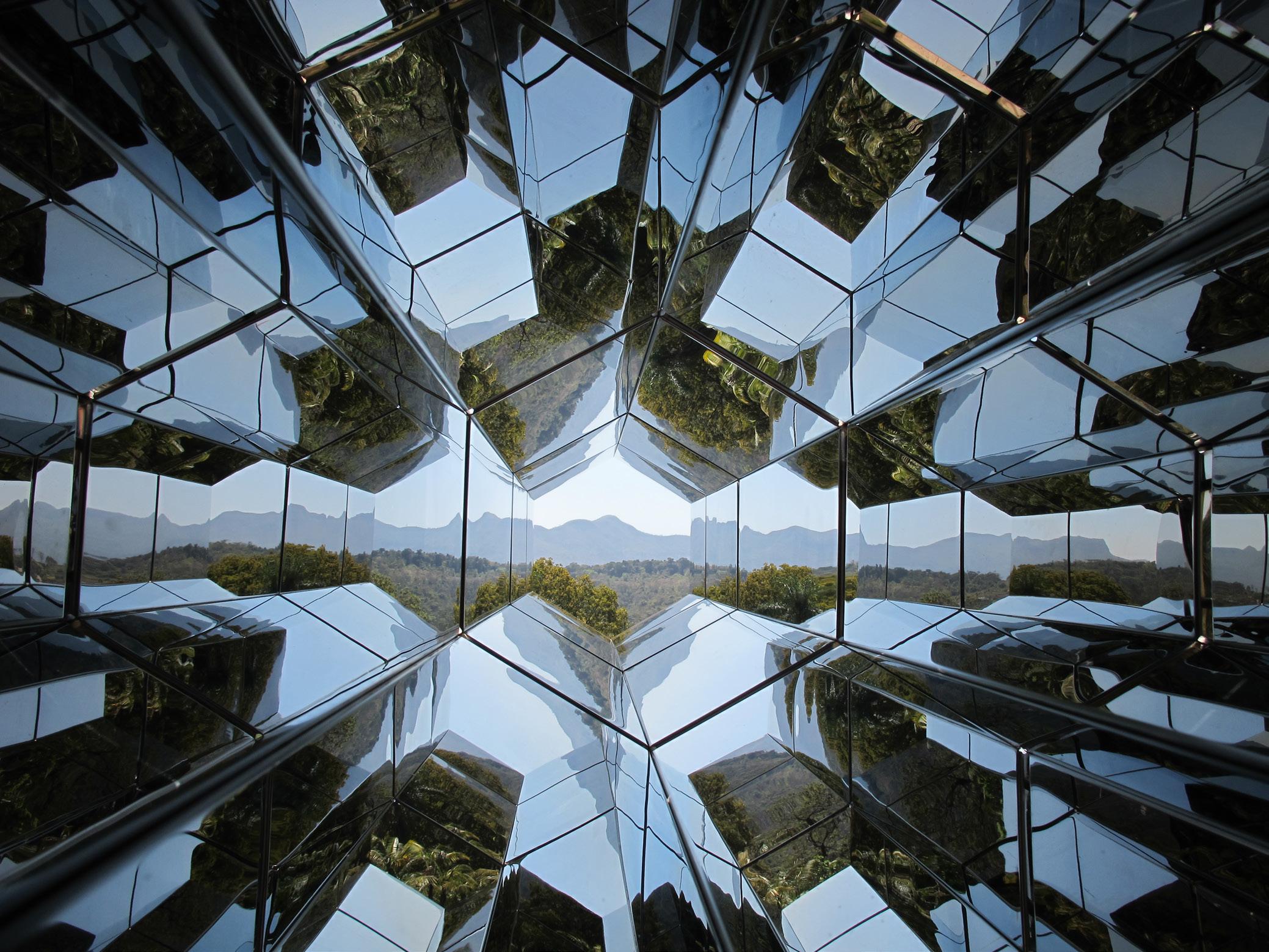
Kati Roover’s video installation, Songs in the Ocean, looks at the link between people and whales. Meanwhile, Olafur Eliasson’s kaleidoscopic Viewing Machine urges observers to reinterpret what they see in novel ways. The Helsinki Biennial 2025 intertwines art and ecology, sparking a hopeful vision for a future where humans and the environment can thrive together.
HELSINKI BIENNIAL 2025
Cultural Reckoning
PHYTO-TRAVELLERS
ZKM Center for Art, Karlsruhe | Until 26 October zkm.de
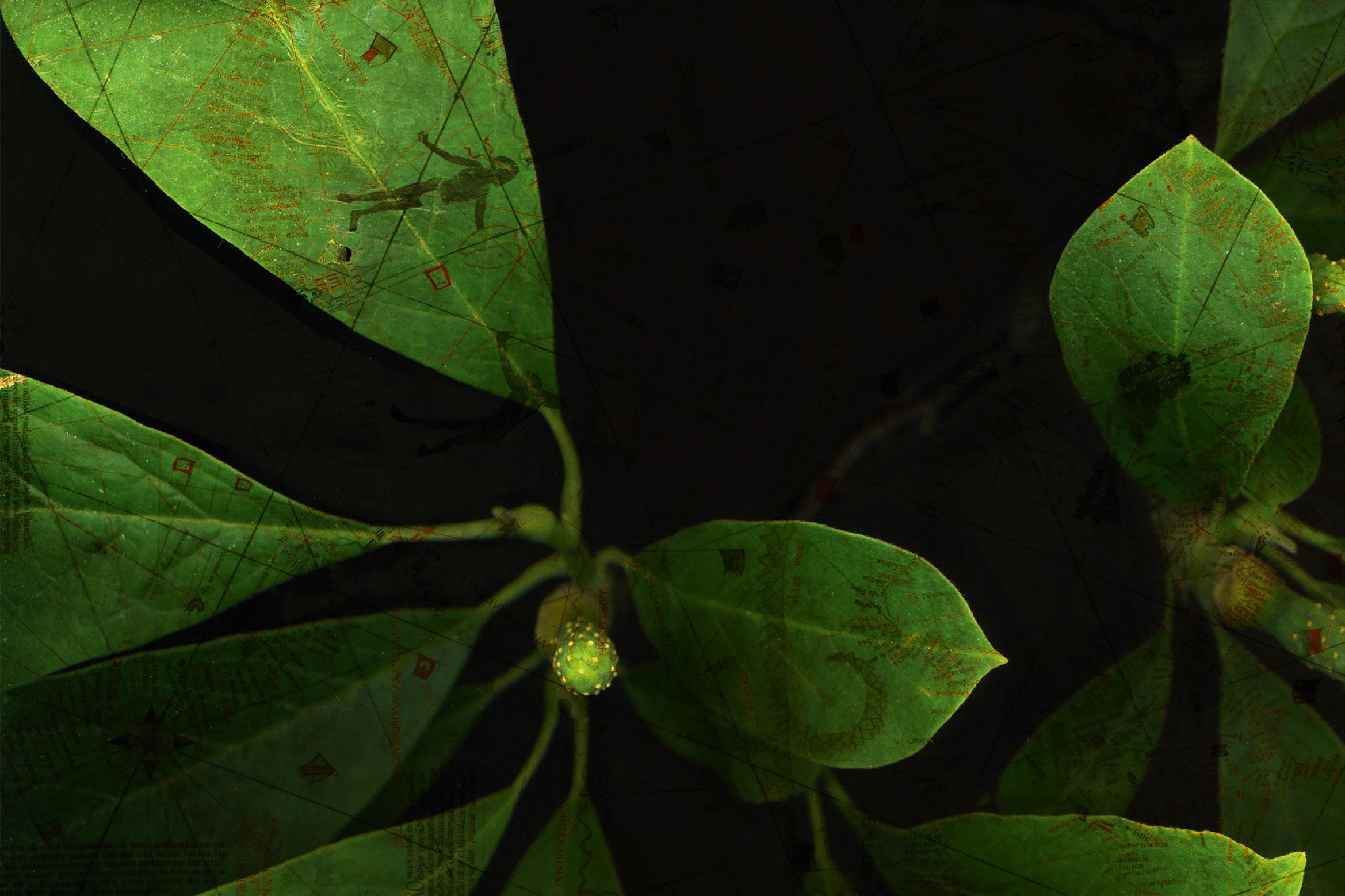
Corn, tomatoes and potatoes feel like staples of the European diet. They’re grown in abundance across the continent, served in national dishes and on dinner tables every day. In reality, they were introduced by Christopher Columbus in 1492, who brought them back from the “New World.” The same can be said of decorative flowers like rhododendron and cherry laurel, imported by researchers for their beautiful and tropical appear ance. These plants, often assumed to be part of local heritage, in fact tell stories of colonialism, extraction and global migration.
Phyto-Travellers, a new exhibition from Paris and Karlsruhebased land artist Eva-Maria Lopez, draws this reality into sharp focus. The show reckons with a fraught past, considering how many culturally significant species were uprooted and renamed by imperial forces. A common type of tea, for instance, has been known as “Cha” and “Chai” in Asia for millennia. It was only in the 18th century that it was renamed “Camellia” by the Swed ish naturalist Carl von Linné – a rebranding that erased deeprooted Indigenous knowledge in favour of a western taxonomy.
The show invites visitors to step inside a 2:3 scale replica of the “Niña” – one of two ships from Columbus’ fleet – fitted with an indoor garden arranged atop freight pallets. Here, the artist creates a living archive that reveals how our natural world car ries hidden histories of appropriation, displacement and cultural erasure. By acknowledging this, Lopez is asking audiences to re think the everyday. Phyto-Travellers is a quiet yet powerful medi tation on the entangled roots of flora, culture, profit and power.
History Revisited
MARRU | THE UNSEEN VISIBLE
Queensland Gallery, Brisbane | Until 3 August qagoma.qld.gov.au
Australia’s Indigenous populations – comprising Aboriginal and Torres Strait Islander peoples – have lived on the continent for over 65,000 years. In these communities, land is an integral part of life, seen as an extension of humanity, rather than distinct from it. European colonisers first arrived in 1788, marking the beginning of a distressing era – one which saw native individuals subject to discrimination, violence, forced removals and exclusion from legal and political rights. These actions had a lasting legacy, which continues to be felt across the country now.
Danie Mellor’s (b. 1971) multidisciplinary practice considers this fraught past through the lens of his Ngadjon-jii, Mamu and Anglo-Celtic ancestry. His latest exhibition, marru | the unseen visible, brings together works that examine memory and the impact of colonialism. Mellor’s recomposed scenes meld archival and contemporary material, reimagining historical records through painting, photography and moving-image. The pieces invite audiences to question what they know about the nation, asking who controls the narrative, and who is neglected from it. The artist’s most recent series uses infrared, a technique reminiscent of renowned figures like Claudia Andujar, who employs the technology to document and advocate for the Yanomami, one of Brazil’s largest Indigenous groups. Mellor's vibrant shots of bubblegum pink trees echo this effort, prompting viewers to consider familiar landscapes in an entirely different way. In doing so, he suggests that the truth about Australia’s history may be hidden, requiring a reappraisal to render it fully visible.
Evolving Technology
ENCOUNTERS: EVER AFTER
Scorpios, Bodrum & Mykonos | Until 28 August scorpios.com
If you had the chance, would you choose to live forever? It’s a theoretical question that people have long pondered, but recently, a select few have taken it from the realms of science fiction to a genuine pursuit. Billionaire Bryan Johnson made the headlines by spending $2 million dollars a year to stop the ageing process, whilst scientists continue to debate whether the first person to live to be 150 years old has already been born. Humanity's increasing fascination with longevity is the inspira tion behind Ever After, the latest edition of Scorpius Encounters festival in Mykonos and Bodrum. It presents installations from renowned names, including Lumen Prize-winners, who use gen erative code, AI, data and sound to build works that grow over time, respond to environments and evolve with audience input. For media artist Philipp Frank, for example, the coastline is a canvas. At dusk, he illuminates the shore with projections –demonstrating how transformational the passage of time can be. Maja Petrić's large-scale light sculpture, meanwhile, is in a constant state of flux, updating and responding to temperature and wind data from the Aegean. Sasha Stiles presents an infinite poem that rewrites itself in real time, reflecting on human versus artificial consciousness, whilst Operator explores the nervous system, reframing the body as the most sophisticated technol ogy to ever exist. Finally, Krista Kim opens a meditative cham ber. This is a cutting-edge programme that dissolves boundaries between organic and synthetic, inviting us to reconsider what it means to be alive – and why we strive to endure beyond the now.
10
to See
RECOMMENDED EXHIBITIONS THIS SEASON
From New York to Sydney, Liverpool and London, our top picks for August and September include a major biennial and newly-opened art foundation. These shows consider themes such as architectural legacy, ocean health and how digital culture is shaping definitions of beauty.
1Sheida Soleimani: Panjereh
ICP, New York | Until 28 September icp.org
Sheida Soleimani is best-known for her intricate, studio-based compositions that explore her parents’ experiences of political exile and migration, after fleeing Iran during the 1979 revolution. She uses these stories to build surreal, magical realist scenes that hold up a mirror to broader geopolitical systems. Panjereh is a new body of work, which expands on these investigations from an unexpected angle: portraits of injured birds. The show references the artist’s role as a wildlife rehabilitator, a care practice which was passed down from her mother.
2 S ilence & The Presence of Everything
Stedelijk Museum Schiedam | 21 September – 31 May 2026 stedelijkmuseumschiedam.nl
Acoustic ecologist Gordon Hempton once placed a microphone in nature and listened through headphones. He said: “silence is not the absence of something, but the presence of everything.” This idea forms the basis of Stedelijk Museum’s latest exhibition, which brings together eight creatives who use technology to reflect on the environment. One particularly arresting example is David Bowen’s Tele-present Wind. The installation employs real-time wind data to make dried grass stalks in the museum sway in sync with the artist's own garden.
3
I naugural Art Programme
Goodwood Art Foundation, Chichester | Until 2 November goodwoodartfoundation.org
The Goodwood Art Foundation recently opened to the public with one clear objective: to establish itself as a major platform for contemporary art in the UK. Their inaugural season showcases eight international artists whose work engages directly with material, context and history. Artists included in the opening shows are Amie Siegel, Hélio Oiticica, Isamu Noguchi, Lubna Chowdhary, Rose Wylie, Susan Philipsz and Veronica Ryan. Their works are across the grounds and galleries, alongside a headline display by Turner Prize-winner Rachel Whiteread.
4 Snap Blak
Queensland Art Gallery, Brisbane | 30 August – 13 September 2026 qagoma.qld.gov.au
Snap Blak brings together contemporary Aboriginal and Torres Strait Island photography that champions Indigenous self-representation. The show features artists including Brenda L. Croft, Destiny Deacon, Fiona Foley, Tracey Moffatt and Tony Albert. Each image subverts a long history of settlers and colonisers weaponising the camera, as an instrument of disempowerment and misrepresentation, with pictures often perpetuating harmful stereotypes. Here, photography becomes a means to reassert identity, cultural continuity and belonging.
5L iverpool Biennial
Various Locations, Liverpool | Until 14 September biennial.com
The 13th edition of Liverpool Biennial spotlights the physical and social roots of the city. This year’s theme, Bedrock, symbolises both the local sandstone that forms much of the region’s distinctive architecture, and the cultural foundations of its communities. The biennial features 30 artists and collectives across 18 locations. Anna Gonzalez Noguchi's sculpture is inspired by the import of “foreign” plants into Liverpool. Elsewhere, Widline Cadet reflects on intergenerational memory, selfhood and erasure within the Haitian diasporic experience.
6
V irtual Beauty
Somerset House, London | Until 28 September somersethouse.org.uk
One of the defining questions of our time is how technology – particularly Artificial Intelligence – is reshaping modern life. Somerset House takes this line of enquiry in a fascinating direction, examining how digital culture has influenced notions of attractiveness. Virtual Beauty showcases 20 artists who touch on gender, sexuality, ethnicity and identity in the post-internet era. The exhibiting names include Ben Cullen Williams, Isamaya Ffrench and Minnie Atairu, who tackle topics from social media filters to biometrics and dating apps.
7
C an the Seas Survive Us?
Sainsbury Centre, Norwich | Until 26 October sainsburycentre.ac.uk
The United Nations recently described the world’s oceans as “overwhelmed.” Sea levels are rising, and the water is becoming warmer, more acidic and less oxygenated. This season, Sainsbury Centre responds with a trio of shows. A World of Water brings together international artists including Eva Rothschild, Julian Charrière and Olafur Eliasson. Darwin in Paradise Camp: Yuki Kihara, presents photography that foregrounds communities vulnerable to climate change. Sea Inside highlights how humanity has domesticated and tamed the oceans.
8
L ifescape b y Alice Ladenburg
East Quay, Watchet | Until 31 August eastquaywatchet.co.uk
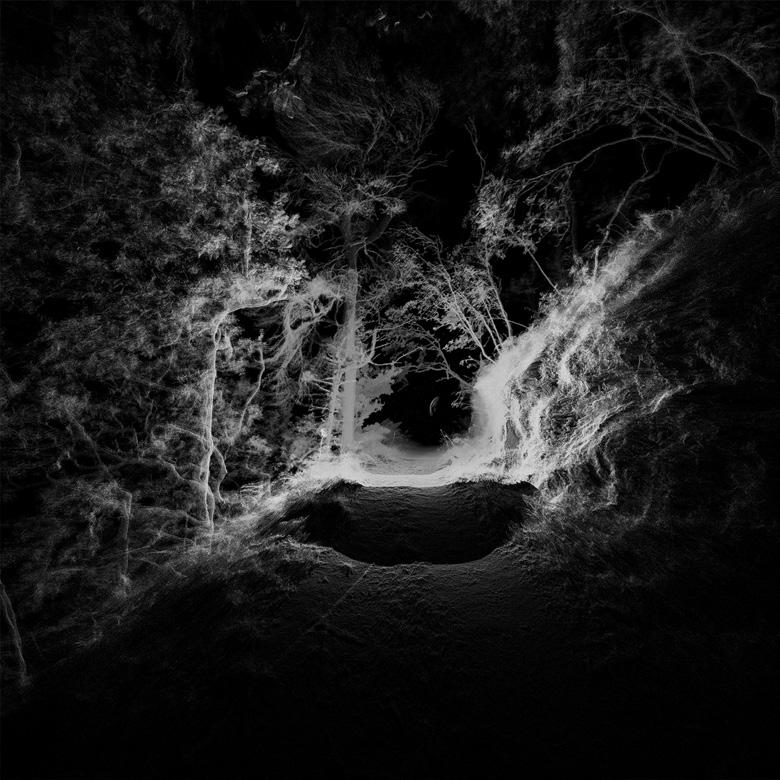
Artist and researcher Alice Ladenburg merges storytelling and scientific insight to call for increased environmental stewardship. Lifescape focuses on six ecologically, culturally and historically significant sites across Somerset. Ladenburg combines advanced LiDAR scanning – a method used to create models of landscapes – with filmed scenes and soundscapes, including interviews with local experts. The striking imagery of dense canopies and lush undergrowth emphasises the area's remarkable richness and an urgent need for preservation.
9
T he Many Lives of the Nakagin Capsule Tower
MoMA, New York | Until 12 July 2026 moma.org
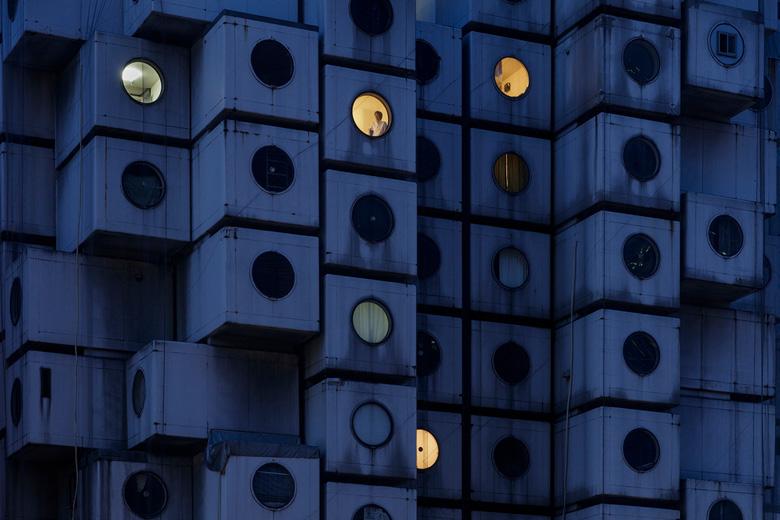
In 1972, a groundbreaking building opened in Tokyo’s Ginza district. The Nakagin Capsule Tower, conceived by architect Kisho Kurokawa, was marketed as micro-dwellings for commuting businessmen, made up of 140 single-occupancy “capsules.” Each individual lodging, equipped with Sony colour TV, was designed to be replaced every 25 to 35 years to keep up with changing needs. This vision was never realised and the Tower was deconstructed in 2022. Now, MoMA offers the chance to step inside an original unit – one of 14 that survive.
1
0
Ce rith Wyn Evans … in light of the visible MCA Australia, Sydney | Until 19 October mca.com.au
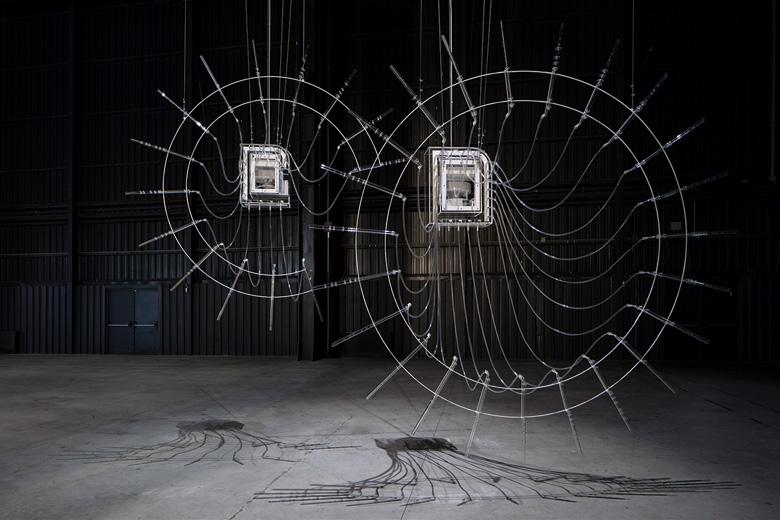
Cerith Wyn Evans investigates the relationship between language and space, time and perception, thought and meaning. His latest exhibition, the first in the Asia-Pacific region, is conceived as if visitors were strolling through a garden. It features key works produced over the last 15 years, such as Composition for 37 Flutes (2018). The piece is made up of 37 glass pipes that “inhale” and breathe sound into the room. Also on display is the acclaimed series Neon Forms (after Noh) (2015 - ongoing), featuring “drawings in space” made solely with light.
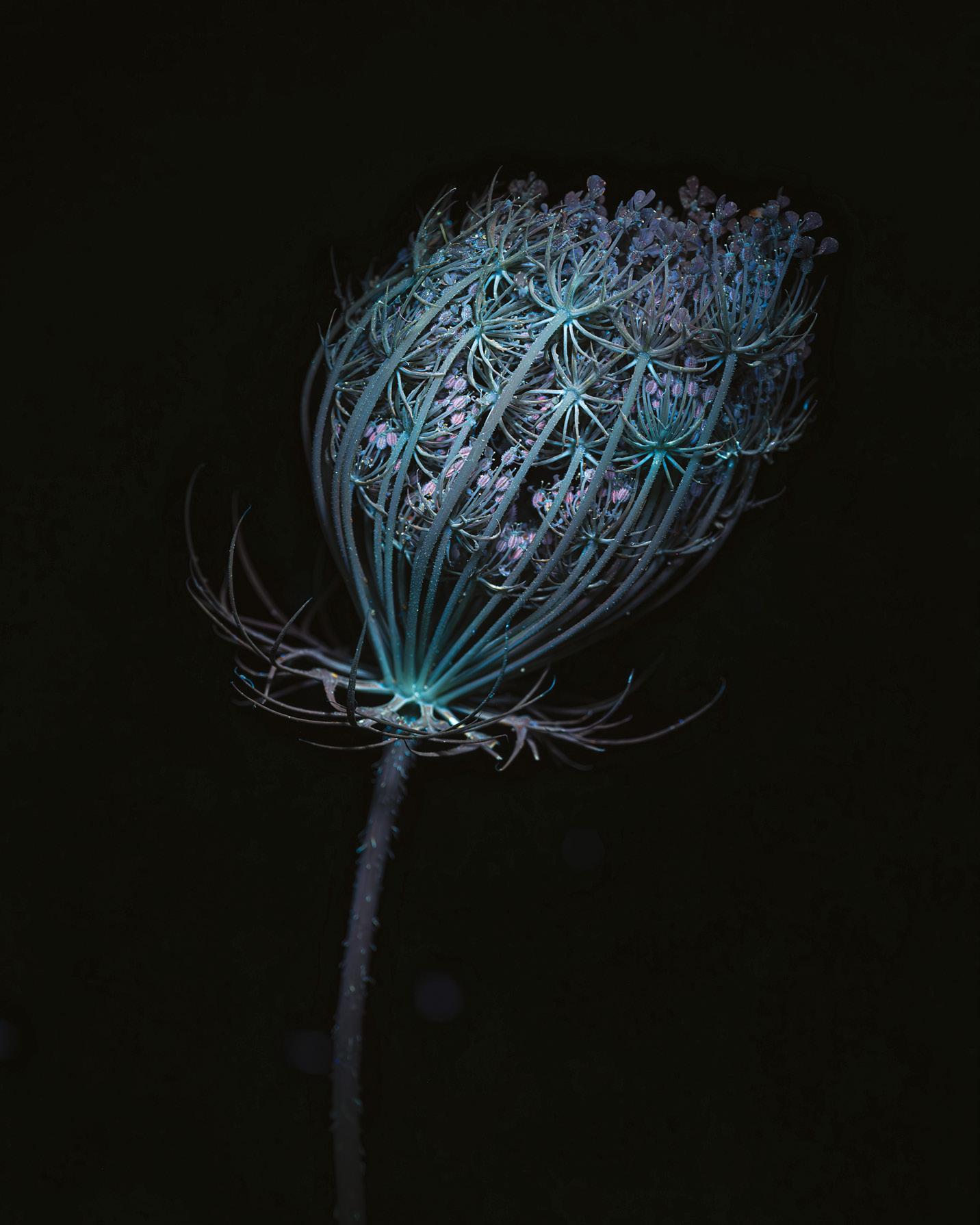
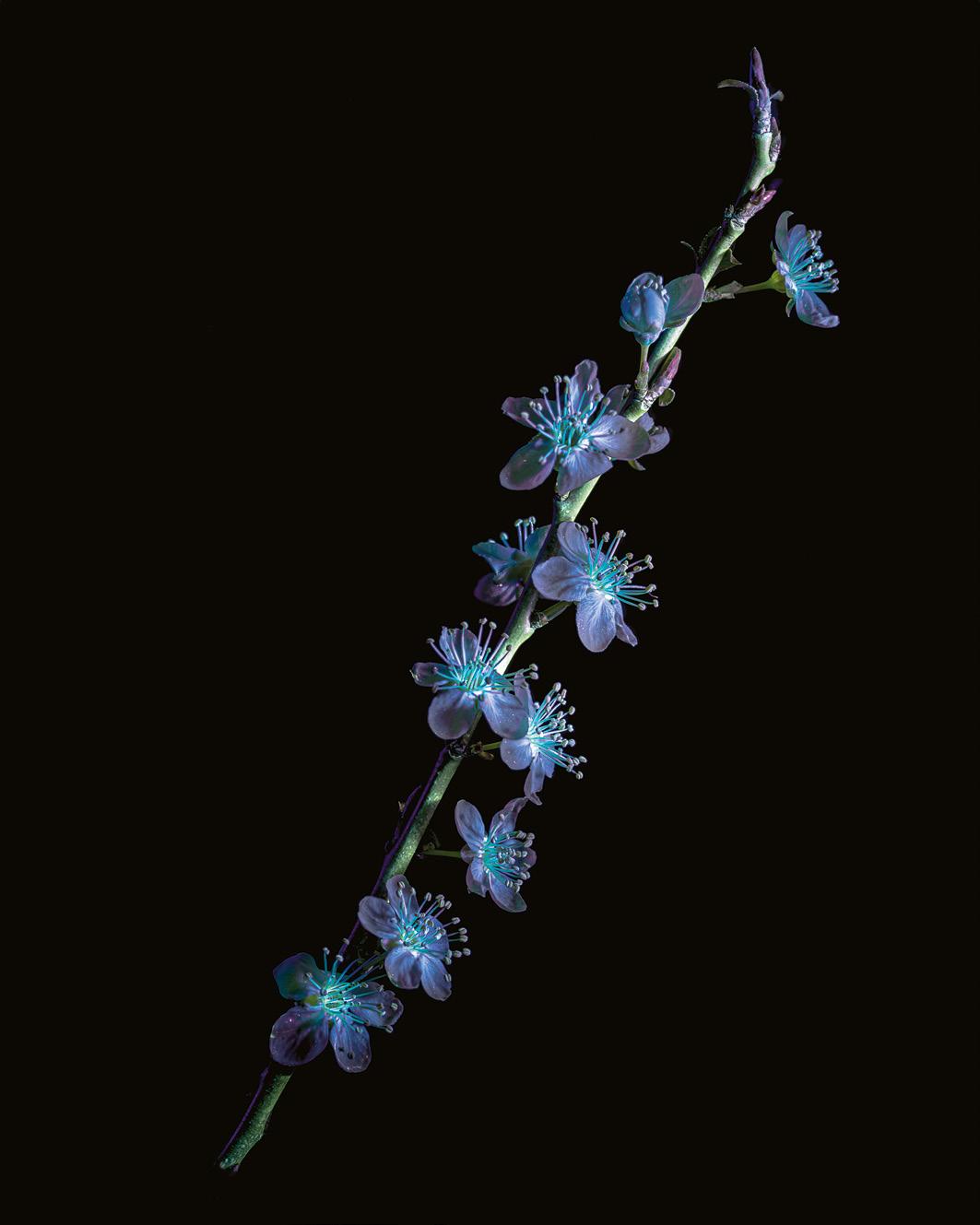
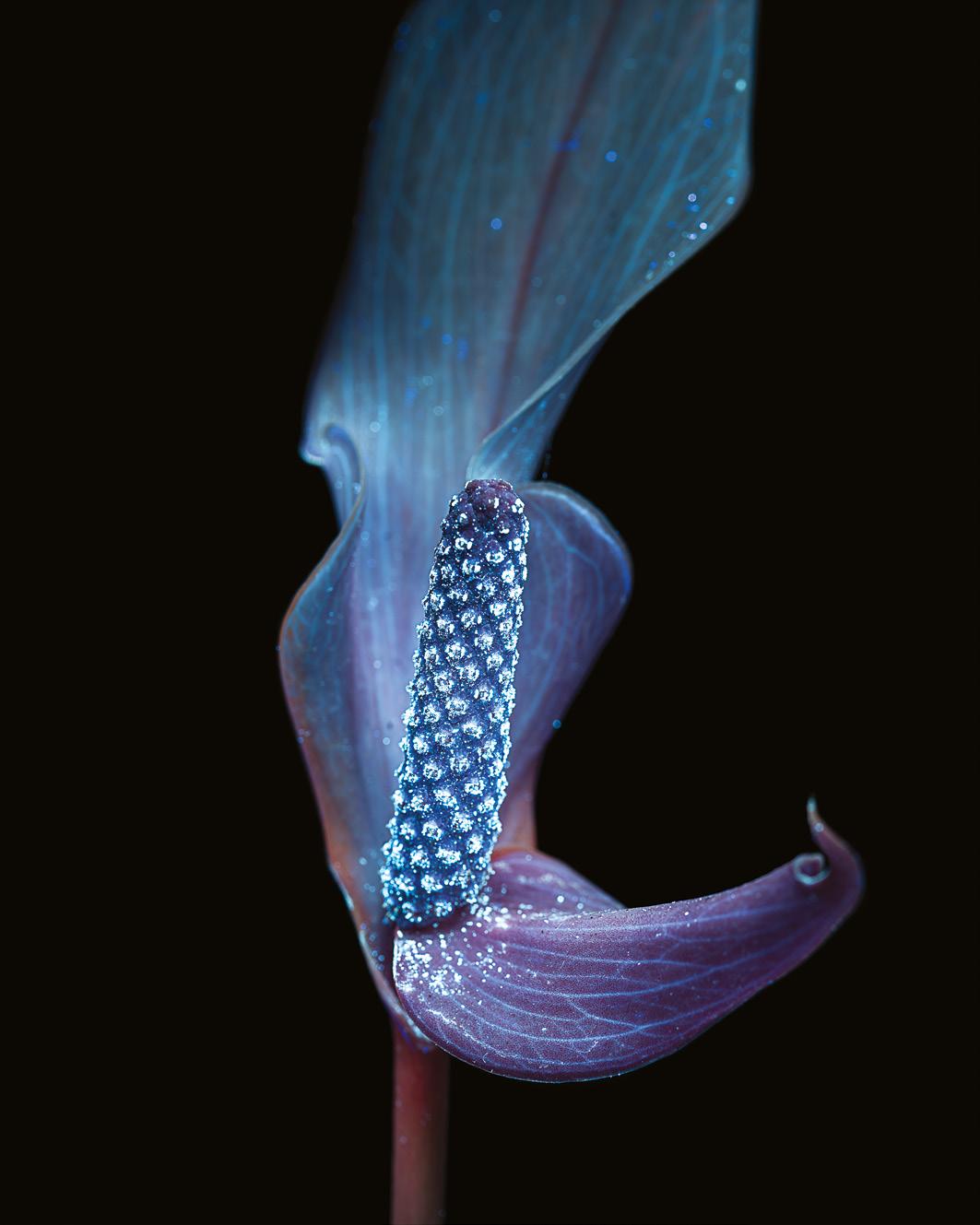
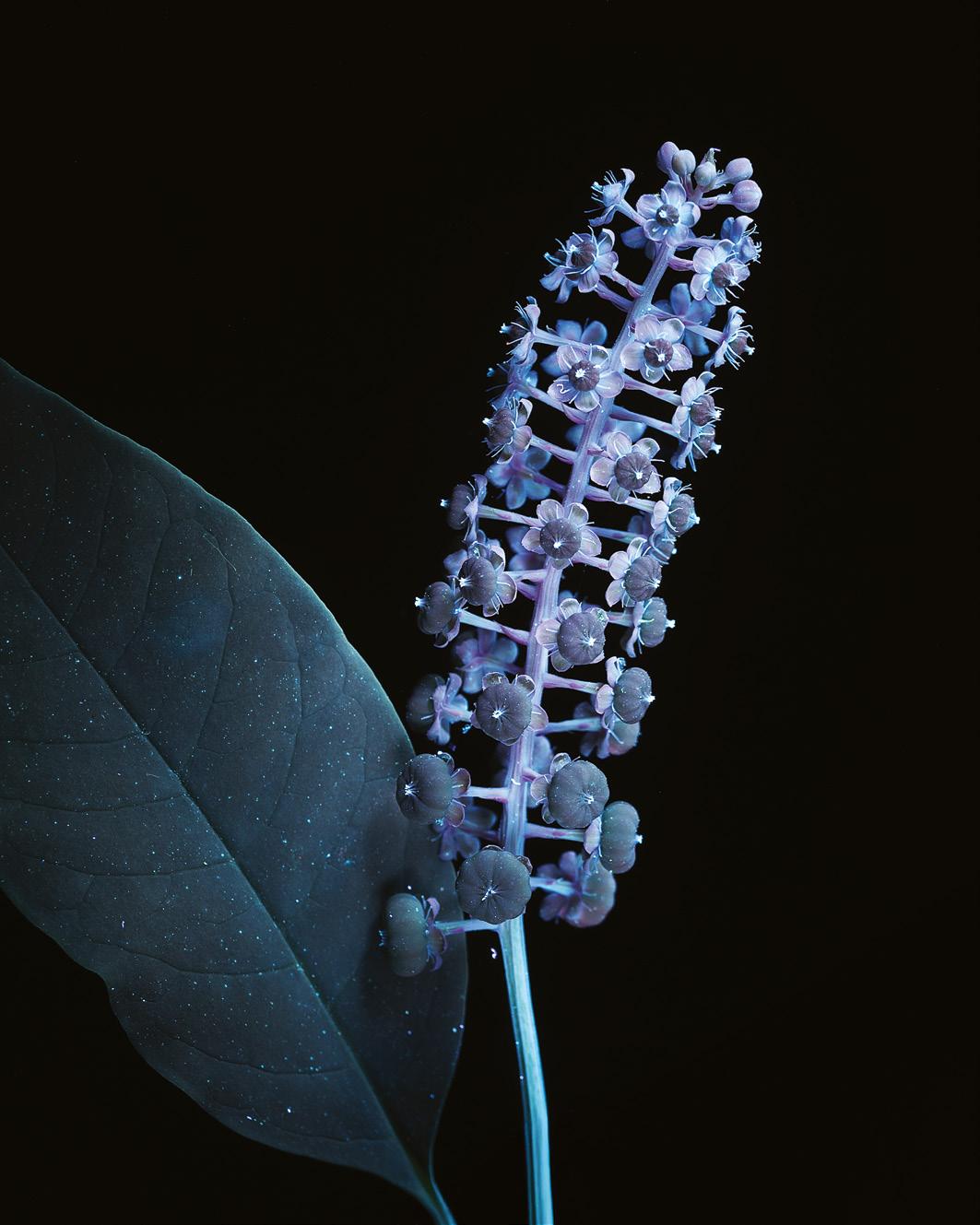
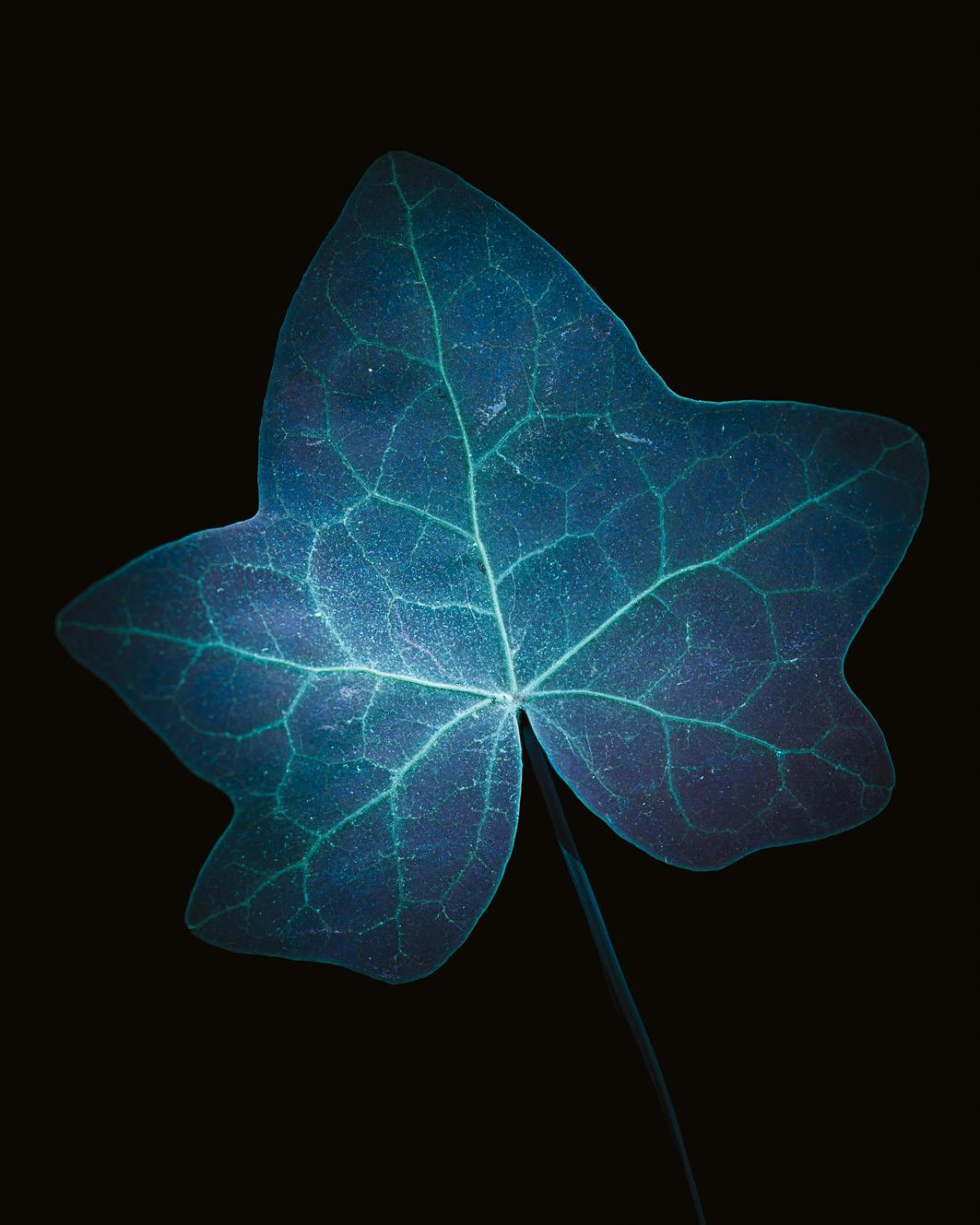
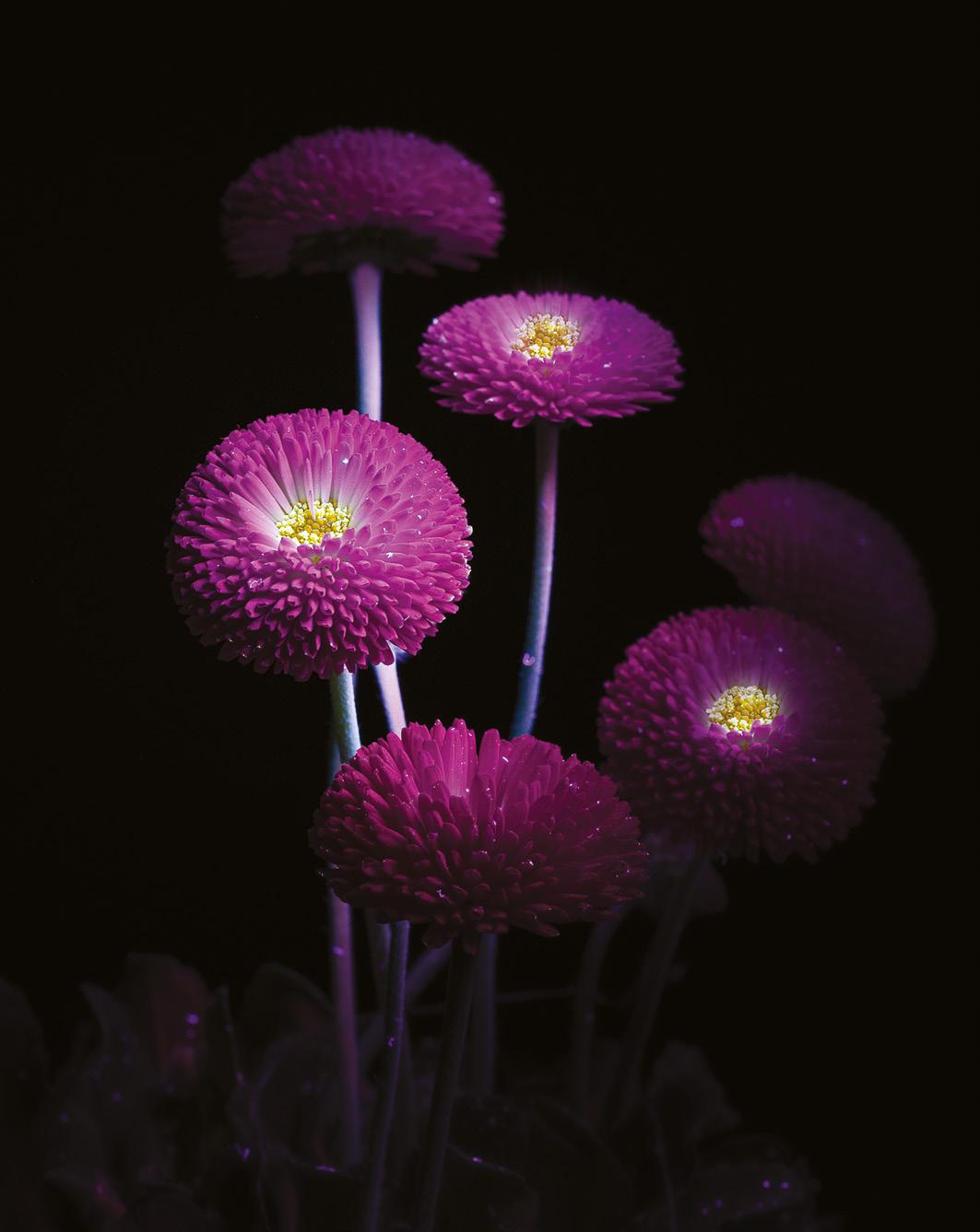
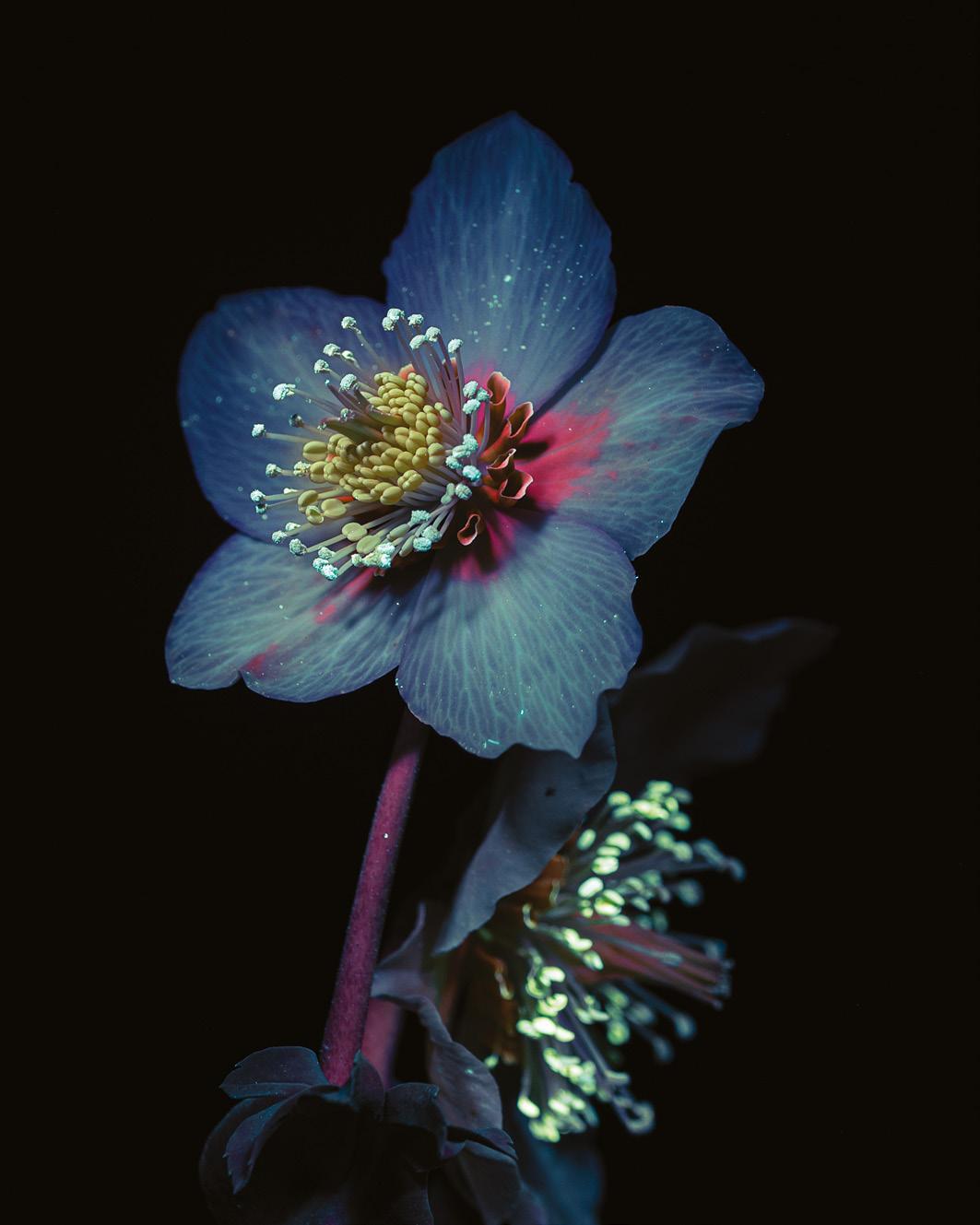
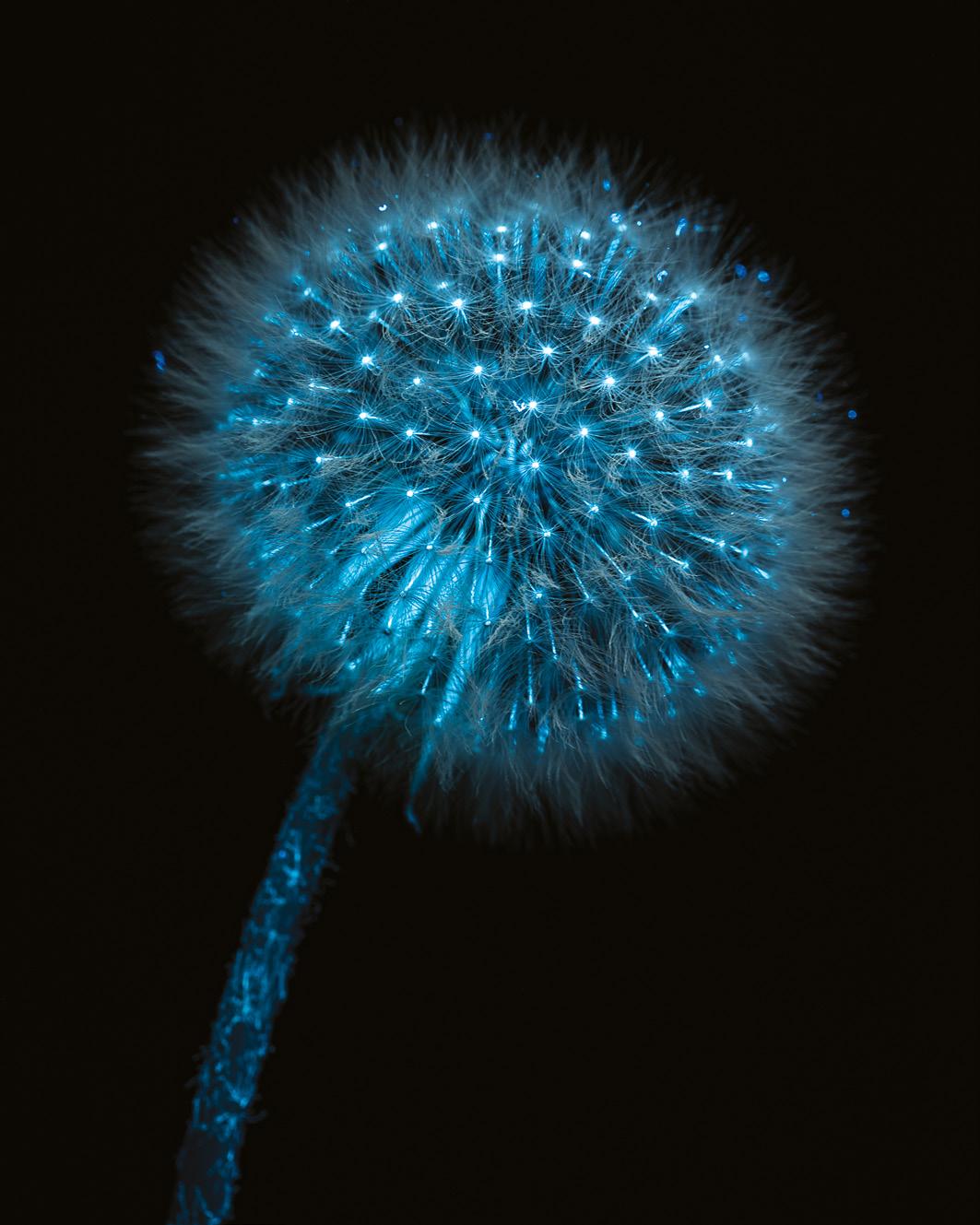
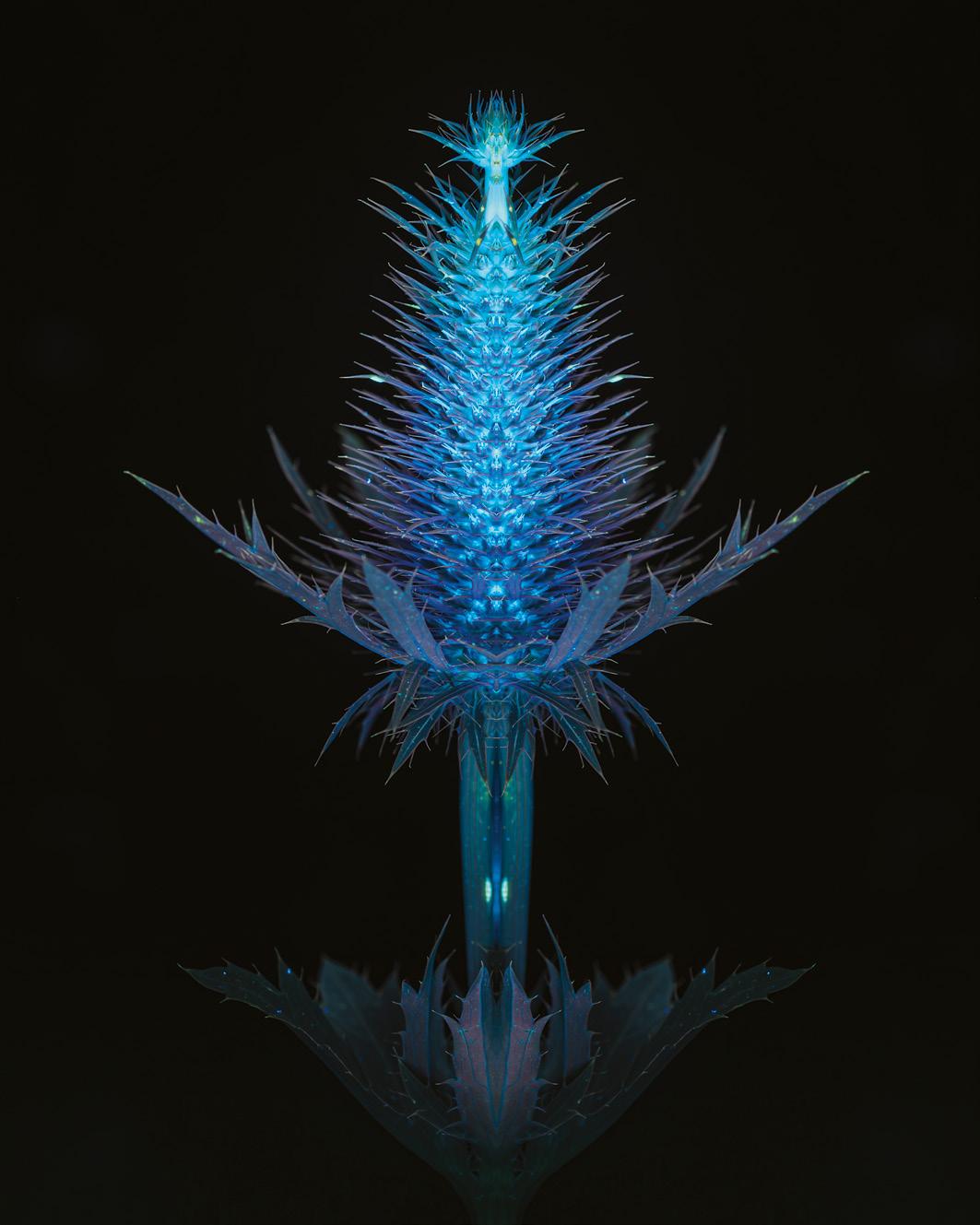
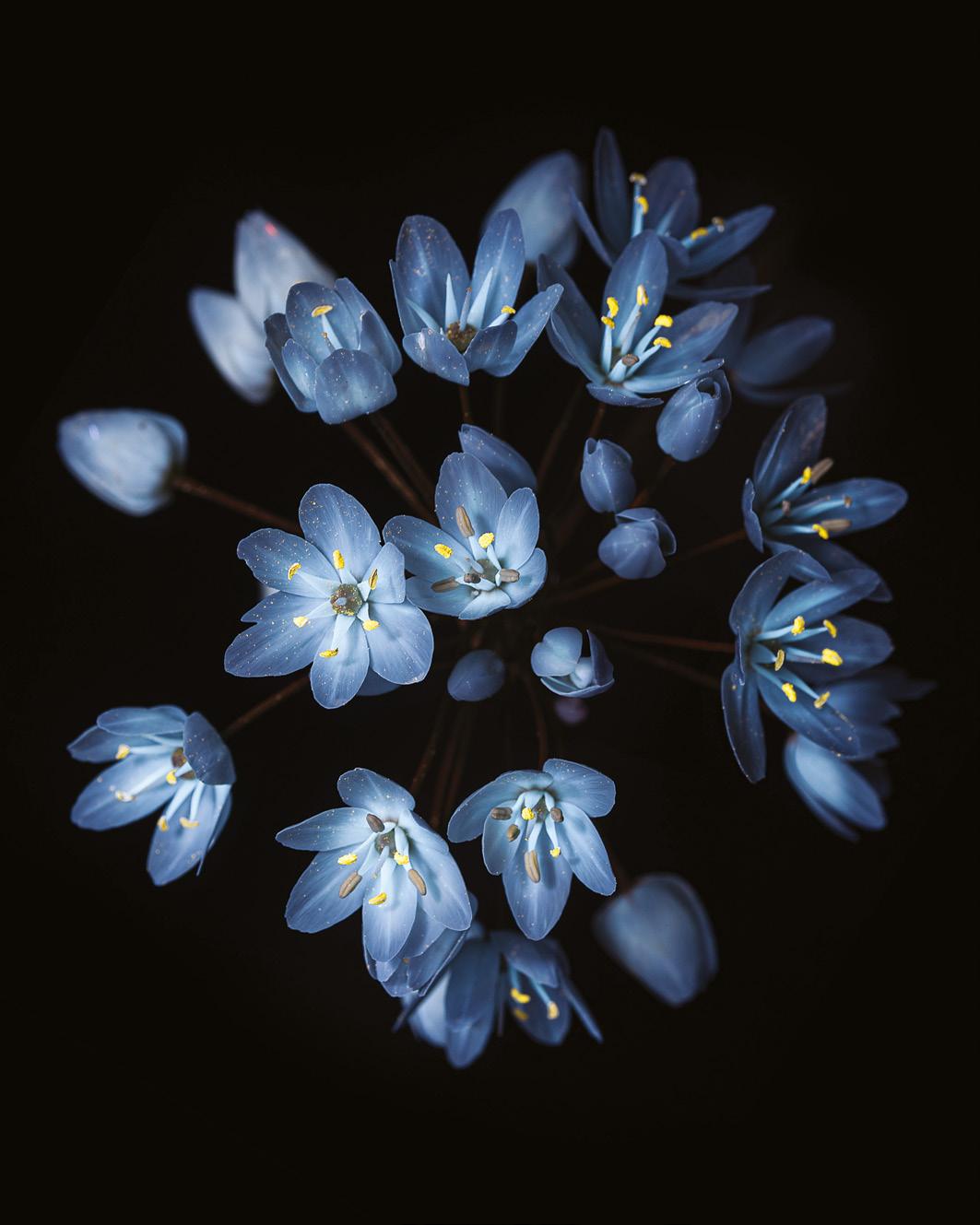
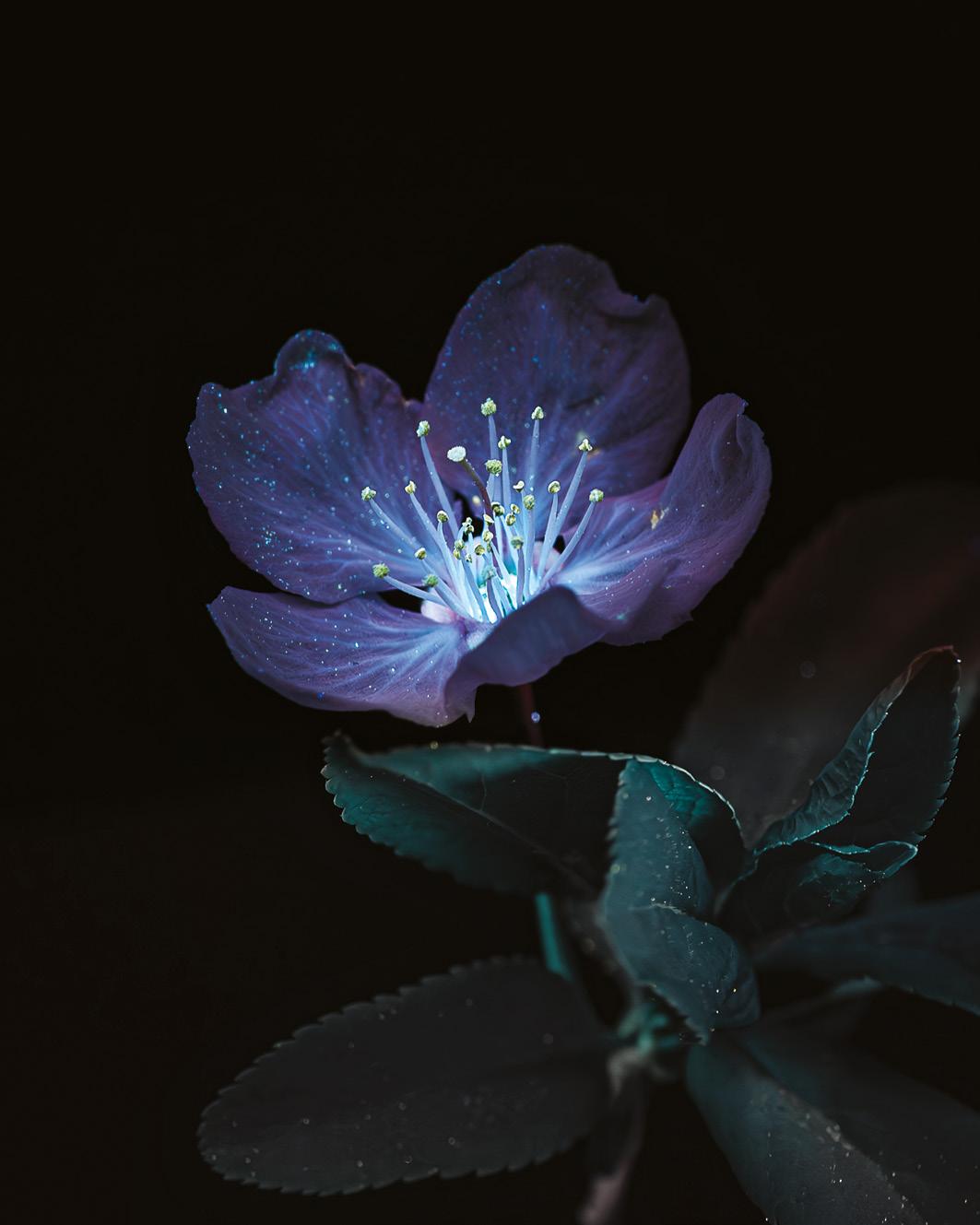
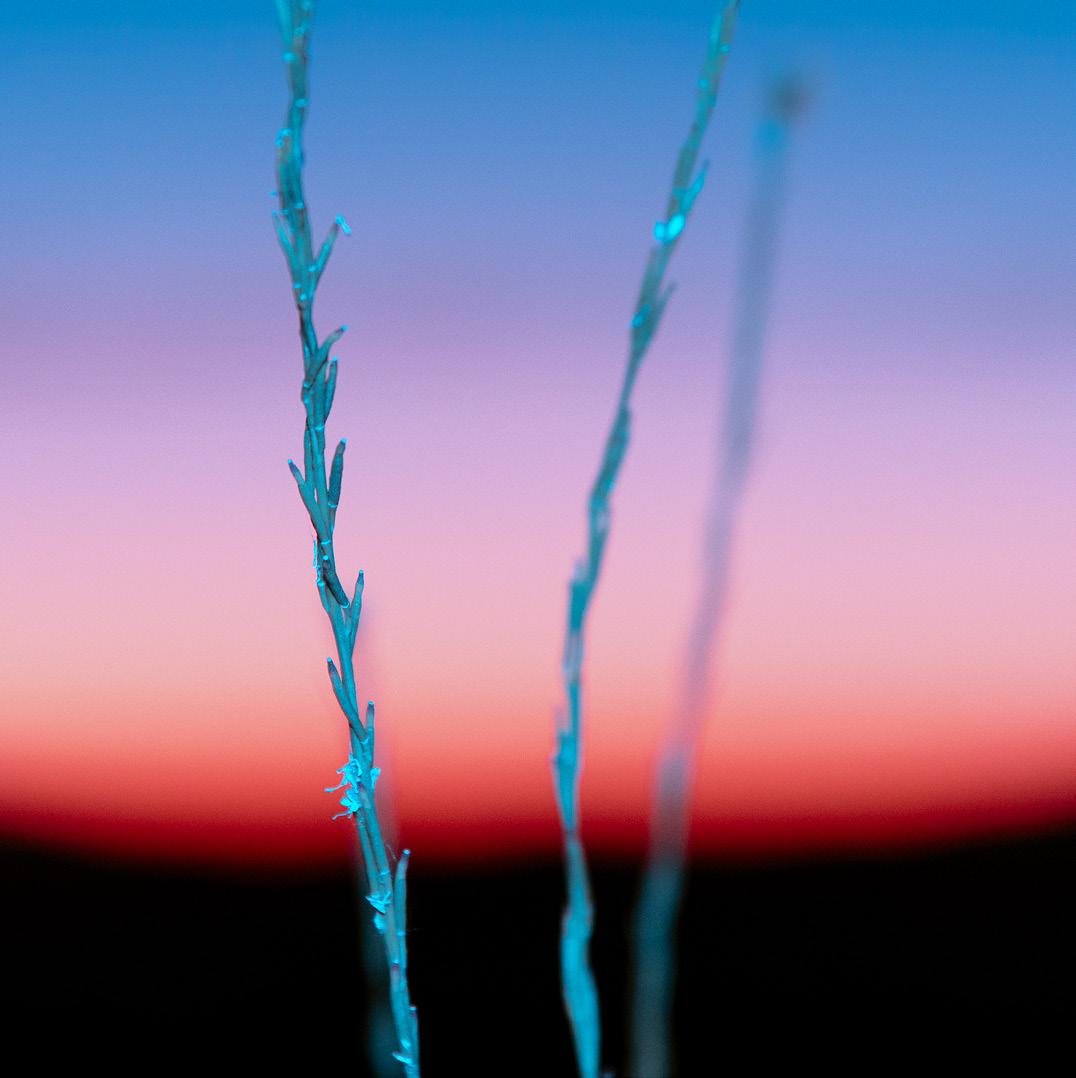
The shared history between plants and photography runs deep. In the mid-1800s, botanist Anna Atkins published the first-ever photobook: a collection of cyanotypes depicting British algae. By the 20th century, notable contributors to the field included Karl Blossfeldt and Imogen Cunningham, celebrated for their close-up depictions of specimens. Fast forward to today, and Debora Lombardi, an architect and visual designer, is making her mark on the genre. These pictures use the technique of ultraviolet-induced visible fluorescence to reveal pigments hidden within flowers, which emit a mesmerising glow when under UV light. Across the following pages, you’ll see common dandelions, daisies and ivy emerge from deep darkness, as if charged with electricity. Lombardi approaches image-making with scientific rigour and curiosity, capturing details with precision. Under her lens, every petal, vein and grain of pollen is rendered in astonishing clarity. @bibadesign_uvivf
Debora Lombardi Conium Maculatum Image courtesy of the artist.
Debora Lombardi, Prunus . Image courtesy of the artist.
Debora Lombardi, Anthurium Image courtesy of the artist.
Phytolacca Bogotensis Image courtesy of the artist.
Debora Lombardi, Hedera . Image courtesy of the artist.
Debora Lombardi, Bellis Perennis . Image courtesy of the artist.
Debora Lombardi, Helleborus . Image courtesy of the artist.
Debora Lombardi, Taraxacum Officinalis . Image courtesy of the artist.
Debora Lombardi, Eryngium Alpinum . Image courtesy of the artist.
Debora Lombardi, Allium Tuberosum . Image courtesy of the artist.
Debora Lombardi, Prunus Mahaleb . Image courtesy of the artist.
Creative Vanguard
Aesthetica Art Prize 2025
ART BECOMES A MIRROR, A WITNESS AND A CALL TO ACTION IN THIS URGENT, VISIONARY EXHIBITION AT THE FOREFRONT OF GLOBAL CONTEMPORARY PRACTICE.
In an age defined by uncertainty, upheaval and profound transformation, art continues to offer a mirror, a window, and – perhaps most importantly – a doorway. The Aesthetica Art Prize: From Memory to Possibility, presented in 2025 at York Art Gallery, brings together 25 artists from around the world who are not only responding to the state-of-play as it is, but also envisioning what it could become. Their practices are urgent, poetic and deeply rooted in the emotional and political complexities of contemporary life. The work on display speaks to global turbulence – climate emergency, digital overwhelm, racial injustice and diasporic memory – whilst offering glimpses of resilience, healing and possible futures. At Aesthetica, we are doing something different. Unlike many awards that focus solely on competition, the Aesthetica Art Prize is a platform for cultural dialogue, creative activism and innovation that transcends borders and disciplines. This commitment to fostering genuine exchange has not gone unnoticed. In 2024, Jonathan Jones, critic for The Guardian, named the Aesthetica Art Prize among the top five exhibitions of the season – advising audiences to "wear your thinking cap." It's a rare accolade for a prize show, signalling its significance in shaping conversations. This recognition reinforces what we have long known: the Art Prize is a vital space where emerging artists can shape the questions of our time. History, identity and memory are the heart of From Memory to Possibility. Àsìkò draws from Yoruba traditions and Caribbean heritage in the photo series New World Giants (2022), whilst Hussina Raja’s STATION (2022) uses archival footage to weave different cultural moments: the arrival of
South Asian and Caribbean communities in post-war Britain, anti-racist protests in Tower Hamlets, and Asian Dub Foundation in the early 2000s. It's just one of several powerful films on view, including Ayo Akingbade’s The Fist (2022), which focuses on the 1962 opening of the Guinness factory in Ikeja, Lagos, linking Nigeria’s post-independence era to global industrialisation. Susanna Wallin’s Lizzy (2024), meanwhile, is a more personal moving-image piece; the result of days in the aftermath of the death of a neighbour in Tampa, Florida The ecological thread of the exhibition is equally urgent, reflecting the current emergency. In photography, Ellie Davies reflects on rising sea levels through multi-layered compositions, whilst Michelle Blancke invites us into timeless woodlands. Kate Hrynko visualises melting ice in colourful abstractions, and Liz Miller Kovacs visits scarred landscapes impacted by extractive economies. Meanwhile, Mónica Alcázar-Duarte's installation Space Nomads (2024) explores human origins from two perspectives: ancient Yucatán ecological knowledge, and the James Webb Space Telescope. In painting, Stephen Johnston’s hyperreal Flowers in Jar (2024) visualises the never-ending cycles of life, death and decay. Together, the Aesthetica Art Prize’s eco-engaged works go far beyond simply documenting crisis; they connect human and more-than-human worlds, past and future, science and spiritual, inviting us to reconsider how we might coexist on planet Earth. This dialogue recalls the practices of Edward Burtynsky, Maya Lin and Olafur Eliasson, artists who have made climate consciousness central to modern art discourse. Technology and digital culture form a third vital current in
Triptych (2023).
Ellie Davies, Seascapes
“The work on display speaks to global turbulence – climate emergency, digital overwhelm, racial injustice and diasporic memory – whilst offering glimpses of resilience, healing and possible futures.”
the show. Brendan Dawes, shortlisted for an Academy Award, presents a 168-hour real-time generative film, commissioned by Venice Biennale Musica 2023. Bart Nelissen visually represents the overwhelming accumulation of data in today’s world, whilst Vlad Hrynko incorporates a background in computer science into his abstract still lifes. Sof presents an interactive sculpture that shifts and responds to interaction. Elsewhere, Gala Hernández López riffs on crypto culture and digital capitalism, and Princess Arinola Adegbite's Afrofuturist film, Time Pops Like Chewing Gum (2024), launches two lovers into a space shaped by algorithms, disconnection and desire. These works do not simply incorporate technology but critically investigate its role in shaping our social world – embracing the awe and alienation of the digital age. This situates From Memory to Possibility within key conversations led by pioneering figures such as Refik Anadol, known for immersive data sculptures, or by Hito Steyerl, whose critical essays and video artworks probe the politics of surveillance.
Representation, voice and authorship are major throughlines. In photography, Joanne Coates and Sujata Setia challenge institutional silences and cultural invisibilities through feminist, working-class and diasporic perspectives. Coates collaborated with women living and working in rural or agricultural settings in North East England to make The Lie of the Land (2022), whilst Setia’s A Thousand Cuts (2023) emerged from a similarly socially-engaged practice: interviewing 21 South Asian women who are survivors of domestic abuse. Elsewhere, Sarah Maple presents Mother Tongue (2024), recalling what it was like to grow up in a Punjabi-speaking household but never learn the language, and Jarman Awardshortlistee Morgan Quaintance presents a layered, emo-
tional film reflecting on adolescence, class and the human condition in London. Finally, Rayvenn Shaleigha D’Clark's precise facial sculptures challenge art historical portrayals –and omissions – of Black anatomy. These works are intimate yet incisive, turning everyday objects, personal histories and cultural gaps into potent materials for reasserting presence. Their critical stance aligns with the legacies of several key names, including Cindy Sherman, who revolutionised contemporary understandings of representation, Shirin Neshat, who foregrounds gender, exile and cultural politics, and Kara Walker, whose haunting explorations of racial history continue to influence conversations around memory and identity.
The show also embraces embodied knowledge and experiences of queerness and neurodivergence, through work by Emma Scarafiotti, Peter Spanjer, Tobi Onabolu and Sam Metz. Spanjer’s film, SWIM (2024), creates a powerful connection with the sculptures of D’Clark – examining the queer Black body in spaces often marked by exclusion. Onabolu's Danse Macabre (2023) explores spirituality, mental health and the human psyche through ancestral memory, Jungian psychology, Yoruba cosmology and dance. Meanwhile, on 16mm film, Scarafiotti introduces an androgynous protagonist; the body is portrayed as fluid, shifting and open to transformation. Metz’s sculpture, Porosity (2023-2025), reflects their sensory experience of the Humber Estuary; bright yellow modular structures echo how they see reflections in water through ocular albinism. They ask: "what might an embodied ethics of encounter look like that centred neurodivergence?"
York’s significance as a UNESCO City of Media Arts provides a fitting backdrop for From Memory to Possibility. The city has become a hub for collaboration and innovation at
Left: Michelle Blancke, Detail of Secret Garden No. 331, (2023).
the intersection of art, technology and activism. The synergy between the Aesthetica Art Prize and York Art Gallery has nourished a fertile environment where emerging talent can flourish and challenge traditional frameworks. It runs alongside another exhibition, Future Tense, featuring pioneers Liz West and Squidsoup, both Aesthetica Art Prize alumni. They use light and digital technology to craft immersive experiences that explore perception, presence and connectivity. Vibrant installations transform space and invite optimism, reinforcing the Prize’s role in nurturing practices that push limits.
Equally vital to the Aesthetica Art Prize ecosystem is the Future Now Symposium, which in 2025 celebrates its 10th anniversary. This annual gathering is a platform for artists, curators, producers and thinkers to convene, exchange ideas and foster collaborations. Over a decade, it has established itself as an essential space where creative voices come together to shape the future of cultural practice. As Aesthetica Director Cherie Federico, who is curator of the Art Prize and Future Tense, states: “Future Now is about breaking down barriers between disciplines and communities – it's where conversations spark change.” It’s also a place to interrogate “how art can intervene in real-world issues with urgency and care.”
This year, the topics of discussion at the Future Now Symposium include the future of curation, immersive practice and community-building. All these activities place emphasis on the importance of cross-cultural dialogue in developing sustainable, innovative creative ecosystems. This commitment has helped position the Art Prize as more than a show; it's a living, evolving conversation about art’s role in society. Reflecting on the award's history, we see how it has launched the careers of many significant contemporary art-
ists who continue to shape cultural discourse today. Several film alumni, including Andrea Luka Zimmerman, Hope Strickland, Jasmina Cibic, Jenn Nkiru, Larry Achiampong, Maryam Tafakory, Michelle Williams Gamaker and others have been recognised by the prestigious Jarman Award, whilst others have gone on to exhibit at the likes of Tate, The Photographers’ Gallery, MoMA PS1, Foam Amsterdam, V&A, Barbican, Guggenheim, Saatchi Gallery, Centre Pompidou and more. The Aesthetica Art Prize fosters a dynamic ecosystem that supports artistic risk-taking and meaningful cultural impact.
From Memory to Possibility refuses to shy away from complexity. It challenges us to think deeply about the role of history in shaping identity, how technology reconfigures time and presence, and the way the environmental crisis is demanding new forms of activism and empathy. Yet, it also offers a message of hope – that through resilience, creativity and connection, new pathways can be forged. This exhibition is a testament to art's role as a witness and agent of change in an ever-shifting world, that is still very much “in the making.”
In the face of global uncertainty, The Aesthetica Art Prize: From Memory to Possibility holds a mirror to our fractured present while opening a door to new beginnings. As Federico says: “It is about more than art on walls – it’s about art in the world, engaging with urgent conversations and inviting us to imagine and act differently.” It's this blending of immediacy and vision that makes the Prize unique and essential. Jones’ recognition of the show as a must-see underscores how, at Aesthetica, we are redefining what a prize can be. It’s not simply a competition but a platform for dialogue, diversity, and transformation – a place where artists from every corner of the world come together to speak truth, share and dream.
The Aesthetica Art Prize York Art Gallery 18 September - 25 January
artprize.aestheticamagazine.com
Right: Michelle Blancke, Detail of Secret Garden No. 325 (2023). Words Anna Müller
Ellie Davies, Seascapes
Triptych (2023).
Layered Perspective
Terri Loewenthal
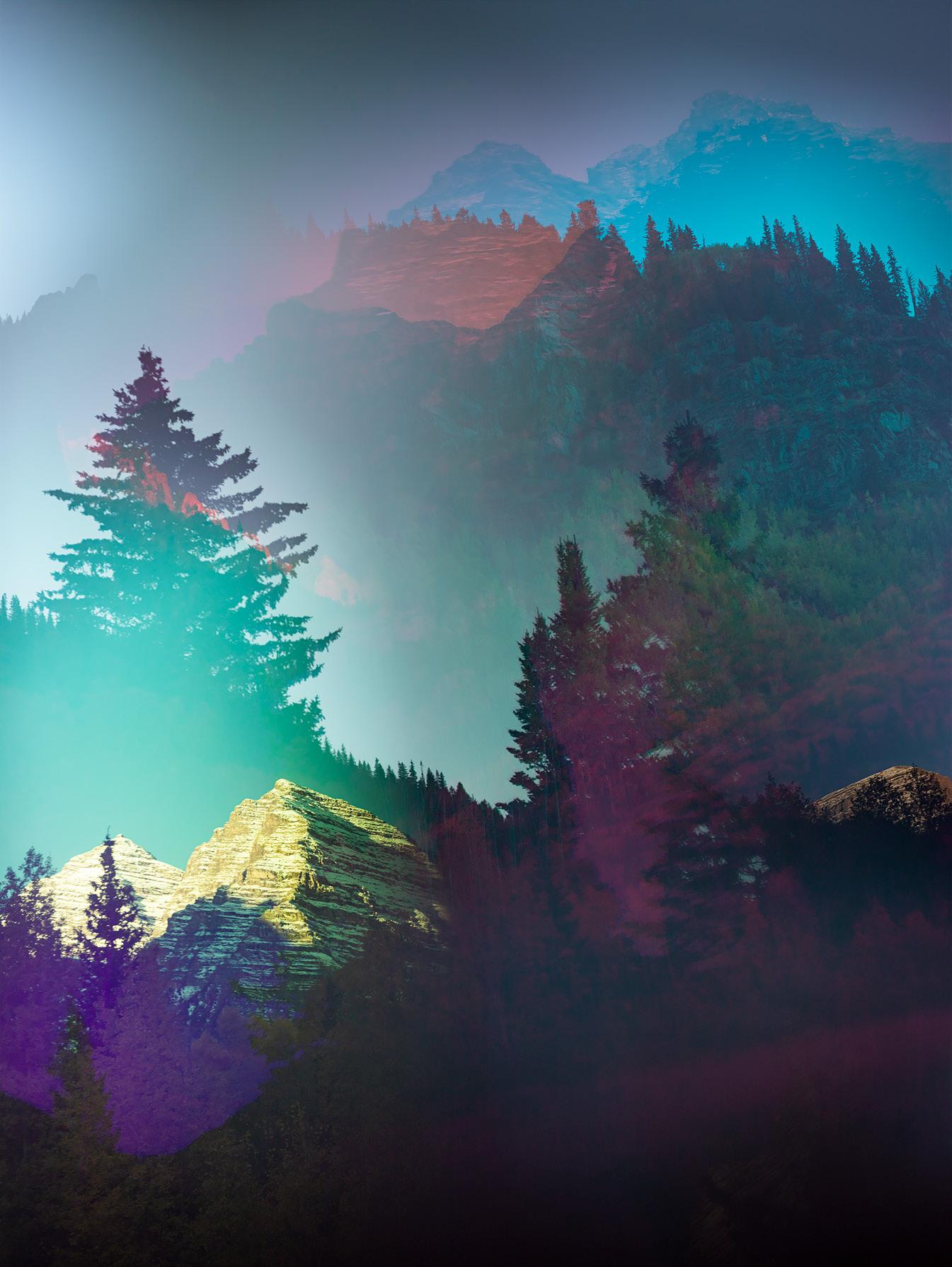
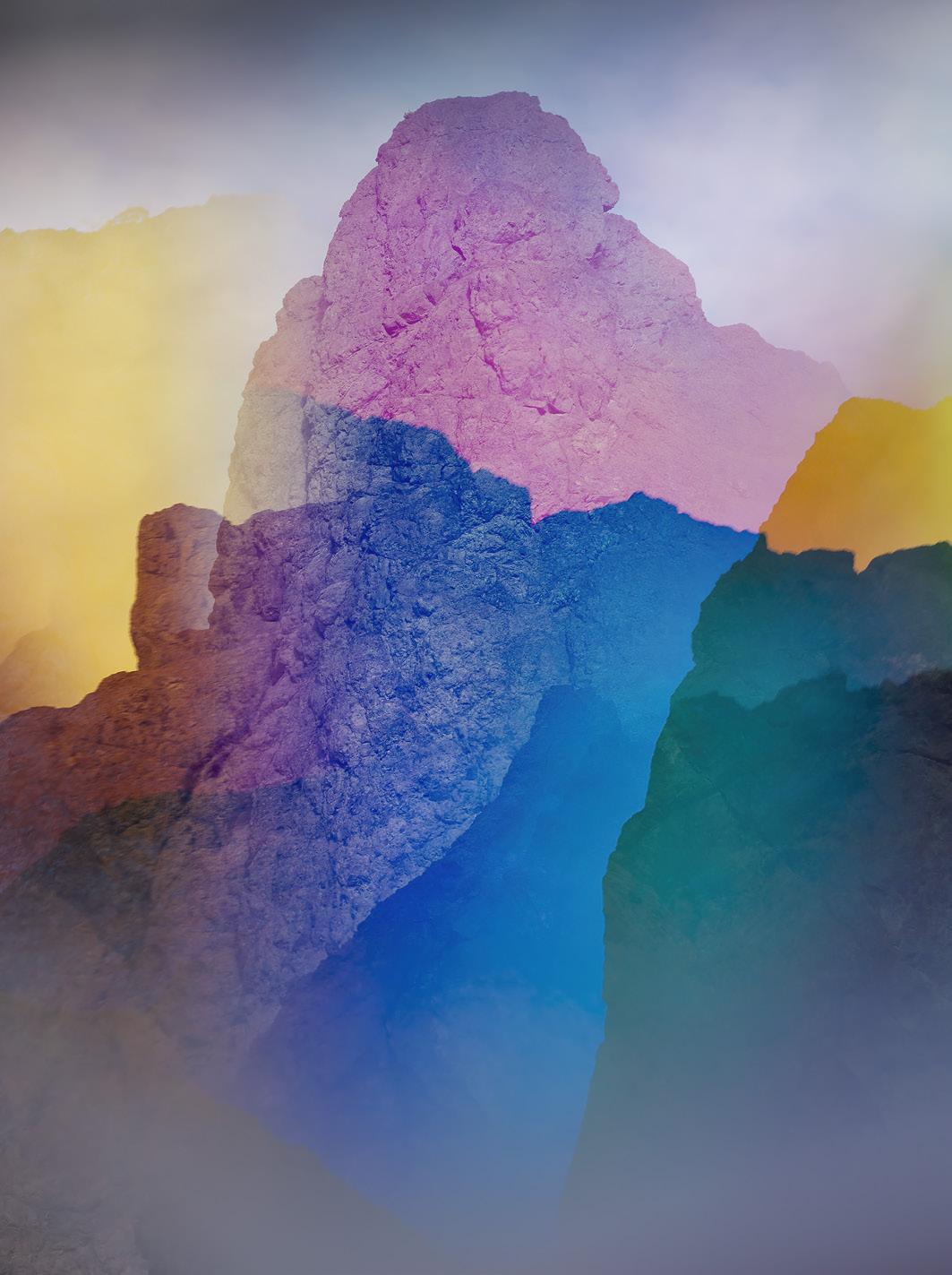
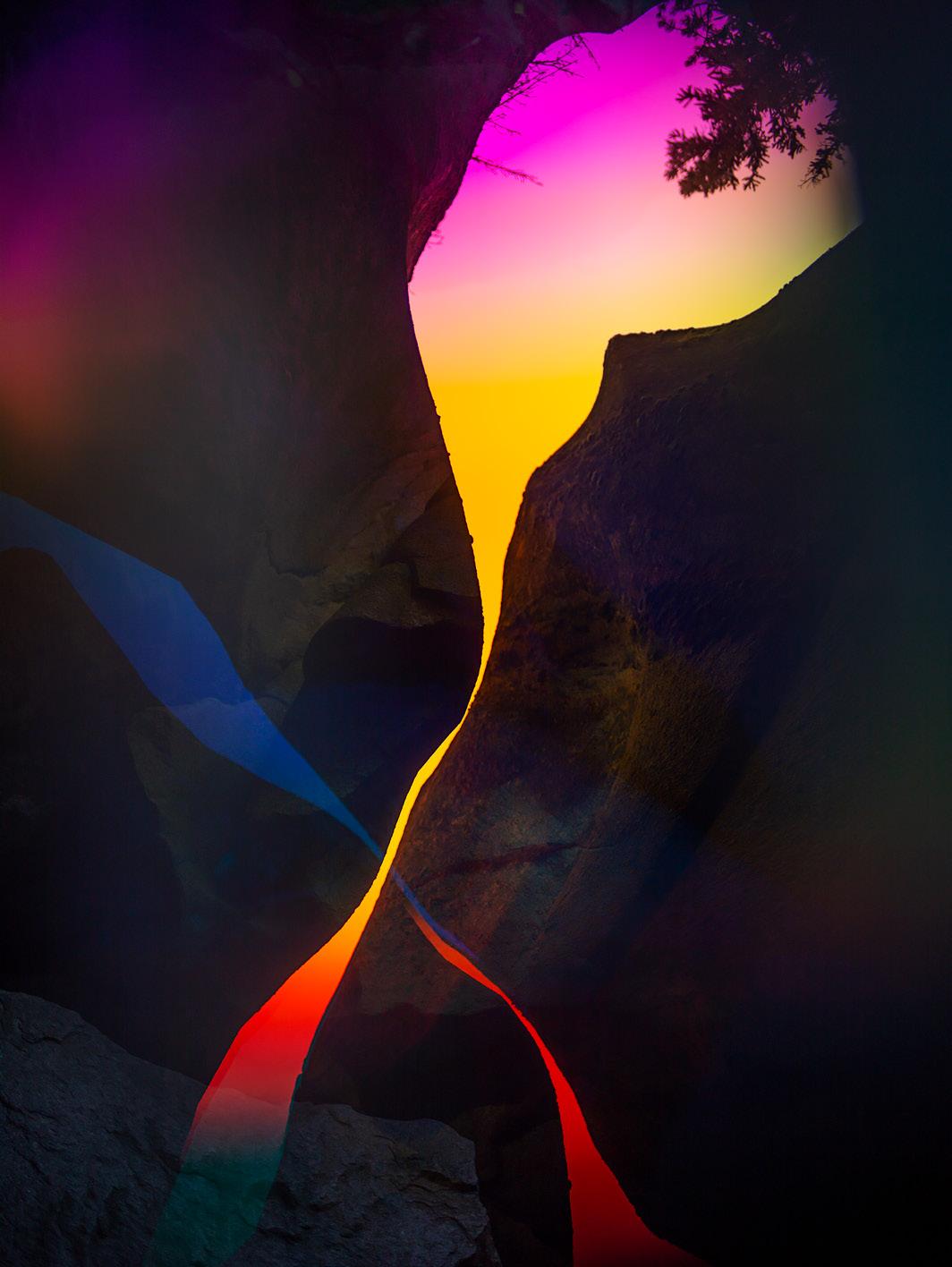
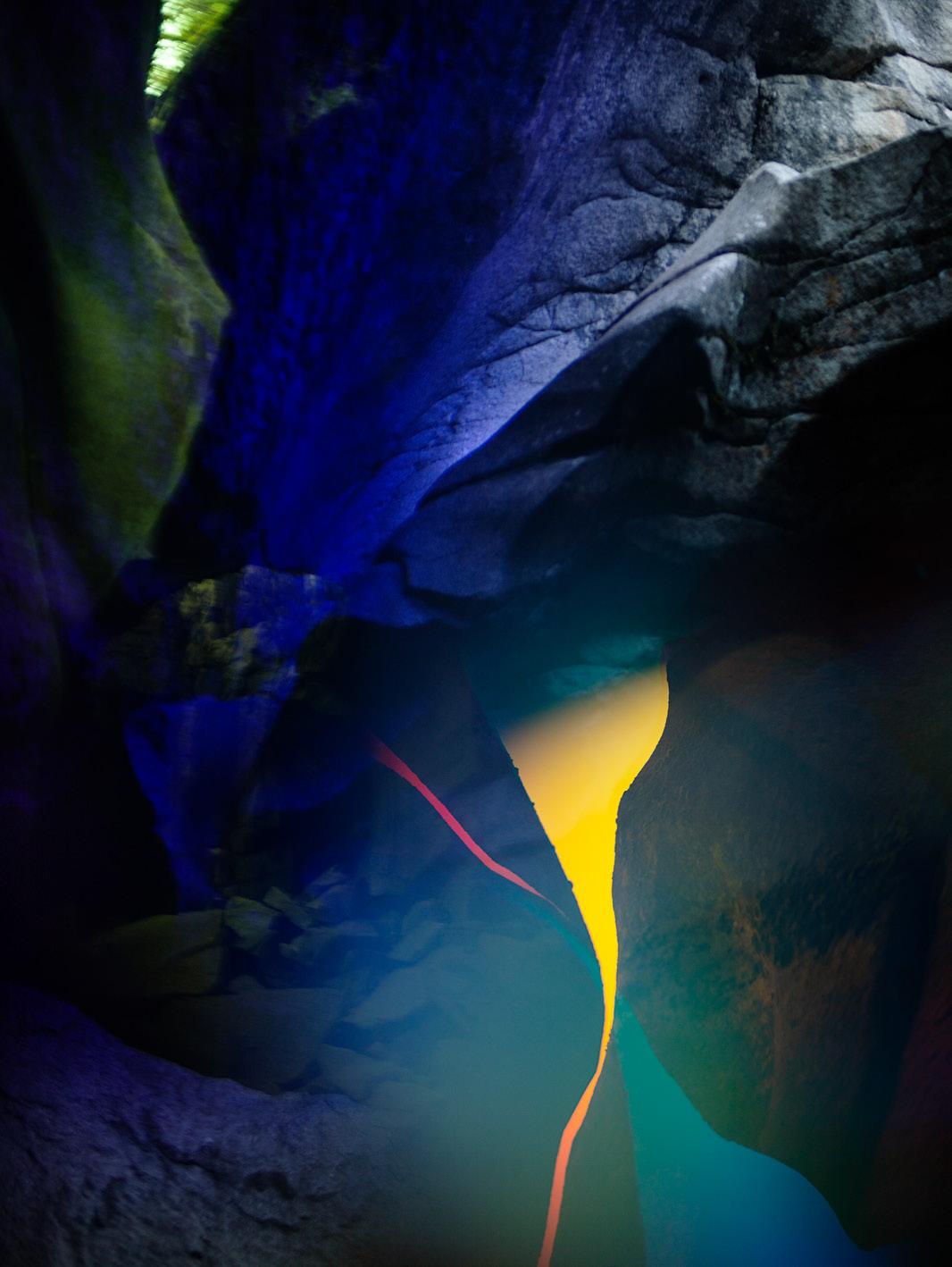
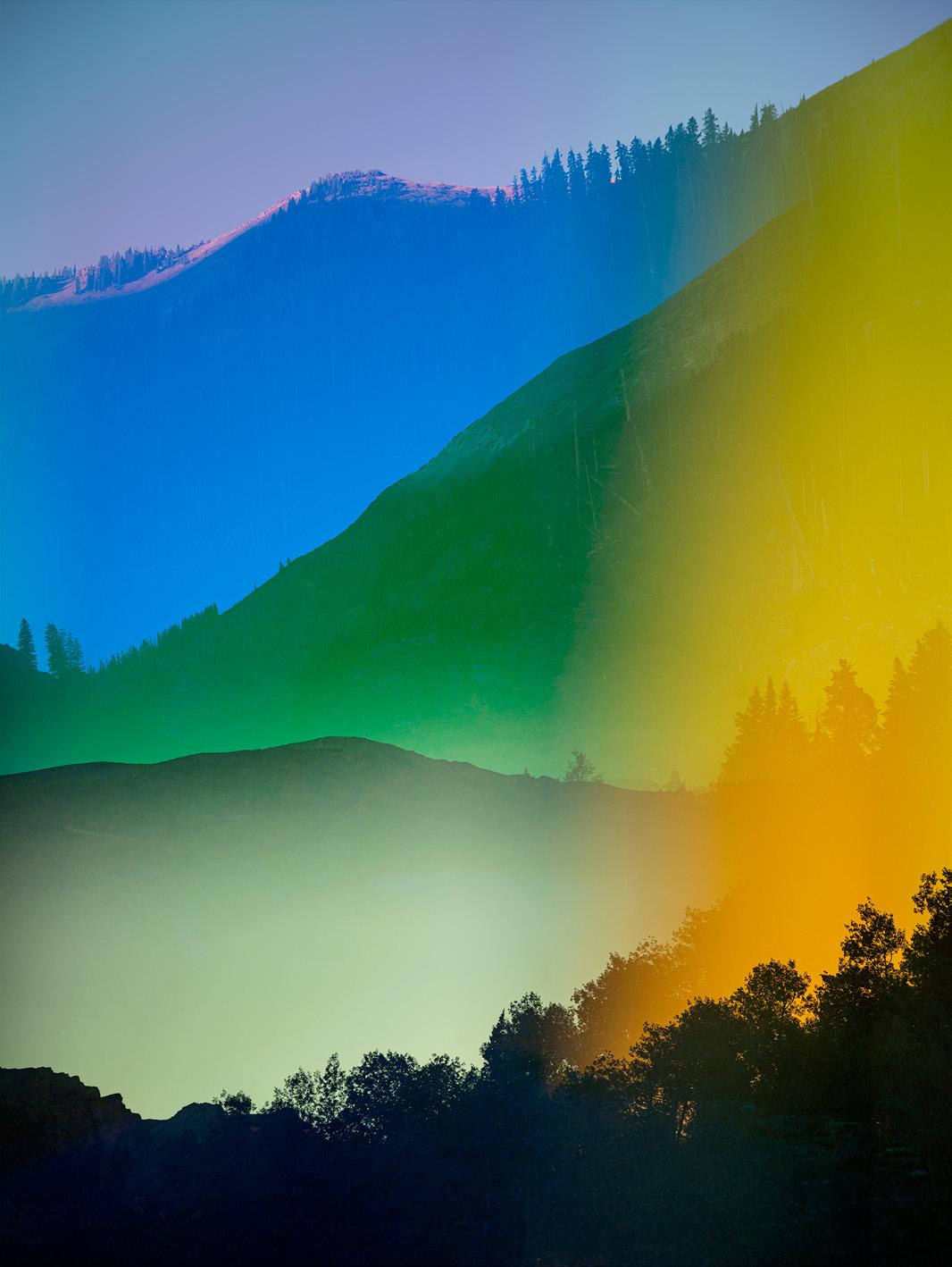
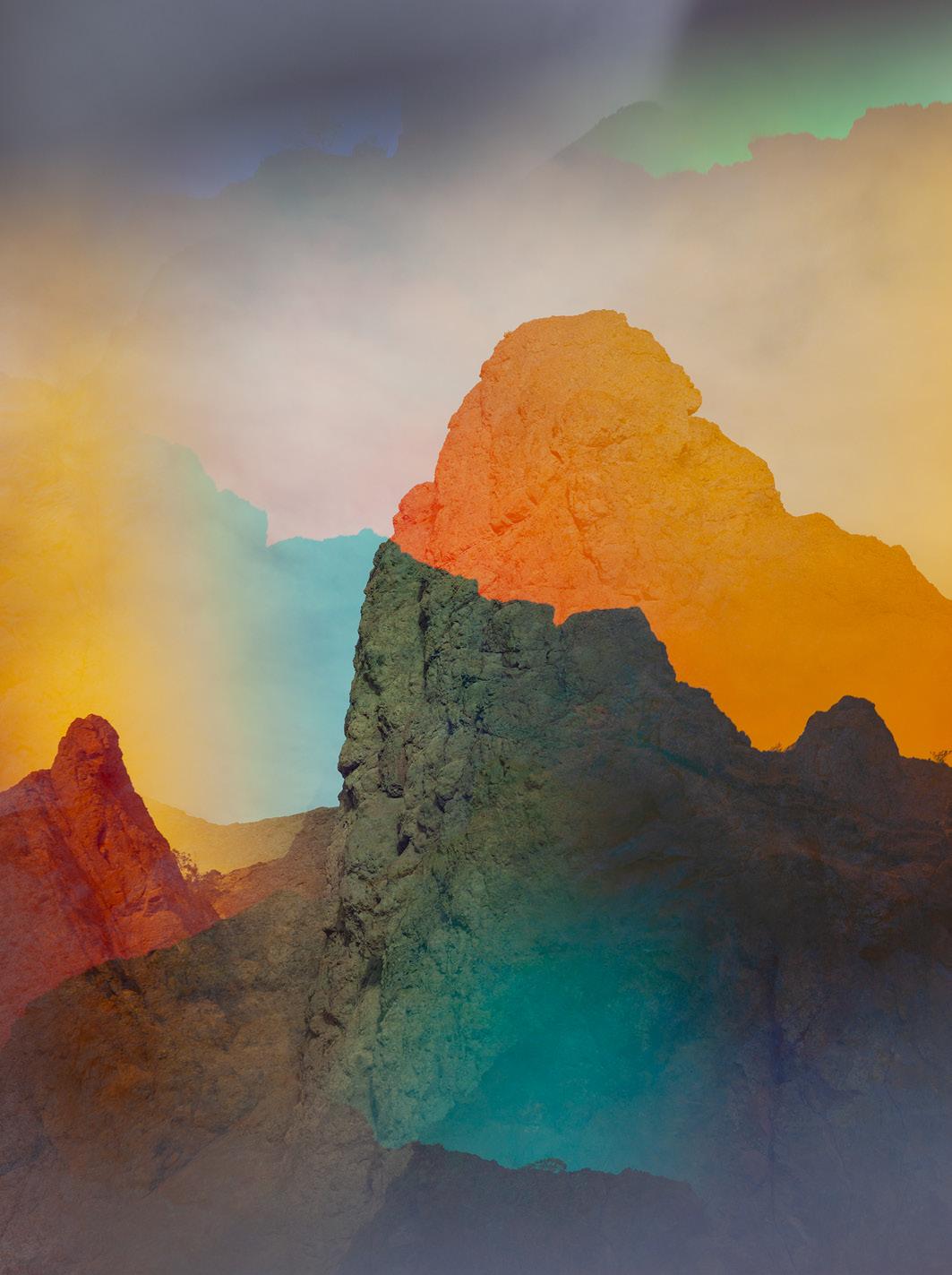
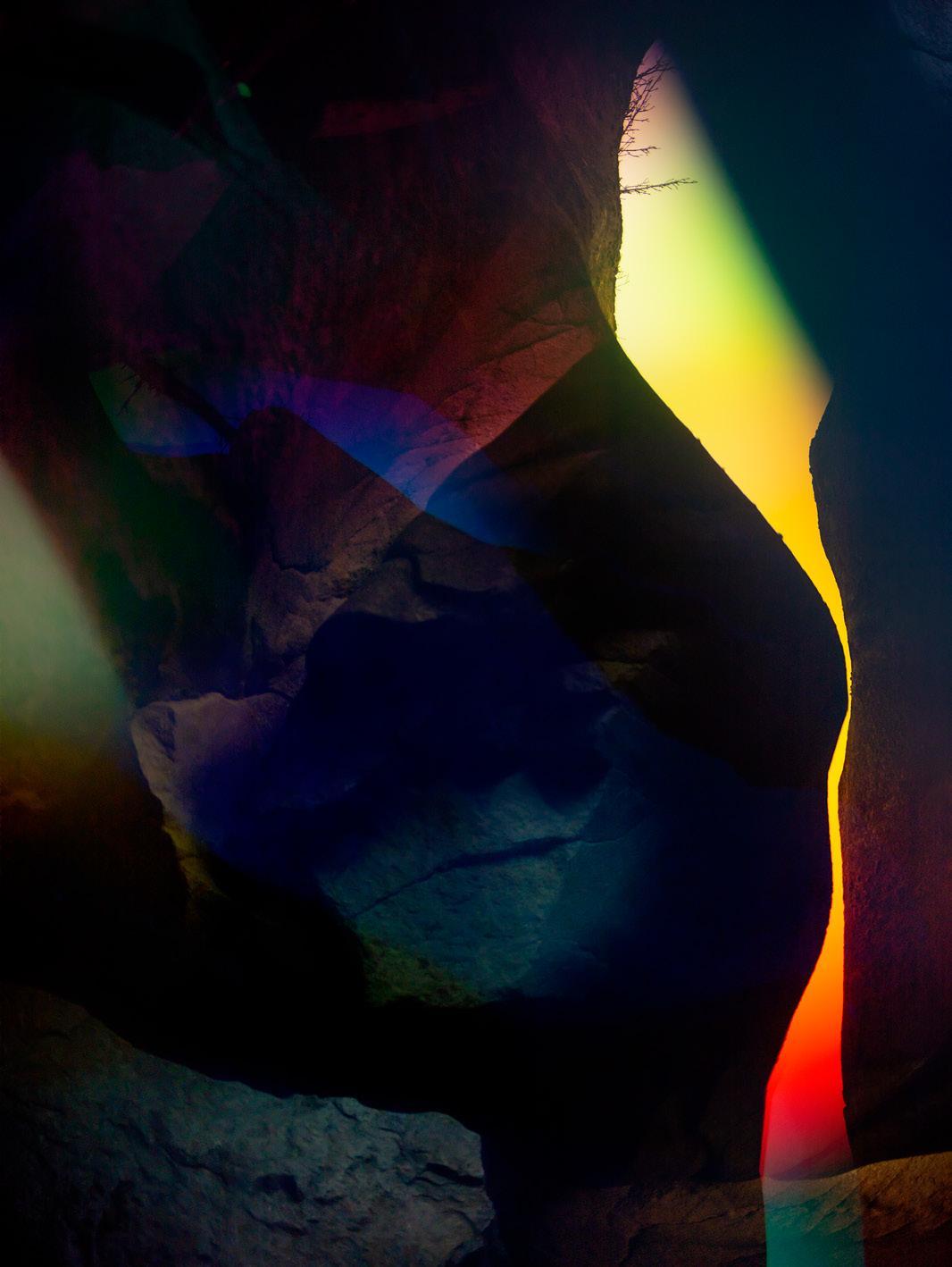
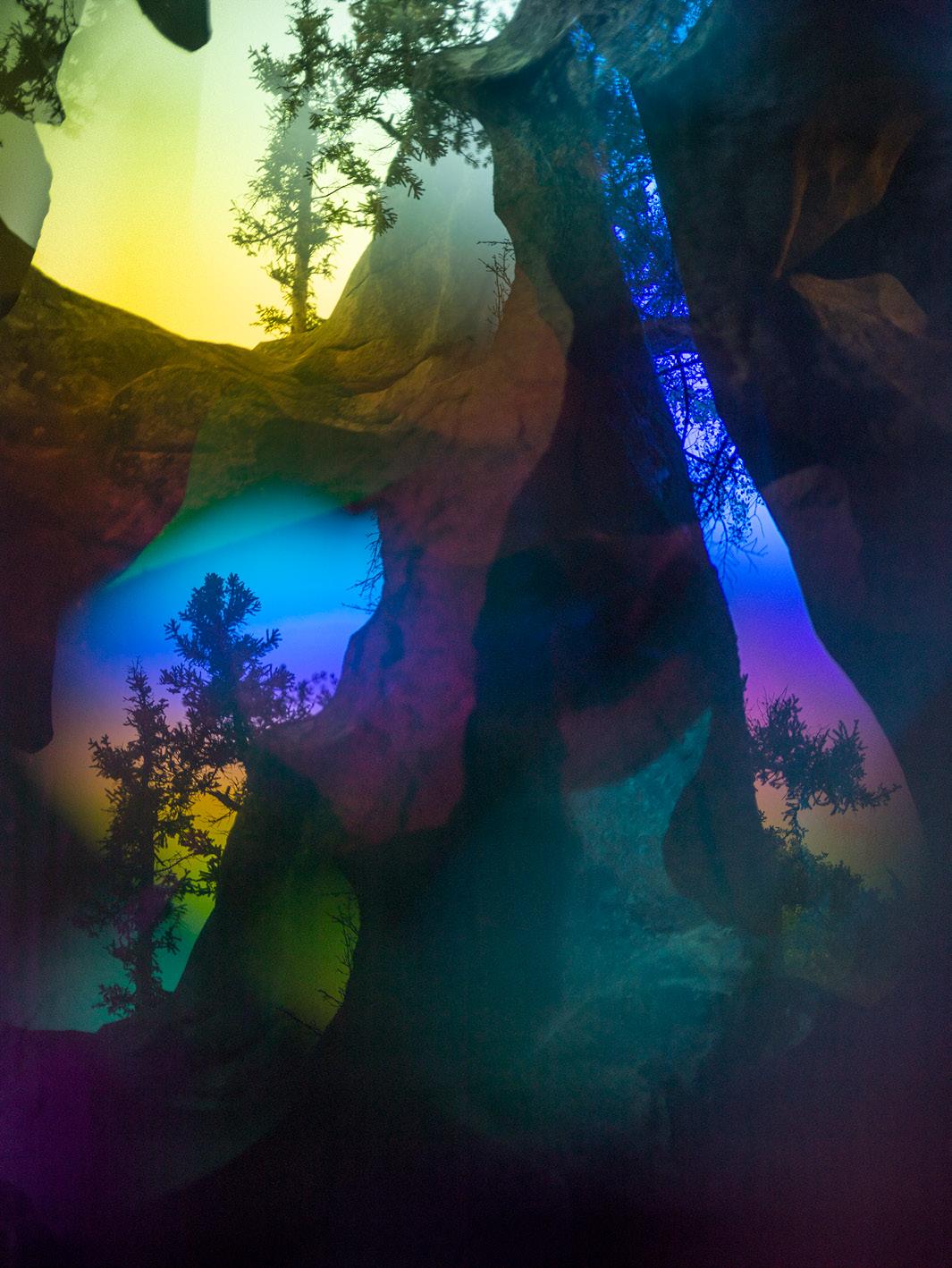
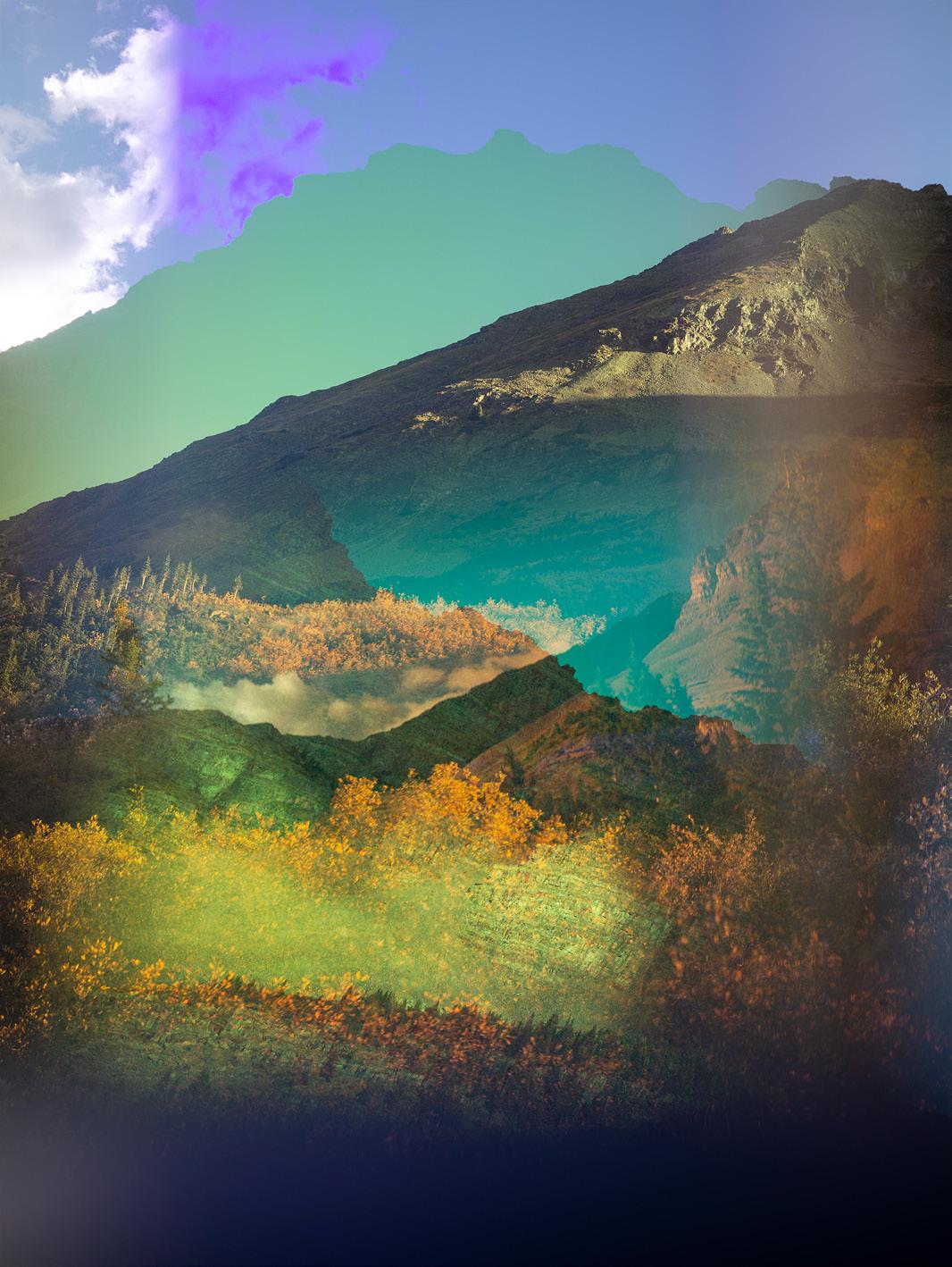
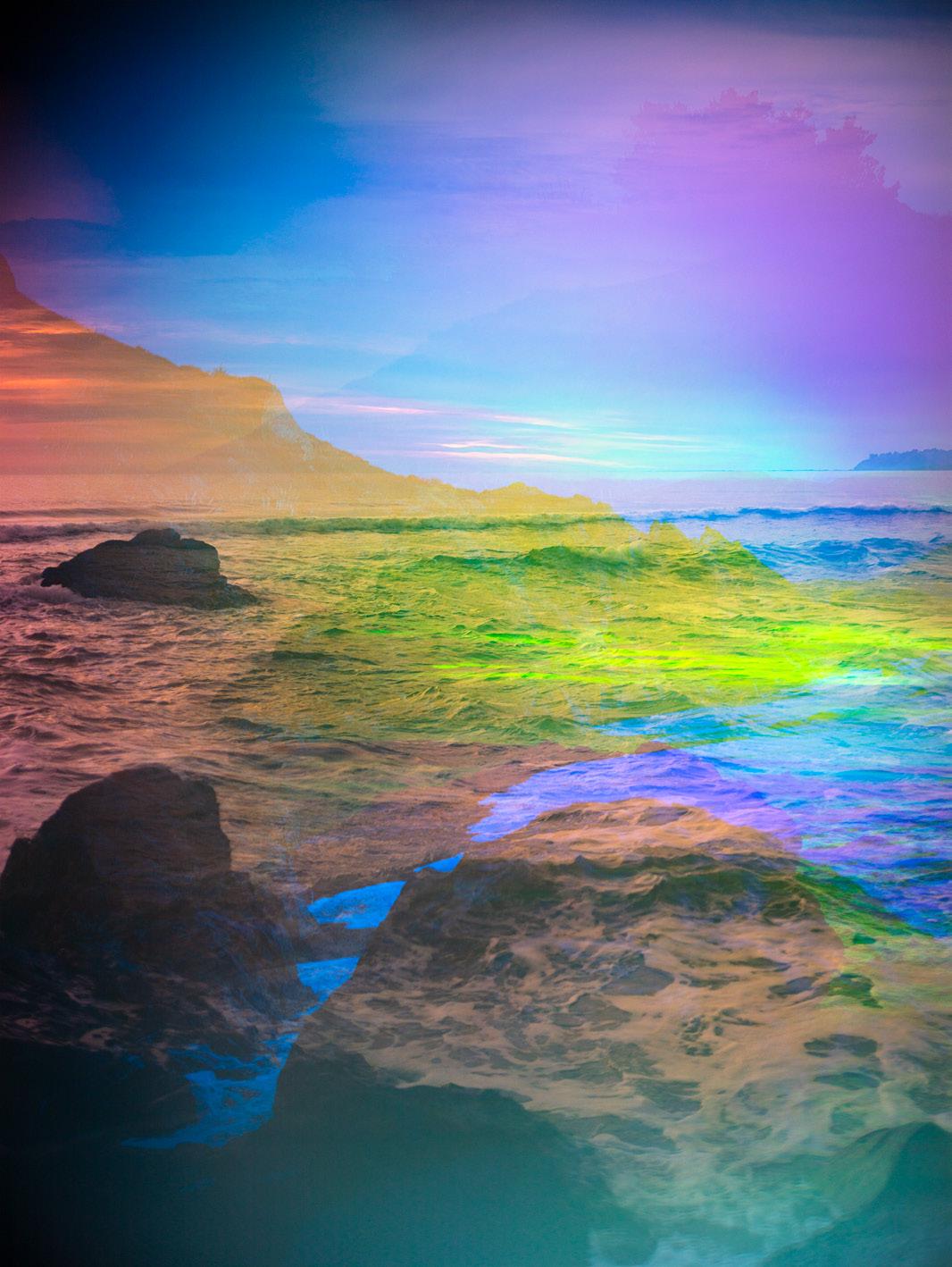
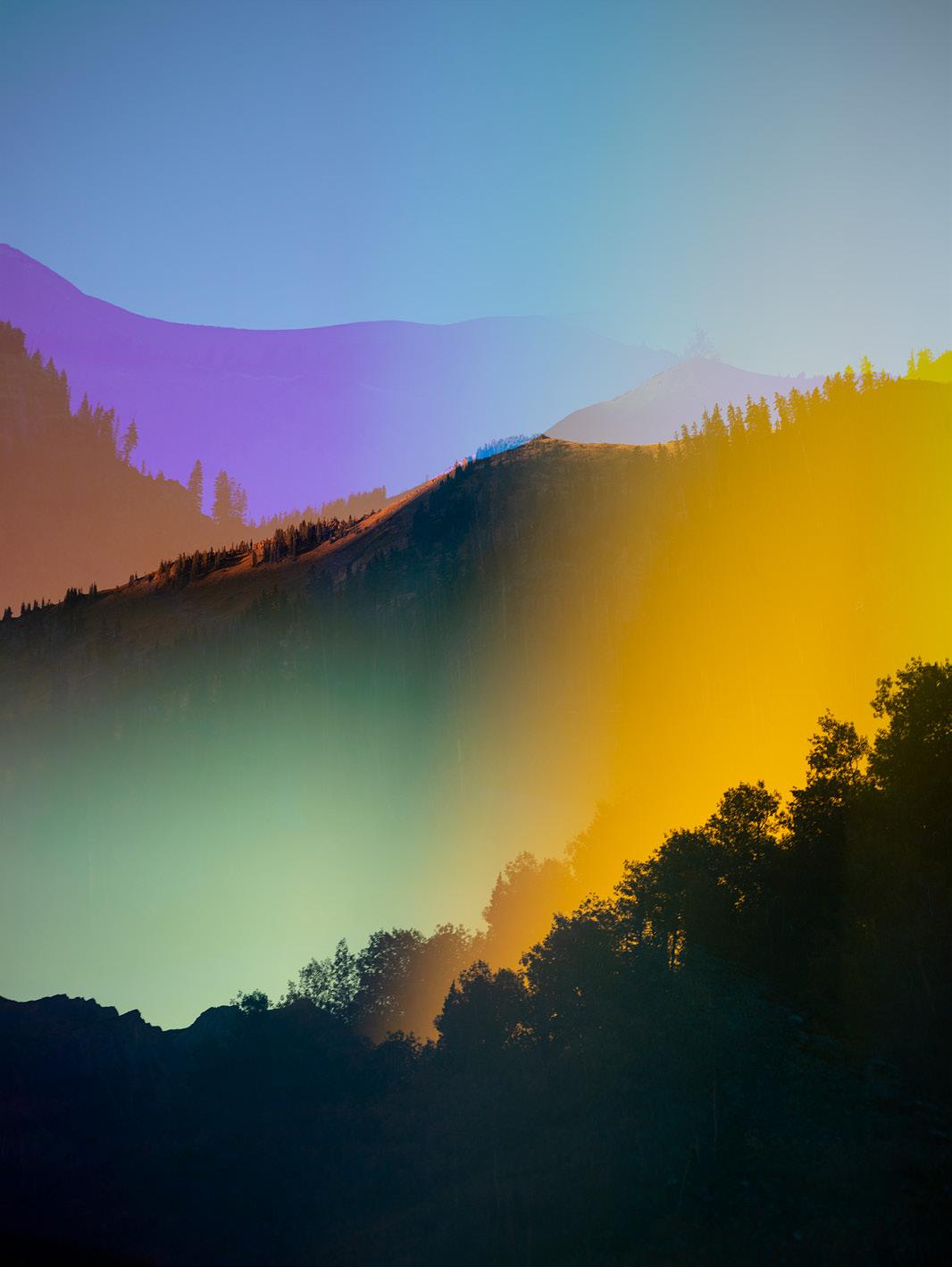
“The history of landscape photography is rife with men behind cameras attempting to offer the definitive view of a particular land feature,” says Terri Loewenthal (b. 1972), referencing the now-iconic images of Yosemite National Park taken by Ansel Adams and Carleton Watkins. “As a woman seeking to reimagine the genre, my work overlaps multiple vantage points and shifts colours into oversaturated hues, exposing the fallacy of a single objective view and offering a rich, sublime subjectivity in its place.” Every one of her artworks is a single-exposure, in-camera composition – layered, psychedelic and flooded with green, orange, pink, purple and yellow tones. Forests meld into mountains, seas bleed into rock formations – blurring the borderlines between reality and imagination. The artist’s works are on view at SOMArts and Heron Arts in San Francisco in late 2025, offering visions of the American landscape like never before. terriloewenthal.com | @lowandtall
Terri Loewenthal, Psychscape 845 (Maroon Bells, CO) , (2022). Image courtesy of the artist.
Terri Loewenthal, Psychscape 602 (White Rock Canyon, AZ) , (2018). Image courtesy of the artist.
Terri Loewenthal, Grottos 9 (Ute land) , (2024). Image courtesy of the artist.
Terri Loewenthal, Grottos 6 (Ute land) (2024). Image courtesy of the artist.
Terri Loewenthal, Gothic Valley (Ute land) , (2023). Image courtesy of the artist.
Terri Loewenthal, Psychscape 600 (Arizona Hot Springs, AZ ), (2018). Image courtesy of the artist.
Terri Loewenthal, Grottos 1 (Ute land) , (2024). Image courtesy of the artist.
Terri Loewenthal, Grottos 4 (Ute land) (2024). Image courtesy of the artist.
Terri Loewenthal, Psychscape 544 (Pyramid Peak, CO) , (2022). Image courtesy of the artist.
Terri Loewenthal, Marin Seashore (Coast Miwok land) (2025). Image courtesy of the artist.
Terri Loewenthal, Psychscape 170 (Rustlers Gulch, CO ), (2022). Image courtesy of the artist.
Climatic Responses
The Iconic Tropical House
SURVEYING FIFTY YEARS OF ENVIRONMENTALLY ATTUNED BUILDINGS THAT BLEND INSIDE AND OUT, RESPONDING TO CLIMATE, CULTURE AND LANDSCAPES.
Tropical is a word that evokes distinct imagery: sun-drenched beaches, swaying palms, lush foliage, fruity cocktails and brightly patterned shirts. Yet, the tropics are not a monolith. The vast region, roughly stretching between the Tropic of Cancer and the Tropic of Capricorn, encompasses 125 countries and territories, and a variety of different ecosystems. It covers 40% of the Earth’s total surface area, and hosts approximately 80% of its biodiversity. Beyond the stereotypical holiday vision is a huge tapestry of histories, cultures – and, notably, a rich architectural legacy receiving new attention.
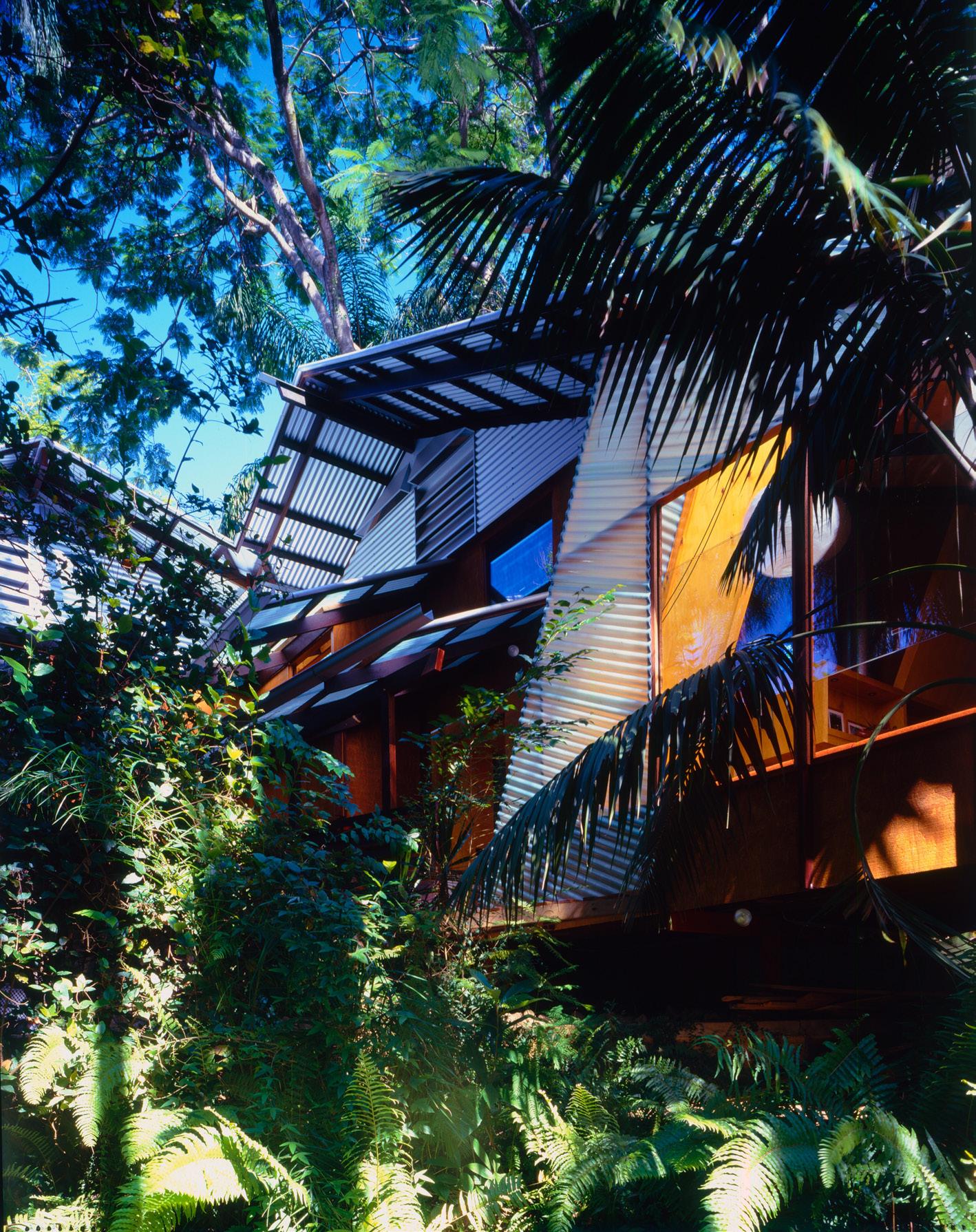
Tropical Modernism emerged in the mid-20th century, combining modernist architectural principles with vernacular traditions. In 2024, the movement was surveyed in a major show at the V&A in London; it focused on how Ghana and India, following independence, adopted the style as a symbol of progressiveness, distinct from colonial culture. Now, The Iconic Tropical House by Patrick Bingham-Hall presents 45 houses across northern Australia, Bangladesh, India, Indonesia, Malaysia, Singapore, Sri Lanka, Thailand and Vietnam. The book reflects on five decades of architecture, situating these homes within their wider context. It argues that climate, colonisation, modernism, geopolitical shifts, rising prosperity – and even the advent of air-conditioning after World War II – have together shaped a specific architectural language. Bingham-Hall is based in Sydney, Australia, and has published extensively on architecture, design, landscape and urban planning. His titles include WOHA: New Forms of Sustainable Architecture, offering insight into one of Singapore’s most dynamic studios. We sat down to discuss the new book.
A: What do we mean when we talk about a “tropical house”? Has the meaning of the term evolved over time?
PBH: The image of the tropical house has always been something of a romantic notion: of a languorous life on the veranda beneath slowly twirling fans. But the architecture has always been derived from the need for optimal environmental performance. The tropics can be overwhelmingly hot and very wet. A badly designed house will be extremely uncomfortable. The changes have been technological rather than structural – steel and concrete are more durable than timber and mudbrick – and the architecture has become increasingly focused on the urban condition, not the tropical idyll.
A: This publication surveys 45 examples, spanning five decades. How did you approach the process of curation?
PBH: I wanted to feature house designs that had been genuinely influential – innovative and pioneering – rather than flashy or opulent. The intention of the book, my historical thesis if you like, was that a path of cross-fertilisation could be tracked from the 1970s, when the shackles of Euro-modernism were first loosened by a handful of architects. They were mainly Australians, some of whom gravitated to Bali and met up with Geoffrey Bawa, a Sri Lankan architect often referred to as the leader of the Tropical Modernist movement. A process of architectural evolution then spread across the region. I tried to be as objective as possible with the selections and not be swayed by rhetoric: I had already visited and photographed many of the houses over the years, and I then took time out to fill the gaps and cover the most recent work.
“The image of the tropical house has always been something of a romantic notion. But the architecture has always been derived from the need for optimal environmental performance.”
A: Are there recurring principles that unite the buildings?
PBH: I wrote in my introduction to this book that, “in the tropics, there is nothing new under the sun.” Singapore-based architect Guz Wilkinson points out: “You just need cross ventilation, overhangs, plants and water bodies. You can attribute that to learning from the vernacular, but really … it’s just common sense.” His house designs are most conspicuously distinguished by their expansive roof-forms, and by the absence of enclosure: tenets which are echoed across the region. C Anjalendran in Sri Lanka describes his spacious courtyard houses as art galleries with gardens, whilst Ernesto Bedmar, an Argentinian émigré to Singapore, confessed: “I stumbled upon a profound architectural precept – only the roof and columns are essential. We can live without the rest.”
A: What are some of the cultural, historical or social conditions that gave rise to these architectural approaches?
PBH: I needed to take many factors into account when covering such a demographically diverse part of the world, particularly with regards to the last 50 years. There is an appreciable architectural unity to the houses of the region, stretching from western India to Indonesia and northern Australia, but in historical and cultural terms, the differences were quite emphatic. The architecture, no matter how it was financed or aestheticised, was always subservient to the climate: the environmentally friendly attributes of the bungalow (as formally prescribed by the East India Company in the 17th century) were both broadly colonial and specifically localised in their origins, as were the elevated Malay houses, the Thai teak houses, and even the timber-and-tin structures of outback Australia. Geopolitics has dictated the recent emergence
and evolution of domestic architecture across the region – some houses were not designed until the clientele (an affluent middle-class) had the wherewithal to pay for them.
A: Close relationships with surrounding nature seem to be central, especially in Singapore’s Water Courtyard House by Guz Architects, or Touching Eden House by Wallflower Architecture + Design. Why is this the case?
PBH: You can hardly avoid it: things grow so fast in the tropics. The virtue of the indoor / outdoor relationship was codified in the mid-20th century, with specific reference to the likes of Richard Neutra, and its modernist stylings were enthusiastically adopted by local architects from the 1980s onward. However, with those more recent Singapore houses by Guz Architects and Wallflower, the demarcation between inside and out – the estrangement – had been effectively abandoned, and the architecture is not much more than a climbing-frame for the landscape. As Ng Sek San, the much-venerated landscape architect, observes: “Softscape is all that matters in architecture these days, the forms and the beauty are in the trees and nature. The hardscape and the new buildings, they’re not the architecture anymore.”
A: What sustainable strategies do these projects employ?
PBH: I tried to include houses directed by passive design principles – comprehensive shading and cross-ventilation –and I have been increasingly intrigued by the efforts made to reduce the amount of embodied carbon, and to minimise the greenhouse emissions from construction materials. As part of his Sekeping project in Malaysia, Ng Sek San reconfigures generic, rundown housing by recycling discarded bits and
Previous page:
Rex Addison, Addison House, Brisbane, Australia, (1999).
pieces in a judicious and joyful fashion; Boonserm Premthada’s house in Bangkok was built with bricks made from the residue found in coal-fired power plants; and the Nisarga house by Wallmakers in Kerala, India, was constructed from locally salvaged debris mixed with soil found across the site.
A: You also documented the book's buildings. What’s the story behind your dual role as author and image-maker?
PBH: I had always been a writer, but it didn’t really appeal as a career choice, so in my early 20s I drifted into photography. I quickly became fascinated by architecture, about which I had known absolutely nothing. I achieved a degree of success – my work was being used in magazines and books –but I got fed up with the "glass ceiling" of my involvement: I had spent days on site, taking photos of every aspect of a building, but somebody else would take over the critical commentary. So, I decided to write. That has gone pretty well. I’ve written something like 30 books. As an architectural photographer, writer and publisher: I need to illustrate the text and explain the building, whilst always remembering that the architecture is more important than the imagery.
A: Which houses stood out the most during your travels?
PBH: To be honest, the most memorable visits were to those far-flung places that lived up to the romantic ideal. The Telegraph Pole House, sited on the top of a hill in Langkawi, looking west over the mountains and the sea; the isolated Stamp House, surrounded by the ranges of the Daintree rainforest in Far North Queensland; and, of course, Geoffrey Bawa’s sublime Lunuganga estate in Sri Lanka. In a more prosaic sense, I was profoundly inspired by little gems in
overcrowded cities, such as: Studi-o Cahaya, by Adi Purnomo in Jakarta; Aurapin House, by Boonlert Hemvijitraphan, and Back of the House, by Boonserm Premthada, both in Bangkok; and Labri House, by Nguyen Khai in Hué, Vietnam.
A: What challenges are designers facing at the moment?
PBH: The future of architecture, never mind the design of tropical houses, is over-ridden by the great existential dilemma of climate change. Vinu Daniel from Wallmakers Architects, based in the southern Indian city of Trivandrum, states that: “In place of questions like ‘What should we build?’, we need to be asking, ‘Should we build?'” Truly sustainable architecture cannot be facilitated by the continued construction of houses, but we all know that it’s going to happen. Ethically enlightened architecture is increasingly becoming standard, and one consequence may well be the aesthetic reconsideration of the urban environment. For all the rosetinged wondrousness of the arcadian idyll, tropical Asia is consummately urbanised, and, in most of its manifestations, depressingly so: in their chaotic and overheated dysfunction, the Asian mega-cities are quite unlike anything seen before.
A: Looking to the future, which studios should we watch?
PBH: The green shoots of resilience and renewal are sprouting, and we should perhaps look most instructively to the younger architects of Vietnam and Thailand, who are tangibly producing new forms of beauty. Nguyen Khai, architect of the glass Labri House in Hué – which is protected by trees, creepers, vines and shrubs – says: “The core value is ‘close to nature’. There are other creatures living inside this shelter, not just humans.” And it's hard to argue with that.
Words Eleanor Sutherland
The Iconic Tropical House Thames & Hudson Published September 2025 thamesandhudson.com
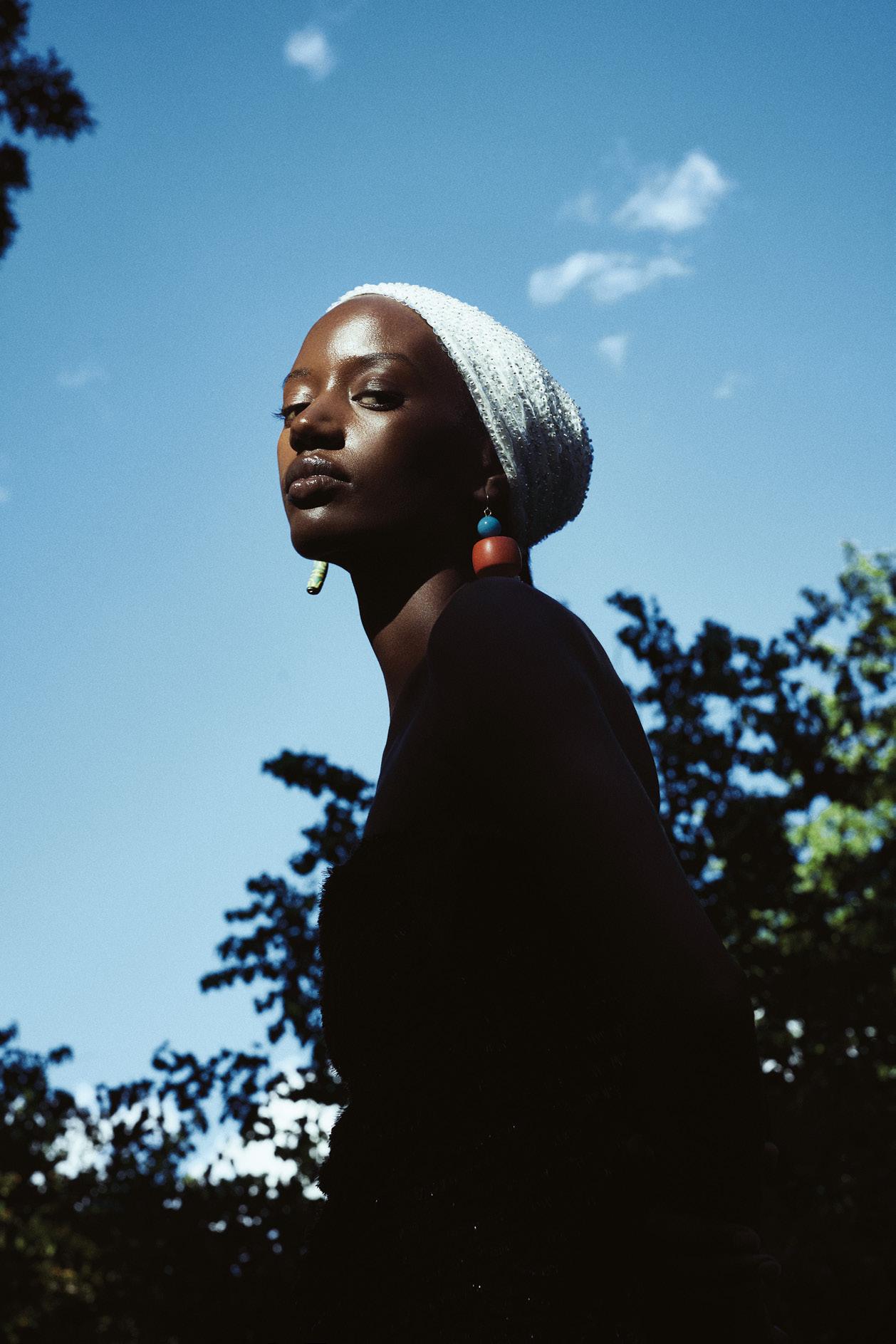
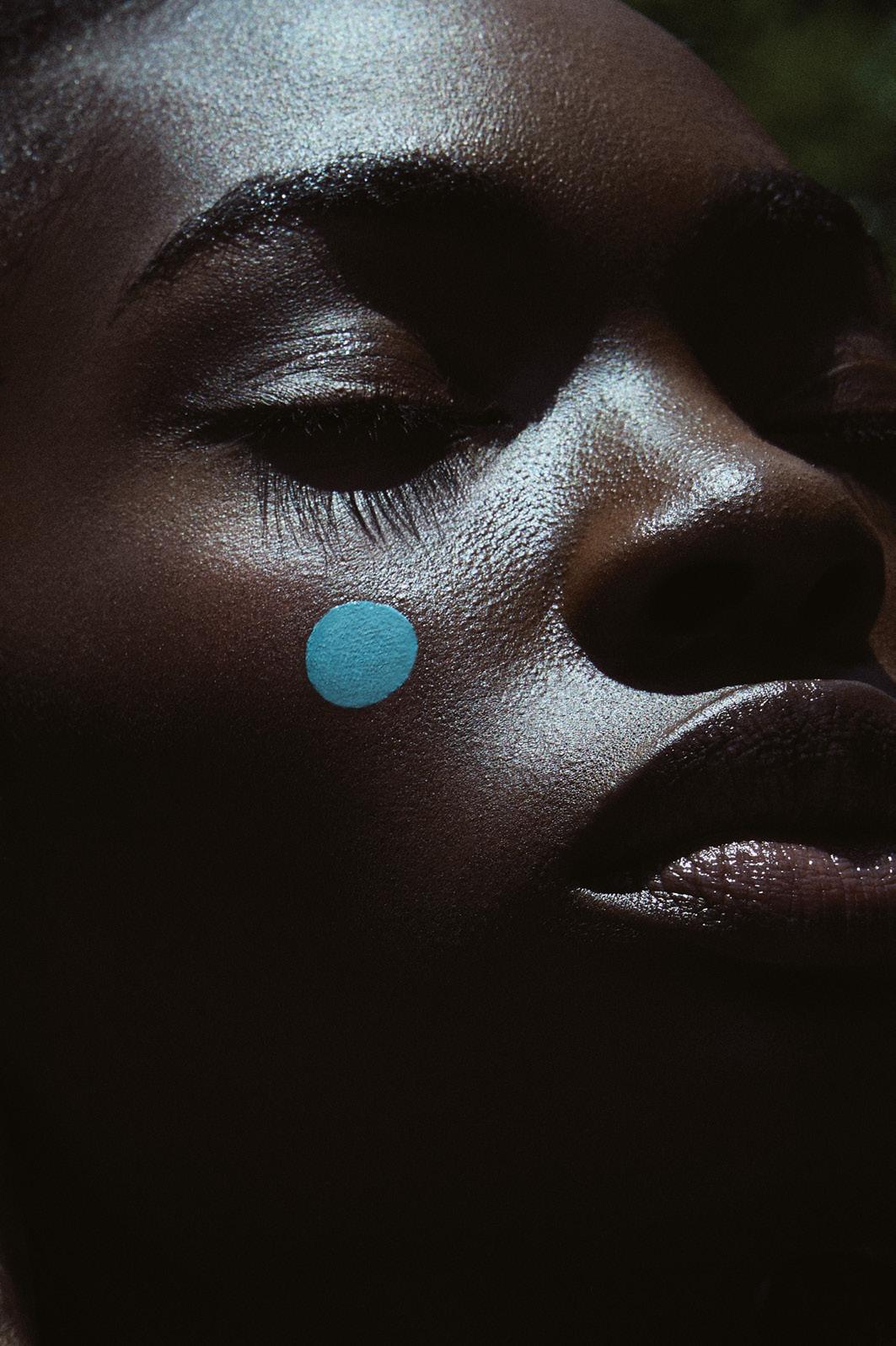
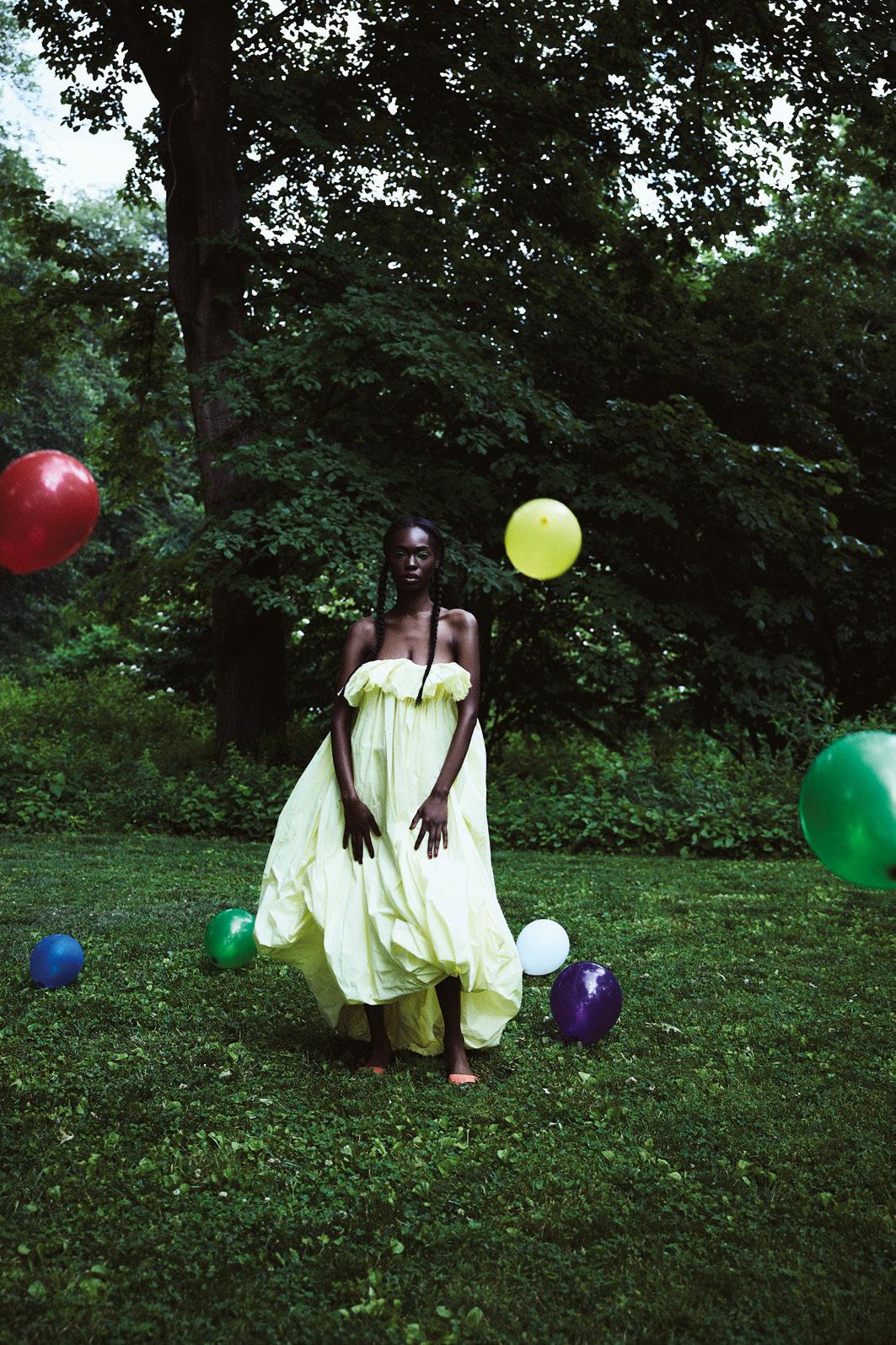
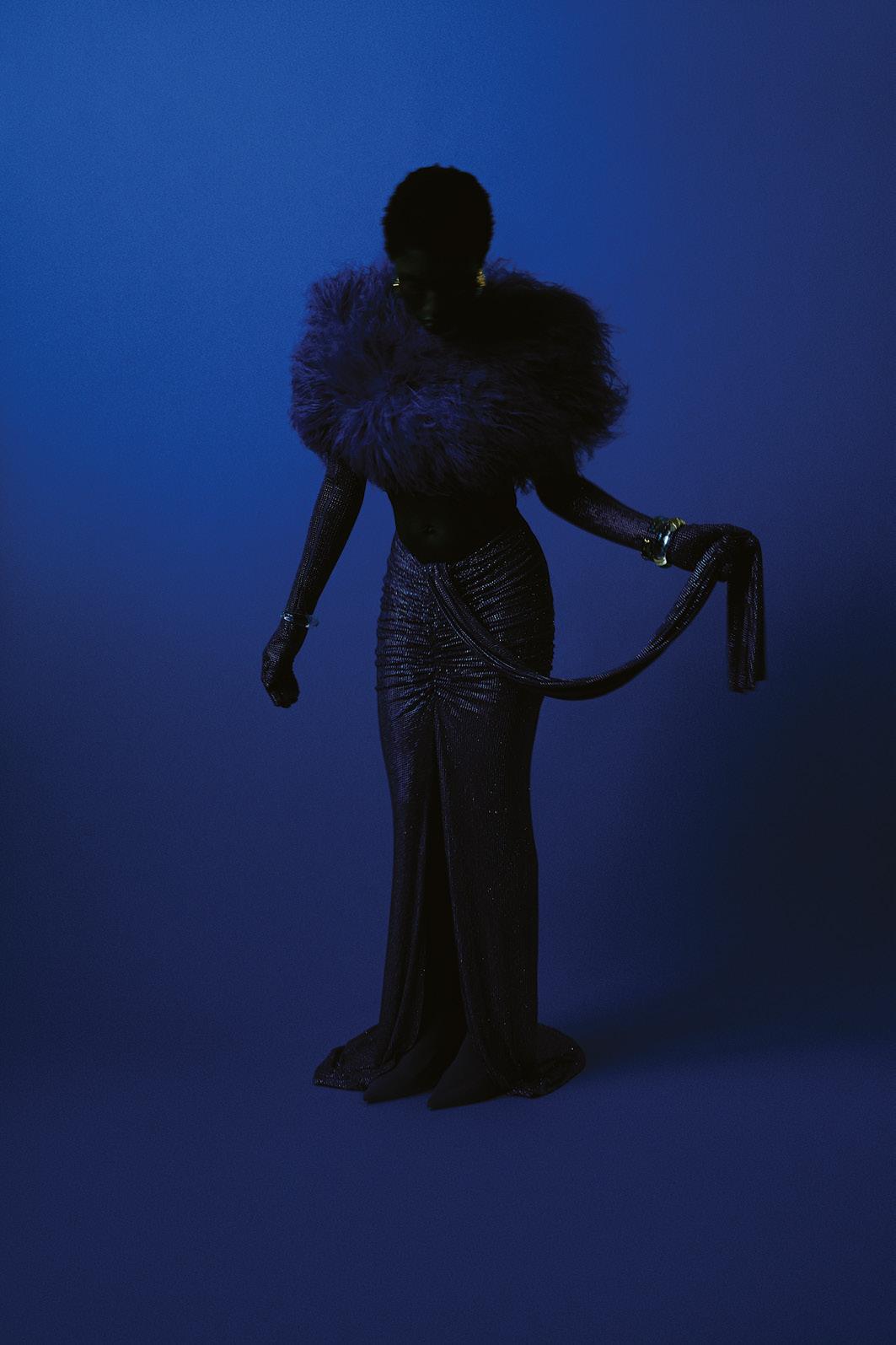
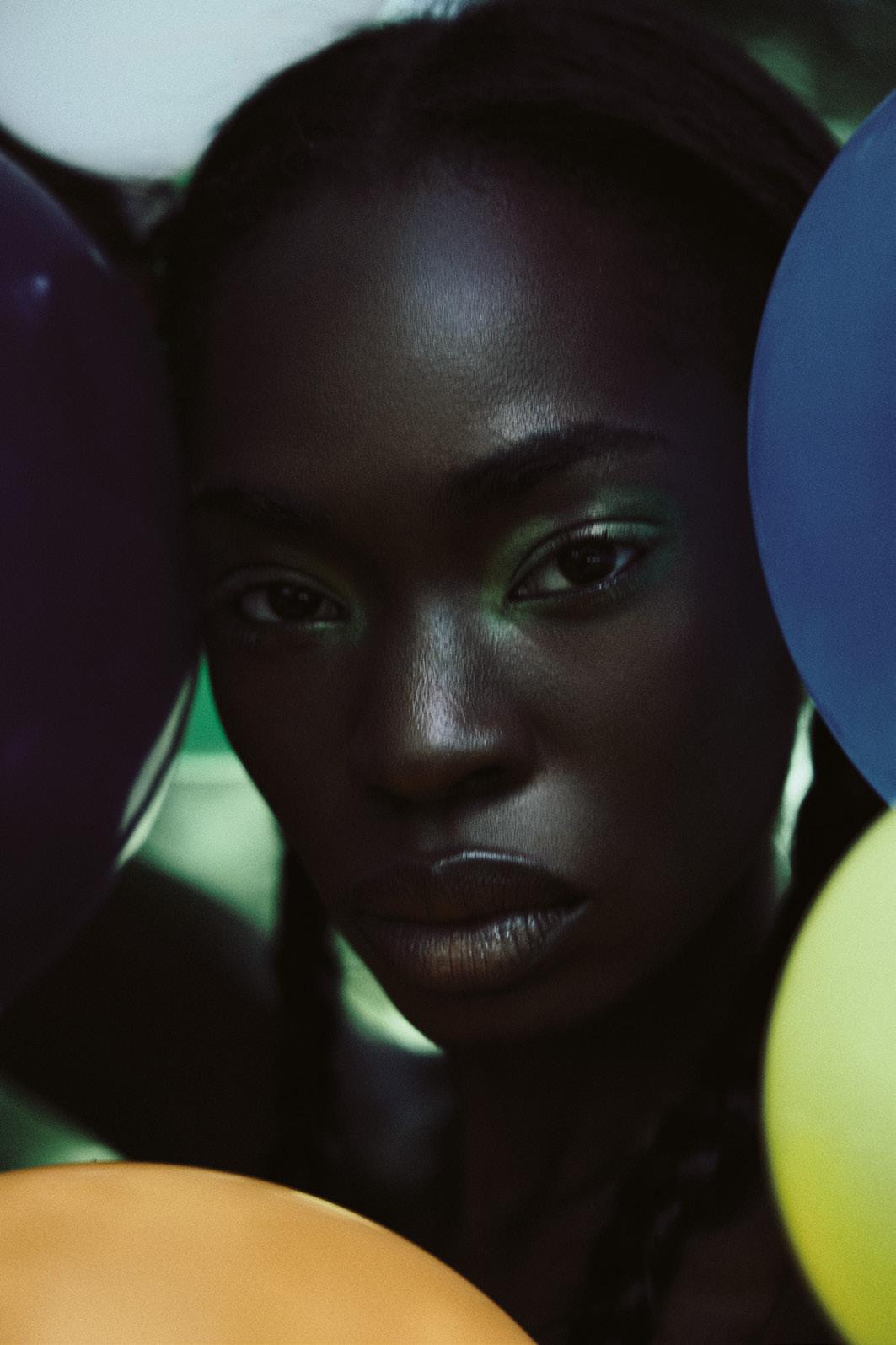
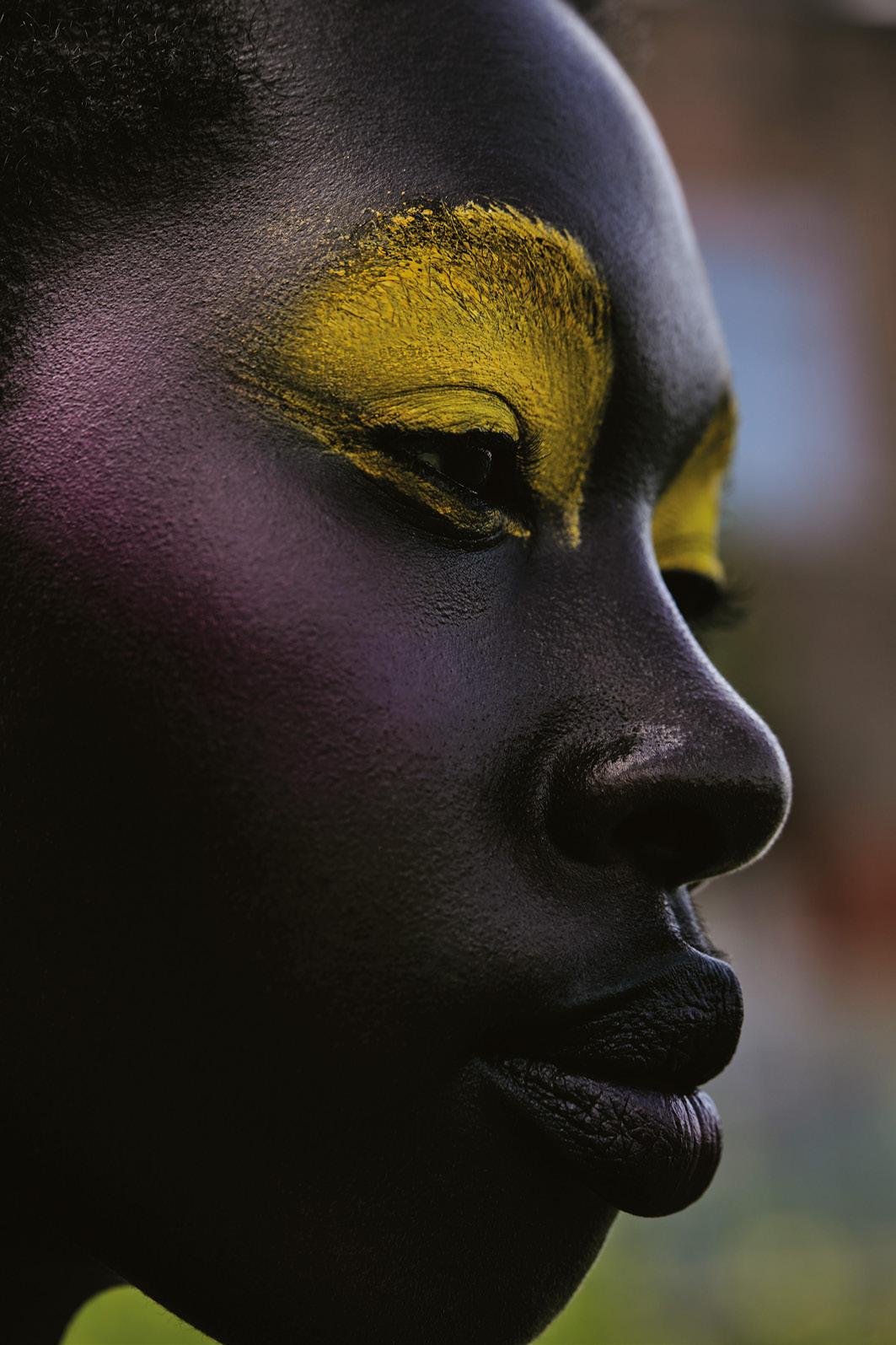
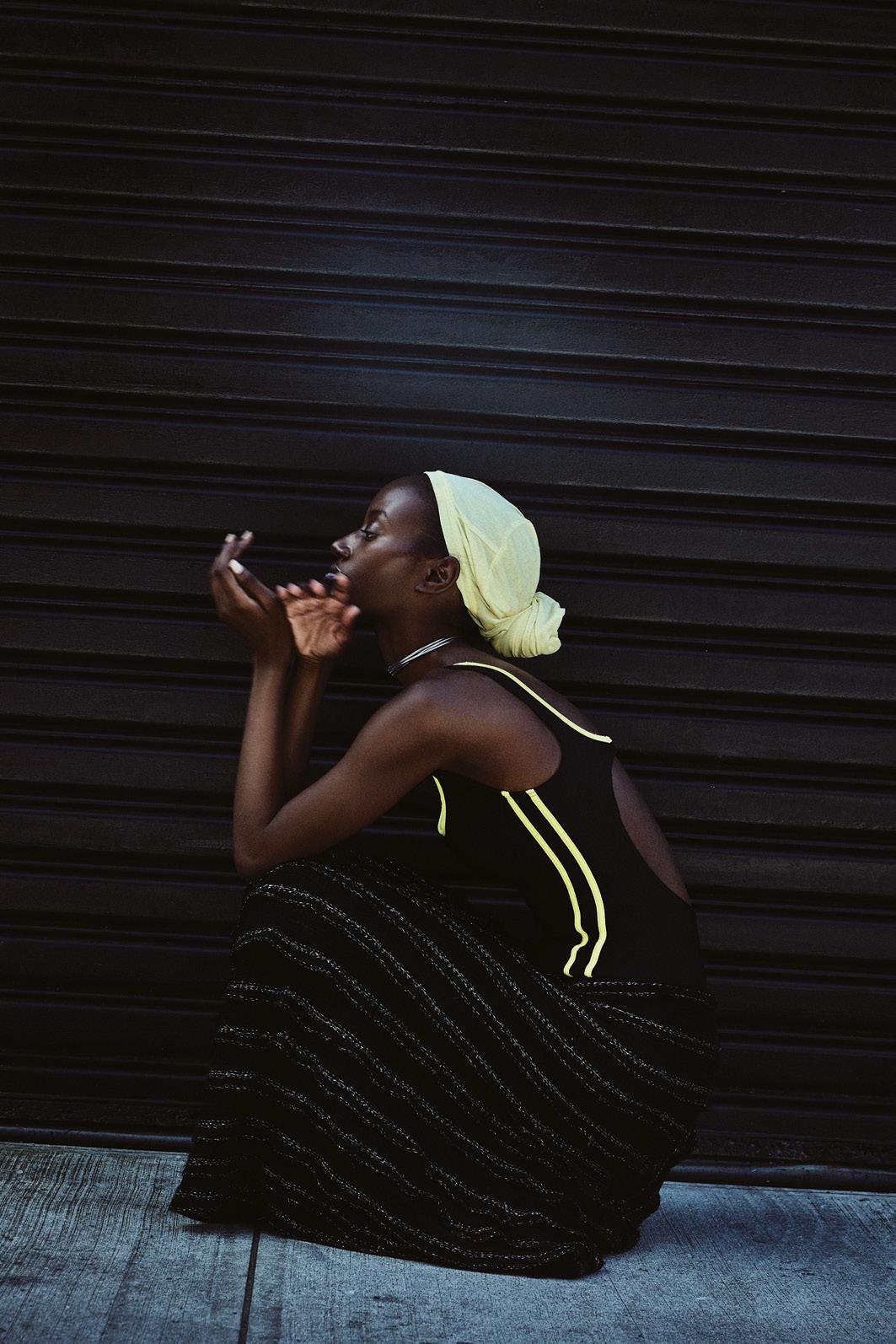
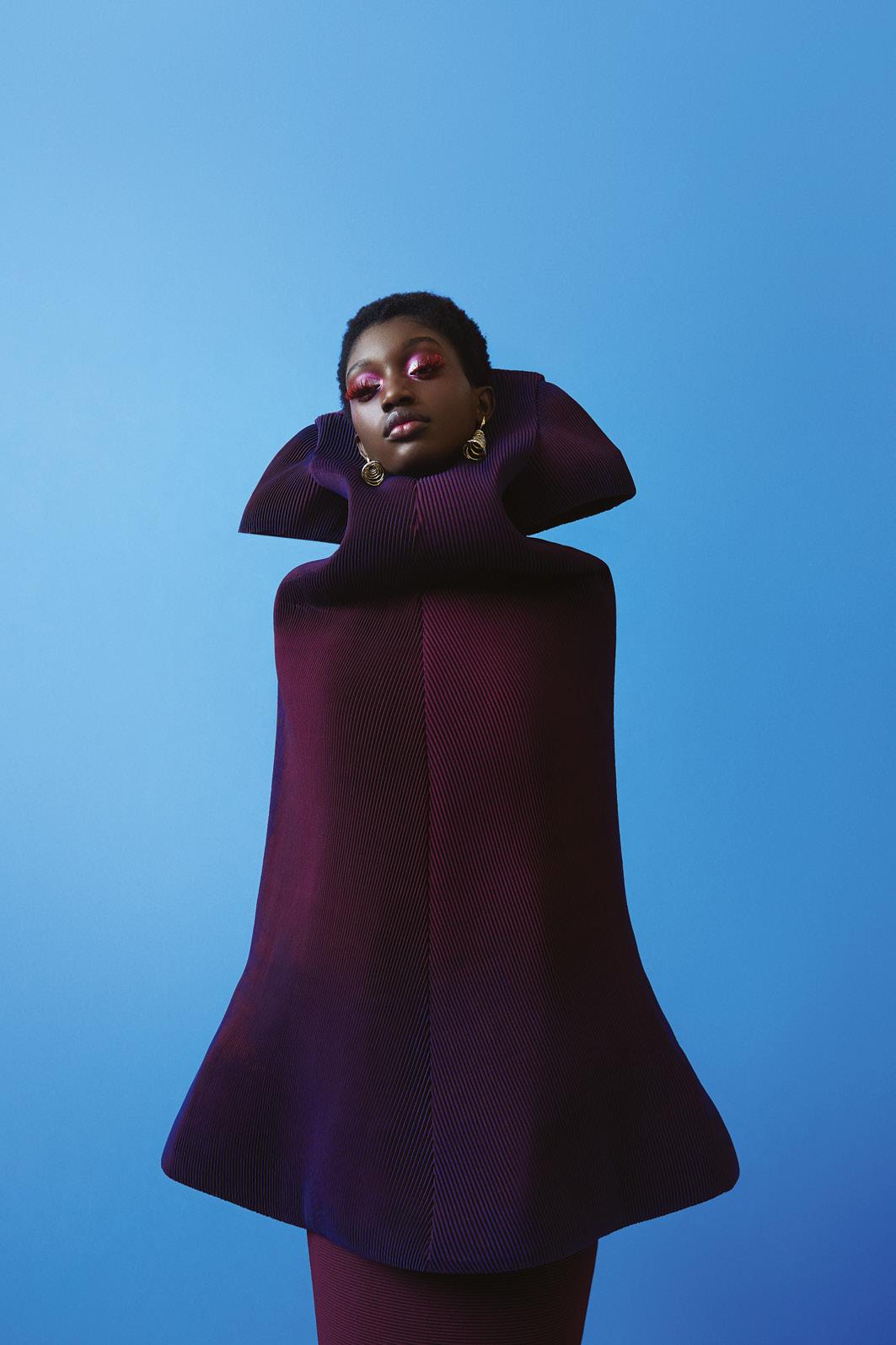
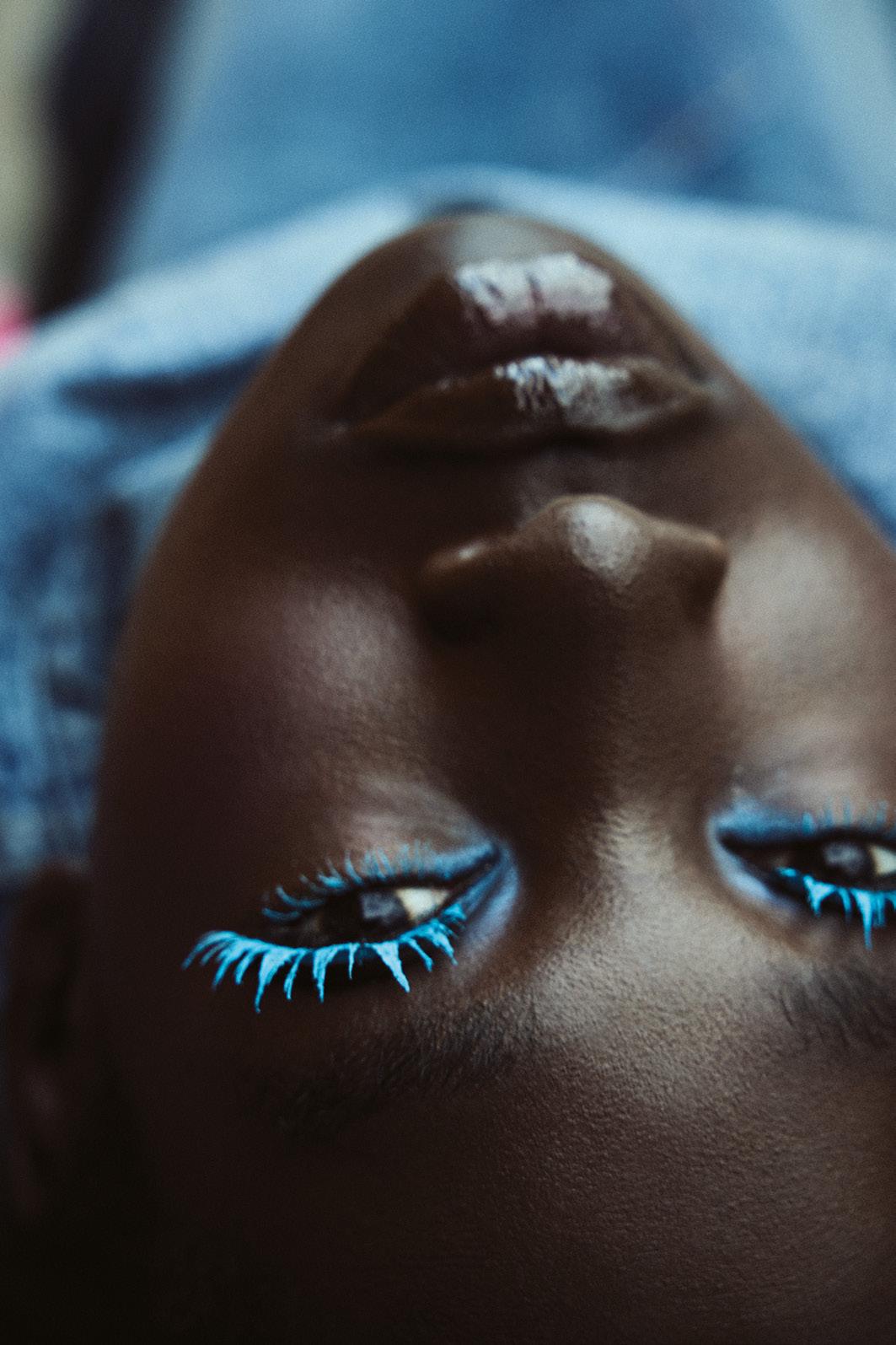
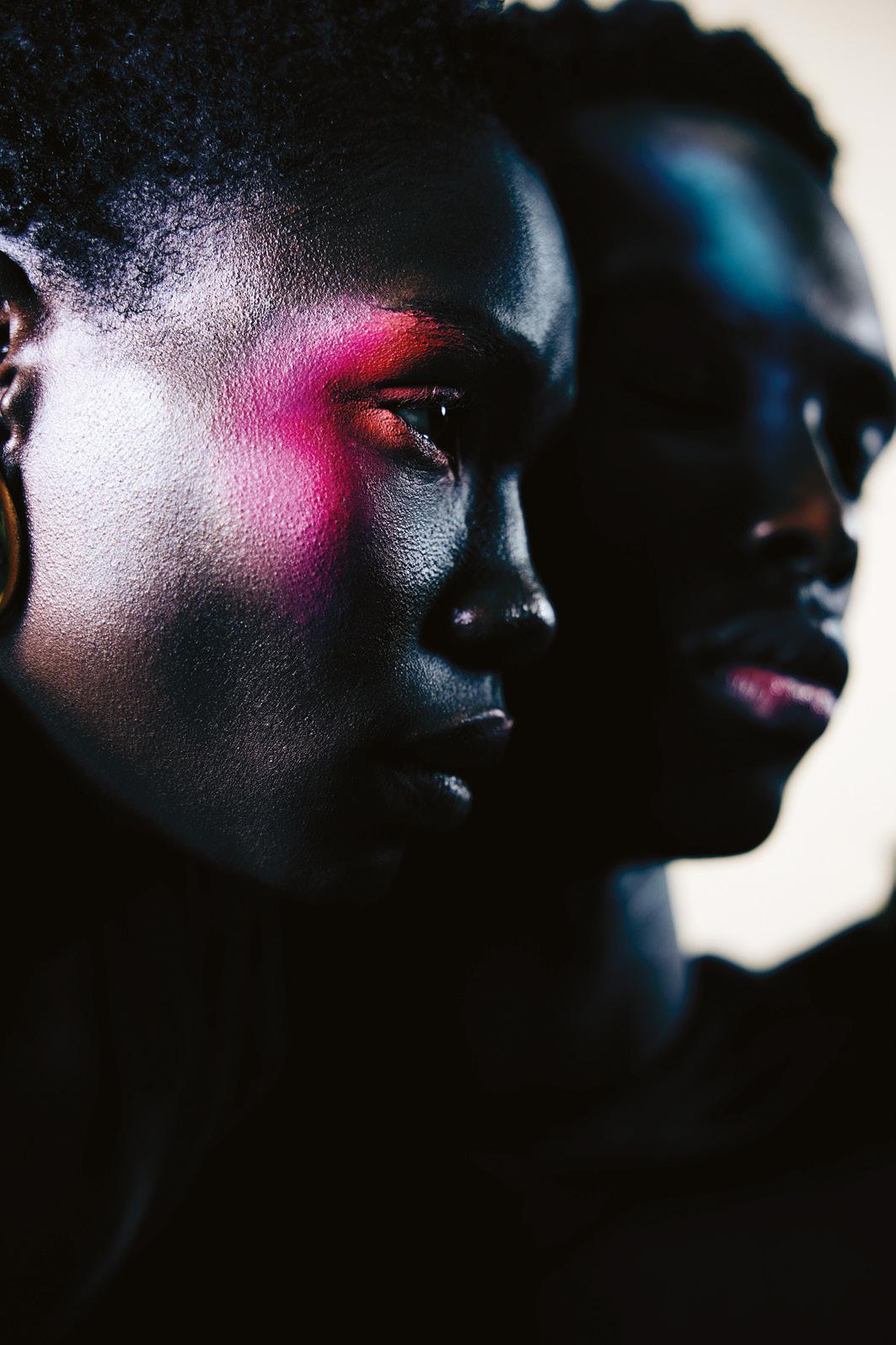
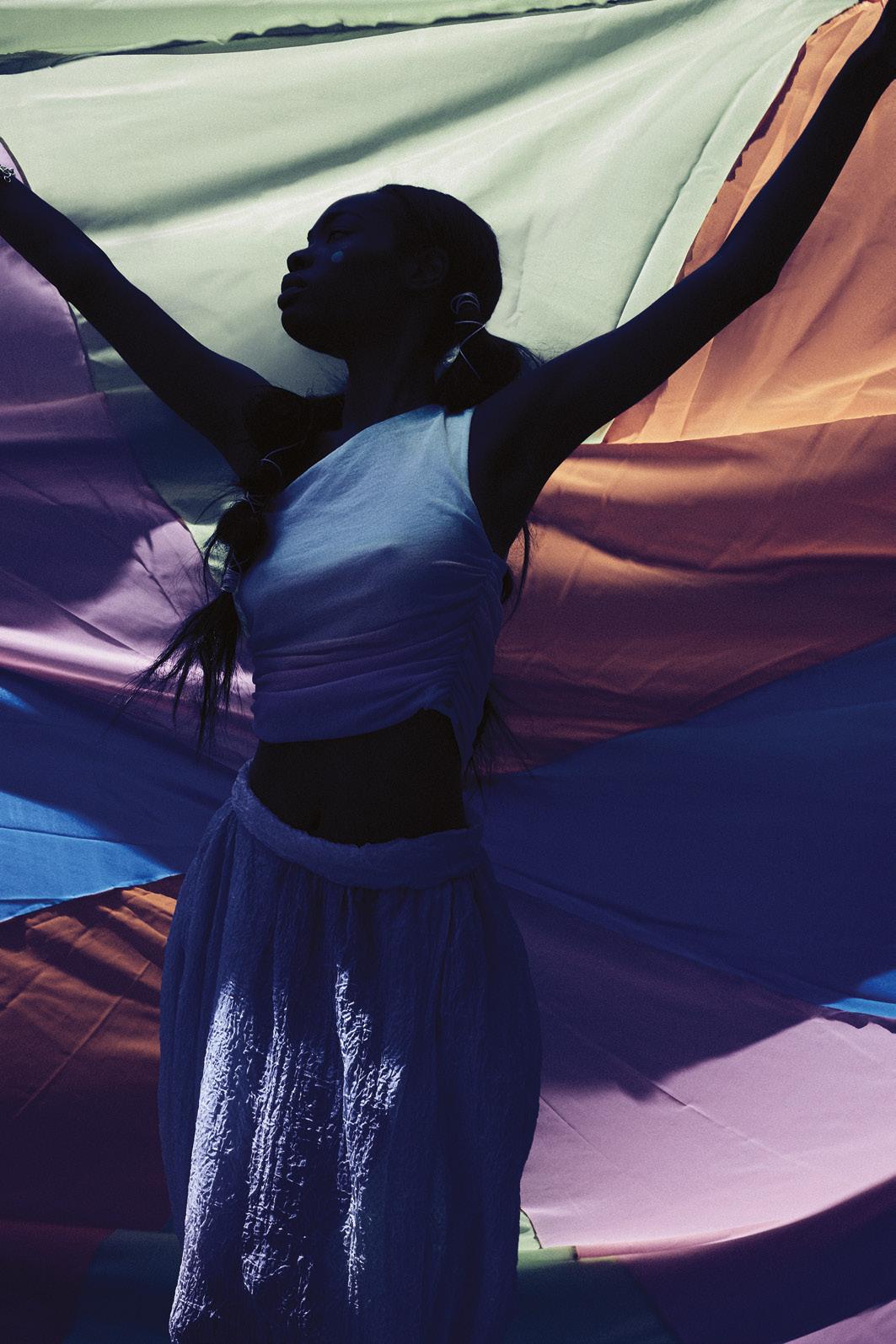
Ashley Chappell’s images sit at the intersection of fine art and fashion. Her portraits revel in the interplay of light, line, texture and form – offering a painterly approach to photography. Intimate close-ups draw attention to small details: bright, metallic eye makeup or circles traced onto skin. Elsewhere, subjects are shown in nature – surrounded by balloons or dancing underneath sun-dappled fabrics. Studio shots, meanwhile, make masterful use of colour-blocking. There’s a cinematic quality throughout, and a notable sense of narrative. Chappell draws inspiration from personal history, as well as ancestral memory and myth, to tell visual stories, which “honour Black presence as layered, sacred and expansive.” Her journey into photography, she explains, is “a tale of resilience and pursuing dreams.” After leaving nursing a decade ago due to lupus, Chappell has since found solace and purpose behind the camera. ashley-chappell.com | @flxashstudios
Image courtesy of Ashley Chappell.
Image courtesy of Ashley Chappell.
Chappell.
Image courtesy of Ashley Chappell.
Image courtesy of Ashley Chappell.
Image courtesy of Ashley Chappell.
Image courtesy of Ashley Chappell.
Image courtesy of Ashley Chappell.
Image courtesy of Ashley Chappell.
Image courtesy of Ashley Chappell.
Image courtesy of Ashley Chappell.
Building Atmosphere
Neil Kryszak
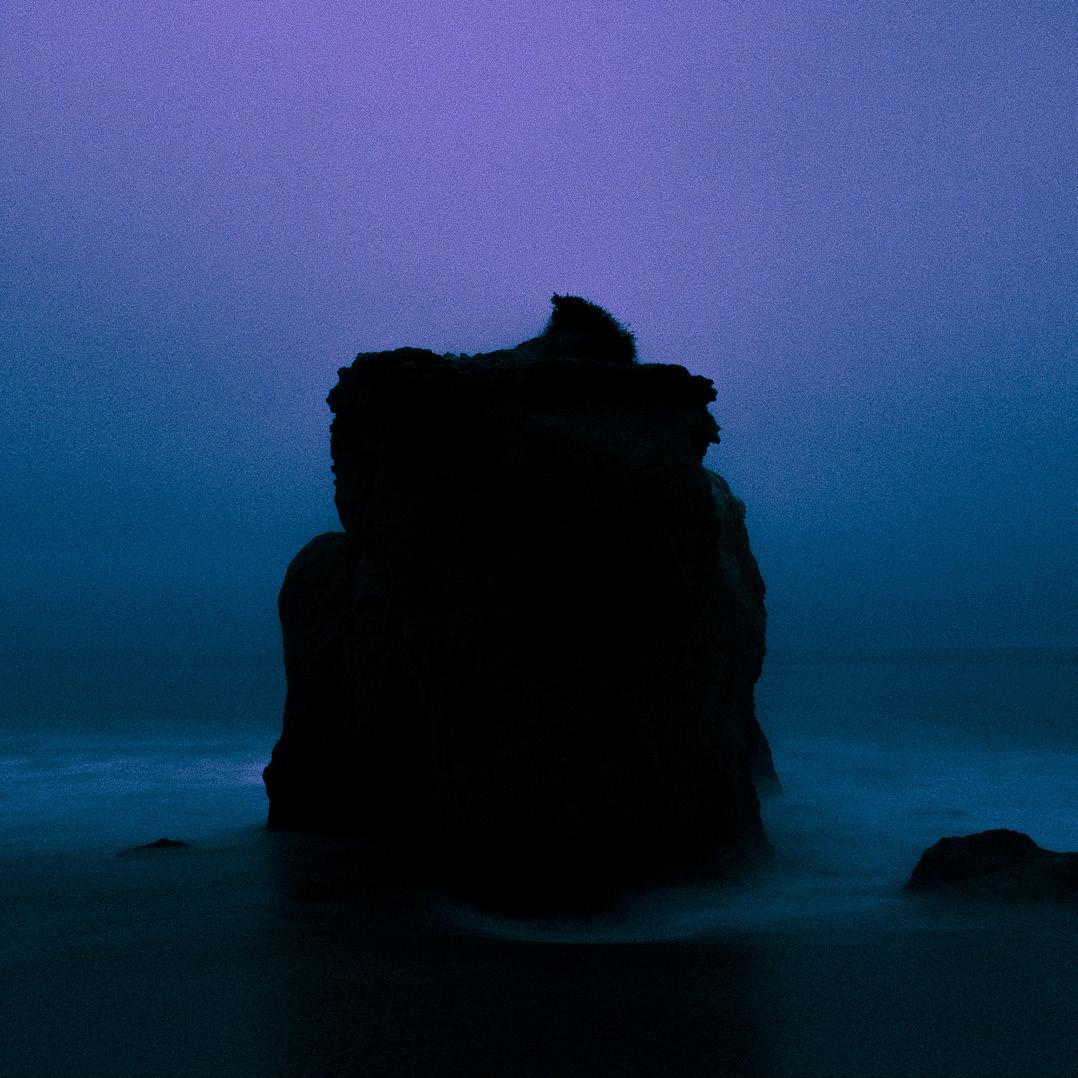
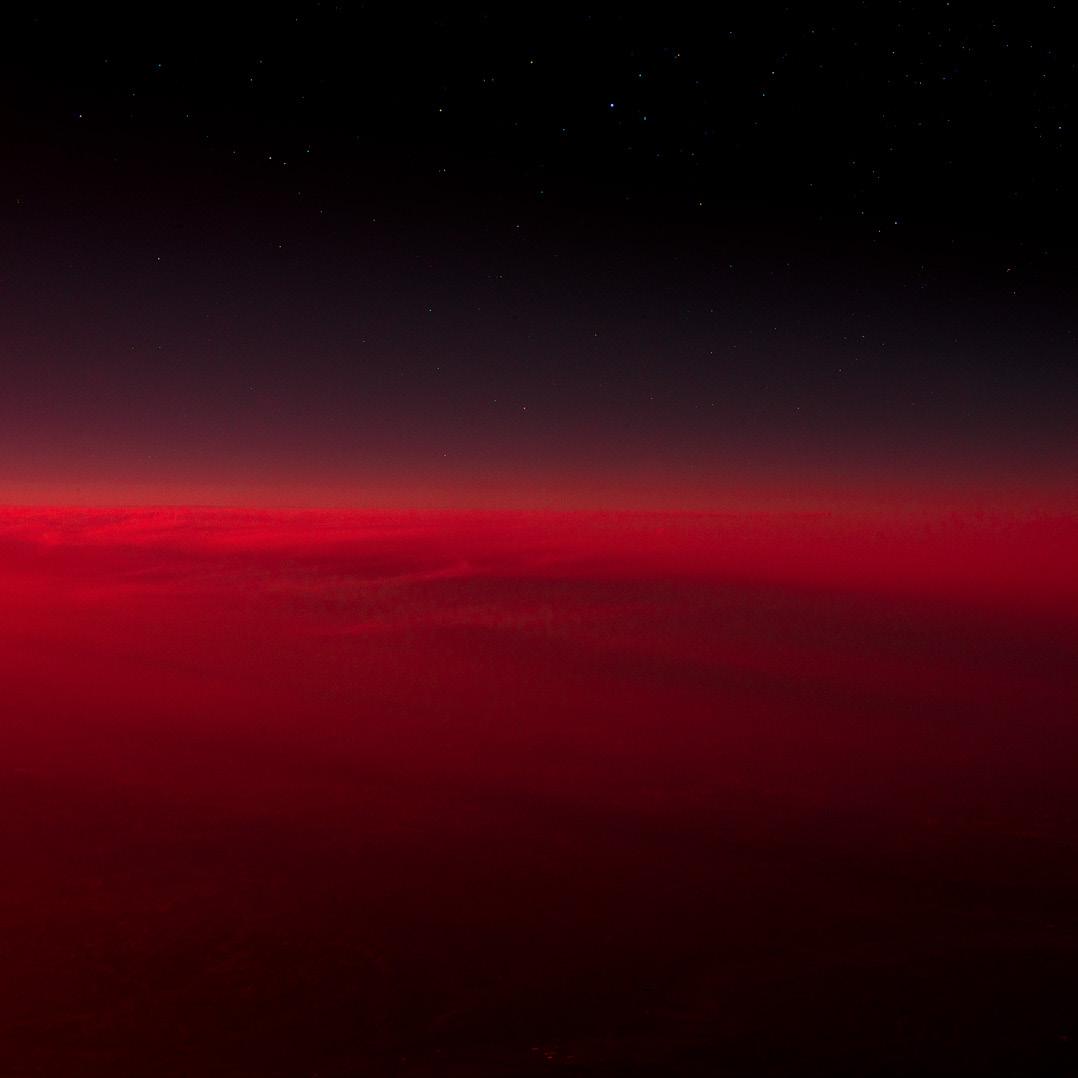
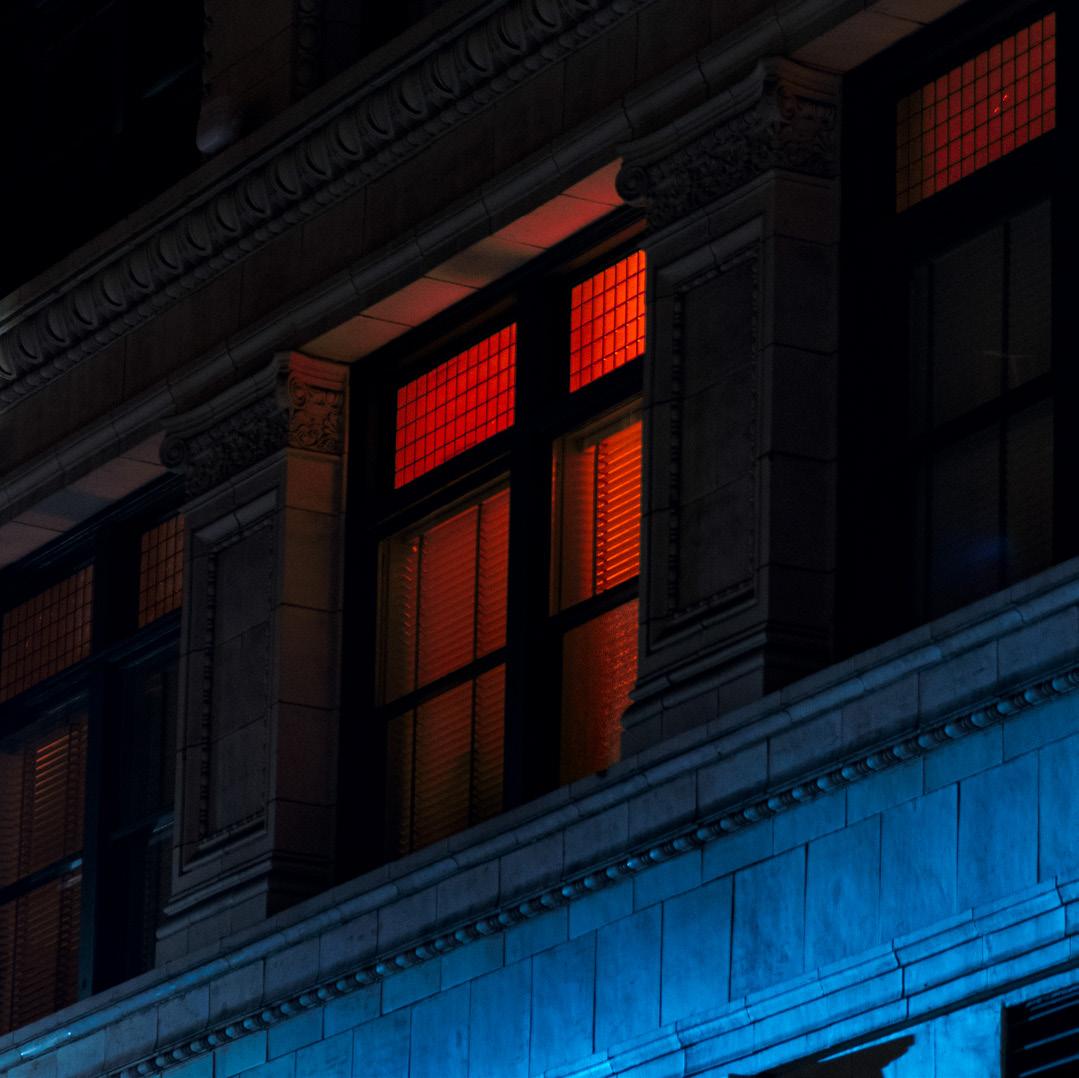
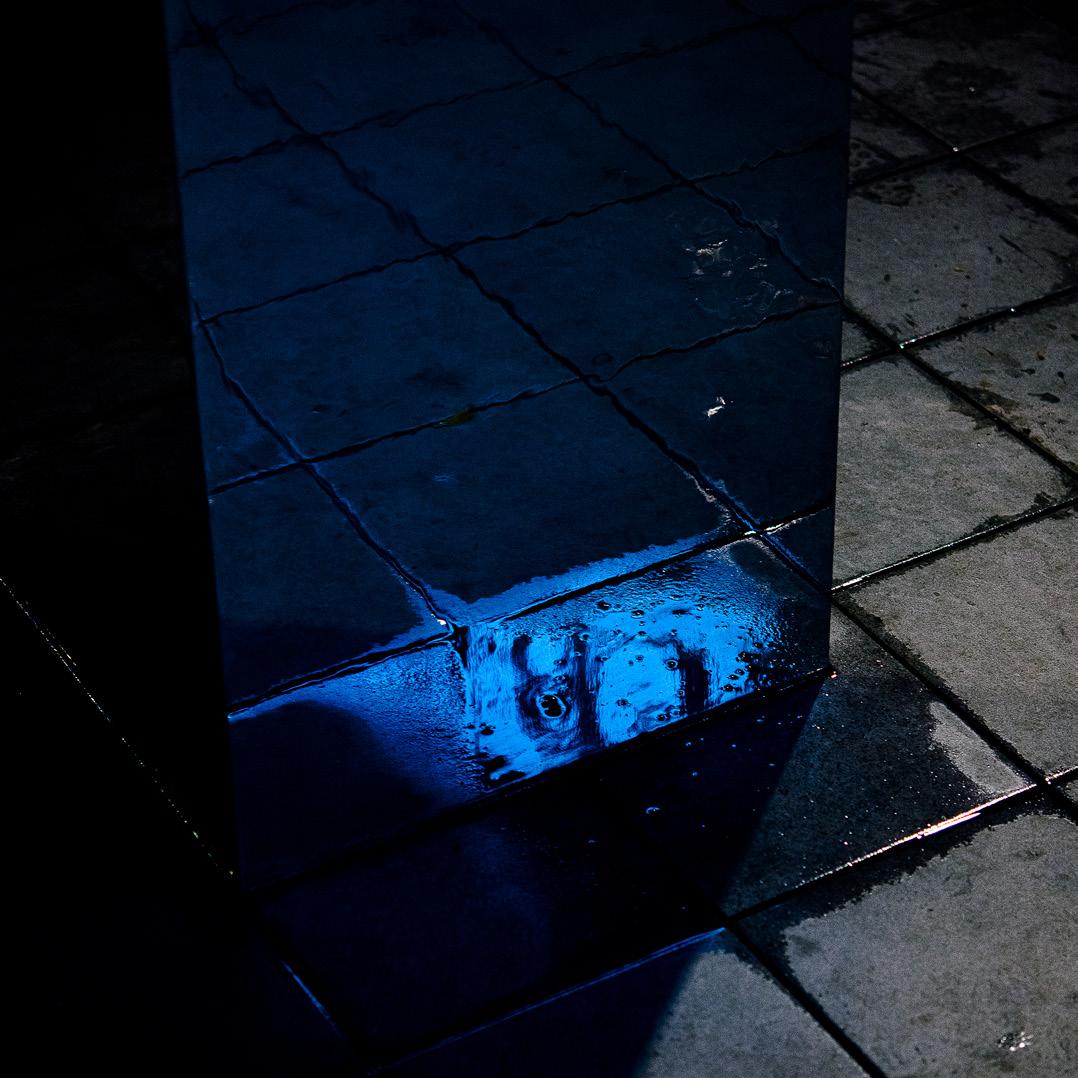
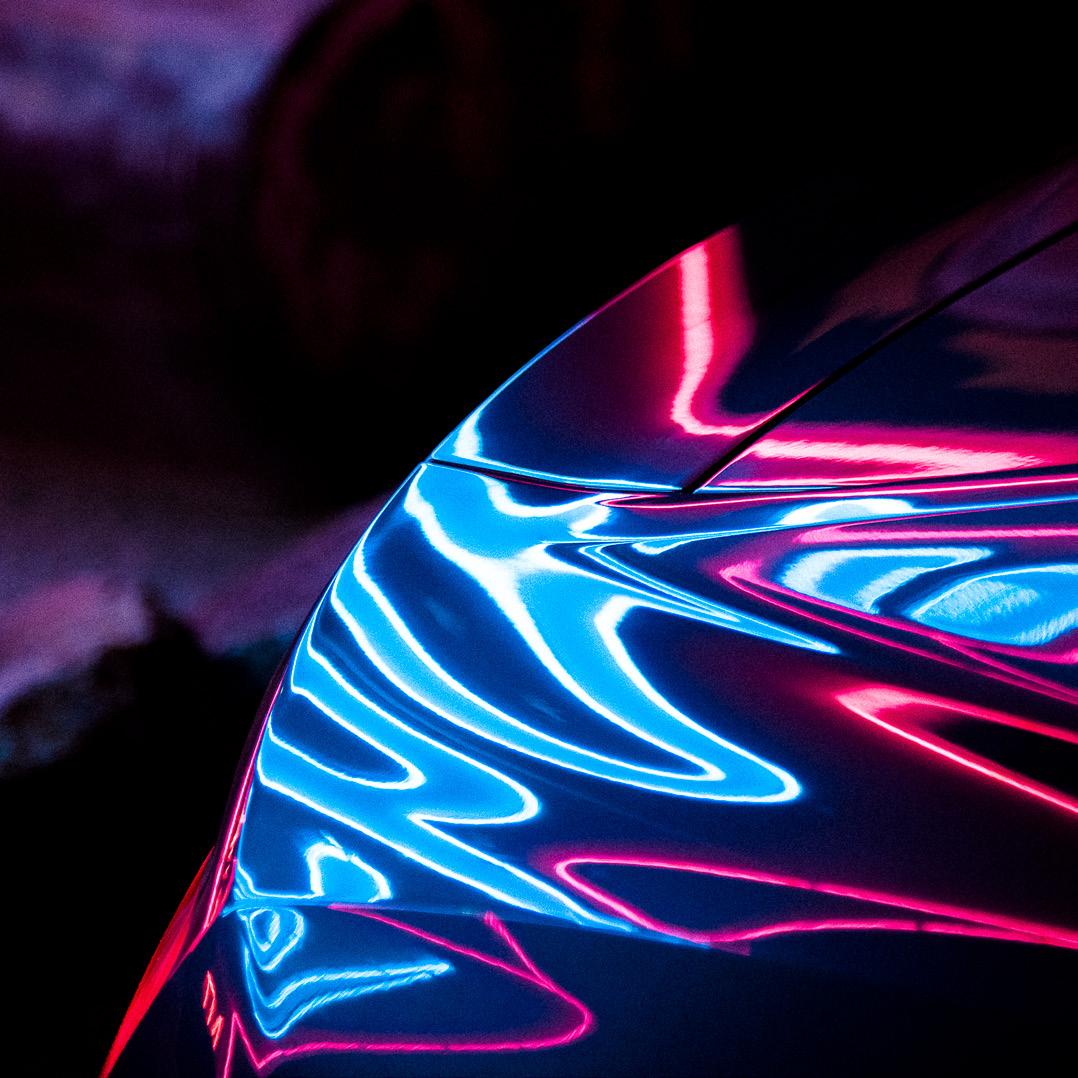
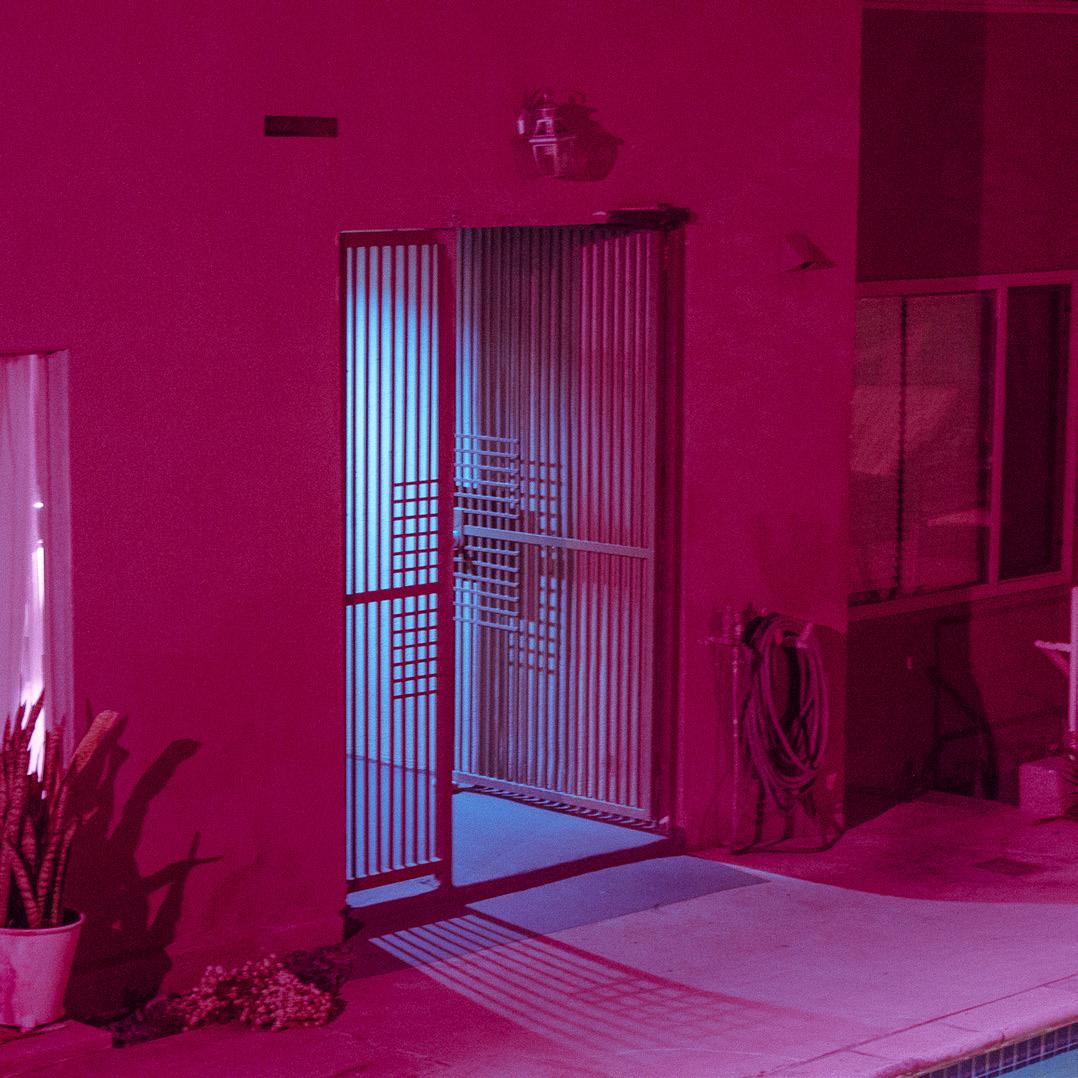
Stars shine above blood-red horizons. Neon hues bounce off metal surfaces. Rocks rise like monoliths from hazy shorelines. Neil Kryszak (b. 1989) is a multidisciplinary artist based between Los Angeles and New York who works across photography, film and music. His focus is on creating surreal, dream-like images and soundscapes that embrace darkness and uncertainty. Kryszak isolates elements from both built and natural worlds, rendering them in a neon-noir aesthetic, reminiscent of cinema. Viewers are encouraged to imagine what lies beyond the frame, asking: who is behind that door, at the end of the street, or driving that car? At the heart of Kryszak’s work is a desire to inspire introspection – calling for audiences to look inward and reflect. He brings this narrative-driven approach to collaborations with Adobe, Apple Music, Audi, Nike, Serato and Universal Music. The artist is represented by Tappan Gallery in Los Angeles. neilkryszak.com | @neilkryszak
Image courtesy of Neil Kryszak.
Image courtesy of Neil Kryszak.
Image courtesy of Neil Kryszak.
Image courtesy of Neil Kryszak.
Image courtesy of Neil Kryszak.
Image courtesy of Neil Kryszak.
Image courtesy of Neil Kryszak.
Image courtesy of Neil Kryszak.
Image courtesy of Neil Kryszak.
Image courtesy of Neil Kryszak.
Image courtesy of Neil Kryszak.
Stories in Colour
Sanja Marušic
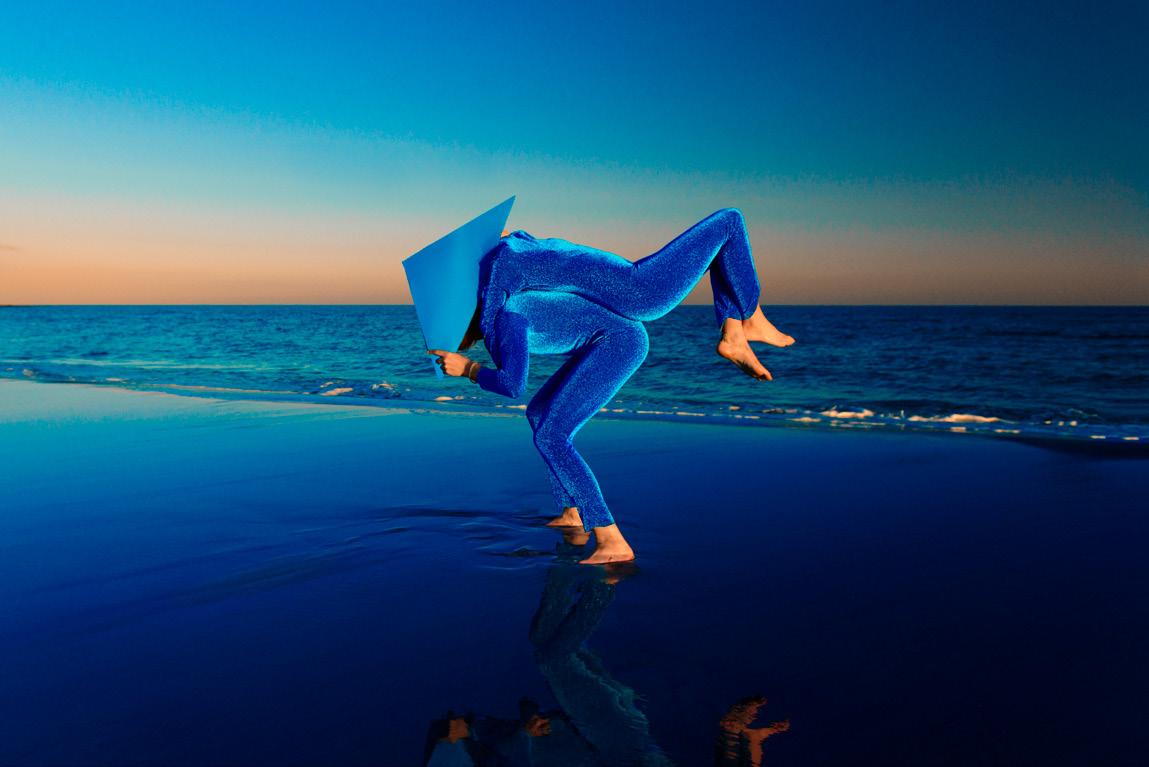
Sanja Marušić (b.1991) is a Dutch-Croatian artist, based in Amsterdam, who builds otherworldly images in which collage, painting and photography collide. The artist travels extensively, capturing performances where figures – often Marušić alone in costume, sometimes accompanied by others – move through surreal landscapes. Mirrored cubes, triangle headdresses and glittery bodysuits create a space-age look and feel. Subjects navigate pink and turquoise flower fields, as if traversing the surface of a new planet, or leap through giant yellow squares, revelling in freedom and play – like completing a video game level. Some of Marušić’s stories are autobiographical, whilst others evade explanation. Folk and naïve art are wellsprings of inspiration here, influencing composition and palette. Ultimately, vivid hues are her hallmark. “By using colour, you can tell a story, but you can also focus attention,” she says. sanjamarusic.com | @sanjamarusic
Sanja Marušić, Singles, (2020). Image courtesy of the artist.
Sanja Marušić, Singles, (2020). Image courtesy of the artist.
Sanja Marušić, Friends or Enemies, Image courtesy of the artist.
Sanja Marušić, Friends or Enemies, (2018). Image courtesy of the artist.
Sanja Marušić, Image courtesy of the artist.
Forests Illuminate
Kazuaki Koseki
GLOWING FIREFLIES LIGHT UP JAPAN’S NIGHTTIME WOODLAND IN A DAZZLING SERIES, WEAVING THEMES OF CLIMATE CRISIS, ECOLOGY, FOLKLORE AND MEMORY.
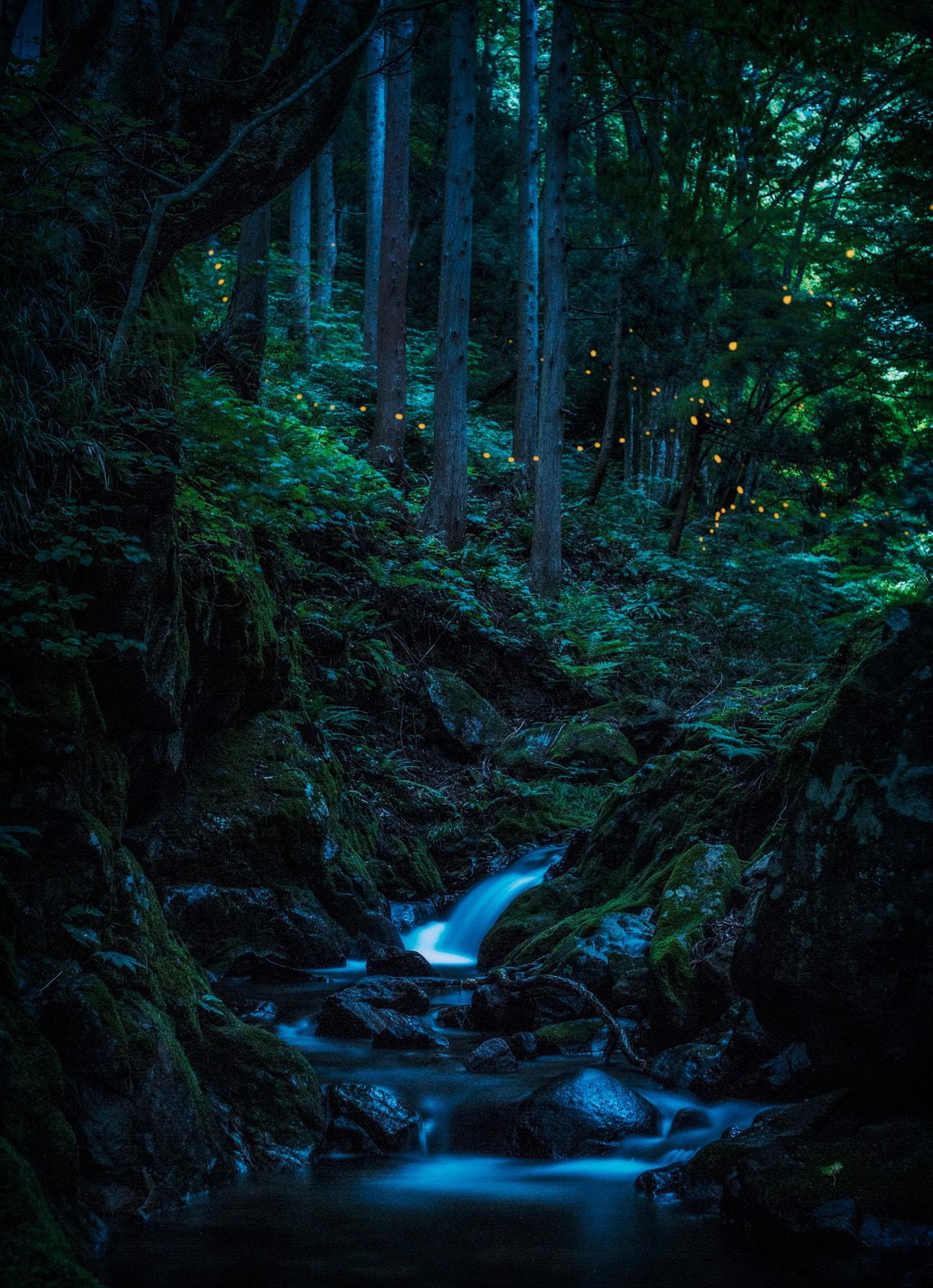
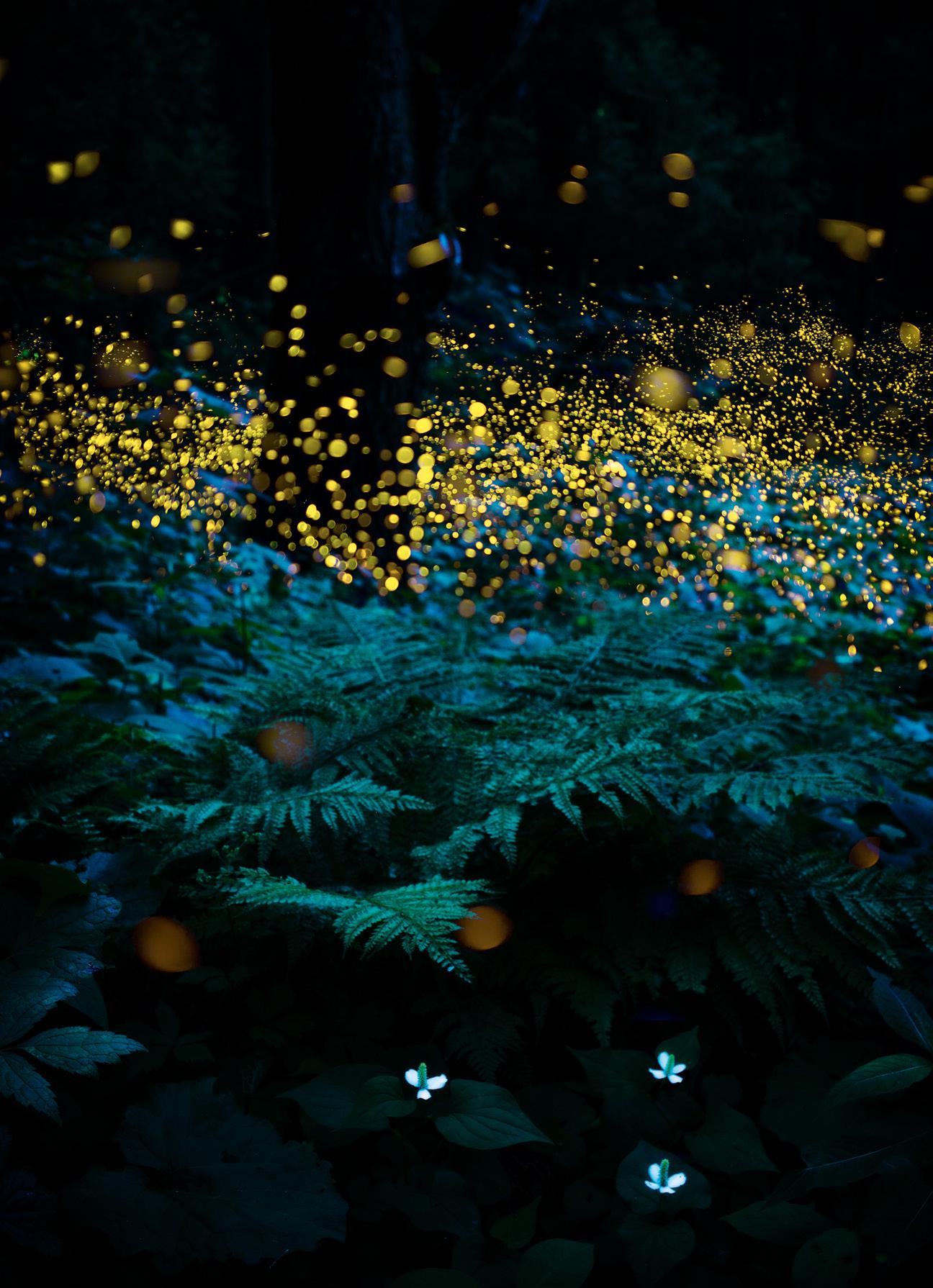
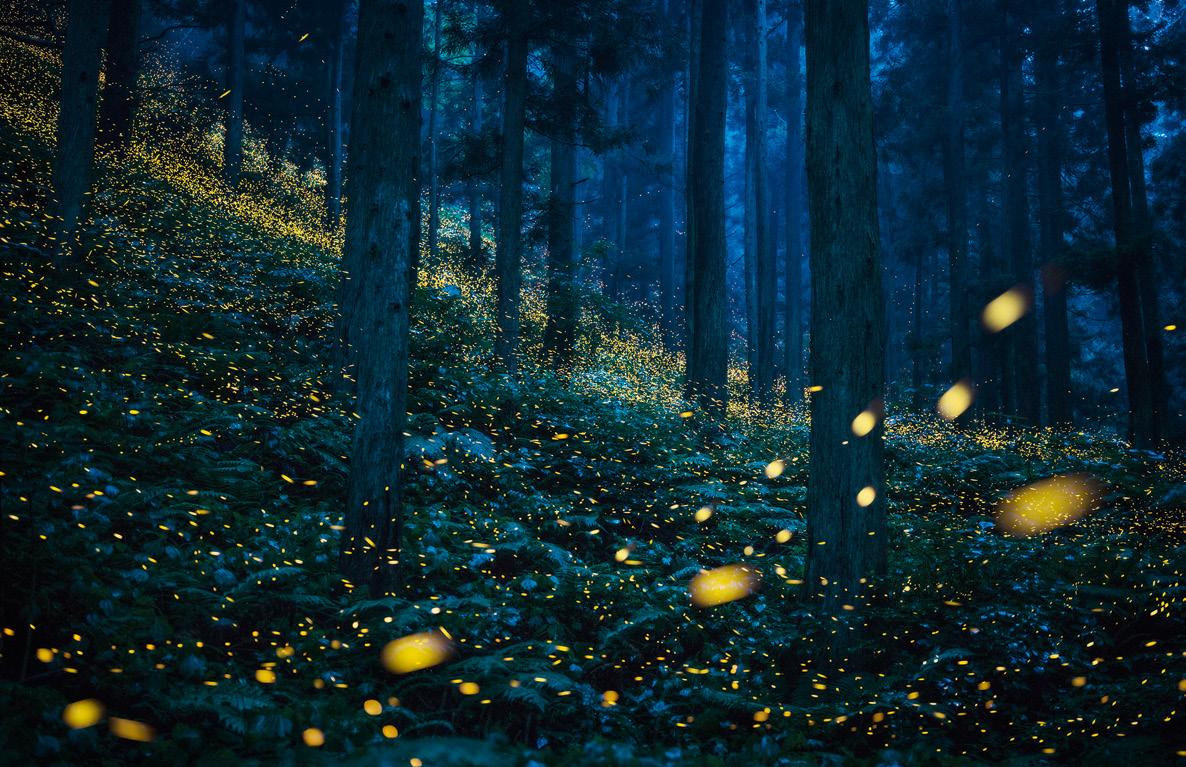
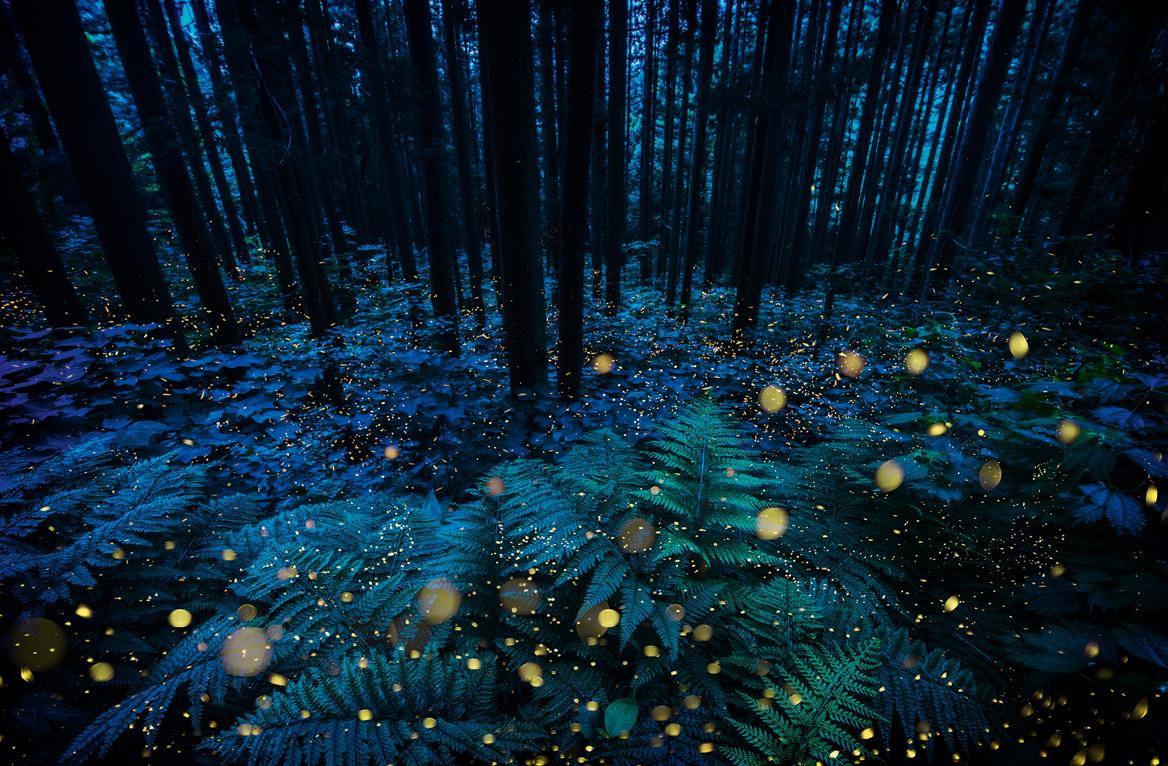
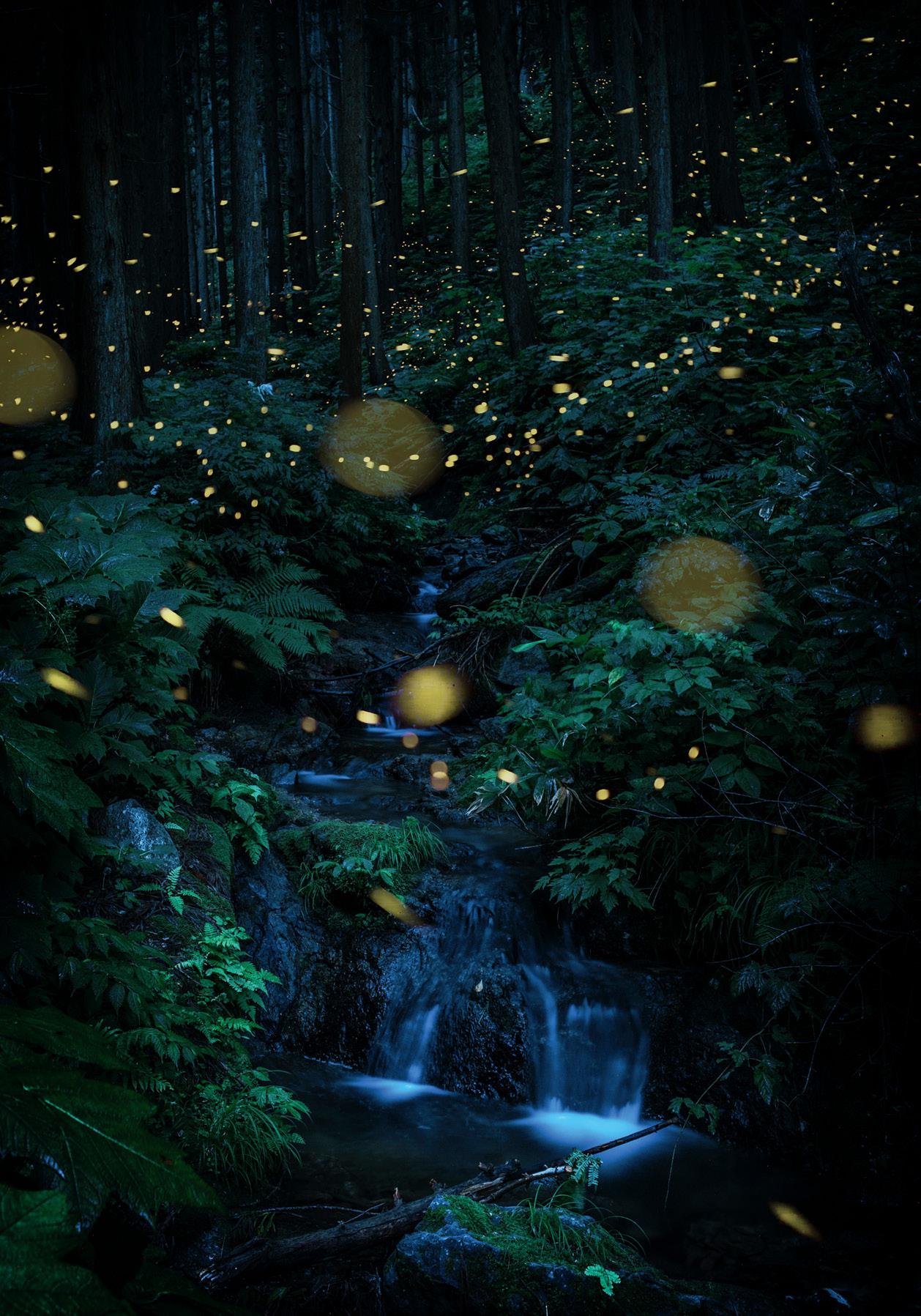
Yamagata Prefecture lies in the Tōhoku region of Honshu, the largest of Japan’s four main islands. It is characterised by its hot, humid summers and long, snowy winters – replete with fir trees, ski slopes and hot springs. It is also home to Himebotaru: small, 6mm-long fireflies known for their bright, fleeting flashes of light. For just 10 days each summer, these insects illuminate the region’s forests with a brilliant display.
Kazuaki Koseki (b. 1977) is a photographer who has spent years observing the species’ ecology and habitat. He takes his camera into the night forest, immortalising their glimmering flight paths in otherworldly compositions. Koseki’s ongoing project, Summer Fairies, has been recognised by major awards like LensCulture Critics' Choice, Sony World Photography Awards and Wildlife Photographer of the Year. His work has also been published by National Geographic and Smithsonian Magazine. Most recently, he was shortlisted for Earth Photo 2025, an international award established in 2018 by Forestry England, the Royal Geographical Society (with IBG) and Parker Harris. The prize champions image-makers who address pressing issues affecting our planet, aiming to stimulate conversation about the environment and climate change. Now and into 2026, the exhibition is travelling across the UK, with a unique curatorial premise: to experience images whilst immersed in nature. The tour includes stops at Forestry England sites including Alice Holt, Bedgebury, Dalby, Grizedale, Haldon, Moors Valley and Wendover. It presents a selection of shortlisted photographs, including those by overall winner Lorenzo Poli. In this interview, Koseki speaks to Aesthetica about how the Summer Fairies series came to life.
A: What was your first ever experience with photography?
KK: I was born the eldest son of a family that owned a studio, so I grew up in an environment where photography was close by. I helped to dry washed prints before I was a teenager. It wasn't until I was an adult that I started taking portraits under my father's tutelage. Photographing nature was just a hobby, and I did it whilst visiting the mountains, forests and rivers for fly-fishing, which I discovered at the same time. On 11 March 2011, the Great East Japan Earthquake struck the east coast of Tōhoku, including Miyagi Prefecture, where I lived when I was younger. Seeing my friends die and so many others affected, I learnt about the ferocity of nature and the fragility of life. Then, the Fukushima Daiichi nuclear power plant accident engulfed the Tōhoku region, and the river I used to travel, in an invisible terror. These experiences were a very big driving force behind my decision to start creating artwork.
A: How did you first come to learn about the Himebotaru?
KK: When I was a boy, I spent a lot of time with my grandparents, who were farmers. The fields, rice paddies and forests were our playground. The fireflies, which I saw out and about back then, still exist in my memory indelibly. I first learnt of the Himebotaru, specifically, through the news. They live all over Japan in mountainous forests – not only in the wild, but also in the cedars planted for building materials. I had no information on whether they existed in Yamagata Prefecture. But, based on my experience of walking and observing nature in the region, I assumed there must be an environment in this area for them to inhabit – so I decided to open up a
“My eyes became accustomed to the dark and lights started to glow like a starry sky. The forest, which had seemed terrifying, spread before my eyes and became the most beautiful I'd ever seen.”
map and start searching. It turns out, during early summer in Yamagata, the males fly through the forest for two hours during the night – glowing as they look to attract females.
A: You specialise in documenting the outdoors, particularly in Yamagata and Tōhoku. Where do you think your big love of wild places and exploration originates from?
KK: My earliest memories of nature are of childhood with family. In my mid-20s, I began to spend most of my holidays walking through forests, up mountains, in streams and fishing for trout. I learnt about seasonal changes, the aquatic insects that the trout feed on, the geology that forms the river, the weather and much more – both through fieldwork and from books. I continue to walk with my camera, listen, see, touch and smell the seasons. I want to understand nature by feeling it with all my senses. And by recording it with my camera, I aim to capture the “now” of living on this planet.
A: Do you remember the first Summer Fairies picture you took? How did you know it was going to become a series?
KK: I painstakingly researched forests that might be inhabited by Himebotaru. When I found a spot, I drove my car deep into the night and started walking – alone without moonlight. The uninhabited forest after dark is a wild territory and, although I felt fear, I walked deeper. After about 30 minutes, I saw a small yellow speck that seemed to twinkle. After a while, my eyes became accustomed to the darkness and countless lights started to glow. It was like a starry sky. The forest, which had seemed so terrifying, spread out before my eyes and became the most beautiful I had ever seen – thanks to the Himebotaru. When I returned home, even after some time
had passed, the sight did not disappear from my mind. It was an emotional experience. And so the project began: to explore nature, ecology and various phenomena, including the forests where Himebotaru live, and to document the fireflies over a long period. It's a series that may last a whole lifetime.
A: What are the specific environmental conditions and photographic techniques needed to produce an image?
KK: Yamagata is a land of four distinct seasons, with hot summers and deep snow in winter. Fireflies fly around the forest for about 10 days in early to mid-July. This is Japan’s rainy, hot and humid season. They are active every night unless there is a heavy downpour, but the ideal day is when the wind has stopped. Fireflies start to move shortly after sunset – the blue hour. In ancient Japan, this was called the “twilight hour” and was regarded as the time between life and death. That blueness is difficult to see with the naked eye but becomes more pronounced when photographed. Another important factor is to predict which altitude and route fireflies will take, and to capture the parabolic lines they draw. Their unpredictable light trails are determined by a variety of things, including the density of darkness, the terrain and vegetation. I photograph with long exposures, and the final image is obtained by the light drawn by the fireflies. I consider Himebotaru to also be artists, who are painting with light. The images are made in a dialogue between me, them and the environment.
A: Your pictures are startlingly beautiful, but there’s a darker side, too. How do these works connect to conversations around climate crisis, deforestation and tourism?
KK: Himebotaru have lived in uninhabited deep forests for
Previous page: Kazuaki Koseki, Cross the Valley , (2019). From Hotarubi - Summer Fairies Archival pigment print, Handmade Japanese traditional Ise-washi paper. Courtesy the artist.
Left: Kazuaki Koseki, Layers of Lights, (2018). From Hotarubi - Summer Fairies .Archival pigment print, Handmade Japanese traditional Ise-washi paper. Courtesy the artist.
a long time. But in the last 100 years or so, much of this has been cut down for farmland, pasture, roads, housing and tourism developments, leaving them no place to live unnoticed. The fireflies we see today are those that have escaped these threats. There are concerns that torrential rains and wildfires caused by climate change could damage populations. And with the development of solar and wind power, which is being promoted for environmental protection, woodland is also being cut down. Asphalt roads for mountain tourism do not make it easy for females, which cannot fly, to cross and expand their habitat. However, the fact that areas have been left behind is largely due to the belief in, and respect for, the natural world. Moreover, during the last few years, the population of Himebotaru has increased –perhaps influenced by rising temperatures and lack of snow.
A: Fireflies have long held a special place in Japanese folklore. How much do these cultural stories, myths or rituals influence your approach to the subject matter?
KK: The word “firefly” was first mentioned in Japan 1,300 years ago in the Nihon Shoki, the oldest book in Japan. It was written there as “(螢火)Hotaru – Fire.” Since ancient times, Japanese people have also associated them with the souls of human beings and the dead. At times, watching them in the darkness feels like a kind of prayer. Even during the production stage, my mind becomes filled with thoughts of what took place in Tōhoku in the past, and other things happening around the world. Near the area where I work, there are many ruins where the Jōmon people lived 10,000 years ago. The female Hime fireflies I photograph are less mobile because their hind wings have degenerated, leading me to believe
that they have lived in the region for generations. I wonder: how did our ancestors feel, when the night was darker than now? Were fireflies considered beautiful? Sublime? Or were they seen as terrifying? These questions always inspire me.
A: Who have been the most influential figures in your creative journey? What motivates their practice, and how does it resonate with the message you're sharing today?
KK: When I started out in photography, I read Ansel Adams' black-and-white printing technique books. His expression of tonality is still an important element in my work now. I also respect Hiroshi Sugimoto’s approach to history and time, as well as Gerhard Richter’s ideas on coincidence. I sympathise with the ways in which they think about and see the world. Nature is sometimes beautiful, majestic, threatening and fragile. It is a living organism, of which we are a part. I hope these pictures are a reminder that we have many neighbours living around us, all the time, and that we coexist on Earth.
A: The Summer Fairies series has been recognised by several renowned awards and events, such as Earth Photo 2025, and Belfast Photo Festival. What is next for you?
KK: I feel very honoured that my work, which I create in the countryside of a small island country, is appreciated and shared all over the world. I see it as my duty to continue living and exploring in the Tōhoku region of Japan. I spend my days in its nature, climate and spirituality. The changing seasons here give me a lot of inspiration. It is a place where the ancient Jōmon people lived and where nature worship, especially mountain worship, flourished. As such, I am working on several new projects in and around this region.
Words Eleanor Sutherland
Earth Photo 2025 Various Locations, UK Until 19 March 2026 earthphoto.world
Right: Kazuaki Koseki, Inside the Water Flowing Forest , (2018). From HotarubiSummer Fairies . Archival pigment print, Handmade Japanese traditional Isewashi paper. Image courtesy the artist.
Into the Landscape
Agnieszka Ostrowska
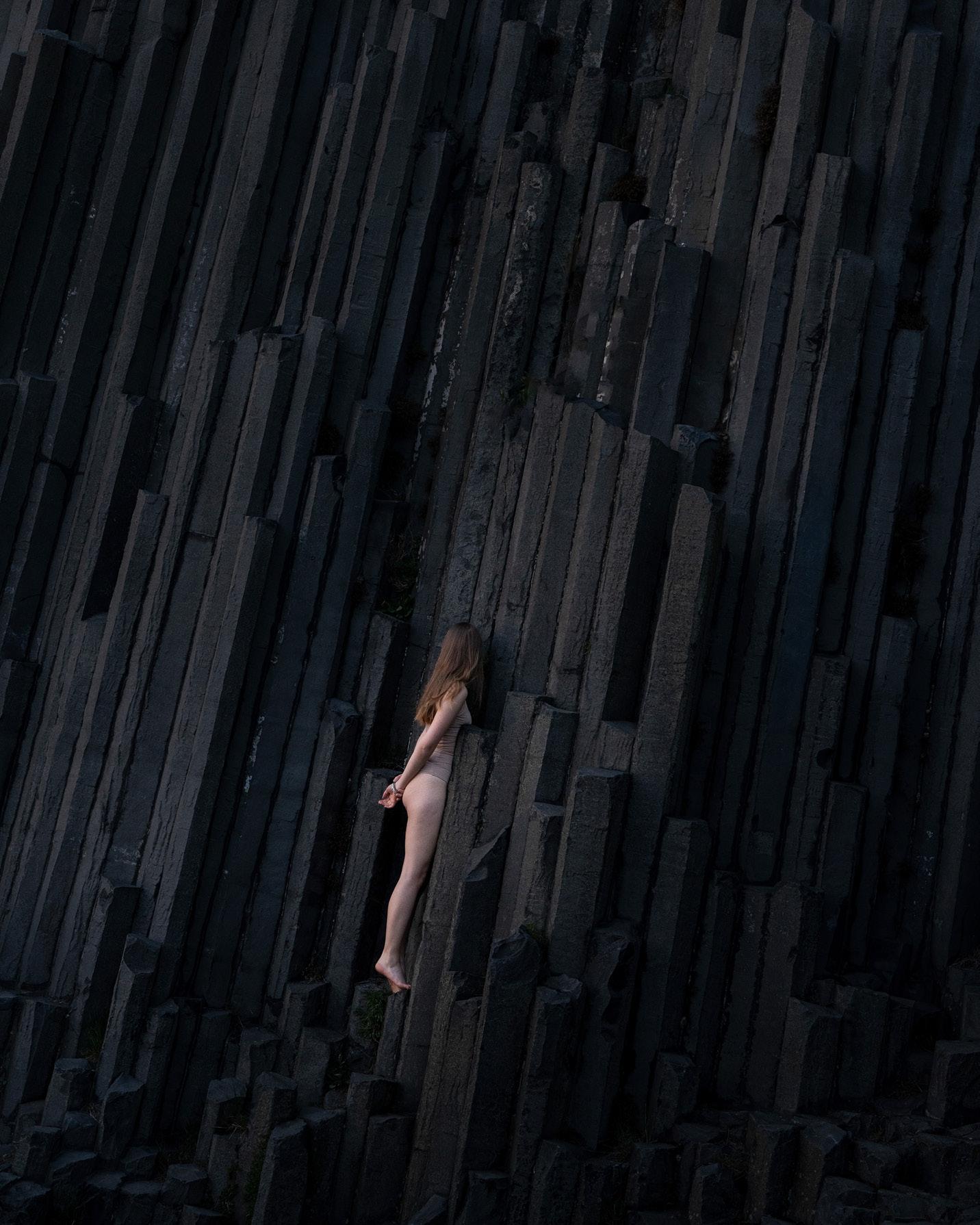
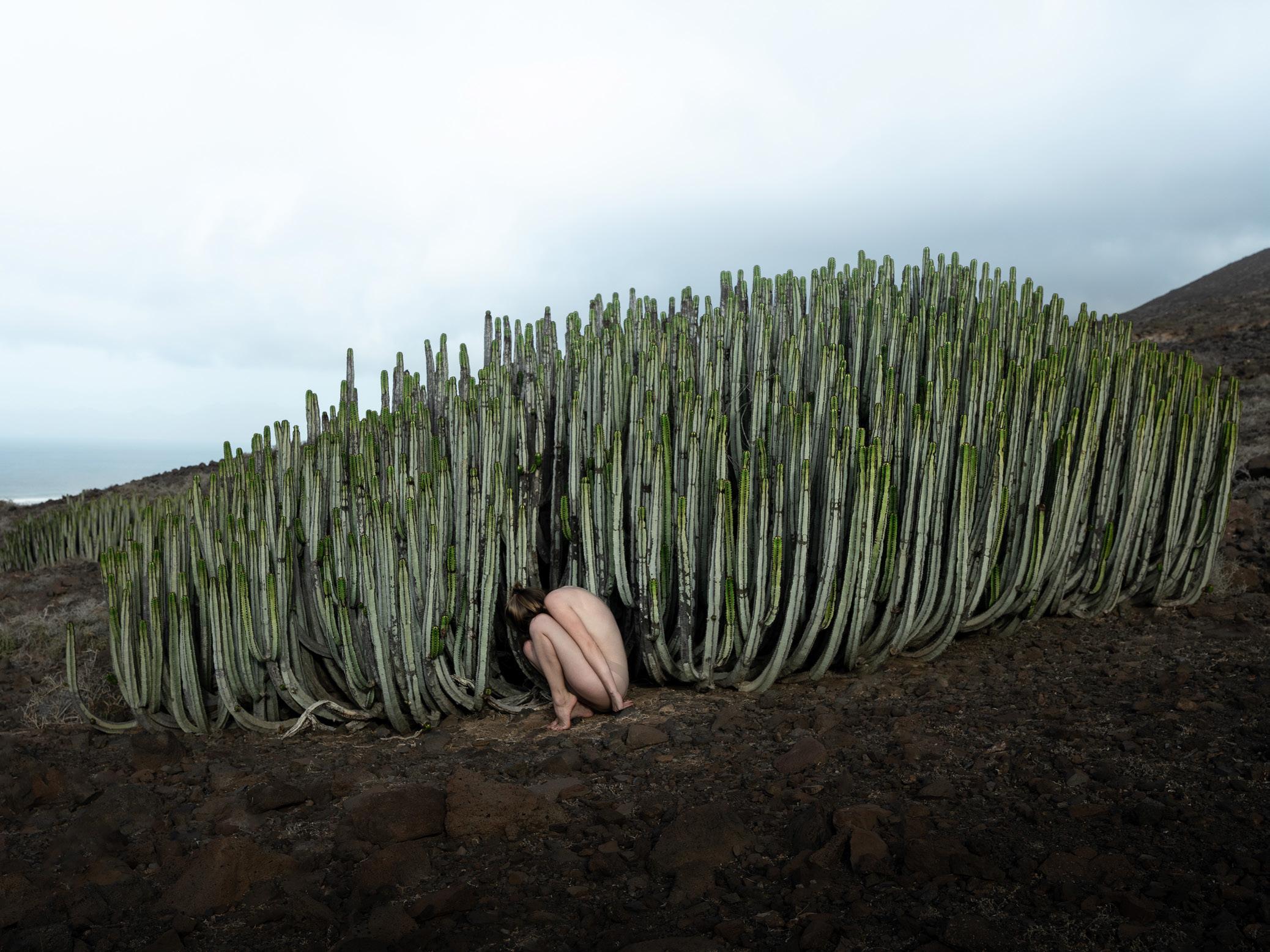
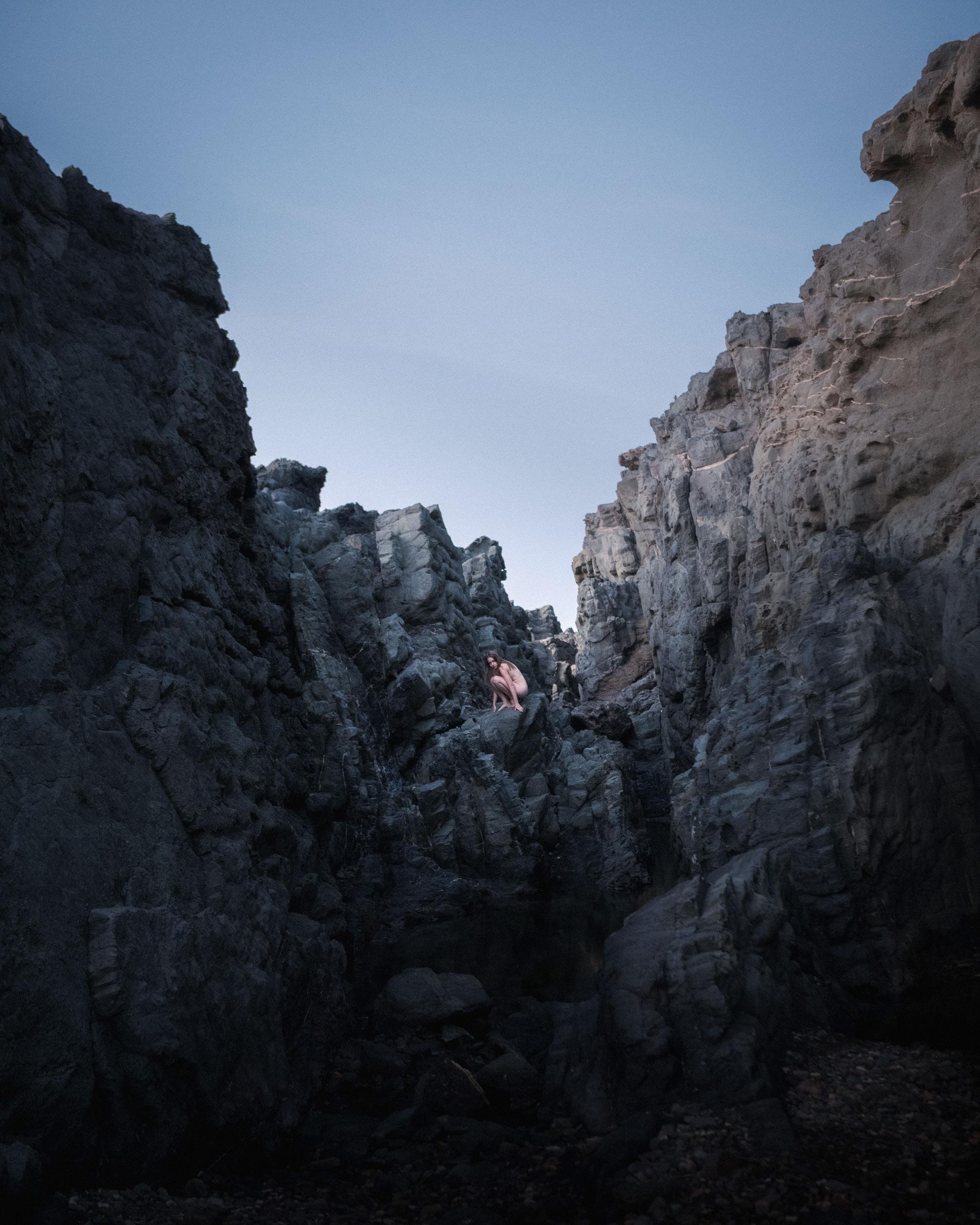
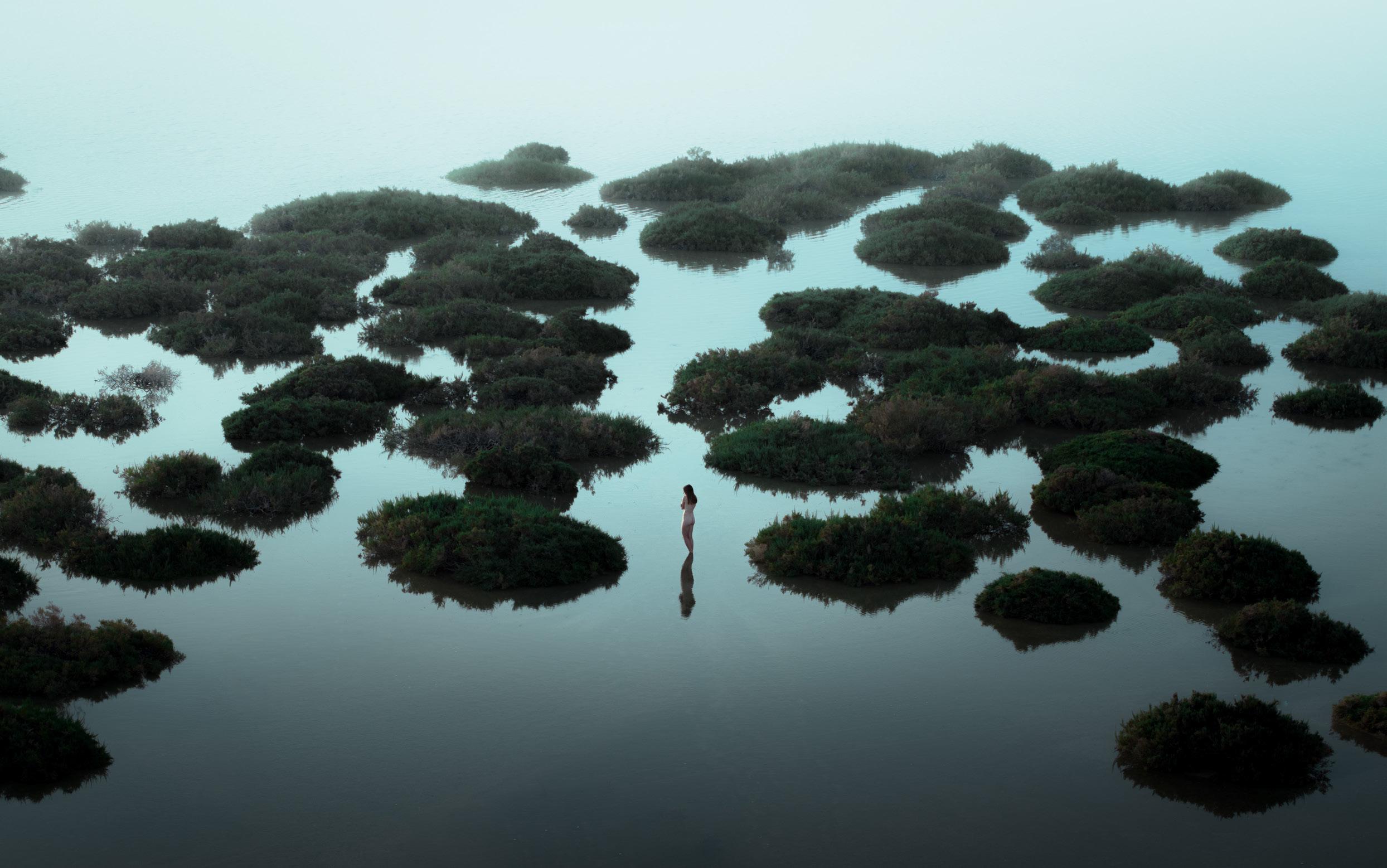
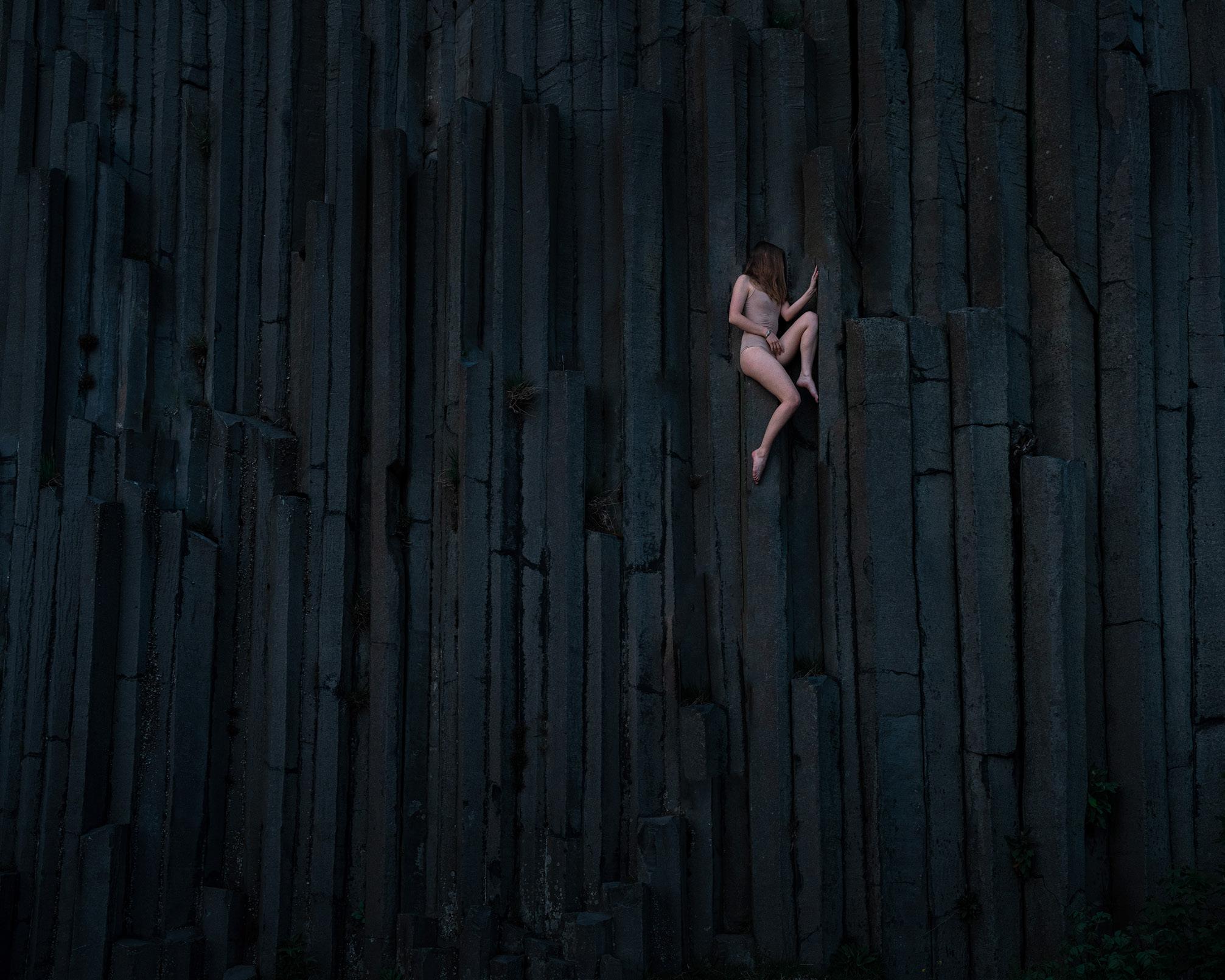
Rock formations, sand and water are constant sources of inspiration for Agnieszka Ostrowska (b. 1998), a portrait photographer based in Poland. Her work is shaped by extensive travel: from mountains in the Czech Republic to striking landscapes across Fuerteventura, Iceland, Portugal and Switzerland. Wherever she goes, Ostrowska sets out on foot – discovering places to photograph along the way. Her self-portraits are rich in symbolism. In one, the artist nestles amongst cacti; this is a metaphor for resilience in the face of hostile environments. Elsewhere, she curls up amongst ferns, balances atop basalt columns, or wades deep into haunting marshlands. These pictures are rooted in human emotion and emphasise our relationship with the vast power of nature. “My style can be described as intimate and sensitive, melancholic and oneiric, and at the same time powerful and introspective,” Ostrowska says. agostrowska.com | @_ostrosia_
Image courtesy of Agnieszka Ostrowska (2025).
Image courtesy of Agnieszka Ostrowska (2023).
Image courtesy of Agnieszka Ostrowska (2023).
Agnieszka Ostrowska (2023).
Image courtesy of Agnieszka Ostrowska (2025).
Image courtesy of Agnieszka Ostrowska (2023).
Exhibition Reviews
1Rencontres D'Arles
A MAJOR CULTURAL
MOMENT
Each year, Rencontres D’Arles is a defining cornerstone of the contemporary art calendar. The renowned festival has taken place since 1970, and today it spans more than 40 exhibitions across the city’s exceptional heritage sites. It is an opportunity to merge the old and the new, creating a unique experience that, 55 years on, remains as compelling as ever. Australia and Brazil come to the fore in the festival’s Counter-Voices section, with two major exhibitions taking an expansive look at both countries’ remarkable cultural output. This is a refreshing take on national photography, centring communities and narratives historically neglected by the canon. The shows are part of a wider, commendable mission, described by the curator as ensuring “photography is not limited to an exoticising gaze”, instead “inscribing the elsewhere with a dynamic exchange and ‘cultural translation.’” To
2Rashid Johnson
A POEM FOR DEEP THINKERS
Rashid Johnson: A Poem For Deep Thinkers features almost 90 works, spanning painting, photography, video and sculpture, confirming that no single medium can contain the artist. The sprawling Guggenheim retrospective, which celebrates Johnson’s 30-year career, traces his conceptual evolution across several series and eclectic inspirations, from American graffiti and Italian Arte Povera to Amiri Baraka's titular poem. Johnson is influenced by the radical politics of his parents’ generation, alongside his youth in Chicago, where he first photographed the city’s unhoused population. His work illustrates the multidimensionality of the Black experience. Early images explore liberatory frameworks through humour and role-play (Self-Portrait with My Hair Parted Like Frederick Douglass), whilst his mixed-media pieces from 2008 onwards suggest an interest in materials as cultural signifiers. Shea
3More Than Human
AN ALTERNATIVE VISION OF THE WORLD
"To walk attentively through a forest, even a damaged one, is to be caught by the abundance of life: ancient and new; underfoot and reaching into the light. But how does one tell the life of the forest? We might begin by looking for drama and adventure beyond the activities of humans." So declares Anna Tsing, American anthropologist and contributor to Design Museum's More Than Human – a show which posits design as a tool for rethinking kinship across different species. Some of its offerings are genuinely reparative. The Melbourne-based Reef Design Lab has made an elegant, ceramic modular reef system – architecture for marine beings – designed via 3D-printed moulds to replicate coral’s cellular intricacies. Nearby, there are modular sea walls and breakwaters that cushion storm surges and double as oyster habitats. Elsewhere, the tone shifts from the pragmatic to the specu-
view the festival’s overall programme is to discover a who’swho of pioneering photographers from the past century. Each is a master of using the camera with sensitivity, using it as an instrument of resistance and social transformation. Iconic figures include Claudia Andujar, known for documenting Brazil’s Yanomami tribe; Kikuji Kawada, who rose to prominence for poetic, symbolically charged images; and Letizia Battaglia, best known for her courageous and revelatory work on the Sicilian Mafia. Yet, what makes this annual showcase so special is its ability to place household names alongside those – such as Elsa and Johanna, Diana Markosian and Louise Mutrel – who are shaping the future of the medium. Half a century on from its first edition, Rencontres D’Arles continues to prove that photography, when at its best, does more than document our world – it actively shapes it.
Words Emma Jacob
Various Locations, Arles Until 5 October
rencontres-arles.com
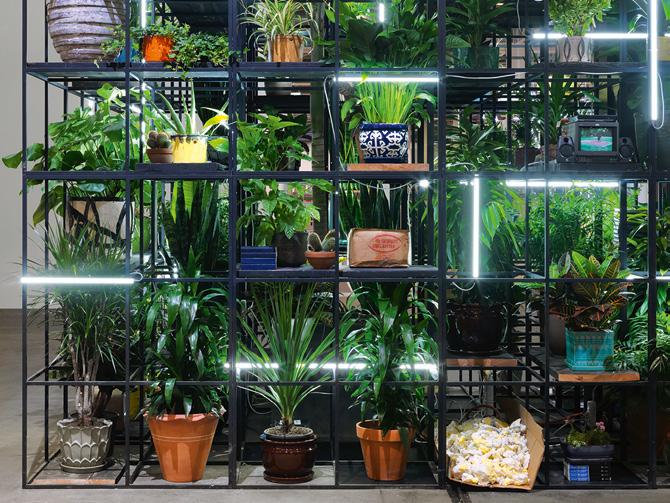
butter, black soap, and glass or ceramic tiles appear in his famous Anxious Men and Cosmic Slop series, as well as in Wake Up Sellout, one of Johnson’s quintessential “shelf paintings,” which features a Miles Davis vinyl and three copies of Randall Kennedy’s book, Sellout: The Politics of Racial Betrayal. Bronze and kiln-fired clay pots serve as vessels for living organisms in Untitled Bust and again in Sanguine, the exhibition’s culmination. The installation includes hundreds of houseplants, books and other ephemera in cubed enclosures, joined by a video of the artist, his father and his son. Johnson excels most in his fluid ability to reference and remake, repurposing language in the pursuit of a visual vocabulary that eludes definition. He even transforms death –which constantly lingers like a spectre over the show – from a harsh truth into a symbol of rebirth, a brand new origin story.
Words Christina Elia
Guggenheim, New York Until 18 January 2026 guggenheim.org
lative. Ant Farm’s drawing DOLON EMB 1 (Dolphin Embassy) (1974) is here in replica: a floating research station dreamt up to broker relations between humans and dolphins. The fact that this proved impractical feels less important than the ambition to imagine multispecies diplomacy. Artists also lean into folklore, ritual and fantasy. One example is the Rumita series (2024), in which Federico Borella and Michela Balboni capture Italian carnival-goers clad solely in leaves. Best of all are the moments of absurd generosity: Shimabuku blows glass balls as gifts for octopuses; Isabella Rossellini, dressed as a seahorse, rhapsodises about their sex lives. Alexandra Daisy Ginsberg’s Pollinator Pathmaker (2025) gives us a meadow rendered in lurid technicolour, designed entirely for bees. Design Museum offers visitors a perfect version of our world – one that thrives without humans in mind.
Words Katie Tobin
Design Museum, London Until 5 October designmuseum.org
1a. Letizia Battaglia Rosaria Schifani, widow of bodyguard Vito Schifani, killed alongside Judge Giovanni Falcone, Francesca Morvillo, and their colleagues Antonio Montinaro and Rocco Di Cillo, Palermo, 1992.
Us in the Frame is a powerful, timely exhibition that surveys the lived experiences and practices of Black queer photographers in the Netherlands. Curated by artist and archivist Ajamu X, it is part of Queer & Pride Amsterdam, amplifying voices all too often side-lined within the photography canon. The show features 14 portraits created by Ajamu X. He spoke with each individual personally, discussing how archiving features in their work, what it means to them, as well as how they claim their own visibility and safeguard their outputs. Alongside their personal and diverse approaches to preservation, the experience of being and working as a Black queer photographer in the Netherlands takes centre stage.
Ajamu X, a seminal figure in Black queer visual culture since the 1990s, has long interrogated visibility, intimacy and history. The portraits unfold as quiet, defiant acts of presence – affirmations that are political and deeply personal. How can
5Helen Chadwick LIFE PLEASURES
In 1977, Helen Chadwick (1953-1996) – alongside three other female performers – stepped out in front of an audience dressed as an oven, refrigerator, washing machine and sink. They were taking part in In The Kitchen, Chadwick’s degree show piece, now considered a seminal example of feminist art. First performed at London’s Chelsea College, where Chadwick studied for an MA, it playfully yet incisively critiques gendered stereotypes. It set her on course to make a huge cultural impact. Ten years later, she became one of the first women artists to be nominated for the Turner Prize. Life Pleasures is a major retrospective of Chadwick, now open at The Hepworth Wakefield. It’s the first in over 25 years, and it kicks off with Cacao (1994), a bubbling chocolate fountain, which welcomes visitors to the exhibition – overflowing and glooping audibly. The piece is very much “alive,” creating a visceral dialogue with Carcass (1986), a two-metre-high tower into which food waste from the gallery’s café is being
6Serpentine Pavilion 2025 A CAPSULE IN TIME
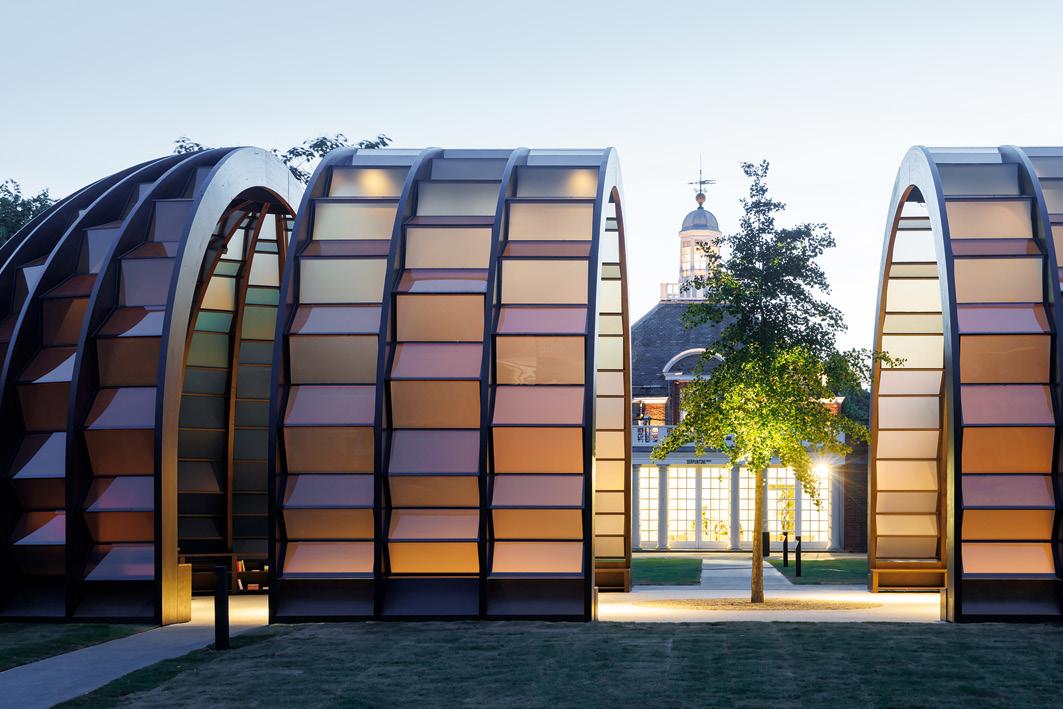
This year marks the 25th anniversary since the first Serpentine Pavilion was commissioned – a project that has made contemporary architecture accessible to the wider public. Over the years, renowned and emerging architects have erected imposing, sometimes intimidating, structures in the heart of Kensington Gardens. In contrast, there is a comforting simplicity to the 2025 iteration, A Capsule in Time by Marina Tabassum Architects, though it poses profound questions, not least about the ephemerality of life.
The structure is designed like a capsule but split into four parts, allowing an abundance of natural light to filter into the space. Equally, visitors are aware that they are not fully secure from the outside world; the individual components do not converge at the top, leaving it partially exposed to the elements. This dichotomy in an otherwise sturdy structure is inspired by South Asian Shamiyana tents, used for outdoor celebrations, and a metaphoric nod to the Bengal Delta –
stories be preserved when they are deliberately excluded? What happens to one’s body, community and narrative if left undocumented? These questions reverberate throughout the exhibition. The work connects with landmark artists such as Zanele Muholi, whose Faces and Phases documents Black LGBTQIA+ communities in South Africa, and Rotimi FaniKayode, whose sensual, mythic portraits challenged western representations of Black queer bodies. Ajamu X’s approach is similarly intimate, celebratory and rooted in a sense of care.
The conversations documented here reveal photography as more than image-making – it becomes strategy, refuge and radical love. Each sitter contributes to a collective memory, creating space for future Black queer generations to see themselves reflected. Projects like Us in the Frame are essential. Here, Foam powerfully asserts the urgency of preserving stories that shape who we are, now and into the future.
Words Anna Müller
Foam, Amsterdam Until 10 September foam.org
deposited. It digests, decays and transforms in real time. Surrounded by machines, organic matter and metabolic cycles, it becomes clear just how key an influence Chadwick has been for the Young British Artists, Damien Hirst in particular. Chadwick's practice was a maelstrom of unexpected materials: fur, hair, bubble bath, blankets, mattresses, milk, oysters, meat, window cleaner, engine oil, earthworms and carcasses. Piss Flowers (1991-1992) exemplifies this – a series of subversive sculptures made by urinating into the snow in Banff, Canada. The Oval Court (1984-1986) is another boundarypusher, controversial in feminist circles at the time, comprising cyan-blue photocopied images of her naked body depicted alongside animals, maggots, flowers, fruit and fish. During her life, cut too short in 1996, she established herself as a taboo-breaker and trailblazer: unafraid to confront beauty, decay, mortality – and the contradictions of being a woman in the world. This is a seminal show for the season.
Words Eleanor Sutherland
The Hepworth, Wakefield Until 26 October hepworthwakefield.org
where land and water are in constant flux. A Capsule in Time invites visitors to reflect on this constant movement and slow down – whether that is by grabbing a coffee from the cafe situated inside, or browsing the books curated by Tabassum.
On any given day, the installation will receive people from all walks of life – the intentional visitors seeking a slice of culture, those that have sauntered in unaware of what it stands for, and others using it as a landmark for meeting up with their kinship groups. At the heart of these interactions is the fact that architecture’s purpose is for people to have a space for collaboration, contemplation or simply respite. In a 2022 interview with Dezeen, Tabassum remarked “The reason I've never really worked outside Bangladesh is the fact that wherever I work, I must understand that place, it is very important to me.” Yet, by creating A Capsule in Time, around 5,000 miles away from home, Tabassum seems to suggest that it is the people that give true meaning to a place.
Words Shyama Laxman
Serpentine, London Until 26 October
serpentinegalleries.org
1Little Trouble Girls
U RŠKA DJUKIC
In The Virgin Suicides, Sofia Coppola's 1999 cult classic about five teen sisters who make a suicide pact, the youngest explains: "Obviously, Doctor, you've never been a 13-year-old girl.” It would not be surprising to hear these words in Urška Djukić's Little Trouble Girls. Those enigmatic in-between years when a child makes the transition into womanhood have long been a point of fascination for filmmakers. Coppola followed her mesmeric Virgin Suicides with the punky Marie Antoinette, then the damning Priscilla. There's also the darkly hypnotic 1975 Australian thriller, Picnic at Hanging Rock and, more recently, brutal television series Yellowjackets Little Trouble Girls, from Slovenian director Urška Djukić, is a natural addition to the subgenre. Lucia (Jara Sofija Ostan) is an introverted, inexperienced 16-year-old Catholic student. She befriends the vivacious Ana-Maria
2Sorry, Baby
E VA VICTOR
American independent cinema in the late 2000s was brimming with "mumblecore", an offshoot of slice-of-life films that centred on early millennials as they awkwardly stumbled through adulthood. Eva Victor’s Sorry, Baby has superficial similarities to the niche genre, but also has much in common with the work of Miranda July. Both Victor and July write, direct and star in their debuts as people who face life's problems with an idiosyncratic wit. Agnes (Victor) is a university professor in a small New England town, where she lives with a stray cat. Her closest neighbour, Gavin (Lucas Hedges), is a kilometre away. In a harrowing moment, she is assaulted by her thesis advisor, Decker (Louis Cancelmi), before starting her professorship. He immediately flees without facing any repercussions. The event defines this nonlinear narrative, ballooning in weight as Agnes grapples with the incident.
32000 Meters to Andriivka
M STYSLAV CHERNOV
Filmmakers have frequently attempted to convey the horrors of war, often with impressive results, but there is no proper substitute for boots-on-the-ground realism. This startling documentary is the product of director Mstyslav Chernov and journalist Alex Babenko. The pair embedded themselves in a Ukrainian military platoon during a 2023 counteroffensive, as the group set out to liberate the strategic Russian-occupied town of Andriivka. Ukrainian-born Chernov worked as a war correspondent for Associated Press before conflict came to his own country. His 2023 film, 20 Days In Mariupol, won the Oscar for Best Documentary. This new work has been similarly acclaimed, receiving the Directing Award in the World Cinema Documentary strand at this year’s Sundance Film Festival. It’s a prize he would no doubt share with the soldiers of Ukraine’s 3rd Assault Brigade,
(Mina Švajger), who has a sinister and beguiling glint in her eye, during a choir retreat at a crumbling convent. Lucia finds herself confronting the dark terrors that come with being on the cusp of womanhood. Her inarticulate desires bubble and burst forth, butting against the rigid Catholicism of her upbringing. The Virgin Mary silently watches over Lucia's hormonal coming-of-age – a figurine or statue looms in the shadows of almost every shot. Djukić's film is beautiful. It's an artful, sensory experience that feels like the incoherent experience of girlhood itself – at times bold and expressive, at others, delicate and intimate. Ultimately, its unforgettable, imagery-laden conclusion feels earned rather than heavy-handed. Appropriately, it offers no clean-cut explanations, only a mystical, bellowing, feminine roar that will echo around in audience's heads long after stepping out of the cinema.
Words Meg Walters
Sorry, Baby could easily have become a tonally sombre story about processing trauma, but in reality it has a disassociated sense of humour. Victor delivers dialogue so candidly that it almost feels as if she isn't acting. This performing style conjures labels often given to female protagonists like “quirky” and “manic pixie.” Those allusions are assuaged by the performances of Lydie (Naomi Ackie) and Pete (John Carroll Lynch), who is sure to be a fan favourite for his affectatious fatherly persona. Overall, Victor presents a comprehensive story about social perceptions of sexual assault. There are times when the character seems to be wading through the darkness alone, but there are glimpses of the light that is found in companionship and community. We see this when Agnes asks her best friend to visit: “Not because I’m gonna kill myself but – don’t wait so long to come back.”
Words Michael Piantini
Picturehouse picturehouses.com
with much of the footage coming from helmet and body cameras. The immediacy of such visuals plunges the viewer into the centre of the conflict and makes the glacial progress made by the troops more striking. The advancement of 2000 metres doesn’t sound like much, but the only way to reach Andriivka is via a thin strip of forest. Landmines line the terrain, while foxholes hide the Russian enemy. “It’s like landing on a planet where everything is trying to kill you,” remarks one combatant. There is a perturbing inevitability to it all. Chernov’s voiceover eerily reflects, with the advantage of hindsight, that many of these soldiers will be dead in a few months time. The overwhelming wreckage of war, tied in with aerial shots of bombed-out landscapes, is shocking enough. But the bleak coda, a few sentences that update viewers on today's situation in Ukraine, leaves you numb.
Words James Mottram Dogwoof dogwoof.com
1The Heat Warps MODERN
NATURE
In this follow up to No Fixed Point In Space (2023), Modern Nature marks something of a return to its roots, whilst simultaneously constructing a new identity. The core trio of front man and creative force Jack Cooper, alongside Jim Wallis (drums) and Jeff Tobias (bass guitar) has been augmented by a new guitarist, Tara Cunningham. This latest project was inspired in part by the late DJ, musician, producer and songwriter Andrew Weatherall. Cooper made it an aim to create a record that he might have chosen to play to his friends late at night.
The lead single, Pharaoh, moves away from the free, open-ended approach adopted on the last two albums towards something more structured. It’s a perfect marriage of vocals and instrumentation, coasting languidly along a tight but subtle groove. Their words make a case for finding a personal philosophy that prioritises living
2The New Eve is Rising
THE NEW EVES
The Brighton four-piece deliver a rock infused and self-described "transcendent ritual" of a first album, replete with swathes of thick, atmospheric strings. The lyrics are interlaced with poetry and there is a fervent kinetic energy throughout that means this record is both meticulously constructed and wonderfully chaotic. Their words are littered with arcane and clearly heavily researched references, including 12th century romantic literature. There’s also a moment where voices are exhaled into a bat detector. This is experimental art and freedom in process but, ultimately, just very good music. The New Eve is Rising feels short at only nine songs –mainly due to the momentum of the tumbling drums and flowing sounds that reach breathless levels. More is needed to complete their sound. The lead single Rivers Run Red is a flurrying example of this: partially a dance-
3Mutant
GUEDRA GUEDRA
Moroccan artist Guedra Guedra returns with his second album, which draws upon the many facets of his culture and experience. He weaves a musical tapestry that elicits feelings of warmth and belonging, no matter where you are in the world. The sound of string instruments, synonymous with Morocco and North Africa, is prevalent in Renegade, whilst the reverberating drums and syncopated rhythm of Paradigm echoes the work of iconic Afrofuturist artists such as Parliament-Funkadelic.
Guedra Guedra takes these traditional components and incorporates elements of techno and dub, creating something that is entirely unique. The Arc of Three Colours features textured yodelling layered over a heavy bass. Elsewhere, Four Lambs begins with the erratic sounds of a saxophone, underscored by a selection of interlocking instruments that feels typical of avant-garde
a life that might inspire others. The songs are a reaction to an increasingly cruel world, demonstrating an unwavering belief that there are still reasons to be optimistic. Source is the lengthiest track, at almost seven minutes, but this bold stylistic choice allows it the breadth and space to exponentially develop. The arrangement is almost meditative as it gently weaves in and out. The lyrics, which touch on contemporary issues and events like last year's riots across the UK, leave no question of the band's well-honed abilities in the art of storytelling. Modern Nature is somewhat consumed by anxieties but in return, offers frequently stunning sounds that bring hope as well as moments of personal reflection. As a whole, The Heat Warps represents elegantly refined and soulful avant-folk, skilfully establishing a scene, place and mood that is peppered with an understated beauty. Words Matt Swain
Union bellaunion.com
tempo leg-shaker, and the remainder a guitar-twanging rallying cry that could have been made by The Doors. Astrolabe feels both painfully romantic and rhythmically vehement, with the ever-present strings taking centre stage. The multi-layered vocal exchanging of all four band members means the folky, free and floating production has a whiff of Tune-Yards' joyous sound –especially on the wondrous, experiential journey of Cow Song. Tempos change, yelps get louder and the relentless march of the beat brings it perfectly together. The album highlight is Highway Man, which channels classic Breeders. The grinding drive of the bass line sits so perfectly with the discordant, aggressive singing that it needs repeat listening to understand its ethereal quality. It’s a great record, not just as a debut, but as a well honed, much considered, yet mad-scientist orchestrated album.
Words Kyle Bryony
Transgressive Records transgressiverecords.com
music. However, the song soon morphs into a different vibe, as disjointed vocals join a strong, energetic pulse, proving once again that he is unafraid to experiment, willing to challenge structures and transcend convention. The fusion of Pan-African and Eastern sounds alongside electronic and dancefloor is where the artist is at his best. Tamayyurt and the bonus track, Aït Crossing, are the most obvious representations of this ability. The songs are a masterclass in how to meld genres and styles, featuring the vocals found in The Arc of Three Colours and a funk and groove style, supported by the powerful beat that runs throughout the piece. This sophomore record sees Guedra Guedra build upon his impressive debut by leaning more heavily into his heritage, translating it into a evocative, fun and inspiring work of art that will undoubtedly speak to music lovers from all walks of life.
Words Issy Packer
Smugglers Way smugglersway.com
Bella
1Museums and Social Justice
TOWARDS RECKONING AND CHANGE
In 2024, the British Museum came under international pressure to return several “contested objects” – including Parthenon Sculptures, Rosetta Stone and Benin Bronzes – to their country of origin. Other galleries, like National Gallery, London, made headlines when climate activist group Just Stop Oil, threw soup at canonical works like Vincent van Gogh’s Sunflowers. Meanwhile, Donald Trump’s election triggered a slew of contentious moves, including an effort to fire the director of the National Portrait Gallery in Washington, D.C. It is undeniable that cultural spaces are tied up with social and political life.
A new publication from Thames & Hudson navigates this complex landscape, addressing themes from corporatisation and decolonisation to legacies of theft and looting. Museums and Social Justice takes readers from their historic origins – many museums grew from the
2Concrete, Mon Amour
THE RAW IMPRINT OF MODERNISM
“There is a sublime poetry in concrete, in its materiality and unapologetic presence.” This is the introductory line of Concrete, Mon Amour. The publication is the documentary work of Stefano Perego, a Milan-based architectural photographer recognised for capturing modernist, brutalist and postmodern structures across the world. This expansive volume collates over 70 projects that celebrate the formidable medium, inviting readers to reconsider concrete not as a cold mass, but as a living, breathing monument to human imagination.
The chapters unfold across geographical regions, tracing a path through central, western and southern Europe, via the western Balkans and through much of Asia. Iconic works such as the Nakagin Capsule Tower in Tokyo, Japan, offer a glimpse into the modular ambitions of the mid20th century, when concrete emerged as the material of
private collections of European colonisers – through to emerging points of debate like “art washing.” The term describes the use of philanthropic donations to launder money and improve reputations built from disreputable sources, such as funding fossil fuels and war profiteering. Author Maura Reilly is particularly adept at capturing the feeling of uncertainty that defines the current moment, describing “a museum world in the midst of a cultural reckoning.” This idea is underscored by the postscript, which explains what has changed since the initial text's completion in June 2024. In it, Reilly references Margaret Atwood’s dystopian novel, The Handmaid’s Tale, saying: “for the foreseeable future, the US is without question the new Gilead.” It’s a haunting note to end on – one that drives home the urgent need for individuals to use their voice and demand justice, now more than ever.
Words Emma Jacob
Thames & Hudson thamesandhudson.com
choice for its remarkable versatility. In the Georgian village of Nukriani, the Peace Monument – a winged female figure with open hands – stands as a stirring relic of the Soviet era, embodying the long-held principles of unity. Stefano Perego also highlights buildings constructed at the end of the millennium. One striking example is the organically shaped Steinkirche (Stone Church) in the Swiss mountains, with its generous windows cut deep into the rounded buildings. Also featured is a vivid blue petrol sub-station in Antwerp, whose raw in-situ cast surface nods to the area’s industrial heritage. These forms offer an insight into the enduring appeal of concrete, although it is surprising that the text does not touch on the discourse around its heavy environmental impact. Nonetheless, the book is, as Perego poetically writes, a “declaration of love for this powerful, unconventional beauty.”
Words Fruzsina Vida
Gestalten uk.gestalten.com
3Man Ray WHEN OBJECTS DREAM
In 1922, Man Ray (1890-1976) unveiled the “rayograph”: a form of cameraless photograph, made by placing objects on light-sensitive paper. Twelve images were published in his initial portfolio Champs Délicieux (Delicious Fields), later described as “a revolutionary step … to put the photographic process on a level with traditional art mediums.” Some items are easily identified – combs, springs, keys, even a gun – but others are left ambiguous. When Objects Dream accompanies an eponymous exhibition at New York’s Metropolitan Museum of Art in September. It positions Ray as a visionary and trailblazer, tracing thematic throughlines from rayographs – Champs Délicieux is reproduced in full – to wider Dada and Surrealist output: collage-inspired paintings and drawings, sculptural object arrangements and experimental film sequences. The book's essays are in-depth
and meticulously researched, uncovering stories behind the artist’s most recognised, but little studied, pieces. What emerges is a thoughtful mapping of ideas across mediums, where all roads lead back to the rayograph. The authors survey recurring motifs: chance and play, shadow and light, form and space, objects and the body. Some contemporary commentary on Ray, and the broader Surrealist movement, interrogates his depiction of women, particularly in Le Violon d’Ingres (1924) and Noire et Blanche (1926). This debate is acknowledged, though some readers may wish it were explored further. Experimental photographic processes are experiencing a renaissance today – perhaps in rejection of generative AI and the issues wrapped up in digital production. Whatever the reason, it feels the perfect moment to look back at Man Ray, who was a pioneer of photogram techniques.
Words Eleanor Sutherland
Yale University Press yalebooks.yale.edu
Anastasia Yanchuk
anastasia_nati
Italy-based Anastasia Yanchuk, is also known as Nati. The artwork shown here is Libertà, an abstract composition in resin and strass, where deep colours dance freely across shimmering textures – a luminous celebration of emotion, freedom and the unbound spirit of creativity. anastasiayanchuk.com
Celestine Li Yang
Chengdu-born, New York-based Celestine Li Yang works across painting, sculpture and installation to explore themes of memory, perception and inner states. She merges philosophical reflection with material experimentation – using a minimalist, poetic language to give form to the intangible.
Annemarie Ambrosoli
Annemarie Ambrosoli creates oil paintings that blend geometric and organic forms. She explores light, colour and human connection through abstract compositions. Influenced by nature and emotion, her visual language conveys harmony, reflection and movement. ambrosoliartist.com
annemarie.ambrosoli
liyangdeart.com
Dagmar Dost-Nolden
Dagmar Dost-Nolden is a painter, sculptor and performer whose art is primarily about energy: “There is a fusion of abstraction and figuration, idea and plan, knowledge and intuition.” DostNolden holds a master’s degree from the Academy of Fine Arts, Prague and is now based in Cologne. dost-nolden.de
beddru
Beddru’s artistic practice explores identity, belonging and emotional heritage through distinctive layered compositions sealed in resin. His current project, Habibi, is a new body of work on canvas that celebrates universal love and emotional resilience. Deeply inspired by his Mediterranean roots, Beddru draws from personal memory and the rich cultural tapestry of Sicily – particularly the enduring influence of Arabic culture on the island’s art, architecture and philosophy. The artist merges these ancestral references with contemporary aesthetics, creating a visual language that speaks to both tradition and modernity. His work invites reflection on intimacy, cross-cultural dialogue and connection in a fragmented world.
beddruart
beddru.com
Derived from a 3D canon of proportions, the subject’s face, after Vitruvius, is divided evenly in three. After da Vinci, the bottom of her lower lip is midway from nose to chin. Detailed in Gilles’ art book Positionism, the canon is useful as a reference for humanoid robotics or digital design.
Irena Krizman
positionism
positionism.com
Irena Krizman is a printmaker, music and video creator. She explores landscape as a reflection of connection-memory, presence and place taking form. In this convergence, experience echoes – revealing the fragile traces of time as the rhythms of interconnectedness emerge.
INKTERAKTIV aka Caro Clarke is a London-based sculptor. She mixes paper and light to create sculptural pieces with a surreal, optical effect. The resulting works – inspired by urban and natural worlds – emphasise the delicacy of paper versus its architectural structure within a minimalist setting.
Jen Hsuan Hou
inkteraktiv
inkteraktiv.com
Jen Hsuan Hou combines the traditional craft of ChanHua with gemstones and metalwork to integrate traditional Eastern techniques into modern jewellery and art. Inspired by nature, the seasons and mythology, Hou’s work explores material symbolism and narrative craftsmanship. frozenblueberry. fzblueberry framer.website
irena.krizman
Katharina Höppel
Katharina Höppel is also known as The Shapeless Motion. She recently launched ONE – her first acoustic album and songbook based upon a series of moving images with acrylic paint and dance. Her previous project is Affirm It! – a book which fuses poetry, nature and movement. theshapelessmotion.com
Maryam Fardinfard
Award-winning artist Maryam Fardinfard explores hyperrealism using pastel, coloured pencil and oil to reveal emotional depth in nature, still life and portraiture. Based in Dubai with roots in Iran, she has exhibited internationally and looks forward to an upcoming residency in Italy.
Canada-based Laura Kay Keeling questions and examines how we form connections with the natural world and investigates how we capture and cherish memories. Analogue photography and video, digital collage, installation and public works are at the heart of this process-based artist’s practice.
laurakaykeeling
laurakaykeeling.com
mary.art.vision
Michael Brace is a visual artist based near London, working primarily with drawing to explore possibilities of still life as well as small objects such as retro toys and doughnuts. He studied Fine Art at Coventry University and has since participated in various shows in the UK.
mbraceart85
michaelbraceart.com
The work of Cuban-American visual creator Nadal Antelmo challenges the boundaries of visual language through what he calls Silabismos Fotocubiertos: a technique that combines syllables and images on intervened negatives to construct new symbolic meanings.
Une Oak Lee-Johnson
nadalantelmo.com
Woon hyoung choi
Woon Hyoung Choi explores the complexities, contradictions and transience of the human experience – desire, failure, happiness and humour are embued in paintings, sculptures, installations and writings. Choi holds an MFA from Yale University and is based in South Korea.
woonhyoung.com
Une Oak Lee-Johnson’s personal stories are told through art. Each of her books features up to 70 paintings, showcasing a journey from post-war Korea to New York’s art scene. Emotion, memory and art merge through fractals and abstraction in a powerful visual autobiography. ulee.us/books
uleejohnson
Yoonyoung Kim
Yoonyoung Kim explores the evolving relationship between humans and algorithms through AI-generated and hand-finished artworks. Kim examines perception, agency and the porous boundaries between human decision-making and algorithmic influence.
yy.playground
yoonyoung.com
“The National Railway Museum was the first national museum established outside of London in 1975 – a revolutionary move that sparked debate initage. Situated in York, a historic rail hub, it is a powerful symbol of regional pride and engineering excellence. Station Hall, originally built in the 1870s by North Eastern Railway, was once the city’s bustling goods station. Since 1990, it's been the heart of the museum: an 8,000-square-metre gallery showcasing historic locomotives and artefacts. Now, following an £11 million transformation, it features multimedia storytelling, restored architecture andgenuity and design.” Reopening 26 September 2025. railwaymuseum.org.uk